Cuts to SAMHSA Would ‘Impact Americans in Every Corner of the Country’
A small federal agency that plays a big role in trying to address America’s mental health crisis is in trouble. Plus, fentanyl deaths may have turned a corner.


Tuesday, March 18, 2025
By Don Sapatkin

Good Tuesday morning! A small federal agency that plays a big role in America’s mental health crisis is in trouble. Plus: Anxious women find a role model in the fiction of Curtis Sittenfeld. Big Pharma makes a cautious return to psychiatric drugs.
Plus, fentanyl deaths may have turned a corner. American adults report record lows of mental and physical health. And observers find AI more empathetic than humans.
But first: The dream of retiring abroad conjures warmer climes and cheaper living by the sea. But it often means loneliness, which is linked to a bunch of bad effects, according to “Trouble in Paradise?,” a research paper in Psychology and Aging.
The federal agency tasked with addressing two of our greatest crises is in big trouble
Updates story to add statement from CEO Alliance in third and fourth paragraphs.
The Substance Abuse and Mental Health Services Administration (SAMHSA) plays a major role in two devastating crises: mental health (including suicide) and addiction (including prevention of overdose deaths and treatment of the living). Significant cuts would decimate the agency and the vulnerable people it is charged with helping.
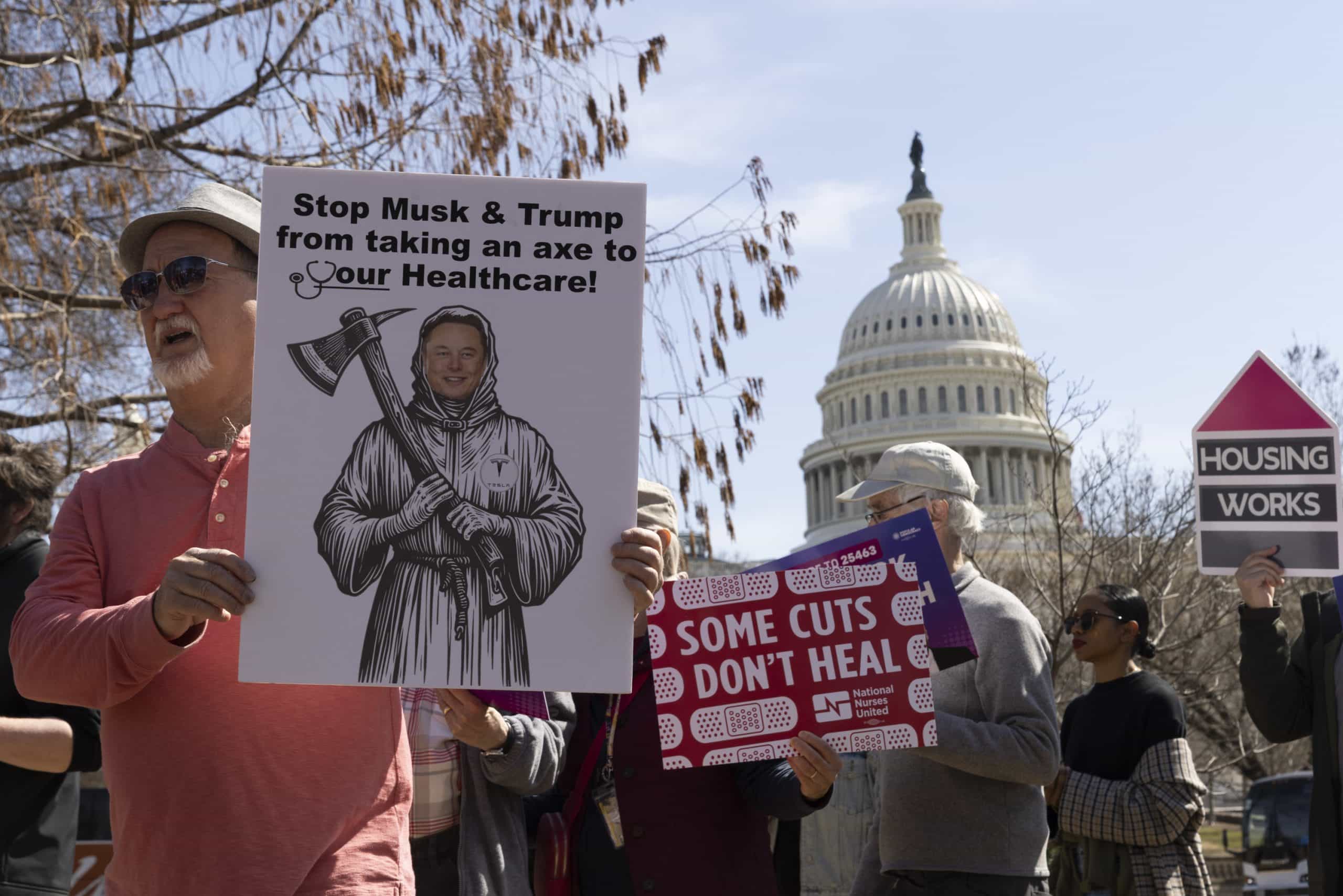
The New York Times reported last week that half the workforce could soon be cut, citing senior staff members and congressional aides who attended briefings by Trump administration officials. My colleagues at MindSite News reported on Friday that cuts already made – and slow administration of contracts – are sapping agency morale and may impede the operation of the 988 Suicide & Crisis Lifeline.
Today, the CEO Alliance, a coalition of 16 major mental health organizations, released a statement expressing “concern” about the potential cuts, and noted the recent history of bipartisan support for mental health services:
“Significant cuts to SAMHSA staff and resources would impact Americans in every corner of the country,” the statement said. “Cuts would reduce oversight of the important grant programs that SAMHSA operates that help people with the most severe mental illnesses, hamper efforts to improve 988 awareness and crisis response systems for people, curtail the progress we have made on reducing overdose deaths, and harm SAMHSA’s work in bringing mental health resources to rural communities.”
The country’s large mental health organizations had largely been silent until the National Alliance on Mental Illness (NAMI) released a statement on Friday warning that major cuts to the agency’s staff “will undoubtedly hurt Americans, worsen this crisis, and impact millions.”
Significant cuts have already been made – roughly 100 probationary employees, more than 10% of the workforce, were fired around Valentine’s Day. And last week, the administration announced that six of 10 regional offices will be shuttered. Several of those fired held senior positions, including Mirna Herrera, who was a regional behavioral health advisor.
“By the time I left my job, we had an increase in calls in our area for Hispanic communities and LGBTQ communities,” said Herrera, who uses her own recovery from trauma she experienced growing up in Israel during the Palestinian intifadas to inform her work. “Now they’re scared for their lives,” she told MindSite News. If the cuts continue, said an employee of a Midwestern state who helps run the state’s 988 suicide and crisis hotline, emergency calls won’t get answered and “people are going to die.”
SAMHSA, which generally has had bipartisan support, operates largely under the public’s radar but has multiple roles: In addition to overseeing the 988 hotline – which has fielded more than 14 million calls, texts or chats since launching in 2022 – it funds mental health and addiction clinics, conducts critical survey research and provides training and resources for hundreds of nonprofits and state agencies. It functions, as STAT News described it in a story last week, as the “connective tissue” that works to tie together the efforts of state, local and nonprofit agencies that serve people grappling with with mental illness and addiction.
‘This is not a blip’: Fentanyl-related deaths are falling and it may continue
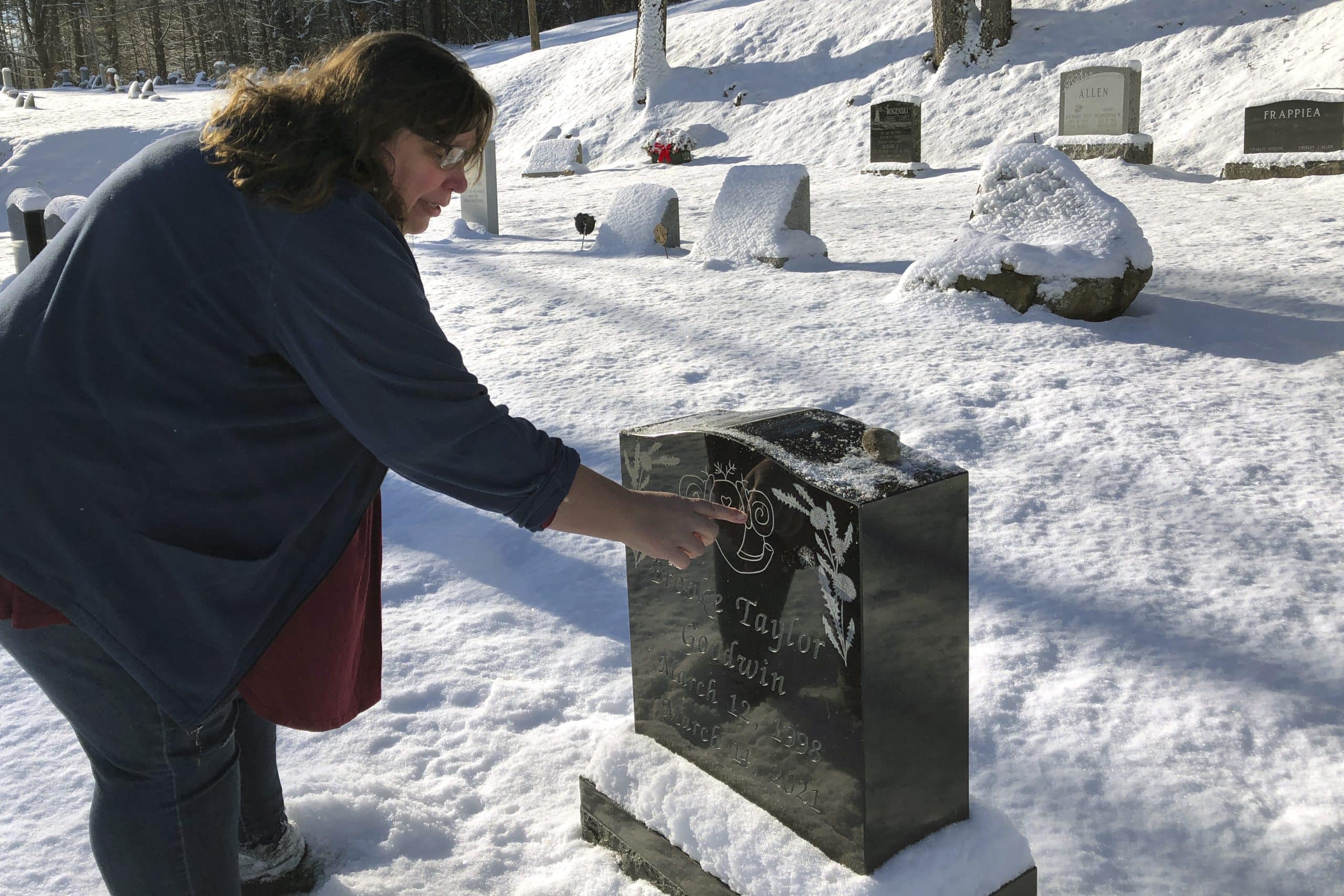
The most deadly phase of the fentanyl overdose crisis seems to be easing, NPR reports, with all 50 states and the District of Columbia recording at least some improvement. If the trend continues, the U.S. could return to a level of fatal overdoses not seen since 2016 – still extremely high – when fentanyl began replacing or mixing with heroin in the street drug supply of many states.
“This is not a blip,” said Nabarun Dasgupta, leader of a University of North Carolina research team that analyzed state-level data from across all states and published a report on their findings.
The Kensington neighborhood has been at the epicenter of Philadephia’s fentanyl crisis – I spent quite some time there reporting on addiction. Users there told NPR that they’re now smoking fentanyl rather than shooting up heroin-fentanyl mixtures, and claim the new habit is safer than the old one.
The wonk in me was drawn to the analysis by the UNC Opioid Data Lab (though it hasn’t been peer-reviewed). It found that things have been improving for longer than many experts thought, suggesting that improvements could be sustainable.
Lab researchers focused on state and local overdose data and found that what has often been described as a “sudden” national drop in fentanyl mortality beginning in fall 2023 actually began almost a year earlier in most states – and in some as early as 2021. Fentanyl drove the rise in overdose deaths, so the 33% drop in fentanyl deaths – to 52,385 in the 12 months ending October 2024 – has now led to a 26% decline in overall overdose deaths to 84,076, according to provisional CDC data.
The Opioid Data Lab credits much of the achievement to actions by local residents – who know the people they are trying to help – using strategies proven elsewhere and adapted locally. Naloxone, which can reverse opioid overdoses, has been distributed widely in Kensington, for example, and many addicts say they’ve had it administered to them more than once. The lab’s analysis emphasizes that there is no single answer to the question: “Why the decrease, and why now?” Just a lot of little ones, and the trends often are quite different from state to state.
NY Times profiles writer who’s “patron saint of women who wish the floor would open and swallow them whole”
I’ve never read Curtis Sittenfeld, though perhaps that’s because I’m a man. In a recent New York Times profile, Emma Goldberg writes, “she’s the patron saint of women who wish the floor would open and swallow them whole.” Her books, Goldberg notes, have “mined the terrain of female self-consciousness and status anxiety across all life stages.”
Goldberg brings us a glimpse of the fiction writer speaking to a 200-strong crowd in her hometown of Cincinnati. Sittenfeld described the sorts of questions that come up in “Show Don’t Tell,” her new collection of stories: If you eat a cup of sauerkraut with a dollop of Thousand Island dressing for lunch every day and your spouse finds that disgusting, is it his fault or yours? The audience laughed, nervously, with an “ache” of recognition.
I’ve been missing out. Sittenfeld’s books, of which this is the ninth, plumb the fascinating mysteries of how we behave, as well as the mortification that often accompanies vulnerability. As Goldberg puts it: “there is no escaping the embarrassment of being alive; there’s only finding somebody who will respond tenderly.”
This new collection of stories focuses on the concerns of middle-aged women who, as Goldberg puts it, wake up one day and realize their lives aren’t exactly what they’d planned. Heroines who seem to want more than they ought to, held back by age or wilted ambition. They’re also funny. “The stories are messy, delicious,” Jen Doll writes in a separate review, like “sitting down with a good friend.”
Big Pharma had abandoned mental health. Now some players are coming back
While the largest drug makers continue to turn out and market blockbusters (Oh,Oh, Oh Ozempic!) for medical conditions, pharmaceutical innovation in mental health treatments hasn’t kept pace. It’s been decades since the industry’s huge successes with Prozac and Zoloft, and big players have been hesitant with investments, even as patient demand for better treatments has skyrocketed.
Now, “signs of a cautious revival are emerging,” the Wall Street Journal reports, citing Bristol Myers Squibb’s $14 billion late 2023 acquisition of Karuna Therapeutics (and its promising new first-in-class schizophrenia treatment, Cobenfy) and Johnson & Johnson’s $15 billion agreement in January to acquire Intra-Cellular Therapies (and Caplyta, a pill that treats bipolar disorder and schizophrenia). Still, these deals are small-stakes compared with big drugmakers’ investments in oncology, autoimmune disorders and Alzheimer’s.
Part of the reluctance comes from a lack of clear biological targets. With cancer, researchers can biopsy tumors and pinpoint specific genetic mutations. Psychiatric illnesses, on the other hand, develop from a complicated interplay of life experiences and genes, each exerting small effects across millions of brain cells. Antidepressants like Prozac were developed with only a hazy understanding of underlying causes while virtually all antipsychotics are refinements of therapies found over 70 years ago.
Startups have jumped into the breach, researching psychedelics like LSD, MDMA and psilocybin. Annual venture capital investment in biotechs focused on psychiatric treatments averaged $550 million between 2014 and 2024, according to the Journal. Big Pharma may be starting to make small steps into these emerging streams.
In other news…
American adults’ mental and physical health are in particularly poor shape. Gallup’s latest results are the worst they’ve recorded in 24 years of polling: In 2024’s annual survey, conducted in November, 76% described their mental health as “good” or “excellent”; as did 75% for physical health. Both ratings began a gradual decline after 2012 – when good or excellent mental health was reported by 89% – and accelerated during the pandemic. The trends show up in all demographic groups, with younger adults, especially women, registering by far the greatest drops.
A separate Gallup tracking poll that measures the pandemic’s lingering effects on school-age children found that their parents are more likely to report ongoing negative social and emotional issues than academic or physical health troubles.
People find AI responses more compassionate than human responses even when they discover who they’re communicating with, Live Science reports. For a study in Communications Psychology, over 550 participants read empathy prompts and then responses to them, some generated by artificial intelligence, some written by humans – either lay people chosen for empathy or trained crisis hotline volunteers. The evaluators assessed the responses for compassion, responsiveness and overall preference. They rated the ChatGPT-4 responses an average 16% more compassionate – conveying understanding, validation, and care – than the human responses, and preferred them 68% of the time, with a lower but still significant preference even when the author was revealed.
If you or someone you know is in crisis or experiencing suicidal thoughts, call or text 988 to reach the 988 Suicide & Crisis Lifeline and connect in English or Spanish. If you’re a veteran press 1. If you’re deaf or hard of hearing dial 711, then 988. Services are free and available 24/7.
Recent MindSite News Stories
Inside America’s Mental Health Agency: Mass Firings and Work Stoppages Sap Morale, Impede Mission
The agency tasked with leading the fight to ease the country’s mental health and addiction emergencies is going through an existential crisis. About 100 of its 900 workers have been fired and those that remain are frightened and demoralized.
Opioid Orphans: Grandparents Struggle to Raise Children Left Behind

Despite billions set aside in settlement funds, very little goes to relatives raising bereaved children.
COVID Stole a Parent from Over 200,000 Children. Indian Country Lost the Most

COVID was not an equal-opportunity destroyer. American Indian and Alaska Native children were orphaned at three times the rate of white children, and Black children at double the rate.
If you’re not subscribed to MindSite News Daily, click here to sign up.
Support our mission to report on the workings and failings of the
mental health system in America and create a sense of national urgency to transform it.
For more frequent updates, follow us on Facebook, Twitter and Instagram:

The name “MindSite News” is used with the express permission of Mindsight Institute, an educational organization offering online learning and in-person workshops in the field of mental health and wellbeing. MindSite News and Mindsight Institute are separate, unaffiliated entities that are aligned in making science accessible and promoting mental health globally.
Copyright © 2021 MindSite News, All rights reserved.
You are receiving this email because you signed up at our website. Thank you for reading MindSite News.
mindsitenews.org

The name “MindSite News” is used with the express permission of Mindsight Institute, an educational organization offering online learning and in-person workshops in the field of mental health and wellbeing. MindSite News and Mindsight Institute are separate, unaffiliated entities that are aligned in making science accessible and promoting mental health globally.


Author

Related Articles
Generation Cancer: Millennials Struggle With Death at an Early Age
More young adults are being diagnosed with cancer. Even for those who survive, the experience can be destabilizing and isolating.

Millennials Weigh Having Children On Their Own Terms
Not having children is also a valid path, and one that everyone should consider, Merle Bombardieri argues in her 1981 book.

Waiting for Word on Relatives Under Attack in Iran
Iranians in the US are caught between two “unrepentant regimes,” says Iranian-American writer and professor Shervin Malekzadeh.
