
Horrific Conditions in ICE Center Harms Women’s Mental Health
Immigrant women not charged with any crimes other than lacking documents say they are being held in a “hell on earth.”


March 26, 2025
By Courtney Wise

Greetings, MindSite News Readers. In today’s Daily, immigrant women and men are being subjected to cramped, filthy, and inhumane conditions in ICE detention. What drives shopping addiction. And why some researchers say that while dementia cases might not double by 2050, they will still become “a significant challenge for the health system in the US.”
Immigrant women report “horrific” conditions in ICE detention

Within weeks of President Donald Trump’s inauguration, two men died at the Krome North Processing Center for immigrants in Miami. The ICE detention facility is reserved for men, but four women held at Krome since mid-February have reported being subjected to inhumane conditions there, held “like sardines in a jar…in a hell on earth.” The women, all still detained, shared details with USA Today, on condition of anonymity fearing retaliation from authorities.
The horrific conditions started on their bus– on a vehicle “made for prisoners,” with small holes rather than windows. All four women say they were chained at the wrist, waist and chest, and they were held on the bus for up to twelve hours. “It was very scary because they chained my chest super-tight and I couldn’t breathe properly,” said one woman, in an audio recording to her family. There was no toilet on the bus either, so women, instructed by guards, had to relieve themselves on the floor.
Conditions in the detention facility were similarly barbaric. The four women interviewed recalled as many as 27 women stuffed into one small cell, sleeping on concrete floors with only one jacket or blanket each. Food and water were also hard to come by, with one woman saying she was fed nothing for 36 hours, and all four women saying they had to plead for small amounts of drinking water. Women were also deprived of timely showers, sanitary and medical care. Noticing that she’d developed a rash from not bathing for days, one woman requested Benadryl – but guards told her she’d need to fake a serious illness to get anything. It made her feel like “nobody cares,” she said. “Everyone acts like we’re animals.”
Krome is one of 130 ICE detention facilities across the nation, many of them privately operated. Until recently, ICE tended to deport or release immigrants without a history of crime – the agency says detention is not meant to be punitive, and the system can’t cope with detaining so many people. Trump’s deportation crusade is trying to change that, putting more pressure on overcrowded, understaffed centers –earlier this month, ICE reported holding 46,269 people in custody, nearly 5,000 more people than the agency has capacity for. Each of these women were arrested for alleged immigration violations, but none have any criminal history.
Tom Homan, Trump’s border czar, recently told attendees at the National Association of Sheriffs conference that the Trump Administration plans to make it easier for local law enforcement to detain migrants by lowering detention standards from strict federal guidelines. “We’re rehashing detention standards,” he said. “As long as you follow your own state standards, if that’s good enough for a US citizen in your county, it’s good enough for an illegal immigrant detained for us.” Earlier this month, the Republican-dominated Congress voted to support Trump’s efforts by approving a budget resolution that increased spending on immigration detention and deportation by $430 million.
What drives shopping addiction?
Shopping addiction is nothing new. I remember reading “Confessions of a Shopaholic” back in high school – a novel (and later a film) following a financial journalist whose compulsive buying lands her deep in debt. It’s a lighthearted rom-com, but shopping addiction affects scores of people in real life, both men and women, in ways that are far from enjoyable.
European psychologists first described the problem in the late 19th century, but these days, researchers and mental health professionals told Scientific American the problem is getting much worse. One significant factor is the dominance of online retailers like Amazon, Shein, and Temu, some of which use gaming strategies to entice consumers to buy. The European Commission even launched an investigation into Temu last year to assess “the risks linked to the addictive design of the service.”
The internet is part of the reason shopping, like many other “mundane behaviors,” has become “something that resembles a drug,” said Stanford psychiatrist and addiction researcher Anna Lembke. It’s a growing issue in China, where a study led by marketing researcher Heping He found that roughly 29% of the population shops compulsively. As his work expands to investigate the brain pathways involved in shopping addiction to, He and others face a big challenge: The phenomenon isn’t recognised officially in the DSM-V or the International Classification of Diseases. Recognition might stimulate more research, on the topic, or more regulation on retailers.
So, if it’s a known issue, why exactly hasn’t it entered psychology’s diagnostic manuals? Because the field has not yet agreed on what causes the issue. Is it brought on by impulsivity, or compulsive in the same vein as obsessive compulsive disorder? Or is it behavioral, linked to the similar dopamine pathways to drugs and alcohol? As it stands, consensus seems to lean towards the latter, addiction-based model.
“People do it at the beginning either to have fun or to solve a problem, from managing anxiety or depression to loneliness to boredom,” Lembke said. If it alleviates negative feelings, or feels fun, people keep shopping, which“changes their brains,” at which point they can’t stop, hurting their finances and sometimes wrecking relationships. There are brain imaging studies that support the addiction theory, as well as one case report involving a person with Parkinson’s disease who took more dopaminergic medication than prescribed. They were found to have purchased “over 5,000 pocket watches and 42 old and unusable cars.”
But not everyone with buying disorder will face the same level of problem, Lembke said – it’s a spectrum, much like substance abuse. “Some people have a bit of a shopping problem and other people end up with very severe addictions where they go into huge financial debt and they lose their primary relationship.” According to He, part of the issue is “a materialistic consumer culture.”
Chipping away at mental health stigma from the pulpit of a Black church
In last week’s family and parenting newsletter, we featured an item on HAVEN Connect, a suicide prevention program being piloted in predominantly Black churches across New York state aimed at reducing suicides among Black youth. This week, we’re sharing a story that digs into the leadership of First Corinthian Baptist Church in Harlem, where the teens in last week’s article attend the HAVEN program. It turns out, with Pastor Michael A. Walrond, Jr. at the helm, the congregation was primed to welcome additional mental health support.
Rev. Walrond has his own history of mental health struggles, including thoughts of killing himself, which he has been open about from the pulpit. He points to scripture as a guide. “You have several people in scripture who wanted to die because of the weight of the responsibility and the expectations. No different,” he said. “Elijah — who was a prophet — he asked God to take his life. It was Moses who asked God to kill him.” Likewise, for the first time in his late 30s, Walrond realized that he was dealing with depression and anxiety, but didn’t have the tools to manage his crisis alone. He needed help supporting his congregation too. His Masters of Divinity degree didn’t train him to provide mental health care, nor did his experiences growing up. Mental health just wasn’t discussed in his Caribbean household. “ I think in the African American community, historically, there’s been the normalization of trauma,” Walrond said. “You don’t really see the mental health impact.” So he decided to make professional help available right inside the church.
He first hired a part-time therapist – but quickly discovered that wasn’t enough. Since then, the church has founded a separate nonprofit, the HOPE Center, which staffs seven clinicians under the leadership of executive director Lena Green. Green is a clinician too, holding a doctorate in social work. The work is vital, Walrond said, because all of people’s needs are important — spiritual, physical, and mental. “Part of the responsibility is to treat the needs of the people as holy.”
In other news…
Fermented foods are good for your brain because they’re good for your gut: New research finds that the probiotics in fermented foods like kimchi, miso, and yogurt may help reduce symptoms of depression and anxiety because of how they affect gut bacteria. Probiotics are “beneficial bacteria” that positively impact not only what’s happening in our stomachs but also our brains because of the gut-brain connection. The pair communicate via “nerves, hormones, and immune signals, allowing them to influence each other, and if your gut microbiome is out of balance—meaning you have too many harmful bacteria or not enough beneficial ones—it can lead to inflammation and disruptions in brain function, which may contribute to anxiety, depression, and brain fog,” neurologist Michael Genovese told Food & Wine magazine. So short of allergies, having them in your diet is a good thing. Still, fermented foods and probiotics are no substitute for mental health treatment in a crisis. If you’re experiencing depression, anxiety, mood swings, or other mental health challenges at a level that makes it hard for you to function, seek a professional for help.
Dementia cases will rise in the near future, but maybe not as high as previously thought: In January, a study led by gerontologists at NYU and published in Nature Medicine concluded that by the year 2060, nearly 1 million Americans will be diagnosed with dementia — almost double the rate of those with the condition today. As people live longer lives, it follows that dementia will increase; it’s a cognitive disorder primarily affecting older adults.
Still, while other researchers respect the methodology and analysis applied in the January 2025 study, some like Eric Stallard, an actuary and co-director of the Biodemography of Aging Research Unit at Duke University, told the New York Times, they don’t believe it. The trouble, Stallard said, is that so many of those cases are presumed to soon affect aging Baby Boomers. But his own research, published as a commentary in JAMA, finds that dementia rates in the US have actually declined with each generation. Rather than rise almost 50%, Stallard expects rates to rise between 10 – 25%. “It will still be a significant challenge for the health system in the US,” he said.
If you or someone you know is in crisis or experiencing suicidal thoughts, call or text 988 to reach the 988 Suicide & Crisis Lifeline and connect in English or Spanish. If you’re a veteran press 1. If you’re deaf or hard of hearing dial 711, then 988. Services are free and available 24/7.
Recent MindSite News Stories
Inside America’s Mental Health Agency: Mass Firings and Work Stoppages Sap Morale, Impede Mission

The agency tasked with leading the fight to ease the country’s mental health and addiction emergencies is going through an existential crisis. About 100 of its 900 workers have been fired and those that remain are frightened and demoralized. Continue reading…
Opioid Orphans: Grandparents Struggle to Raise Children Left Behind

Despite billions set aside in settlement funds, very little goes to relatives raising bereaved children. Continue reading…
COVID Stole a Parent from Over 200,000 Children. Indian Country Lost the Most

COVID was not an equal-opportunity destroyer. American Indian and Alaska Native children were orphaned at three times the rate of white children, and Black children at double the rate.
If you’re not subscribed to MindSite News Daily, click here to sign up.
Support our mission to report on the workings and failings of the
mental health system in America and create a sense of national urgency to transform it.
For more frequent updates, follow us on Facebook, Twitter and Instagram:

The name “MindSite News” is used with the express permission of Mindsight Institute, an educational organization offering online learning and in-person workshops in the field of mental health and wellbeing. MindSite News and Mindsight Institute are separate, unaffiliated entities that are aligned in making science accessible and promoting mental health globally.
Copyright © 2021 MindSite News, All rights reserved.
You are receiving this email because you signed up at our website. Thank you for reading MindSite News.
mindsitenews.org

The name “MindSite News” is used with the express permission of Mindsight Institute, an educational organization offering online learning and in-person workshops in the field of mental health and wellbeing. MindSite News and Mindsight Institute are separate, unaffiliated entities that are aligned in making science accessible and promoting mental health globally.


Author

Related Articles

Health Organizations Condemn Traumatic ICE Raids, Family Separation
According to letters from children living in an ICE detention facility, living conditions are inhumane and their mental health is suffering.

In Teens, Social Anxiety Often Looks Like Anger
A study finds that some teens’ aggressive behavior may be due to social anxiety, not straightforward reactivity.
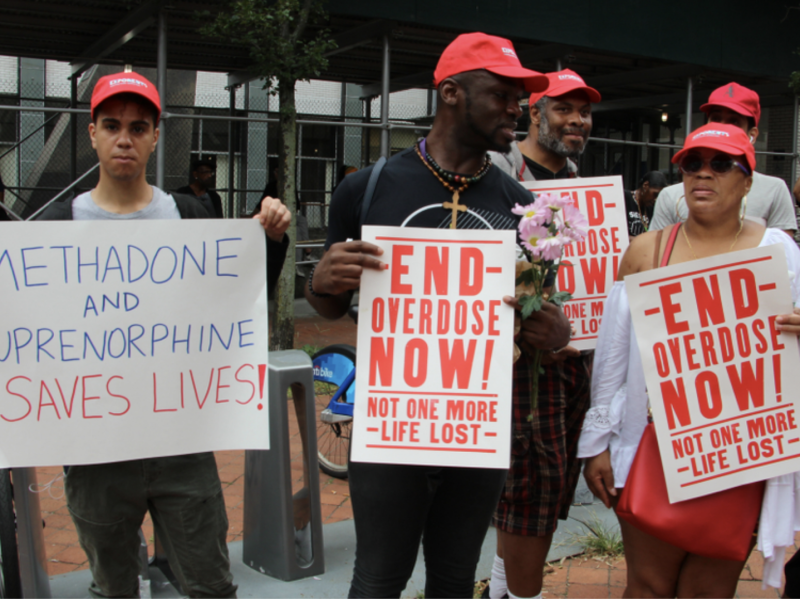
Expert Calls for Harm Reduction, Not Punishment, to Resolve Our Overdose Crisis
As the Trump administration pulls funding from harm reduction, an expert on the overdose crisis says it’s the best way to save lives.
