
A Father Fights Against Mental Health Stigma in Sports
Brian Monday is on a mission to help youth confront the stigma and silence around mental health struggles in sports.
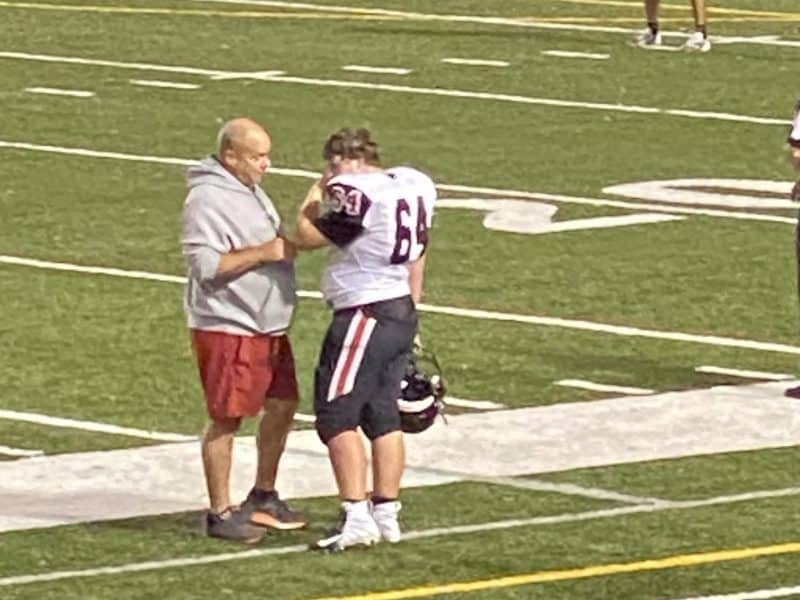
Brian Monday remembers his oldest child Eric as a kid who loved
wrestling but was himself wrestling with a greater private battle –
depression.
At age 21, Eric lost that battle.
Since Eric’s death in 2009, his father has been on a mission to help
youth confront the stigma and silence about mental health struggles by
training coaches to offer more support along the way. In 2019 in Vienna,
Virginia, he established the Eric Monday Foundation to raise
awareness about the stigma around mental health in the athletic
community.
Alongside his wife, Holly Monday, he has partnered with
local organizations to amplify their message and fund initiatives.
Their focus is to work with community leaders, local schools,
coaches, educators, and mental health experts to educate on mental health
awareness in an effort they call #TAKEDOWNTHESTIGMA.
“There are people who are going to be very resistant to having a
conversation (about mental health), ” said Monday. “Let’s give them a tool
to start the conversation.”
Striving to increase awareness and reduce the stigma related to mental health, #TAKEDOWNTHESTIGMA aims to foster a culture where people can be supported, and to help start a conversation that for many is not easy. This includes free online training for coaches, which is now required for Virginia’s Fairfax County schools.

Training for change
Katie Stancampiano, an assistant girls’ basketball coach at James Madison
High School in Vienna, Va. and herself a former student-athlete, has seen
these challenges firsthand.
“Mental health wasn’t really a topic of discussion,” when she was a
student, Stancampiano said.
Stancampiano received training during the 2020- 2021 school year as
part of Fairfax County’s partnership with the Monday Foundation.
The 40-minute training is designed to be easy to access and user-
friendly, the foundation says. About 4,255 coaches have completed the
training since it was launched, according to the foundation.
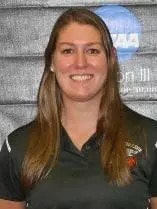
Stancampiano said her experience as a high school student athlete
reminded her of the importance of making mental health a priority: “I
wanted to be the best coach possible and support my players, this training
allowed me to have a tool to use then and now.”
The training, in addition to her own experience as an athlete in high
school and college, helped Stancampiano feel “deep empathy” for the
challenges her athletes face, she said.
Student-athletes like Michelle Collins face not only pressure and
competition in their sports but also manage rigorous schedules.
“I have 11-hour days for three months and I’m honestly too tired to
consider my mental health,” Michelle said.
Stancampiano has seen this many times.
“They strive for excellence in their sports while also managing demanding
academic workloads. Expectations from family, friends, and coaches can
create an overwhelming environment. Recognizing these pressures has
been crucial in my approach to coaching, as it helps create an atmosphere
where athletes feel comfortable discussing their mental health,” said
Stancampiano.
The Monday Foundation’s training works to ensure coaches have the
education and the tools necessary to be able to aid their athletes when they
go through difficult situations. The training, which uses a step-by-step plan
called Listen, Accept, Support, Refer, Report, is available to anyone, not
just coaches.
Fairfax County’s required training is part of a larger nationwide effort
to create more recognition within school sports communities and implement
strategies and programs that would be able to protect athletes who were
battered by these competitive environments.
States including Ohio now require coaches to undergo mental health
training before being able to renew their “pupil activity permits.” Maryland
Governor Wes Moore signed a bill in May mandating that coaches receive
mental health training, “coaches to recognize indicators of mental illness
and behavioral distress in students.”
Florida has a similar law called Youth Mental Health Awareness
Training (YMHAT) which teaches those who work with students to identify
early signs of mental health distress. The law also provides them with the
next steps to find help for a person developing or experiencing mental
health disorders or substance abuse.
Making a difference
Students say that helping coaches catch the signs of burnout and
mental health disorders is helping them.
“I’m very tired both mentally and physically but my coach, he is
amazing. If I ever tell him ‘I don’t feel well’ he’s going to take me aside and
we’re gonna talk. I feel like a lot of teams don’t have that,” said Michelle.
The message Monday hopes to share is encouraging others to speak
more openly about their struggles and for coaches to recognize the outsize
role they can play in their athletes’ lives.
“Our mental health is just as, if not more, important as our physical
health, and seeking help is a sign of strength, not weakness — you are not
alone in this struggle and there will always be support available.”
—Angely Pena-Agramonte is an intern with Youthcast Media Group (YMG) in
her junior year at the University of Miami studying journalism and international relations.
Rossy Soto and Munira Khalif are juniors at Annandale High School in Annandale, Va.,
a high school partner of YMG.
The name “MindSite News” is used with the express permission of Mindsight Institute, an educational organization offering online learning and in-person workshops in the field of mental health and wellbeing. MindSite News and Mindsight Institute are separate, unaffiliated entities that are aligned in making science accessible and promoting mental health globally.


Authors


Related Articles

1 in 8 Youth Turn to AI for Mental Health. ‘It Just Tells Me What I Want to Hear’
Youth with the deepest emotional needs are using chatbots for therapy the most – but many are unhappy with the outcome.
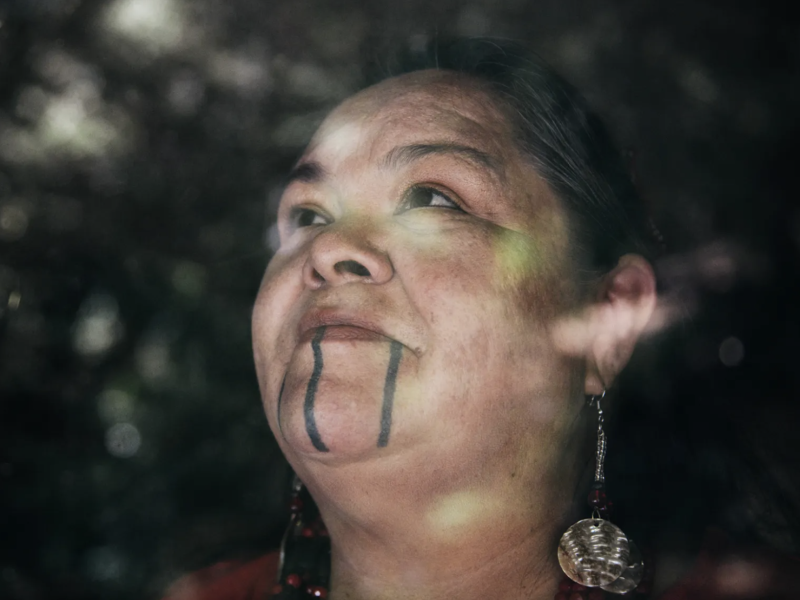
California Tribal Advocate Who Fought to Prevent Suicides Dies in Apparent Murder-Suicide
Celinda Gonzales of the Yurok Tribe worked to prevent suicides among Native Americans after losing a son and a brother. She “was a friend to many,” the tribe said.
Countering the ‘Dark Passions’
Across liberal democracies and nations, like the U.S., that are sliding out of the democratic zone, autocrats are weaponizing our most divisive emotions. In “Anger, Fear, Domination,” William A. Galston offers a guide to how these passions spread and what it takes to keep them from overwhelming us.
