
Less Trauma Means Less Crime
Reducing trauma could also shrink the sky-high rates of incarceration in the United States, experts say.


April 9, 2025
By Courtney Wise

Greetings, MindSite News Readers. In today’s Daily, we find that less trauma means less crime — and it can help reduce our country’s sky-high rates of imprisonment. Research also shows that wellness farms aren’t a universal balm for mental illness and addiction, but community-based mental health care often is.
We also recall the first Trump administration, in which U.S. agents took babies and children away from their migrant parents and imprisoned them in separate camps. Psychologists and children’s health experts like physician Nadine Burke Harris went to Washington, D.C., to testify about the devastating mental health damage of child separation. Today psychologists are also talking about the mental health damage to adult immigrants who are being singled out for arrest and even deportation to foreign prisons far from their home countries, as well as European tourists to the US being sent to privately run prison facilities here for minor visa issues.
Concerningly, the Supreme Court paused a lower court ruling that required the White House to return a migrant wrongly deported to a Salvadoran prison – and why this and other recent SCOTUS rulings should send a chill through dissidents, journalists, congresspeople, comedians and others around the country.
And in better news, how poetry changes you and your brain. TS Madison opened a home to support formerly incarcerated Black trans women. Plus, poetry is good for your mental health.
Less trauma, less crime

In this brief, yet thoughtful essay published in Yes! magazine, journalist Sonali Kolhatkar and incarcerated essayist Dortell Williams assert that to reduce our nation’s rates of imprisonment, our society has to be serious about preventing trauma.
“We have the means to equalize social strata. Yet too often we choose to spend disproportionate public revenue on reacting to crimes rather than preventing them, enforcing inequality through ‘tough on crime’ policies…Punishment does not stop the cycle of trauma but worsens and either fuels existing trauma or creates new ones,” they write. “Yet if we envision a fairer world where we aim to prevent traumas before they begin, where people have the collective apparatus to build strong social connections and have their needs met, we can reduce the need for policing and prisons altogether.
In the meantime, we need to look at how prisons can be places for rehabilitation rather than cruelty and despair. If you haven’t seen them, read our stories on a U.S. prison following a transformative Scandinavian model, why U.S. prisons should encourage children and family visits and “bro-cheting.”
SCOTUS pauses a court order to release wrongly deported immigrant father

On Monday, Chief Justice John Roberts issued an “administrative stay” in the case of Kilmar Abrego Garcia, a 29-year-old Maryland resident wrongly deported to a prison system in El Salvador known for its torture, beatings and scores of inmate deaths. Roberts acted on his own, the New York Times reports. The measure gives the Supreme Court time to consider the case, but it came shortly after a request from the Trump Administration. The White House admits that it accidentally deported Abrego Garcia, whose wife and young son are US citizens, due to an “administrative error” but argues that the courts do not have the authority to compel his release and return to the U.S. Since his wrongful removal, Abrego Garcia has been held at the notoriously CECOT prison. Human rights organizations have protested the unacceptable mistreatment at the facility.
In a separate case, Judge Emmanuel Boasberg ruled it was illegal to send any Venezuelan immigrants from the U.S. to prison in El Salvador, but the Trump administration defied the judge’s order.
Abrego Garcia entered the United States in 2011, fleeing from gang violence and extortion in El Salvador. In 2019, an immigration judge barred him from being sent back to the country.
The original order to return Abrego Garcia came from Federal District Judge Paula Xinis, who wrote, “There were no legal grounds for his arrest, detention or removal.” Xinis went on to call his deportation “wholly lawless. ” It was a “grievous error” that “shocks the conscience,” she concluded.
A later order from the U.S. Court of Appeals, rejecting the administration’s attempts to block the order, went further, comparing Abrego Garcia’s removal to kidnapping: “The United States government has no legal authority to snatch a person who is lawfully present in the United States off the street and remove him from the country without due process,” Judge Stephanie D. Thacker wrote. “The government’s contention otherwise, and its argument that the federal courts are powerless to intervene, are unconscionable.”
Even without being sent to a Salvadoran hellhole, deportation is not only traumatic for people who are deported, exacerbating their mental and physical health issues. It also undermines the mental health of their families and loved ones “and discourages people from getting the care they need,” the National Immigration Law Center has pointed out.
Nonetheless, in a separate case involving deportations to CECOT, the Supreme Court overturned a lower-court block on deportations under an 18th-century law in a 5-4 decision.
And finally, why is the US paying $6 million to imprison Venezuelans in El Salvador?
One of our editors, D Hembree, wrote on a Substack just a day or so ago that something was bizarre and suspicious about the determination of Trump to send Venezuelan migrants in the U.S. to a notorious prison in El Salvador. “I was asking why on earth we were wasting 6 million dollars – $6 million!– to send Venezuelan immigrants to a horrendous prison system in El Salvador known for its torture.” she notes. “It was not only illegal, as US judges ruled, it didn’t make any sense at all – Venezuela had already agreed to take them back.”
“But it DOES make sense if Trump is sending Venezuelans there as a trial run for something else, like imprisoning American citizens – you know, the dissidents, protestors, comedians, musicians, journalists, rappers, late night talk show hosts and others he is always saying need to be punished. And that would also explain why he is so desperate to keep all those migrants there, defying court orders and violating international law. It also explains why he is pretending that he and the most powerful nation on earth cannot bring home a wrongly deported father from that prison – because that would set a precedent and Trump wants to make sure that prison is available for his ongoing use. And sure enough, just hours after I wrote about this, Trump told a journalist that he would “love” to send Americans to the El Salvador prison as well.”
Trans star TS Madison launches home supporting formerly incarcerated Black trans women
On Monday, TV and media personality TS Madison celebrated Transgender Day of Visibility by opening the TS Madison Starter House in Atlanta. The home serves formerly incarcerated Black trans women by providing them with stable housing, gender-affirming health care, job assistance, GED support, life-skills training, nutrition education, and individualized therapy throughout a 90-day re-entry program.
A vocal and longtime advocate for trans rights, Madison’s personal experiences with homelessness and survival sex work underpin her passion. “I wanted to make space for these girls,” she told NBC News. “I wanted to teach them how to be successful without relying on their bodies but on their other gifts.”
Trans adults experience homelessness at disproportionately high rates, and rates for Black trans people are even higher. According to the most recent data available, 8% of trans adults have experienced homelessness in the past year, compared to just 1% of the ‘straight’ population. A 2015 survey found that 42% of Black trans adults have experienced homelessness in their lifetime. Many of those unhoused trans people turn to sex work just to survive, with the National Alliance to End Homelessness reporting that 98% of unhoused trans adults have engaged in high-risk behaviors, including sex work – that figure is an astonishing 100% for unhoused black trans people, who are also particularly vulnerable to hate crimes.
The TS Madison Starter House doesn’t rely on government funding, which should help it weather attacks on trans rights from the Trump Administration. “This is funded by the people, for the people,” Madison said. “Even with the government cutting funding, we don’t need them. We have each other. It’s kind of like an underground railroad.” Anticipating success for the women in the program, Madison is chronicling their journey for a forthcoming docuseries, but vows it will be about increasing trans visibility and hope, rather than showcasing drama. “No,” she said, “these are the girls overcoming. These are the triumphs…This is about possibility and transformation, not exploitation.”
In other news…
JFK’s vision for mental health lives on: The Kennedys have a well-documented interest in mental health. The Community Mental Health Act of 1963, the final bill signed by President John F. Kennedy, aimed to reform mental health care by shifting the system’s focus from institutionalization to care based in communities where people live. The issue was personal: His sister, Rosemary, underwent a now disproven mental health surgery – a lobotomy – that left her permanently disabled. Another sister, Eunice Kennedy Shriver, would found the Special Olympics to support children and adults with intellectual disabilities just one year before JFK’s assassination. And his brother, Sen. Ted Kennedy, used his role in Congress to advocate for mental health issues.
Now, JFK’s nephew, Robert F. Kennedy, Jr., is charged with leading the nation’s department of Health and Human Services, with a strategy aimed at discouraging the use of research-backed vaccines, reducing the use of pharmaceuticals for mental illness and promoting the establishment of “wellness farms” to treat mental illness and addiction.
The trouble is, wellness farms haven’t been proven widely effective in practice, but his uncle JFK’s community-based concept has. “To champion the wellness farm seems out of left field when other models like permanent supportive housing or supportive employment have a huge evidentiary base, including cost-effectiveness,” health economist Ryan K. McBain told The Atlantic.
“How Poetry Changes You and Your Brain”: Emerging research finds that poetry can help us feel happier and more connected to each other, even healthier, according to the Greater Good Science Center at UC Berkeley. “Poetry may also help us build empathy for each other and, in doing so, strengthen our relationships,” the author wrote. What is your favorite poem? We’d love to create a list.
If you or someone you know is in crisis or experiencing suicidal thoughts, call or text 988 to reach the 988 Suicide & Crisis Lifeline and connect in English or Spanish. If you’re a veteran press 1. If you’re deaf or hard of hearing dial 711, then 988. Services are free and available 24/7.
Recent MindSite News Stories
A Father Fights Against Mental Health Stigma in Sports

Brian Monday is on a mission to help youth confront the stigma and silence around mental health struggles in sports. Continue reading…
‘The Press Has Sanewashed Trump’s Dementia and Mental Illness’: Dr. John Gartner

The psychologist and founder of Duty to Warn says the aging Trump has dementia and is severely mentally ill. Continue reading…
SAMHSA Firings Continue, Devastating U.S. Mental Health Agency

Employees of SAMHSA, the federal agency responsible for leading the nation’s response to the mental health and drug overdose crises, were among those terminated this morning in the latest round of mass firings implemented by the Trump administration. Continue reading…
If you’re not subscribed to MindSite News Daily, click here to sign up.
Support our mission to report on the workings and failings of the
mental health system in America and create a sense of national urgency to transform it.
For more frequent updates, follow us on Facebook, Twitter and Instagram:

The name “MindSite News” is used with the express permission of Mindsight Institute, an educational organization offering online learning and in-person workshops in the field of mental health and wellbeing. MindSite News and Mindsight Institute are separate, unaffiliated entities that are aligned in making science accessible and promoting mental health globally.
Copyright © 2021 MindSite News, All rights reserved.
You are receiving this email because you signed up at our website. Thank you for reading MindSite News.
mindsitenews.org

The name “MindSite News” is used with the express permission of Mindsight Institute, an educational organization offering online learning and in-person workshops in the field of mental health and wellbeing. MindSite News and Mindsight Institute are separate, unaffiliated entities that are aligned in making science accessible and promoting mental health globally.


Author

Related Articles
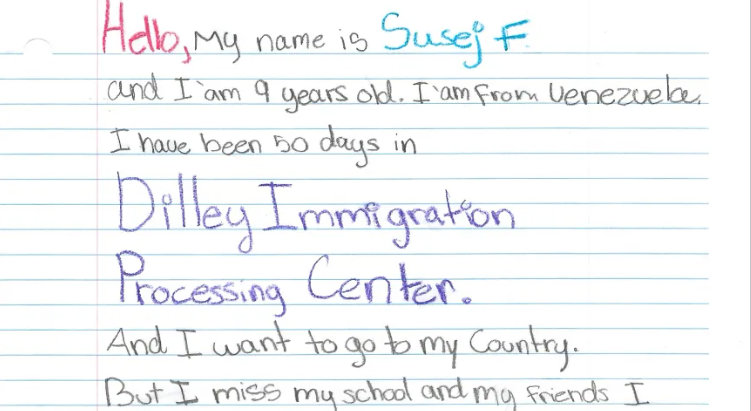
Health Organizations Condemn Traumatic ICE Raids, Family Separation
According to letters from children living in an ICE detention facility, living conditions are inhumane and their mental health is suffering.

In Teens, Social Anxiety Often Looks Like Anger
A study finds that some teens’ aggressive behavior may be due to social anxiety, not straightforward reactivity.
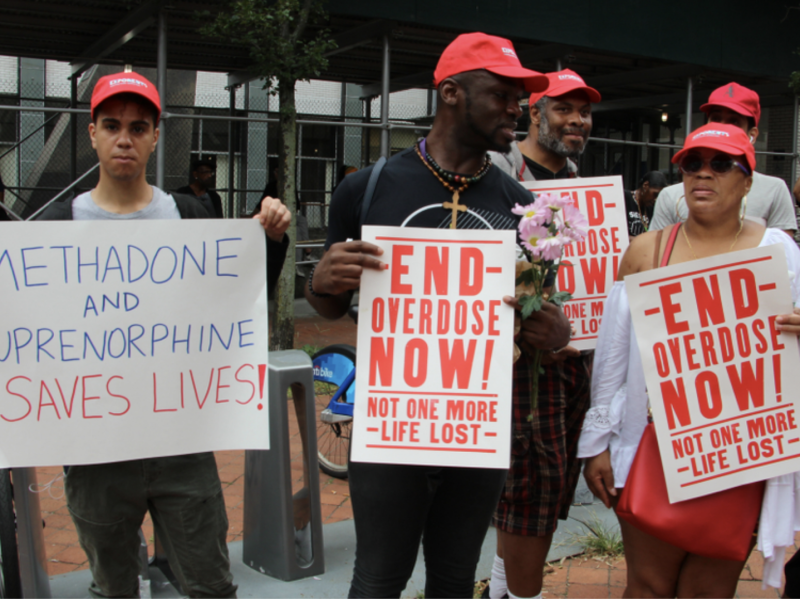
Expert Calls for Harm Reduction, Not Punishment, to Resolve Our Overdose Crisis
As the Trump administration pulls funding from harm reduction, an expert on the overdose crisis says it’s the best way to save lives.
