
‘All I Did Was Sleep’: Despite Years of Damning Reports, States Fail to Rein in Psych Meds for Foster Youth
An investigation by The Imprint reveals overmedication and spotty enforcement of federal requirements that child welfare agencies monitor psychiatric prescriptions for foster youth.

A 50-state review finds many child welfare agencies do a spotty job monitoring prescriptions
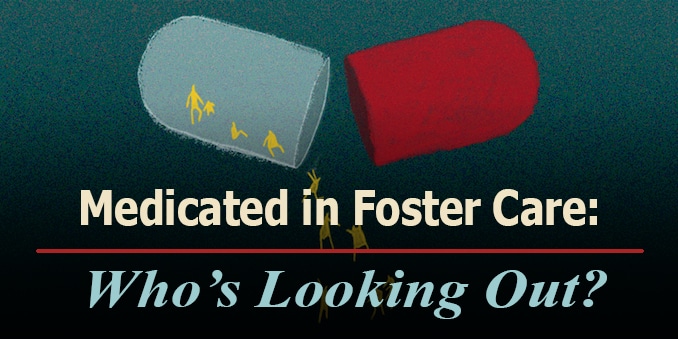
This week and next, we are publishing an investigative series, Medicated in Foster Care: Who’s Looking Out? by The Imprint, a national nonprofit news outlet covering child welfare and youth justice. Sign up for The Imprint’s free newsletters here.
Part 1 in a series
Alicia Bissonette, a 21-year-old living among the lakes and foothills of western Maine, recalls her teenage years in foster care as a heavily medicated, crises-filled blur.
After years of childhood abuse, she moved between numerous foster homes, treatment centers and hospitals. Caseworkers and doctors insisted she needed a regimen of psychiatric meds that included the antipsychotic Abilify, the antidepressant Lexapro, the attention-deficit drug Strattera, and three drugs she was told to pop as needed for anxiety: hydroxyzine pamoate, prazosin HCI and propranolol.
“There was a whole mix they had going,” the college student recalled in a recent interview. “And all I did was sleep.”
In foster care, Bissonette was diagnosed with PTSD, ADHD and a “mood disorder.” But the drug treatment compounded her struggles. She gained more than 70 pounds, nodded off at school, and felt like she was “crawling out of her own skin,” she stated in records filed in federal district court.
For decades, advocates, public health experts and foster youth like Bissonette have expressed alarm about the child welfare system’s heavy, haphazard reliance on psychotropic medications for traumatized children.
They’re just not allowed to have a bad day. ‘We have a bad day, that means we get put on medication.’ Those kinds of stories I’ve been hearing for 30 years.”
Cassandra Simmel, professor of social work at Rutgers University
A series of federal audits beginning in 2011 confirmed foster youth were being prescribed at far higher rates than their peers, often at very young ages. That year, Congress called on states to act. Bipartisan legislation required state child welfare agencies to develop and report protocols for “the appropriate use and monitoring” of psychotropics, many of which are not approved for children, and can result in debilitating side effects such as massive weight gain, diabetes and extreme lethargy.
Despite these widespread concerns, an Imprint review of child welfare policy manuals in all 50 states revealed that at least 10 states still do not include any policies for caregivers, caseworkers or medical providers on the use of psychotropic medication for kids in foster care. Although they must follow Medicaid prescribing rules, in states that do have such policies a majority do not mention safeguards considered critical for foster youth: ensuring rights to informed consent or shared decision-making, conducting secondary reviews of prescriptions, and providing alternative methods for healing from trauma. These practices are widely encouraged by experts, and in some states, enforced by higher courts.
Spokespeople for child welfare agencies in Massachusetts, North Dakota, Arkansas, West Virginia, Kansas, Alabama and Kentucky either confirmed or did not dispute that their states have no child welfare policies specific to psychotropics. Two other state agencies, in Montana and Hawaii, do not post a policy online and failed to produce one after months of correspondence.
Minnesota’s child welfare agency has no specific policy beyond general medication oversight statutes, but case planners must note if a child is prescribed psychotropics on “out-of-home” case plans.
Psych meds in foster care: a crisis of overprescription
Currently, there are four ongoing class-action lawsuits and related settlements filed on behalf of more than 18,000 foster youth and some migrant kids. Plaintiffs’ allegations – contested by state and federal agency defendants – have included medical record keeping, a lack of second opinions on questionable prescriptions, and children, parents or caregivers not being offered meaningful opportunities to object or provide input.

Foster youth make similar claims in eight other class-action suits, among broader complaints about their treatment in government care.
High prescribing rates remain rampant across the country, according to a recent federal review of Medicaid claims for more than 700,000 child welfare-involved youth. That research team found 24 states prescribing the broader class of psychotropics to at least 30% of child welfare-involved youth – two to four times the rate of other children. It also identified nearly 100,000 kids in the system receiving at least two psychotropics at once, a mixing of meds that can heighten health risks.

“They’re just not allowed to have a bad day,” said Cassandra Simmel, a social work professor at Rutgers University whose research has involved interviewing foster youth across the country about consent, mental health and medication. “‘We have a bad day, that means we get put on medication.’ Those kinds of stories I’ve been hearing for 30 years.”
Interviews with 60 experts, including pediatricians, mental health professionals, policy analysts and child advocates, as well as caregivers and foster youth in six states, underscored potentially lifelong consequences for children raised in government custody.
Jimmy Vaughn, a 34-year-old business attorney in Texas, said he was placed on heavily sedating medications while he was in foster care, taking as many as seven drugs simultaneously. Since 2017, he has frequently testified before the Texas Legislature about attempting to enlist in the military and encountering recruiters who – after learning about medications he took only while in foster care – balked or told him he’d need a waiver.
“I went to all these psychiatrists, and none of them were willing to write down that I was misdiagnosed,” he said. “I sat there trapped between the system I was part of, and wanting to serve my country.”
Psych meds follow kids in foster care
It is widely acknowledged that foster youth face more challenging circumstances than their peers, and typically require mental health support for often-acute needs. Poverty, drugs, domestic violence and mental illness have frequently wracked their families. Many have experienced physical or sexual abuse at home, in foster care or in their community.
Despite frequent moves in the system, medical records don’t always follow them, leaving a series of caregivers trying to piece together medical histories. Recent Department of Health and Human Services audits in Indiana, Michigan, Ohio, Florida and California have found sizable numbers of foster children’s case files with missing information about psychotropic prescriptions.
Psychiatric drugs that alter mood and behavior through the central nervous system can “improve daily functioning” in school and at home, according to American Academy of Child and Adolescent Psychiatry guidance. Common stimulants like Ritalin are Food and Drug Administration approved to treat attention-deficit/hyperactivity disorder after age 6, for example. Atypical antipsychotics such as Risperdal are approved only for rarer cases of schizophrenia or bipolar disorder in older youth, and autism-related irritability in kids as young as 5.
Some prescribers say they have few options when overwhelmed foster parents or caseworkers seek a sedating medication to calm a distressed or angry child whose behaviors they can’t manage.
Still, concerns and cautions abound, particularly when multiple drugs are prescribed at once. Drugs are often given “off-label” for non-FDA approved diagnoses. Many antidepressants are linked to increased risk of suicidal behavior in youth. In addition to diabetes and obesity, antipsychotic use can have lifelong consequences, including metabolic and cardiovascular problems and involuntary movements such as facial tics caused by tardive dyskinesia.
Many times you don’t agree, and you’re still kind of forced to take the medication. There needs to be an agreement factor on both ends.”
Stephaney Knight, former foster youth
Biological parents eventually reunite with their children in roughly half of cases – but they are frequently sidelined from making decisions about psychiatric drugs until then, interviews with parents’ attorneys and state data show.
“The routes to ‘too many, too much, too young’ psychotropic medication use in youth are numerous,” notes a 2024 editorial published by the journal Frontiers in Psychiatry, “yet the routes to reducing them are just being forged.”
State policies fall short
There are signs of change. Antipsychotic medication use has declined nationwide, according to research from the Rutgers University School of Public Health – particularly in states with stepped-up oversight such as California, Washington and Texas.
In Texas and Washington, though, publicly available data also shows hundreds of pre-teens in foster care prescribed at least four psychotropic medications at once – concurrent doses with high risks and limited evidence of effectiveness.
“The problem hasn’t gone away. We’re chipping away at it, but it’s not fundamentally improved,” said Christopher Bellonci, an assistant professor of psychiatry at Harvard Medical School. “Even in the states where you see rates have come down some, they’ve come down from a completely unconscionable level, to something that is merely alarming.”
For this analysis of psychotropic medication oversight across the country, The Imprint searched two different documents for each state’s child welfare agency: Health Care Oversight and Coordination Plans – which must address this issue and be submitted to the federal government annually. In contrast, the child welfare policy manuals that The Imprint also reviewed for each state detail rules and protocols for professionals in the foster care system.
In every state, there is typically a small list of high-risk prescriptions – such as antipsychotics for young children – that Medicaid agencies and managed care insurers reserve the right to review and reject. Massachusetts, Kansas and Arkansas cited those programs in explaining the absence of any policies specific to foster youth, most of whom are on Medicaid. A spokesperson for West Virginia’s Department of Human Services pointed to those extra layers of protection for children age 5 and younger who receive prescriptions for antipsychotics.
In recent years, Kansas has had one of the highest prescribing rates in the nation for child welfare-involved youth ages 2 to 17 – 35% received at least one psychotropic in 2019, which was more than three times the rate of their non-foster peers on Medicaid, according to the federal researchers.
A class-action lawsuit brought by foster youth in 2018 alleged in part that “Kansas often relies on the overuse of psychotropic medications,” with children routinely being prescribed by “non-specialists in order to manage behavior.”
The state disputed that claim and many others in court and ultimately settled in 2021. Among sweeping reforms a federal court continues to monitor, the settlement required the Kansas child welfare agency to stop delaying mental health treatment for children awaiting a stable placement. The agreement did not require new policies specific to psychotropics, however.
In email responses, Kansas Department for Children and Families spokesperson Erin La Row said her agency “does not have specific policies for the use of psychotropic medication with children in foster care.” But she pointed to other protections, such as the state Medicaid agency’s “prior-authorization” rules that apply to all pediatric patients and best-practice guidance manuals for doctors treating foster youth.
La Row added that “it’s possible” additional oversight is conducted by private foster care providers contracted by the state that “may have their own policies.”
Teresa Woody, litigation director for the nonprofit Kansas Appleseed and co-counsel on the 2018 lawsuit, reacted to the state’s response: “What does that tell you? In other words, ‘We have no idea what our contractors are doing on this issue’ – right?” Woody said her clients bear the brunt. “We hear stories all the time, people who take in kids in emergency situations and aren’t given the prescribed meds, or instructions on how to use the meds by the contractors – and then have negative consequences.”
The Imprint also reviewed states for any binding policies that require consent from youth – or from parents who retain custodial rights.
In Georgia, parents and children are mentioned as part of the decision-making conversation under state policy; but ultimately, the agency itself “must take the course of action determined to be in the best interest of the child,” and an approval form must only be signed by a county director employed by the Department of Family and Child Services.
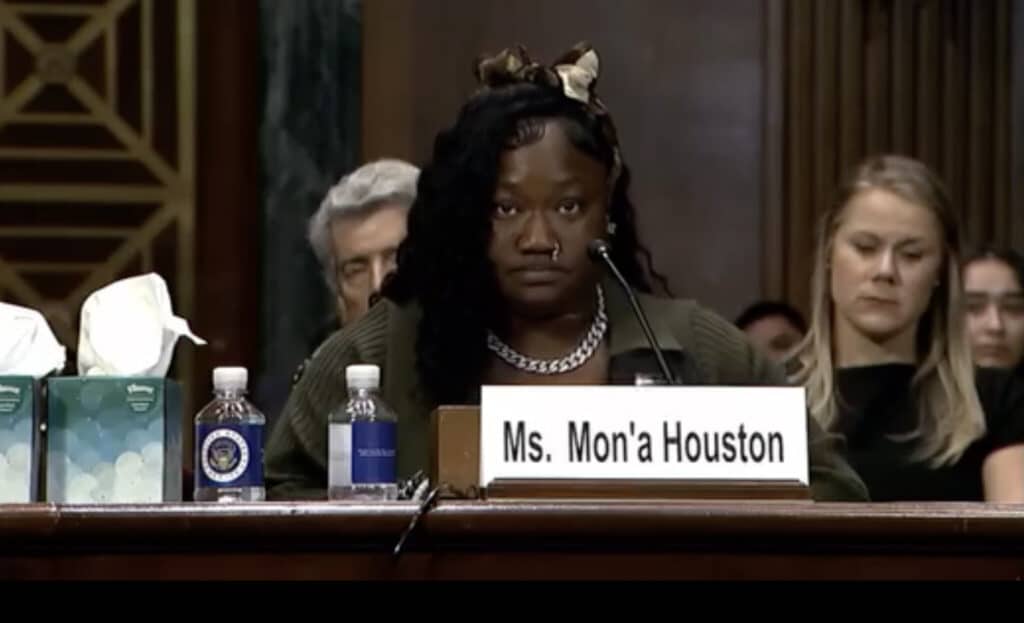
In 2023, Mon’a Houston, then 19, testified before the U.S. Senate about how voiceless she felt when the Georgia Division of Family and Children Services (DFCS) made medical decisions on her behalf.
“One of the worst parts about being in care is that I was overmedicated. DFCS kept telling my doctors to up my dosage because I was not behaving,” Houston told a Senate subcommittee. “I was overmedicated to the point of always feeling over-tired and sluggish. It hurt to walk. But I had trauma and no one to talk about it with.”
The problem hasn’t gone away. We’re chipping away at it, but it’s not fundamentally improved. Even in the states where you see rates have come down some, they’ve come down from a completely unconscionable level, to something that is merely alarming.”
Christopher Bellonci, assistant professor of psychiatry, Harvard Medical School
In Indiana, caseworkers are instructed not to wait longer than 24 hours to obtain a parent’s approval, if they decide waiting isn’t in the child’s “best interest.” Current policy also requires staff to “engage in meaningful discussions with the child and family regarding the initiation, change, or discontinuation of medication to ensure informed decision making.”
But one former foster youth said her feelings weren’t considered.
Stephaney Knight, a college student in Indiana, recently obtained some medical records from her time in foster care. They show drugs she was given ten years ago at age 14, to manage her mental health: 2.5 milligrams of risperidone and 20 milligrams of Abilify for “mood,” 450 milligrams of the mood stabilizer lithium, 100 milligrams of the antidepressant sertraline, and the blood pressure medications prazosin and 10 milligrams of propranolol for drug-induced hand tremors.

The state moved Knight through more than 30 foster homes, she said. She was diagnosed with post-traumatic stress disorder, severe depression, borderline personality disorder and bipolar disorder, yet her medical records note she was “satisfactory” in school, raised “no concerns” for staff and achieved an A- in English.
“Many times you don’t agree, and you’re still kind of forced to take the medication,” Knight said in a recent interview, flanked on camera by portraits of her cats Whisper, Bird and Squirrel, and stacks of James Patterson novels where she finds respite from some of her memories. “There needs to be an agreement factor on both ends.”
Three experts who reviewed Knight’s records said there wasn’t enough information to draw firm conclusions, but they saw red flags, particularly with the two simultaneous antipsychotic prescriptions.
“That makes no sense to me,” said Bellonci of Harvard. “It is sadly a not-uncommon cocktail of meds.”
Alternatives to Psych Meds: Trauma-Focused Therapy
Reforming mental health care for this population has been a hard-fought task, with medical providers, caseworkers, child advocates and foster parents often at odds: Clamp down on prescriptions? Enhance public funding for non-medication treatments backed by strong evidence, such as Trauma-Focused Cognitive Behavioral Therapy or multisystemic therapy? Keep kids out of the system that may force them on meds?

While states such as Arkansas, New York and North Carolina have invested in treatment for children’s traumatic stress, scientific evidence points to reliance on antipsychotics too often as a first-line treatment. The Imprint’s policy review found scant mention of therapeutic alternatives to medication. Basic steps such as screening children for trauma when they enter foster care remain rare. Youth advocates lament the ongoing lack of support for other popular but harder-to-evaluate therapies for children involving art, music, martial arts or interactions with animals.
Dr. Brooks Keeshin, a Utah-based pediatrician and child psychiatrist who is an executive committee member for the American Academy of Pediatrics, said heavy reliance on drugs for foster youth is in part a reflection of how widely available they’ve become and how closely trauma in children can mimic more common childhood diagnoses.
“It’s not like kids in foster care should have far higher rates of ADHD, depression or anxiety relative to other kids,” said Keeshin, who reviews prescribing to foster youth across his state. “We go to things we have easiest access to. There’s a CVS or Walgreens on every corner.
Some states have stepped up oversight
In 2019, a panel of mental health experts and youth advocates convened by the federal government endorsed peer-review as one of the most effective ways to ensure safe and appropriate prescribing to children and foster youth. The recommendations also stressed the importance of “shared decision-making” involving youth and parents about whether drugs should be taken.
Simmel and her colleagues at Rutgers University have also published a series of reports documenting the importance of shared decision-making and other carefully designed protections.
Foster youth, medical providers and caregivers interviewed for this report echoed this theme – the decisions that are being made are not often understood or shared in a meaningful way.
“Because it’s doomed to failure. I mean, it’s the height of folly,” said Dr. Martin Irwin, a child and adolescent psychiatry clinical professor at New York University’s Grossman School of Medicine. “If the kid doesn’t consent, there’s a good chance it really ruins trust. It re-traumatizes kids and second, it never works. It can’t possibly work because the kids will be noncompliant.”
States and the federal government have faced concerted pressure on these issues from legal advocates, including national nonprofits Children’s Rights, and the National Center for Youth Law, along with local disability rights and civil liberties groups.
What’s concerning is there is just no expertise involved – there should be a good clinical team to review these medications.”
Susan Worsley, executive director of The North Georgia Angel House
In the next story in our series, The Imprint describes the many policies California has developed over the past decade to curb overprescribing to foster youth, including judicial review.
Other states have teams of reviewers. Illinois, Alabama, Utah, Indiana, Wyoming and Washington contract with independent clinicians at local universities or hospitals to review some or all prescriptions to foster youth. Washington and Illinois are among the few that have given those reviewers the authority to revoke dangerous or unnecessary prescriptions.
The Connecticut Department of Children and Families has an in-house consent unit comprised of nurses and a psychiatrist who must authorize psychotropic medications, as outlined in its health care policy manual.
Susan Worsley, executive director of a transitional home for teenage girls in the foothills north of Atlanta, said she is concerned that child welfare agency officials, not trained professionals, provide second reviews in her state of Georgia.
“They are not medical professionals, I’m not sure that’s the best person you want signing off,” Worsley said. “What’s concerning is there is just no expertise involved – there should be a good clinical team to review these medications.”
Some states, including Georgia, have made recent changes to their oversight strategies.
In an emailed response, a spokesperson for the state’s Department of Children and Family Services noted that the agency had “recently executed contracts with two vendors that offer consultation services for medical decisions, which will include the use of psychotropic medication.”
According to a spokesperson for Indiana’s Department of Child Services, the state launched an “outlier cases” panel in 2013 – while former foster youth Knight tapered off her heavy drug combination. A panel of psychiatrists and other experts now reviewing such regimens could have flagged Knight’s list of drugs, according to its 2023 review criteria: She had been taking more than four medications, and two antipsychotics at once.
These days, every month, the panel reaches out to flagged prescribers.
“Sometimes the prescriber will have a clinical reason for the medications they’ve prescribed and no changes will be made,” said Brian Heinemann, spokesperson for Child Services. “Other times they may make adjustments when necessary to bring the medication regimen in line with best practices.”

Missing Safeguards in Foster Care
While she was a teenager, Bissonette said her doctors refused her repeated pleas to end or at least to reduce her prescriptions for diagnoses that included PTSD and ADHD. She wanted to spend time with horses on the ranch where she volunteered. Instead, she ended up stuck at a group home, studying online with heavy limbs and in a mental fog.
Bissonette recalled being told by staff not to discuss her prescriptions with other kids, and being confined to her room for refusing to take her pills, part of one group home’s disciplinary “color system.”
“If I did not want my meds, I’d just straight up not take ’em, and I’d be put ‘on red,’” she said.
Her doctors seemed just as uncaring.
“One of the biggest things I remember was the day the doctor told me there was nothing else to help me,” Bissonette said.
In 2021, her experience was included in the Bryan C. v. Lambrew lawsuit against Maine, filed by the pro bono legal advocacy nonprofits Children’s Rights and Equal Justice Maine, and corporate co-counsel Bernstein, Shur Sawyer and Nelson.
They sought relief for shoddy record-keeping and poor oversight of prescriptions for hundreds of foster youth, alleging their due process rights had been violated by the system’s failure to provide “a sufficient process for informed consent.” The amended complaint also described the state’s consent policy as being too narrowly focused on antipsychotics and often “misapplied, misunderstood, or entirely overlooked by caseworkers.”
While the state initially denied those allegations, the settlement a judge approved in November addresses three areas: strengthening the state Office of Child and Family Services documentation of medications and informed consent practices, and creating an expert review process for prescriptions. Its current policy “is in the process of being revised to align with current standards of care and the conditions of the court agreement,” according to an agency spokesperson. It will be implemented under an independent monitor’s supervision.
These days, Bissonette says she is medication-free. She’s a mom and juggles college and work. Her young daughter helps her pour feed for Canadian quarter-horses at a ranch where she has volunteered with disabled children. She admires the animals’ character.
She’s proud to be raising her daughter on her own, she said, and for having broken her family’s cycle of scrutiny by child protective services.
“I come from a shitty situation,” Bissonette said. “And I want to turn it around.”
The name “MindSite News” is used with the express permission of Mindsight Institute, an educational organization offering online learning and in-person workshops in the field of mental health and wellbeing. MindSite News and Mindsight Institute are separate, unaffiliated entities that are aligned in making science accessible and promoting mental health globally.


Author

Related Articles

Collateral Damage: The Emotional Toll of Trump’s Immigration Policies on Asian Children and Families
An investigation into the trauma caused by ICE and its potential long-term harm in Asian youth.

Troubled Teen Industry Rocked by Lawsuits, Sexual Assault Charges
One of the nation’s largest behavioral health hospital chains continues to face legal scrutiny for alleged patient abuse and negligence.

Despite Crisis Training for Mental Health Emergencies, Many Chicago Police Officers Still Resort to Force
Last year, 169 police officers who received crisis training used force at least once during a mental health-related incident in Chicago.
