
NYC’s Subway Mental Health Team: ‘Compassionate or Inhumane?’
A New York City nurse is charged with evaluating seriously mentally ill people on subways platforms – and sometimes removing them against their will. A debate continues on whether this approach is compassionate, by enabling people to get help they need, or inhumane, by eliminating their freedom and doing little to help them long-term.

Tuesday, April 15, 2025
By Don Sapatkin

Good Tuesday morning! In today’s newsletter, we follow a nurse in the New York City subway tasked with evaluating seriously mentally ill people on the platform – and removing them whether or not they agree to it.
Plus: Therapists at the VA might tell patients: “I cannot guarantee complete confidentiality.” New studies of an old care model suggest primary care providers could substantially and cheaply reduce suicide risk. A supervised injection has opened in the U.K. A New Mexico law authorizes state-regulated psilocybin treatment. And some Kaiser Permanente behavioral health workers stage a hunger strike, after little progress from a six-month labor strike.
But first: How healthy is your “social biome”? Take the New York Times quiz.
NYC’s subway mental-health outreach team: ‘humane and compassionate, or inhumane and ineffective?’
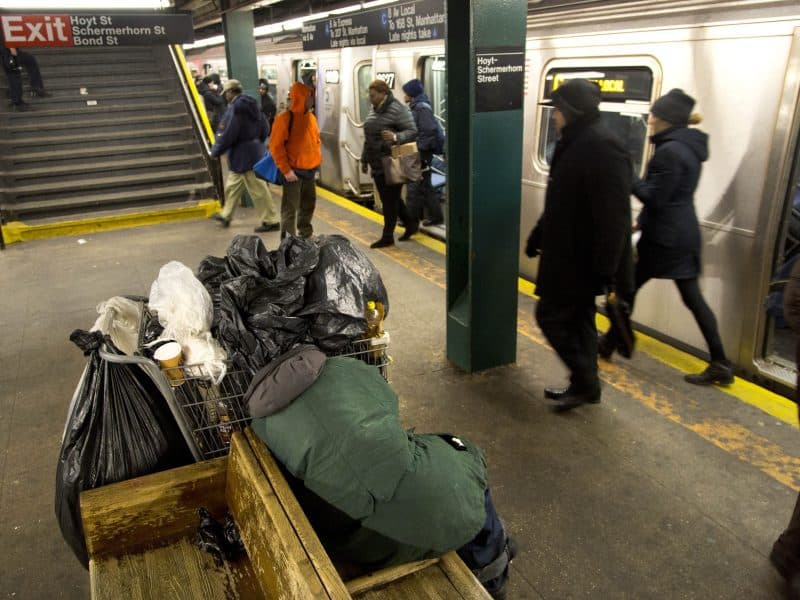
The woman was slumped over on a bench at the 34th Street-Herald Square station, one of New York City’s 472 subway stops. Since 2022, Mayor Eric Adams has directed law enforcement to take severely mentally ill people from public spaces into psychiatric hospitals – even if they’re not acting dangerously. Lisa Singh, a 53-year old psychiatric nurse, has discretion to remove such people under section 9.58 of the state’s mental hygiene code, if she finds they can’t meet their basic needs. The mayor’s forceful approach is in line with demands from the governor and now the president but has angered civil libertarians and mental health advocates, who say the city isn’t providing the long-term care people need. The debate centers on whether the approach is compassionate – enabling people to get help they need, or inhumane – taking away someone’s freedom but doing little to help them long-term.
On the platform, Singh and the rest of her team – five police officers and two homeless-outreach workers – huddled around the bench as Singh scanned the woman’s face, looking for clues as to what care she might need. She saw swelling around her left eye and a bump on her head, soiled clothing, several large tote bags and a container of raw rice that had spilled onto the platform. Washington Post writer Ruby Cramer and photographer Victor J. Blue documented the work of Singh’s team in an eye-opening report that follows the team from station to station.
Singh usually begins her clinical assessments with “Hi, I’m Lisa. I’m a nurse,” but the woman on the bench wasn’t speaking English. “I will just wait a little, and I will go,” the woman said in Cantonese, translated into English by the team’s NYPD supervisor, Capt. Hanjie Lu. The woman went on to say that it was morning, sometime around 8 a.m., that stores would be open soon and she was waiting here because she had hurt her leg.
“She believes right now it’s 8 in the morning?” Singh asked, though it was nearly 10 p.m. To Singh, her repeated references to it being morning suggested delusions. Two paramedics arrived. “I don’t want to,” the woman said in Cantonese, before officers struggled to place her on a stretcher. She began to scream for help, and officers restrained her with handcuffs, as a train screeched on the tracks and a man played the drums. Over the din, Singh overheard a paramedic saying to the woman on the stretcher: “I hate that I have to do this to you. I’m sorry. It’s not my decision.”
Although overall subway crime in New York is down, assaults have tripled since 2009. Since Singh joined the outreach team in September, a woman has died after being lit on fire on a train, and a man was pushed into the path of an oncoming train. The city has tripled the number of nurses at its agency for the homeless, sending some into the subways with the power to order involuntary removals of people with mental illness and hospitalize them for up to 72 hours. The NYPD’s transit chief, whose officers work alongside her, described her job as “finding the next person who’s going to push someone onto the tracks before they do.”
The vast majority of Singh’s conversations don’t end in involuntary commitment, but she has called dozens of 9.58s and learned how to gauge the “extreme circumstances” that call for one. Another day, she approached a man with three carts of belongings and a tarp on the floor. The man made clear that he didn’t need any help, and Singh noticed the tarp and the galoshes he wore on his feet – preparations for the rain outside, a clear sign he was taking steps to look out for himself. Whatever was going on in his life, this was not a 9.58.
New script for VA therapists: ‘I cannot guarantee complete confidentiality’
Mental health providers who have so far been spared from the Trump administration’s plan to cut 80,000 employees at the Department of Veterans Affairs face a new challenge. On Monday, many were required to return to office spaces which have been revamped into doorless cubicles – threatening privacy for clients as therapists conduct video sessions in spaces resembling call centers. The back-to-work orders include therapists who had been hired to work remotely, and many employees are still unsure about exactly where they’re supposed to go, and when. NPR interviewed clinicians at VA locations around the country and reports that panic, fear, uncertainty, anger, confusion and dysfunction continue, in part thanks to a massive, lightning-quick restructuring at the agency that Secretary Doug Collins calls an effort to root out waste.
Confidentiality is critical if veterans are to trust their therapists, and to feel secure in opening up about traumatic or sensitive experiences. It’s also hard to maintain in new environments. Regional leadership at one VA facility sent a memo, obtained by NPR, that offers a script for its therapists to read to patients: “Before we begin our session, I want to inform you that I am currently in a shared office space,” the script reads. “While I will do my utmost to maintain your privacy, I cannot guarantee complete confidentiality.”
In other Trump administration news:
Trump orders NIH to study “regret” and “detransition” among transgender children and adults: A directive from acting NIH Director Mark Memoli, obtained by NPR, says the National Institutes of Health must study the impact of “social transition and/or chemical and surgical mutilation” among people, especially children, who transition, citing requests from the White House and HHS Secretary Robert F. Kennedy Jr. “to get this moving.”
Medical experts and trans advocates say that language like “chemical and surgical mutilation” are loaded, non-scientific terms that have historically been used to stigmatize trans people. Many researchers say there’s ample existing evidence that few people who begin a gender transition regret it, and that the number who seek to reverse a transition is very low. Others disagree, pointing out that higher percentages of young people have come out as trans in recent years for reasons that are unclear. But the idea that the White House would dictate scientific research is distressing to many.
“What they’re looking for is a political answer not a scientific one,” says Adrian Shanker, who served as deputy assistant secretary for health policy at HHS under President Biden. “That should be an alarm for everyone who cares about the scientific integrity of the National Institutes of Health.”
16 states sue Trump administration over abrupt cancellation of $1 billion in school funding. One of the states, Pennsylvania, had been given an extension until March 2026 to spend $185 million for school mental health and other pandemic-related purposes. Then, on March 28, Education Secretary Linda McMahon notified states that the department had rescinded the extensions that very day. The Trump administration “is trying to renege on its commitments to our kids and leave Pennsylvania taxpayers holding the bag,” said Gov. Josh Shapiro
A low-cost, evidence-based model for reducing suicide risks and deaths
A large majority of patients who die by suicide have visited a primary care provider in the prior year, with almost half having done so in the prior month.
So begins a new report from Shatterproof and the Bowman Family Foundation that highlights a new finding: that a model for integrating mental health and substance use treatment into primary care – previously shown to improve patient outcomes in a wide range of conditions – can also lower the risk of suicide.
The Collaborative Care Model (CoCM), as it’s known, was developed in the 1990s to enable primary care clinicians to provide mental health and substance use care in their offices. It uses standardized screening tools, a patient registry to manage caseloads and track outcomes, and psychiatric consultants (typically virtual) to advise primary care providers. This reduces patients’ reliance on the availability of specialists and helps more patients than would be possible with traditional one-on-one sessions.
Three studies were cited in the report. One found that suicide risk scores were lowered in 56% of patients after they received CoCM treatment. Another found similar reductions in suicide risk, as well as significant declines in anxiety and depression. The third, sponsored by Kaiser Permanente and published in Annals of Internal Medicine, used elements of CoCM with 228,255 patients in 19 practices in Washington state. It found that suicide attempts and deaths combined were 25% less likely among people whose primary care visits used the CoCM model than among those in a control group who got “usual” treatment.
Suicide rates have risen 28% over the past two decades, according to CDC data, but have largely held steady for the past five years. In 2023, 49,316 people died by suicide (14.1 per 100,000 U.S. population).
To lower that number, the report recommends that primary care providers implement CoCM, that payers – including Medicaid – reimburse providers for it, and that regulators and accreditation organizations allow in-network CoCM services to count as mental health and substance use treatment. A webinar intended for physicians, policymakers and health plans about the model and the research findings is scheduled for May 8 at 2 p.m. Register for free here.
In other news…
The United Kingdom opened its first safe injection site in early January – a facility where users can inject themselves with their own drugs under the supervision of nurses.
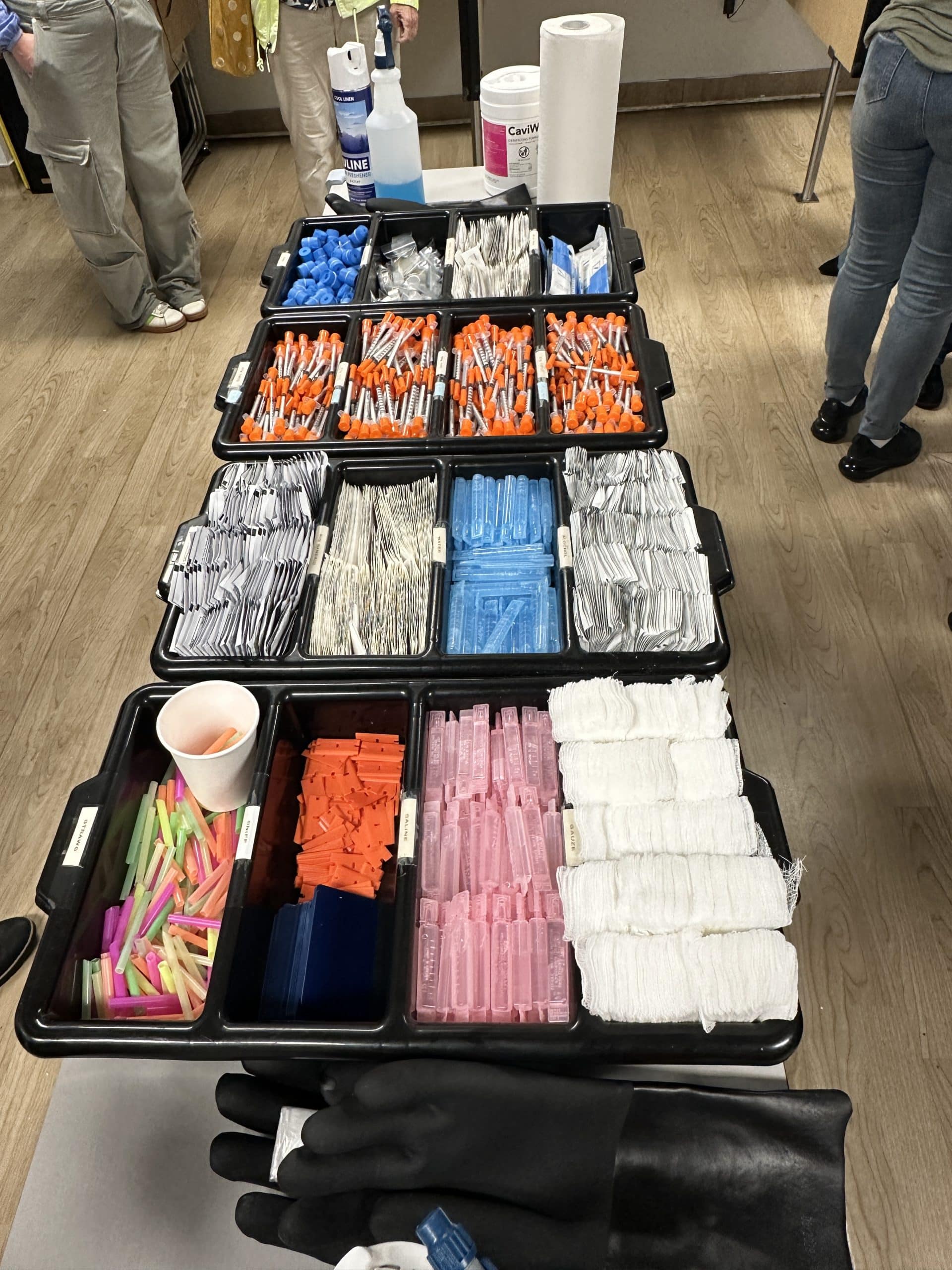
The nurses intervene in the event of an overdose and can help reduce the spread of blood-borne disease and refer people for services including housing. Similar sites operate in 18 other countries. The United States has two, both in Manhattan, operated by a nonprofit, OnPoint NYC.
The BBC spent two days inside the facility called The Thistle. Thirty minutes after the film crew arrived, a man in his 30s overdosed, and the staff rushed to administer naloxone and called paramedics.
Less than an hour later, the alarm sounded again for another man in his 30s. His overdose was also reversed with naloxone. There had been no alarms during the program’s first four weeks, then five in mid-February when the BBC visited – perhaps due to tainted street drugs. Sixteen overdoses took place in the center’s first 11 weeks. If staff had not been present, said service manager Lynn Macdonald, “people would not have survived.”
New Mexico is the third state to authorize a psilocybin access program, The Microdose newsletter reports, and the first to do so through legislation. Gov. Michelle Lujan Grisham last week signed the bill into law, after it passed the legislature with large bipartisan majorities. The New Mexico law makes it state-legal for clinicians, manufacturers and patients to grow, prescribe and use psilocybin for medical purposes. The law establishes a state agency and advisory board to create and oversee the program, which would start by 2027. Unlike voter-approved programs in Oregon and Colorado, the New Mexico effort requires approval from a licensed health care provider before patients can receive the psychedelic.
Eight frustrated Kaiser Permanente therapists staged a hunger strike to protest a lack of movement from the health-care giant after nearly six months on strike. More than 2,400 behavioral health workers at Kaiser Permanente in Southern California went on strike in October. Some have returned to their jobs, but hundreds remain on strike without pay. Workers say their wages and pensions are too low and are also pressing for more time between appointments. Many told NPR that they don’t have time to go to the bathroom or eat between clients. When a reporter visited last week, a few who hadn’t eaten sat quietly under a tent, conserving their energy and mixing electrolyte drinks – their only planned sustenance for five days – on what was then the second day of their hunger strike. They ended the fast last Friday evening, as planned, “with colleagues and clergy by their side,” according to the National Union of Healthcare Workers.
If you or someone you know is in crisis or experiencing suicidal thoughts, call or text 988 to reach the 988 Suicide & Crisis Lifeline and connect in English or Spanish. If you’re a veteran press 1. If you’re deaf or hard of hearing dial 711, then 988. Services are free and available 24/7.
Recent MindSite News Stories
NYC Stands Out for Tracking Prescribing of Psych Meds to Foster Youth. What Do Numbers Say?

Nearly one in four New York City foster youth is prescribed psychotropic medication, raising concerns about oversight and overmedication.
‘All I Did Was Sleep’: Despite Years of Data, States Fail to Rein in Psych Meds for Foster Youth
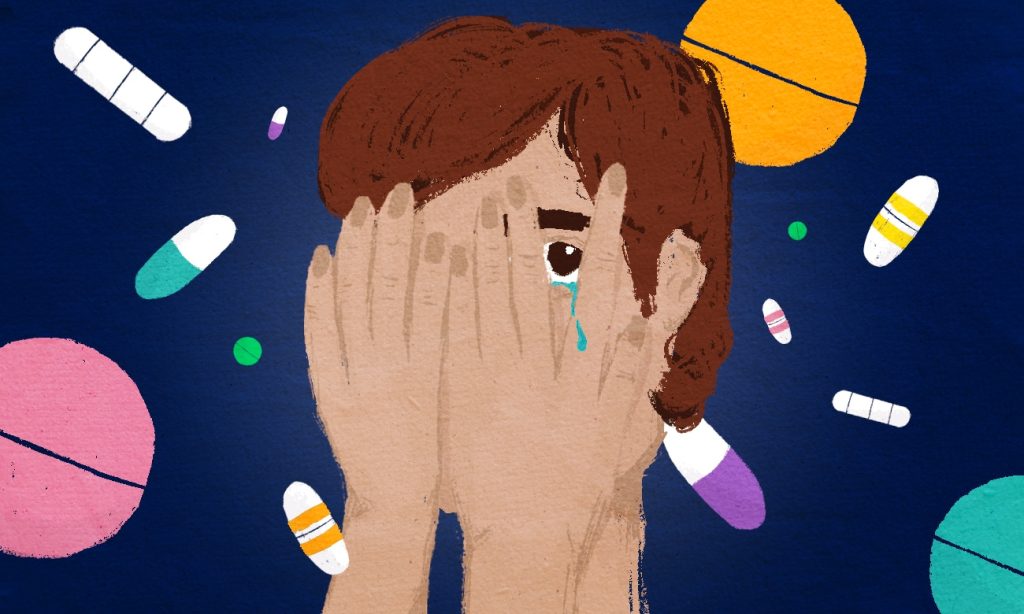
An investigation by The Imprint reveals overmedication and spotty enforcement of federal requirements that child welfare agencies monitor psychiatric prescriptions for foster youth.
A Father Fights Against Mental Health Stigma in Sports

Brian Monday is on a mission to help youth confront the stigma and silence around mental health struggles in sports.
If you’re not subscribed to MindSite News Daily, click here to sign up.
Support our mission to report on the workings and failings of the
mental health system in America and create a sense of national urgency to transform it.
For more frequent updates, follow us on Facebook, Twitter and Instagram:

The name “MindSite News” is used with the express permission of Mindsight Institute, an educational organization offering online learning and in-person workshops in the field of mental health and wellbeing. MindSite News and Mindsight Institute are separate, unaffiliated entities that are aligned in making science accessible and promoting mental health globally.
Copyright © 2021 MindSite News, All rights reserved.
You are receiving this email because you signed up at our website. Thank you for reading MindSite News.
mindsitenews.org

The name “MindSite News” is used with the express permission of Mindsight Institute, an educational organization offering online learning and in-person workshops in the field of mental health and wellbeing. MindSite News and Mindsight Institute are separate, unaffiliated entities that are aligned in making science accessible and promoting mental health globally.


Author

Related Articles

Kids Lonely, Isolated Without Friends To Play With in Person
As families connect virtually, it’s becoming easier for kids to play online. That makes it harder to organize real-life playdates.

Teens Close to Parents More Likely to Have Strong Social Network as Adults
New research finds that close relationships with parents during middle and high school can predict a strong social life two decades afterward.
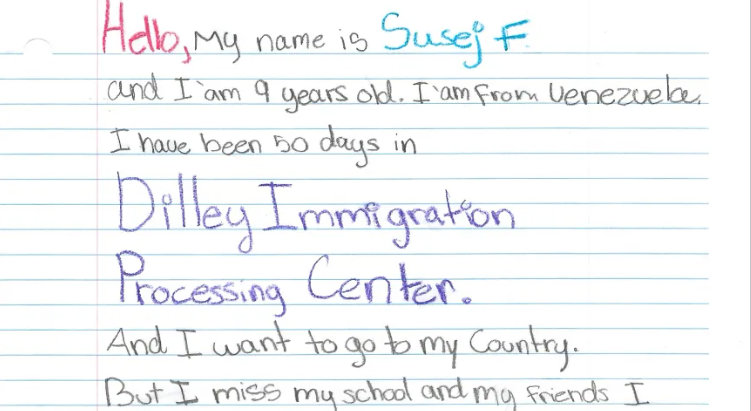
Health Organizations Condemn Traumatic ICE Raids, Family Separation
According to letters from children living in an ICE detention facility, living conditions are inhumane and their mental health is suffering.
