
Monitoring Psych Meds for California Foster Youth: ‘It’s the Job of All Who Are Involved’
Prescribing to foster youth of psychiatric medications has fallen since judges were tasked with oversight. Still, says one, “constant vigilance” is needed.

Some state judges oversee prescribing to foster youth ‘like a hawk,’ but critics says others are lax
This is the third part of an investigative series, Medicated in Foster Care: Who’s Looking Out? by The Imprint, a national nonprofit news outlet covering child welfare and youth justice. Sign up for The Imprint’s free newsletters here.
Part 3 of a series. Read part 1 here and part 2 here.
In California, foster youth prescribed psychiatric drugs are asked a series of questions: Do you know your diagnosis? Do you know the reason for the prescription? Are you aware of side effects? Do you have a trusted adult you can talk about medical issues with?
Under state law, the professionals managing their lives must pay attention to, and consider the answers.
“It is the job of all who are involved with the youth to engage and prepare the youth,” states a court form all parties must sign. “That includes medical professionals, caregivers, social workers, probation officers, attorneys, CASAs, and more. Achieving this goal is the responsibility of literally ‘the whole village’ affiliated with the youth.”
A decade ago, California strengthened policies to ensure kids in foster care did not receive dangerous doses and quantities of psychotropic drugs to soothe their wrenching emotions and past trauma.
Mood-altering medications can soothe an overwhelmed child, and tamp down depression and anxiety. But when misused and poorly managed, some types of these drugs can lead to further harm: Known side effects of antipsychotics, for example, include diabetes, obesity and chronic tremors and tics.
Under pressure from an aggressive advocacy campaign by the National Center for Youth Law and a hard-hitting investigative series by The Mercury News published in 2014, the state enacted six bills to provide stricter controls on how psychiatric medications are dispensed to foster children. The legislation calls for publicly available data on prescribing, and empowers judges, social workers and public health nurses to provide greater oversight. Also under state law, residential facilities must report the number of kids on psychiatric drugs, and the state’s medical board must monitor its licensed physicians who are doing the prescribing.
The oversight measures appear to have made a difference.
Getting good outcomes really boils down to what you know about the child.”
Dr. Ijeoma Ijeaku, California Academy of Child and Adolescent Psychiatry
A recent federal analysis of public insurance data found nearly half of all states prescribed psychiatric drugs to child welfare-involved youth at a rate of greater than 30%. California, by contrast, has a statewide average of 12.5%.
Over the past decade, the number of foster children on psychotropic medications has declined by 22% in California, which has coincided with a decrease in the number of children placed into foster care, according to state data.
One of the riskiest types of drugs for children showed the most remarkable decline, according to a 2022 study published in the Journal of Child and Adolescent Psychopharmacology. Researchers reported that between 2011 and 2020 – a period when the reforms were passed – antipsychotics prescribed to foster youth in the state also showed a steep drop. In 2011, 5,570 kids – or more than 7% of all foster children – received prescriptions for antipsychotics. In 2020, the proportion dropped to 3%.
California’s system is not without its flaws. A 2023 Inspector General audit conducted by the Department of Health and Human Services identified no court authorization record in 38% of cases examined at random. The federal review of psychotropic prescriptions for foster youth called on state and county officials to improve tracking procedures.
Former Los Angeles County foster youth Jennifer Myers, an advocate with the National Foster Youth Institute, spoke from experience about how urgently change was needed.
She recalled the effect of drugs she was given at age 10 for anxiety, depression, PTSD and “acting out” behaviors. The medication dropped her “into zombie mode” for the next four years, she said, a stupor that made it impossible to remember which schools she attended or the names of her teachers during that time.
“I felt like they were just throwing medicine at me,” said Myers, now 29.
Health and education passports
An Imprint investigation published Wednesday included a review of child welfare policy manuals in all 50 states. It found that although federal law has required guidelines for 12 years, at least 10 states still do not include rules for caregivers, caseworkers or medical providers. In states that do have policies about psychotropic use in foster care, a majority do not address widely known and critical safeguards: Informed consent from youth and their parents, secondary reviews of prescriptions and access to alternative methods for healing from trauma.
Kids in foster care shoulder the burden of childhood maltreatment and family separation. The psychiatric drugs they receive follow diagnoses such as serious depression, attention-deficit/hyperactivity disorder and post-traumatic stress disorder. Medication is also prescribed for children who are suicidal or who act out in violent and disruptive ways.
Many psychiatrists and clinicians say psychotropics – which include stimulants, antipsychotics, antidepressants and mood stabilizers – can be helpful for some foster youth. But many are prescribed “off-label” for diagnoses or age ranges they are not approved for, and there is little research on how they affect the developing brain.
Dr. Ijeoma Ijeaku, president of the California Academy of Child and Adolescent Psychiatry, said medications can play an important role for some foster youth.
But she stressed the importance of something the state has required for the past two years: an electronic “health and education passport” that aims to ensure prescribers know as much as possible about a foster child’s history before they write a script, including past medications and health history.
“Getting good outcomes really boils down to what you know about the child,” Ijeaku said in an interview.
Judges oversee California prescribing
California is among at least three states that require a judge’s oversight or approval for some or all psychotropics medications prescribed for kids in out-of-home care. Judicial review is a centerpiece of the oversight system here, where judges are expected to review and monitor psychotropic medications, in consultation with other professionals in the children’s lives and the youth themselves.
The heart of California’s oversight efforts is located in Los Angeles County, home to the nation’s largest locally run child welfare system. Roughly one third of all foster children in the state live here, currently 13,000 children and young adults through age 21.
At the Edmund D. Edelman Children’s Courthouse, a team of psychiatrists, nurses and social workers scrutinize all psychotropic drugs authorized by the court, reviewing potentially dangerous situations such as providing medications to kids age 5 or younger and those receiving three or more medications.
Recent data collected by the Los Angeles County Office of Child Protection indicates about 10% of foster children here are given psychotropic medications. Roughly 2% have received antipsychotic medications, which is below the state’s current rate of 3.5%. Roughly 42% of foster youth prescribed psychotropic medications are taking two or more, a rate that is below the state average of 48%.

Dependency Court Judge Mary Kelly said she’s impressed with Los Angeles County’s oversight system and believes that for the most part, the Superior Court is able to ensure foster children are prescribed psychotropic drugs only when necessary.
Kelly, who worked as a psychiatric nurse before becoming a dependency court judge seven years ago, said continual monitoring of medications is necessary to prevent harmful side effects of these potent psychoactive drugs. She’s seen, for example, how the antipsychotic drug risperidone can cause some boys to grow breasts.
In Los Angeles County, the Department of Mental Health plays a critical oversight role in protecting foster youth, flagging questionable prescriptions and interpreting lab results. The role of judges, she added, is to do more than just approve medications.
Kelly wants to understand why a medication has been ordered, who is requesting it and whether it matches up with a child’s diagnosis.
“I always inquire about what the situation is like at the home they’re living in,” she said. “Are they in a room with a bunch of other kids? If it’s because of a school issue, you want to know what’s the behavior in the classroom. It’s our job to understand what’s going on.”
How it works in LA
The process in Los Angeles County begins with a Psychotropic Medication Authorization Form filed with the juvenile court. Judges must rule on the medication request within seven days, unless doctors indicate it involves a life-threatening situation.
During that time, staff from the county’s Department of Mental Health review the request and make recommendations to the court about whether it should be approved, denied or modified, and whether a hearing is needed to discuss it. Children’s attorneys and court-appointed special advocates also have an opportunity to weigh in.
“It is the job of all who are involved with the youth to engage and prepare the youth. … Achieving this goal is the responsibility of literally ‘the whole village’ affiliated with the youth.”
From California court form for youth given psychotropic medication
Dr. Hanu Damerla, a psychiatrist who chairs the Department of Mental Health’s psychotropic medications committee for children and adolescents, said this group of psychiatrists looks at all requests. Members can provide a second opinion, as in cases of very young children, or when files lack information about symptoms and diagnosis. Some combinations of drugs are automatically flagged for review.
“Just like in many other areas of law, judges depend on experts to provide them with additional information so they can provide a reasonable determination,” Damerla said. “We provide the judicial officer with context and they make the ruling.”
Once the medication is approved, the judge asks for a report in 45 days regarding how a child is responding to the drugs. After six months, a new psychotropic authorization request must be made.
Blakely Hamilton is an attorney who works on foster youth’s mental health needs for the Children’s Law Center of California. Her firm represents roughly 20,000 foster children in Los Angeles County, where a pioneering judge, Michael Nash, began stepping up local oversight more than 30 years ago, well before the state caught on.
The role of the judge isn’t just to be a rubber stamp. These protocols are meaningless unless everybody involved with that child is paying careful attention to this process, for every single child.”
Judge Michael Nash
Hamilton described the challenges of caring for children’s psychological needs in foster care, where they move frequently between homes, schools, caregivers and medical providers. Given that steady upheaval, the local court protocols have helped “nudge the system in the right direction” when it comes to prescription oversight.
“There are definitely times when our kids benefit from medication – whether that’s so they’re able to function in a classroom setting, or they’re able to engage with their therapist and sit for a 45-minute session, or they have behaviors that are really difficult to manage,” Hamilton said.
But she added that medications should often be accompanied by therapy; “wraparound” services supporting caregivers, teachers and family members; enrichment activities and meaningful connections to close and caring adults in a child’s life.
L.A County’s system has been shaped by state legislation, but also a set of policies spearheaded by Nash, who retired as presiding judge from the dependency court in 2015 and now heads the county’s Office of Child Protection. For about a decade, Nash has convened regular meetings with a group of attorneys, officials and social workers with the goal of monitoring psychotropic drug use and ensuring local protocols are followed.
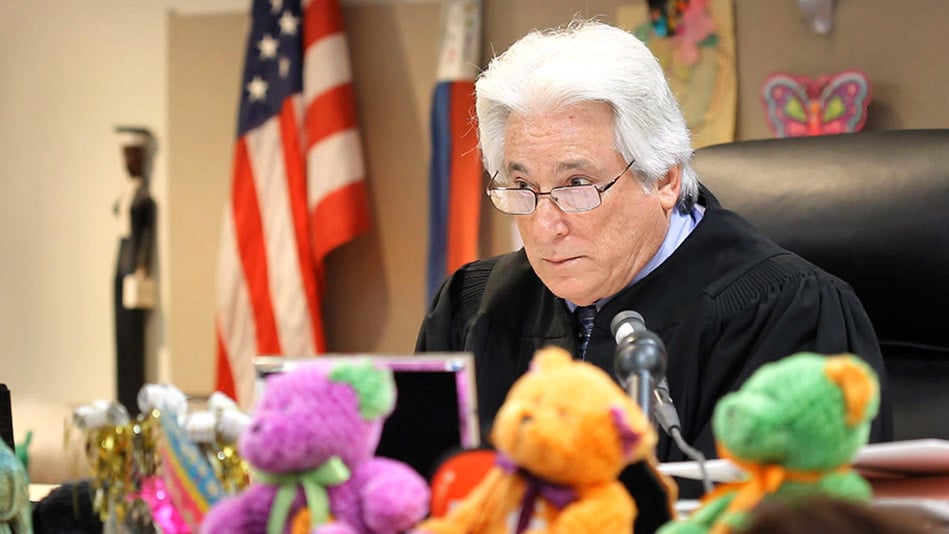
Nash described this work as part of a need to “watch these children like a hawk.” His zeal dates back decades to his time behind the bench when Nash first learned of disturbing examples of inappropriate prescribing. One psychiatrist inadvertently prescribed drugs to a 2-year-old for an incorrect diagnosis of oppositional defiant disorder. In another case, ADHD medications were prescribed for a child to pay better attention in class, even though a social worker’s report described him as excelling in school without the drugs.
Nash said he wondered how many more children were given psychiatric medications under questionable circumstances. That led to Los Angeles County beginning to track the numbers, and eventually to a California law requiring the state to do the same.
The data is now publicly available on a website managed by a University of California, Berkeley team, and can be sorted by age, race, region, placement type, number of drugs and even type of medication.
Not all agree on court oversight of meds
Not everybody sees L.A.’s court monitoring of psychotropics as a success.
Los Angeles County psychiatrist Dr. George Fouras has worked with foster youth in multiple county mental health departments and previously served as co-chair of the American Academy of Pediatrics’ Council on Foster Care Adoption and Kinship Care. In practice, he said, judicial oversight is “often poor.” Judges sign off on some powerful medications with too little scrutiny, he said. Other times they don’t move fast enough to approve drugs that could help children adapt to new homes and schools.
“Courts are slow by design, and medicine doesn’t work that way,” Fouras said.
He described the struggles of a 6-year-old boy who was “floundering” in kindergarten. If the child’s caregiver had private insurance, Fouras said he could have provided the boy with medication that would have enabled him to pay attention in class within a day.
Instead, Fouras said he had to wait for six weeks for the boy’s prescription to be approved in court, all while he was getting little out of his time in school. While that case occurred in a neighboring Southern California county, Fouras said the issue is symptomatic of slow processes that aren’t nimble enough to help foster children in crisis.
“Bureaucracy has become more important than the delivery of appropriate care to the youth of California,” Fouras said. “The system is well-meaning and well-intentioned, but the implementation has been a complete failure.”
Another critic is Los Angeles Dependency Lawyers Director Amy Einstein. She said while L.A. County has done well to limit psychotropic medications for foster children, a glaring problem remains: Parents battling to reunify are not given adequate opportunity to participate in the drug approval process.
Einstein said her clients typically do play a role in education or physical health care decisions, and they’re able to meaningfully weigh in on their child’s lives in those realms. But that access is not available for children’s mental health care, she added, and parents temporarily separated from their children are not consulted about ways to alleviate behavioral issues.
What’s more, when medications are authorized, parents are not easily provided with information about which drugs their kids are taking and why. They must receive a form in the mail, and send it back within seven days if they have any objections. But appeals are rarely heard by the courts, Einstein said.
Bureaucracy has become more important than the delivery of appropriate care to the youth of California. The system is well-meaning and well-intentioned, but the implementation has been a complete failure.”
Dr. George Fouras, psychiatrist
Keeping parents informed might lead to better health outcomes for their children and improve the likelihood of reunification, she and other parent advocates say.
“The entire process is usually stacked against the parents’ participation or input,” Einstein said. “It just puts our clients in a really bad position.”
Nash contends L.A. County currently has “probably one of the best” policies in the country to ensure psychotropic medication oversight.
But he, too, acknowledged the system’s limitations. Judges must actively monitor the prescriptions and be able to push back on some medication recommendations, even though “there aren’t many psychiatrists or psychologists on the bench,” Nash said. Constant vigilance and communication with other parties to the court is needed to ensure foster children are being treated with medication for legitimate diagnoses and “aren’t just being used to turn these kids into zombies.”
In short, Nash added, “The role of the judge isn’t just to be a rubber stamp. These protocols are meaningless unless everybody involved with that child is paying careful attention to this process – for every single child.”
Michael Fitzgerald contributed to this report.
The name “MindSite News” is used with the express permission of Mindsight Institute, an educational organization offering online learning and in-person workshops in the field of mental health and wellbeing. MindSite News and Mindsight Institute are separate, unaffiliated entities that are aligned in making science accessible and promoting mental health globally.

Author

Related Articles
Collateral Damage: The Emotional Toll of Trump’s Immigration Policies on Asian Children and Families
An investigation into the trauma caused by ICE and its potential long-term harm in Asian youth.

Troubled Teen Industry Rocked by Lawsuits, Sexual Assault Charges
One of the nation’s largest behavioral health hospital chains continues to face legal scrutiny for alleged patient abuse and negligence.

Despite Crisis Training for Mental Health Emergencies, Many Chicago Police Officers Still Resort to Force
Last year, 169 police officers who received crisis training used force at least once during a mental health-related incident in Chicago.
