
Immigrant Youth Need Mental Health Support as Raids Continue
Children who are afraid may act out, shut down or skip school for fear of being deported.

April 17, 2025
By Courtney Wise

Greetings, MindSite News Readers. In today’s Daily, immigrant youth weighed down by ICE raids need more mental health support, and one mother shares her perspective that disability has made her a better caregiver. And Ada Limón would like us all to read – and write — more poetry: Check out some of the poems being circulated during National Poetry Month this April.
But first, a happy note:
How about an emotional support bird that fits in your backpack? Participants at the Knitting Tree LA spend time crafting chickens, tending to their emotional health in the process. CBS News has more in this 2-minute story.

Continued ICE onslaught hurts youth mental health
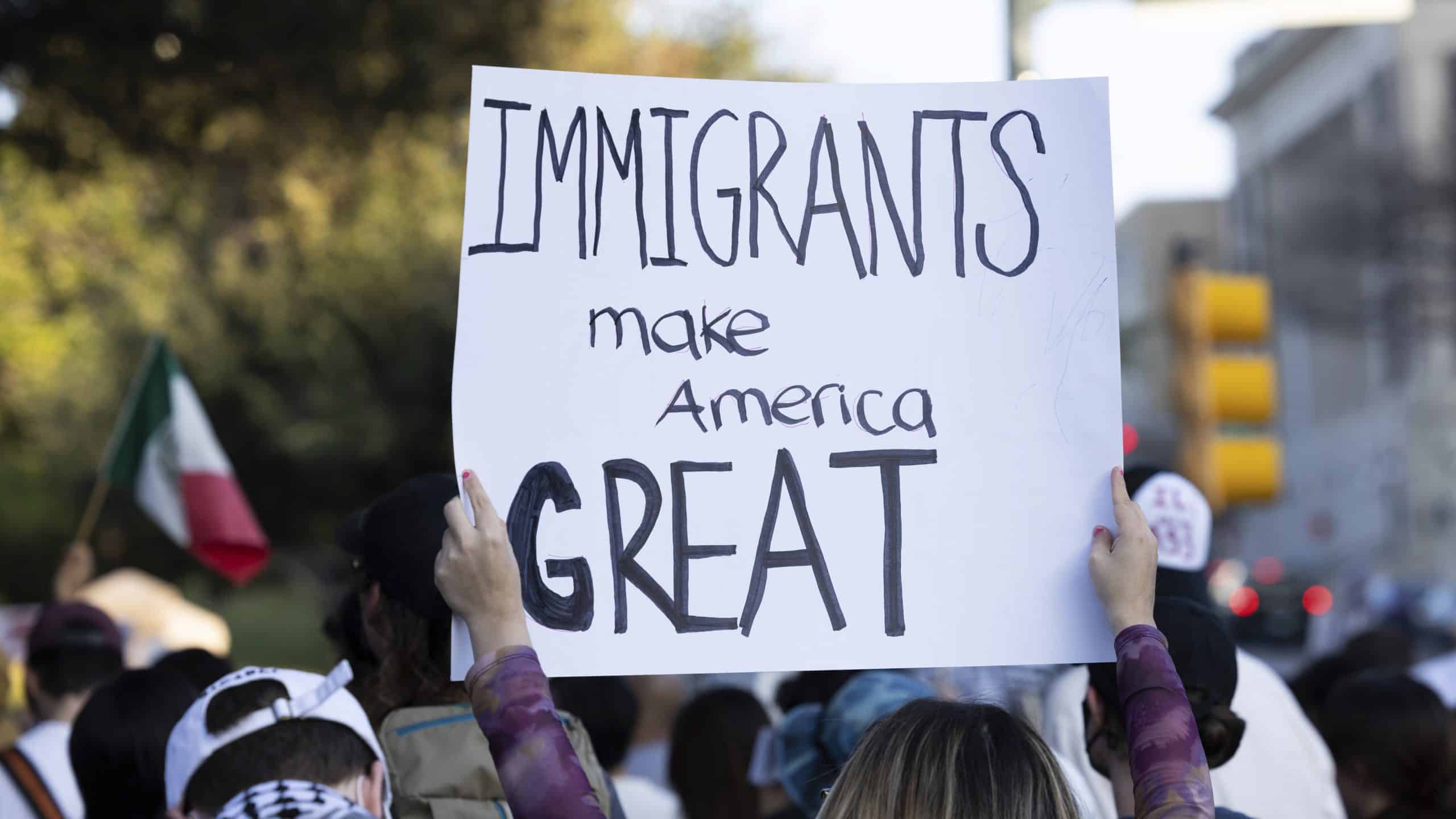
A cursory glance at Convivir Colorado’s Arts and Conversation Series workshop in Denver won’t reveal anything amiss. The teen participants gather and chat as always, munching on snacks as they await instructions from their teacher. What they draw makes it clear: Vans with ICE marked on the side and armed men near houses; skylines and downtowns overlaid with a giant X. Their greatest fears are wrongful persecution for being from immigrant families.
None of the 16 students in the session had lost a parent to deportation, but distress over the possibility remains, explained Tania Chairez, founder of the program designed to help youth navigate migration-related trauma. They all live within one mile of a series of apartments ICE targeted earlier in the year for raids, she told The Denver Post. “They’re sort of helping each other out,” Chairez said.
In one conversation, they discussed why people, including other longtime immigrants, look down on newer migrants. Thirteen year old Camila Chavez said she believes it’s due to their own fears of being stereotyped as people who live here and take up resources, even though they’re working. “We put pressure on each other to be perfect, so when one of us messes up, we think it’s all going to fall apart,” she added.
More immigrant and first-generation youth are in need of mental health support as the Trump Administration advances its ugly deportation agenda, experts say. “I’ve had kids contacting me who are full-fledged American citizens, wanting to know, ‘Can my citizenship be revoked?’ ” said Tessa Nelson, youth program manager at the Spring Institute for Intercultural Learning.
Nelson recently had to intervene when a man unleashed a verbal tirade against a brown-skinned child at the zoo, believing the boy to be an undocumented Latino. He wasn’t. The man “just saw the color of a kid’s skin and decided to yell at an 8-year-old,” she said.
Though children tend to be resilient, adults need to understand that children who are afraid – or managing a family separation, as many are – may act out or shut down, said school counselor Lisyuri Gallardo. They might also miss school due to fear. “There were days (around the raids) when 50% of the students were not here,” she said. They need patience and support. Maintaining routine and consistency is one way to help.
Connecting children and their families to after-school and extracurricular activities is also good, especially if the group can offer a sense of belonging. Doing this can be tricky, though, said Olivia Shadid, a psychiatry professor at the University of New Mexico. People who are scared tend to isolate and withdraw from social interactions, further threatening their mental health. Empowering them to navigate a crisis – such as rehearing how to refuse to answer questions without a parent present – is effective, Nelson said. “That helps you feel more in control of an uncontrollable circumstance.”
How disability prepped one mom for parenthood
It didn’t take long for Jessica Slice to realize she was having an easier time navigating life with a newborn than everyone else in her weekly mommy group. At first, she assumed it was because her body wasn’t recovering from birth – Slice was fostering her daughter at the time, who she’d eventually adopt. In the years since, she’s begun to suspect that her lived experience as a disabled person is what’s helped her adjust. “One way to think about the first week of parenthood is as a time when a large portion of a family is or becomes temporarily disabled,” she wrote in The Atlantic.
The very idea of relying on others for some basic needs is terrifying. Folks are unaccustomed to that – it’s why people tend to fear disability. But a new baby requires continuous attention, meaning the parent caring for them does too – there are a lot of sudden needs that need meeting.“Disabled people have years of figuring out how to get along,” said Lisa Iezzoni, a Harvard professor who researches disabled-health-care access and is disabled herself. “Every day, we navigate a world not designed for us. It’s no wonder we would be particularly well equipped to navigate something new, like parenthood.”
Disability opens a path, from an individualistic mindset to one turned toward community and resilience. Living with disability means making plans, but understanding that something, at some point, will go wrong. It comes with daily reminders that obstacles don’t mean things are falling apart, or are going to. It fosters an appreciation for imperfection – something that’s valuable for any parent.
Getting it all right is an impossibility. Expecting to master parenting alone is futile. What does work is submitting to help where you need it, and reciprocating with support for others where you are strong. “This vision of parenthood may seem less aspirational,” Slice wrote. “But flexibility and compassion are vital when your body is sore from labor, no one is sleeping through the night, and your family dynamic has shifted beyond recognition.” Giving compassion to yourself, she said, is giving your baby what they need.
In other news…
Several states are suing the Trump Administration in an attempt to reclaim funds revoked by the US Department of Education. In a letter dated March 28, Education Secretary Linda McMahon told state education leaders that the government would no longer honor Biden-era extensions of COVID relief grants. One of the 16 states filing the suit, in addition to Washington D.C., is California, where $200 million or so is at stake. The state’s Attorney General, Rob Bonta, doesn’t feel the government has the authority to rescind that funding. “When the president breaks the law, we sue. It’s that simple,” Bonta said. “And he’s broken the law again, unfortunately, this time harming children in the process.”
Ada Limón wants us to encounter poetry everywhere: In a recent episode of Modern Love from the New York Times, the US poet laureate asserts that poetry brings us closer to our emotions, making us more present in life. “I think we’d all be better off if we encountered poetry on a regular basis, because it reminds us to feel – that we’re not supposed to numb out, that the weeping and the rage and the grief leads to feeling alive.” If you’ve been to a national park recently, you might have seen one of her projects in the role – she’s been putting poems on picnic tables all over the country.
If you or someone you know is in crisis or experiencing suicidal thoughts, call or text 988 to reach the 988 Suicide & Crisis Lifeline and connect in English or Spanish. If you’re a veteran press 1. If you’re deaf or hard of hearing dial 711, then 988. Services are free and available 24/7.
Recent MindSite News Stories
Monitoring Psych Meds for California Foster Youth: ‘It’s the Job of All Who Are Involved’

Prescribing to foster youth of psychiatric medications has fallen since judges were tasked with oversight. Still, says one, “constant vigilance” is needed.
New York City Stands Out for Tracking Psych Med Prescribing to Foster Youth. What Do Numbers Show?

Nearly one in four New York City foster youth is prescribed psychotropic medication, raising concerns about oversight and overmedication.
‘All I Did Was Sleep’: Despite Years of Damning Reports, States Fail to Rein in Psych Meds for Foster Youth
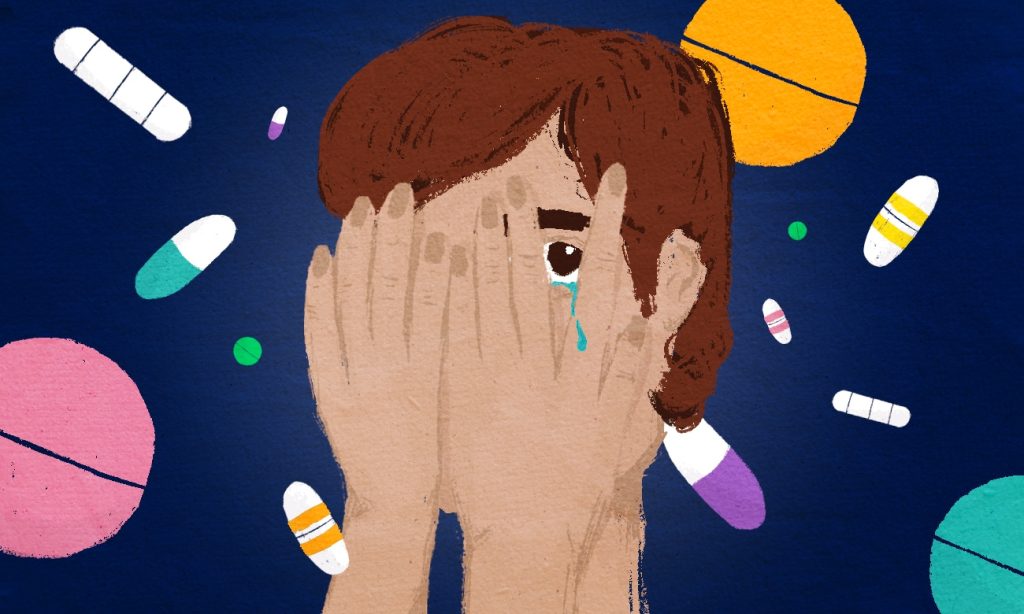
An investigation by The Imprint reveals overmedication and spotty enforcement of federal requirements that child welfare agencies monitor psychiatric prescriptions for foster youth.
If you’re not subscribed to MindSite News Daily, click here to sign up.
Support our mission to report on the workings and failings of the
mental health system in America and create a sense of national urgency to transform it.
For more frequent updates, follow us on Facebook, Twitter and Instagram:

The name “MindSite News” is used with the express permission of Mindsight Institute, an educational organization offering online learning and in-person workshops in the field of mental health and wellbeing. MindSite News and Mindsight Institute are separate, unaffiliated entities that are aligned in making science accessible and promoting mental health globally.
Copyright © 2021 MindSite News, All rights reserved.
You are receiving this email because you signed up at our website. Thank you for reading MindSite News.
mindsitenews.org

The name “MindSite News” is used with the express permission of Mindsight Institute, an educational organization offering online learning and in-person workshops in the field of mental health and wellbeing. MindSite News and Mindsight Institute are separate, unaffiliated entities that are aligned in making science accessible and promoting mental health globally.


Author

Related Articles
Family of 6 in ICE Detention for 9 Months ‘Dying on the Inside’
After nine months in Dilley Immigration Processing Center, “we forgot what it feels like to be free,” a recent high school graduate wrote.
Generation Cancer: Millennials Struggle With Death at an Early Age
More young adults are being diagnosed with cancer. Even for those who survive, the experience can be destabilizing and isolating.

Millennials Weigh Having Children On Their Own Terms
Not having children is also a valid path, and one that everyone should consider, Merle Bombardieri argues in her 1981 book.
