‘A Public Health Emergency’: The Crusade to Assess Trump’s Mental Fitness for Office
Dr. Bandy X. Lee says Trump has deteriorated, and the level of danger has vastly increased — especially because his symptoms have spread.

Psychiatrist Bandy X. Lee on Trump and dementia – and why she believes his mental decline poses a danger to democracy
Update: Lee is starting a new organization called Physicians for Global Survival. “In 2025, we are closer than ever to a precipice of human disaster,” she wrote recently in her Substack column. “The extreme dangers of nuclear, biological, and space warfare continue to escalate, while global climate destruction is no longer a distant concern but an immediate reality…We can no longer wait for the next world war to prompt the creation of a new, life-affirming world order. In the past, atomic scientists led the charge. Now, scientists and healers of the human mind must step forward.” To join or learn more about this new organization, read her post here.
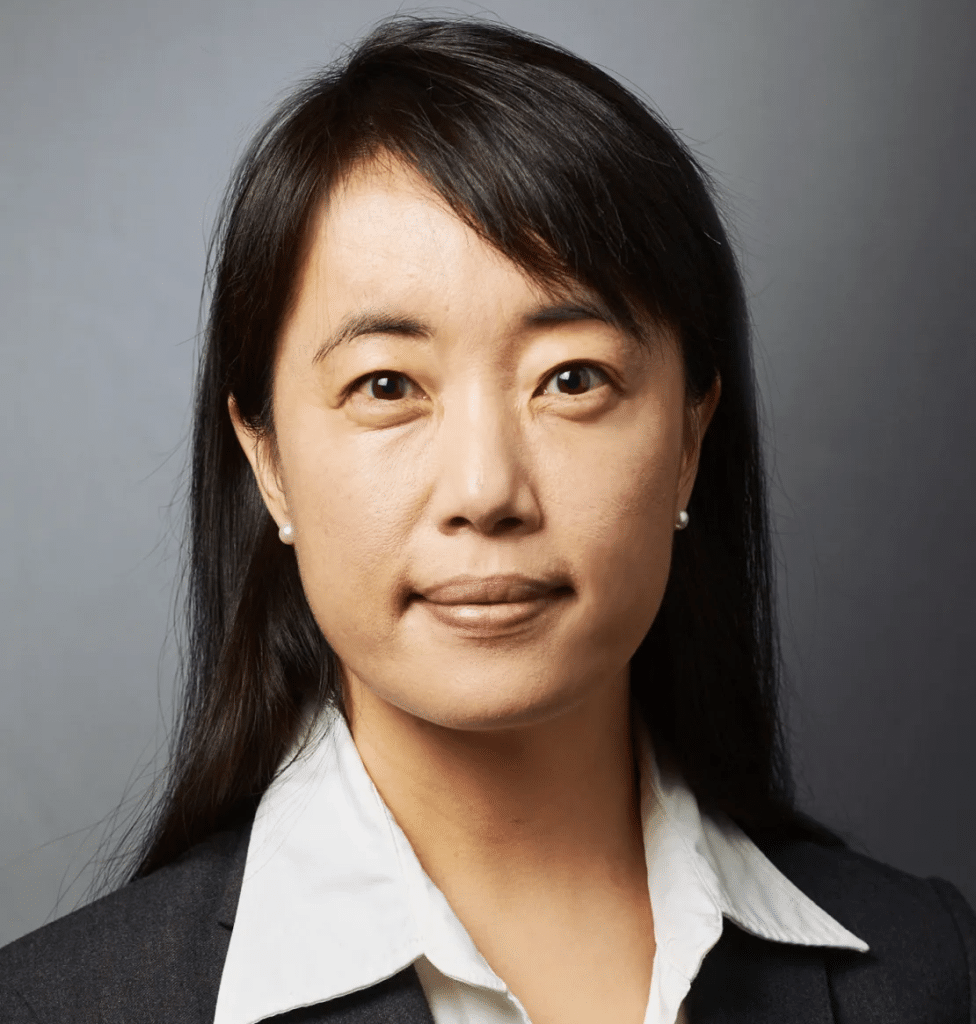
Eight years ago, psychiatrist and prominent violence expert Bandy X. Lee and a cadre of mental health professionals issued a dire warning: President Donald Trump was mentally unfit to remain in the presidency and his doing so amounted to a public health crisis. Today, she continues to sound the alarm despite ongoing harassment and death threats.
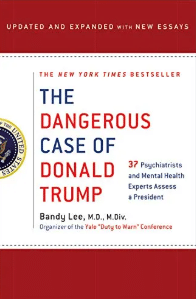
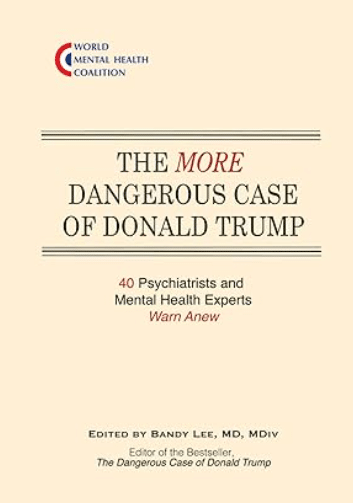
“Perhaps the oddest experience in my career as a psychiatrist has been to find that the only people not allowed to speak about an issue are those who know the most about it,” she wrote in her introduction to the 2017 book she organized and edited, The Dangerous Case of Donald Trump: 27 Psychiatrists and Mental Health Experts Assess a President, which has been continually updated and republished.
Lee was talking about a 2017 directive from the American Psychiatric Association telling its members it was “unacceptable and unethical” to talk about Donald Trump’s mental capacity for office. Mental health professionals like Lee and others were worrying long about that before he was elected: In the months before Trump was elected to his first term, an online warning about the dangers of Trumpism was published with more than 2,200 signatures. At around the same time, another book from academics and therapists came out: a collection of essays called A Clear and Present Danger: Narcissism in the Era of Donald Trump.
The APA’s unexpected directive was an expansion of its so-called Goldwater rule, which prohibited members of the APA – an organization that Dr. Lee had left years earlier – from diagnosing or giving a professional opinion about public figures they have not personally examined, which many current mental health professionals considered a gag order. The APA had issued the original guideline in 1973, some years after more than 1,000 psychiatrists publicly shared their views that Barry Goldwater, the 1964 Republican presidential candidate, was psychologically unfit to serve as president, with many offering opinions on his probable psychiatric diagnosis.
But Lee says there is a big difference between sharing a diagnosis of a candidate, which is private information, and warning the public of a candidate’s mental unfitness for office, which mental health experts are best qualified to do. Psychiatrists supporting Lee and the other authors of The Dangerous Case of Donald Trump pointed to other declarations of professional ethics: the Declaration of Geneva, which includes a pledge not to use medical knowledge “to violate human rights and civil liberties, even under threat,” and the American Medical Association’s “Declaration of Professional Responsibility” that physicians have an obligation to “educate the public and polity about present and future threats to the health of humanity.”
Also, psychiatrists are allowed to disregard doctor-patient confidentiality if they have reason to believe a patient is about to harm a third party. The Central Intelligence Agency has long ordered up psychiatric evaluations of world leaders who have not been examined in person. And when judges ask for a psychiatric assessment of someone a psychiatrist hasn’t met, that profile depends on materials collected by other people.
The APA’s expansion of the Goldwater rule – which effectively barred its own members from commenting on Trump’s mental fitness for office – was stunning to Dr. Lee, a forensic psychiatrist and leading expert on violence who had served as an assistant clinical professor in the law and psychiatry department at Yale for 17 years. Texts and emails had poured into her office after the election from patient advocates, lawyers, students, civil servants and others terrified about Trump’s propensity for fomenting violence. In April, 2017 she organized an ethics conference at the Yale School of Medicine on whether attendees had a professional duty to educate and warn the public (attendees decided they did).
During Trump’s first presidency, Lee briefed concerned members of Congress who believed he posed a danger to democracy, as well as some Cabinet-level members who were in a position to use the 25th Amendment to have Trump examined and possibly removed from office. In 2019, she organized a conference at the National Press Club on impeachment and worked with other mental health experts to propose a process for evaluating the mental capacity of presidents.
Still, APA heavyweights continued to criticize Lee and others for their warnings about Trump. In 2020, Yale University declined to renew her contract for alleged violations of the Goldwater rule after lawyer and Trump advocate Alan Dershowitz filed a complaint with the university about a tweet from Lee. (In it, she said “almost all of Trump’s followers” had a “shared psychosis” with him and that Dershowitz had “likely wholly taken on Trump’s symptoms by contagion.”) Lee sued for breach of contract and accused the university of violating academic freedom and abandoning its principles. She had extensive support from other mental health professionals and free speech advocates, and Harvard Medical School immediately offered her a position on its faculty; however, the suit was dismissed after the judge was reassigned without explanation. Meanwhile, Lee received so many death threats from Trump supporters and others that she wound up going into hiding for a month.
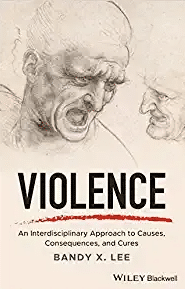
But Lee soon re-emerged and is currently president of the World Mental Health Coalition, the largest professional organization to address the problem of dangerous leadership and its contribution to a “mental health pandemic.” As of 2025, she has written or co-authored 17 academic books, including a comprehensive textbook on violence, and more than 100 scientific papers; she also has a regular column on Substack. She continues her “duty to warn” about the dangers Trump poses to the nation and the world.
This MindSite News interview has been edited for length and clarity.
Diana Hembree: As a forensic psychiatrist, you worked with gang leaders and violent offenders in maximum security prisons for years. You said you see frightening similarities to them in Donald Trump. What are some of those traits?
Bandy X. Lee, psychiatrist, professor and author: First, there was the verbal, sexual, and psychological aggression, as well as the stoking of violence. Then, in his interaction with his followers, he displayed a facility with manipulation … exploiting others’ psychological vulnerabilities in order to turn them into his instruments or pawns.
The most dangerous individuals are not those who lash out themselves, but those who can condition others to do their bidding. Once their followers began doing that, there would be almost no limit to which they would sacrifice themselves to follow their “leader,” because he demands that they do so. I have likened this relationship to that of street gang members and child soldiers, who are commanded to kill a police officer or to sacrifice their parents in order to prove their loyalty. The “leaders” command this, in part, so that there will be no turning back, since admitting that they made a mistake would be far more painful than continuing to do what they are told and to receive the ringleader’s protection.
In a sense, the president did this during the Covid-19 pandemic, when during the height of lethal risk, he ordered his subordinates and followers not to wear masks and to pack into crowded stadiums. They had to choose him over protecting their lives—and they disproportionately died. Yet, each person is more eager than the next to prove their loyalty to him.
The fragility of sense of self in the “leader” determines how beholden his followers will need to be for him, in his demands for extreme obedience—much like in a cult or an abusive household, there is little difference in the psychological dynamics. This fragility manifests in many ways: a requirement of the utmost adulation from those around him, a paranoid belief that others are “mocking” him, and perpetual feelings of vengeance for perceived slights, which make one prone to lashing out with violence at any moment.
As early as Donald Trump’s first presidential run, you said that he was a danger to America and the world. What evidence did you have for those concerns back then?
By that time, I had two decades of experience treating violent offenders and designing programs for violence prevention in maximum-security jails and prisons. I was also consulting with governments around the world on reducing community and mass violence, including civil unrest, through the application of scientific scholarship and public health methods. One of the courses I taught at Yale Law School for 17 years was Immigration Legal Services, in which the students represented those seeking asylum from violent, autocratic regimes.
Initially, I did not pay much attention to the presidential campaign, as I was not very interested in domestic politics. But when I happened to catch the then-candidate on television, I realized that he was not merely a political figure but a psychological danger to society. This is why I stated, from the start, that he was a “public health emergency.”
What evidence did I base this on? First, he exhibited verbal aggression and boasted about sexual assaults, which indicated that he was likely to be aggressive in other ways—psychologically, physically, and politically. Second, he stoked violence at his rallies, offering to pay legal fees for those who would “knock the crap” out of protesters, and this kind of rhetoric would increase violence in society, regardless of his actual mental state. Third, his interaction with his followers was reflective of sociopathy and extremely familiar to me, having worked with street gangs and violent offenders in prisons.
How has your thinking about Trump changed since his first presidency?
I have never veered from my initial assessment [in 2016]. I had by then seen approximately a thousand individuals like him, from my specializing in treating violent behavior.
In particular, we have to assess dangerousness immediately and act as rapidly as possible to protect ourselves and others, the moment there are any signs, before entertaining any formal diagnosis. It is a quick assessment that every mental health professional must make with every person, at every encounter. If we are in a public place and see dangerousness for mental health reasons not being addressed, we do not have the choice to walk away. Like any other medical emergency, we are obligated to treat it.
Also, dangerousness has more to do with the situation than any individual diagnosis. You can intervene to make the situation better or worse. And giving power to this kind of individual was making things maximally worse.
During his 2024 campaign, Trump showed bizarre behaviors, including garbled speech and a Pennsylvania rally at which he put a stop to questions, declared that he and the audience would now have “a music” and then swayed in silence to recorded songs on stage for 39 minutes. Some psychiatrists have said this reflected a problem in his cognitive abilities. Could you comment on this and other unusual behaviors you and the World Mental Health Coalition have observed in Trump and what they indicate?
There is indeed a statement on cognitive concerns [about Trump] that the World Mental Health Coalition put out before the election, signed by fifty of the most renowned forensic psychiatrists, neuropsychiatrists, and dementia specialists in the country, and published on our web site.
We listed problems that included a deterioration in language skills, such as simpler vocabulary, incomplete and incoherent sentences, grammatical errors, and paraphasias (substituting words); impaired memory/recall, such as confabulation, where memory gaps are filled with false or fabricated details; and tangential thinking, where speech often drifts to unrelated topics in an erratic manner.

Other problems included inappropriate or vague statements that lack connection to reality; perseveration, where thoughts or ideas are repeated without a relevant trigger; rigidity in thinking, evidenced by an inability to adapt or revise opinions, often manifesting as “doubling down”; amplification of maladaptive personality traits, such as paranoid (invented threats), narcissistic (excessive focus on self), or antisocial (criminal and dangerous) personality traits; disinhibition in speech, such as the frequent use of vulgar, profane language or hate speech; and disinhibition in behavior, such as impulsive decision-making or aggression and violence.
Cognitive problems and the high risk for dementia may be foremost in the public’s mind, since they are obvious, but they are not the most dangerous – in part precisely because they are obvious to laypersons. Although signs of dementia in him are serious, the most dangerous signs imperiling public safety and survival are the least perceptible. And this is why it was important to educate the public.
A 2022 Mother Jones article about you written after the Jan. 6 insurrection at the US Capitol said “the psychiatrist who warned that Donald Trump would unleash violence was absolutely right.” What in Trump’s psychological makeup and behavior led you to make that warning, and do you feel vindicated?
The level of Donald Trump’s psychological fragility determined the degree to which he would need to gather and beguile supporters around him – not through rational persuasion or actual accomplishment but through manipulation – and the degree he would resort to violence. Individuals of such instability are not able to set limits on themselves, and we failed to do that.
People have asked me frequently if I felt “vindicated,” since very early in the first Trump presidency, actually. But my motivation was never to be right but to stop the dangers. They have not been stopped, and therefore it is not much consolation that people consider me vindicated. And what does it mean when, even after mental health experts have correctly predicted the dangerous outcomes every step of the way for almost a decade—sometimes predicting specific actions within days—we still are not called upon for advice
Because mental health is a young science, it is easy for people to believe that they know all there is to know, that they do not need experts, and that this is a “subjective” field. I would contend that it is an area of the greatest complexity, since we are dealing with human beings—and yet our society is playing Russian roulette with our species’ survival!
In the The Dangerous Case of Donald Trump, psychiatrists and psychologists said they felt that Trump showed signs and symptoms of malignant narcissism, a disorder that includes paranoia, sociopathy, and sadism. Could you describe the diagnosis you feel might best describe Trump?
You are correct to bring up malignant narcissism, which is technically not a diagnosis. Neither is psychopathy. These are more measures of dangerousness, and what matters most is whether Trump is dangerous to the public and whether he is unfit to be president.
On the Hare Psychopathy Checklist, a score if 30 out of 40 indicates dangerous levels of psychopathy, and Trump scored 36.
A panel of the most eminent psychiatrists in the country got together in June 2024 to do a dangerousness risk assessment before Trump’s sentencing in New York, and it included the highly reliable Hare Psychopathy Checklist. A score of 30 out of 40 indicates dangerous levels of psychopathy, and he scored 36. This means he has dangerous levels of symptoms such as glibness and superficiality, an exaggerated sense of self-worth, low frustration tolerance, pathological lying, lack of remorse, lack of empathy, a parasitic lifestyle, impulsivity, irresponsible behavior, and failure to accept responsibility for his own actions, among others. Since he is not only dangerous but dangerous to perhaps one of the highest possible degrees, we recommended maximal sentencing.
Dangerousness makes one automatically unfit for the presidency. Indeed, when another panel of top, independent, nongovernmental mental health experts from around the country gathered to perform a mental fitness evaluation in April 2019, when Special Counsel Robert Mueller’s report yielded the highest-quality data we could ask for, we found that he failed every criterion for mental fitness. This means that he is not only unfit for the U.S. presidency, but for any job.
These are issues of concern to mental health experts, with respect to our professional societal responsibility, and matters of great interest to the public—not diagnosis, which is a private affair. In fact, once you diagnose a person, you become his treater and therefore are no longer eligible to participate in an independent evaluation. These are some of the distinctions we were trying to make for the public.
Trump created the so-called Department of Governmental Efficiency, from which a handful of young tech engineers and Elon Musk – the world’s richest man and an unelected private citizen – are causing fear and chaos by dismantling federal agencies and firing tens of thousands of federal employees. As a psychiatrist, what do you make of Musk and his relationship with Trump?
First, the severity of symptoms in the president will preclude most rational explanations for his actions, and second, unfit “leaders” are generally more attracted to unfit appointees than fit ones.
There is one type of person developmentally wounded individuals will perpetually seek, and that is a parental figure. In a leader-follower relationship I call this “narcissistic symbiosis,” as I explain in my 2020 book, Profile of a Nation: Trump’s Mind, America’s Soul—in which I not only predicted a violent uprising after an election loss but stated that his “presidency” would not end with an election.
Narcissistic symbiosis means that there is a magnetic, “lock and key” attraction between narcissistically impaired leaders and narcissistically wounded followers. The “leaders” feed off the adoration of his followers, as the confirming and admiring responses help him to ward off intolerable feelings of worthlessness and inadequacy. To nourish his famished self, the “leader” continually displays a sense of grandeur, omnipotence, and strength, which evokes the adulation of his “ideal hungry” followers, who are in turn looking for a parental figure who will rescue them and take care of them.
“Trump is much deteriorated, and the level of danger has vastly increased—not only because his own expectations have expanded, and along with the grievance that reality is not matching up to them, but also because his symptoms have spread.”
We see this in an apparently two-way dynamic with Donald Trump and Elon Musk, where each idealizes the other as a parental figure for different reasons …The relationships he has are based on dominance and submission, and equality makes no sense to him.
What does Trump’s behavior tell you about his state of mind today, including his propensity for violence, and how is it different from his last presidency?
He is much deteriorated, and the level of danger has vastly increased—not only because his own expectations have expanded, and along with them the grievance that reality is not matching up to them, but also because his symptoms have spread. I describe this phenomenon in my 2024 book, The Psychology of Trump Contagion: An Existential Danger to American Democracy and All Humankind.
My work with violent street gangs, and bringing public health approaches to violence prevention, has helped me to see that a failure to contain the spread of symptoms resulting from a mentally impaired leader in an influential position has caused our descent into a “Death Spiral.” Now, we are imperiled not just by an unstable individual having sole command over thousands of thermonuclear arsenals that could destroy the planet many times over, but by a contagion of symptoms all over the nation and the world, such that much of the population has lost the ability to see anything wrong with it.
How have your warnings been received?
Three months after the publication of our 2017 bestselling book, The Dangerous Case of Donald Trump, we were the number one topic of national conversation. There is not a major news program I was not invited to. I was in fact impressed that mental health was treated as any other subject, and there seemed to be almost no hesitation in discussing it. Even Congress members were looking to us for solutions, stating that they needed us to “educate the public medically,” so that they could “intervene politically.” There was a major bill in Congress gaining ground for another body that could replace the cabinet in initiating the Twenty-Fifth Amendment, and this body would include psychiatrists and neurologists.
But everything came crashing down. The APA labeled us, without any evidence, as ‘armchair psychiatrists’ for speaking out publicly…about the dangers to the public. Its “Goldwater rule,” which not many psychiatrists even heard of before the Trump era, became a household phrase, and it was ingrained in people’s minds that mental health professionals were never to be heard from – and we disappeared from the public forum altogether.
Donald Trump is the most dangerous man in the world, and this is the most dangerous moment ever – because we allowed his pathology to magnify over time and because of the five thousand thermonuclear weapons he has at his disposal.
I warned that, if we did not have a mental health intervention for a primarily mental health issue, nothing else would work, and that came true, also: neither impeachment, prosecution, nor voting would take care of the problem.
You’ve warned that Donald Trump has moved the Doomsday clock closer to midnight, and that he could actually spell the end of the human species if he is not stopped.
Yes, I believe that this is still the case. He has manipulated many even very intelligent people into believing that he is a “peaceful” president, when that was possible in his first term only because of those around him, like White House Chief of Staff John Kelly and Chairman of the Joint Chiefs of Staff Mark Milley. Kelly, as the Guardian reported several years later, had secretly purchased our 2017 book and used it as an “owner’s manual,” which showed in his use of our principles to stop the president from waging nuclear war against North Korea, when all other rational and political methods failed.
Milley took precautions to prevent any rash military decisions, such as against Iran after the 2020 election loss, going as far as to conduct secret phone calls with his Chinese counterpart to reassure them that the U.S. had no intention to attack China. Donald Trump is the most dangerous man in the world, and this is the most dangerous moment ever – not because he is the worst but because we allowed his pathology to magnify over time, and because of the five thousand thermonuclear weapons he has at his disposal. Given his instability and fragility, his decisions will be unpredictable, irrational, and changeable.
It has been difficult, but I also have a glimpse of ultimate knowledge—that is, knowledge of truth. This knowledge has intrinsic in it the solution to all problems, and the joy of that knowledge surpasses all human suffering.
The end goal of pathology is destruction and death, which is why we treat it. This is also how I was able to predict the destructiveness of his first presidency – which in my opinion included the eventual 1.2 million American deaths from Covid-19, the propagation of political violence, the exacerbation of economic inequality, the destruction of the climate, the replacement of international collaboration with transactional combativeness, a renewed and accelerated nuclear arms race, and a global emboldening of brutal dictators that laid the groundwork for the intensity of wars in Ukraine and Gaza.
I also believed that there was a large possibility he would be reelected and bring a sledgehammer to this country, as he is doing now. When trauma is too great, it is easier to identify with the aggressor in a traumatic bond, or to idealize him, since the alternative is too tragic and frightening to endure.
This is where I fault the APA again: psychiatrists saw it first, since pathology is very rigid and predictable. Everything that is happening to this day could have been foreseen on the day of his first election, since destructiveness in a person is like an equation of his level of impairment and the power given to him that he cannot handle. In the beginning, removal was possible and feasible. Now, it may still be possible to save ourselves, but only [after enduring] extreme violence.
Yet this violence will still be less than if we waited even months from now. Senator Chris Murphy said correctly: “I don’t think we have a year to save American democracy.” We did not have to get to this point. That is why, in 2017 I dropped everything and tried to warn the public. Many of us did. Indeed, thousands of professionals joined our World Mental Health Coalition.
Trump is making increasingly virulent attacks on immigrants, women, trans people, and people of color; imposing and lifting tariffs over and over again; encouraging a non-elected billionaire to dismantle our federal agencies; ignoring court orders; insulting our allies; deporting immigrants to a violent prison in El Salvador against court orders; and making bizarre and outrageous threats to take over Mexico, Canada, Panama, Greenland, Denmark, and Gaza. Yet much of the mainstream media is still reporting on these developments as if Trump were a normal, functioning president. What is going on?
Because we did not intervene properly and did not give him the appropriate treatment, which is to set boundaries and to help him to ground himself back in reality, everything we saw in him has only grown worse—and will grow worse still. I stated since the beginning that, the longer he remains untreated, the more severe his symptoms will grow and eventually become uncontainable. And those who are not accustomed to treating mental symptoms will find it increasingly frightening to intervene or even to comment on them —but of course pretending that the symptoms do not exist is not the answer.
What do you make of Trump’s refusal to abide by a federal judge’s orders not to send immigrants to a brutal prison in El Salvador and of him ignoring a Supreme Court decision that a man wrongfully deported from the U.S. should be returned from that prison?
We are accustomed to thinking in terms of rule of law, as we have been a mature democracy for a while, but the Trump administration is at a different developmental stage, which in moral psychology we call, “preconventional.” This means that abstract concepts such as rules and the law do not yet make sense, but “might makes right.”
Right now, the president has the power to defy any rule of law, and he will flout the law to demonstrate his power, and not cease to commit greater and greater arbitrary atrocities until troops physically come and stop him. He is, in fact, internally screaming for someone to intervene and to stop the impulses that are frightening even to him, but few recognize this.
I have seen this with many violent offenders: They in truth feel comforted when limits are set on them, because like toddlers they are actually testing to see if a parental figure will hold them and guide them. This is why the president is drawn to brutal dictators, because he feels safe there – but of course those who purport to “guide” him have no benevolent intent in mind, just as he has done nothing but manipulate, exploit, and harm his own followers. This is what was important for the psychiatric establishment to point out – and why I call the APA’s refusal not only to intervene early but to stop those of us trying to do so as “the original sin” of where we are today.
Because we did not set boundaries and help him to ground himself back in reality, everything we saw in him has only grown worse – and will grow worse still. There will be no end to his destructive aspirations to become a dictator and to deprive all others of what he never had in his early life – and no one will gain from this, not even him. Now, cognitive problems have combined with perhaps a dozen other preexisting conditions to show acute deterioration.
Yet it has become established that no one who is not a mental health professional can say anything, at the same time that mental health experts are gagged from speaking about their area of expertise.
You’ve talked about the danger of what you call the ‘Trump contagion.’ Could you elaborate on that?
I coined “Trump Contagion” to describe the dynamic that led to the “mental health pandemic” we are in, from failing to contain the first Trump presidency. Swiss psychiatrist Carl Jung stated in his 1954 book, The Symbolic Life: “It is not famine, not earthquakes, not microbes, not cancer but man himself who is man’s greatest danger to man, for the simple reason that there is no adequate protection against psychic epidemics, which are infinitely more devastating than the worst of natural catastrophes. The supreme danger which threatens individuals as well as whole nations is a psychic danger.”
“That psychological symptoms, as in the phenomenon of ‘shared psychosis,’ are communicable has been scientifically documented for over 150 years.”
That psychological symptoms are communicable has been scientifically documented for over 150 years. And like any other contagion, three conditions allow for the spread: first, an offending agent, or severe symptoms in an authority figure; second, weakened hosts, or emotionally-bonded followers; and third, an environment conducive to transmission. I have seen the phenomenon of “shared psychosis” a great deal, having worked in public-sector settings where severe symptoms go untreated for long periods of time and often spread from dominant to subordinate members of a group, be it a family, gang members, or among co-conspirators in a crime.
I have argued that mental symptoms may be more infectious than physical ones, for physical exposure is unnecessary for the transmission to occur. All one needs are media exposure and emotional bonds, and social media posts going “viral” are ideal conditions for spread. And the more severe the symptoms – such as delusions rather than lies – the more rapid the transmission. Additionally, unlike physical symptoms, mental symptoms are not confined to the body but psychosocial in nature.
The most immediately necessary intervention in an emotional contagion is to remove the offending agent, or the primary source of symptoms. I have seen even extreme cases of shared psychosis—where the “primary” individual with symptoms looks identical to the “secondary” individuals—resolve with removal of exposure.
We have witnessed Republican lawmakers and Trump followers momentarily return to their senses when he was removed temporarily, either because he was hiding in a bunker during the Black Lives Matter protests or he was removed from social media platforms after he instigated the January 6, 2021, attack on the U.S. Capitol. People gave rational explanation for the shifts, such as his mismanagement of the Covid-19 pandemic or the severity of the Capitol attack, but as we can see from the 2024 election results, it had more to do with something else: whether we contained or allowed the spread of Trump Contagion.
Besides losing your long-time job at Yale, you have noted that you had to go into hiding for a month to escape the wrath and death threats from Trump’s followers. How are you holding up now?
The source of my strength has been that what we are seeing is a known problem, for which we have known remedies. I am a great believer in knowledge, because it has helped me to understand what we are dealing with and to know that there are solutions. It is truly power, and I have a great desire to share it.
I knew from the beginning that, although it was menacing and intimidating to make the proper intervention because he was already in a high office, doing so would save us much suffering in the future. In my view, it was the duty of psychiatrists to explain what we uniquely have the clinical experience for, and as applied scientists, our expertise is intervention. I am also accustomed to making recommendations all the time to courts, governments, and policymakers from my work in public health. And medicine has built into it neutrality, where the same principles apply, no matter the politics, a person’s position, or setting—these things are simply irrelevant.
People are afraid to intervene although Trump is, in fact, internally screaming for someone to intervene and to stop the impulses that are frightening even to him.
I admit that it has been difficult not being able to share what I know, since solutions arise only when we have a detailed and correct understanding of what the problem is. I was trained as a physician to alert potential victims about any dangers they faced, as a duty to protect life that overrides all other duties—for which we could be held legally liable if we failed to warn.
In this case, we are told to keep silent about potentially the greatest danger we could ever face, which potentially involves all our patients, ourselves, and all humankind—in the name of our profession! No other profession has faced this kind of muzzling. We do not say to lawyers, for example, that they must keep quiet about legal issues our nation is facing, unless they have personally represented the president and have received consent to speak about him! Imagine how in the dark the public would be legal experts, constitutional experts, and national security specialists were not allowed to speak to them about whether what the president is doing is legal. In my view, mental health knowledge is even more important and relevant in this situation than even legal knowledge.
Hence, it has been difficult, but I also have a glimpse of ultimate knowledge—that is, knowledge of truth. This knowledge has intrinsic in it the solution to all problems, and the joy of that knowledge surpasses all human suffering. This is the knowledge people who are destroying society lack, and their destruction is merely an expression of their suffering from not knowing. Those who have this knowledge know what I am speaking of, but it cannot be explained—it can only be experienced. So it is kind of a spiritual experience. The joy is in the knowledge itself, and this is the source of not only what keeps me going, but the foundation that gives rise to all other knowledge and all solutions that are true solutions.
Maintaining our own mental health can be the best thing we can do for ourselves, for herein lies all our power, resourcefulness, and verve. And when the right moment comes, we will be ready.
What can regular people do to make a difference as the United States lurches towards authoritarianism?
I have stated in several of my books and in many places: care for the self. Maintaining our own mental health can be the best thing we can do for ourselves, for herein lies all our power, resourcefulness, and verve. And when the right moment comes, we will be ready.
– You can learn more about the World Mental Health Coalition and subscribe to Dr. Bandy X. Lee’s newsletter here.
Related articles:
‘The Press Has Sanewashed Trump’s Dementia and Mental Illness’: Dr. John Gartner. MindSite News, April 1, 2025.
Elon Musk’s War on Working Families. MindSite News, November 30, 2022.
Mental Health Experts Continue Their ‘Duty to Warn’ Up to the 11th Hour. MindSite News, November 4. 2024.
The name “MindSite News” is used with the express permission of Mindsight Institute, an educational organization offering online learning and in-person workshops in the field of mental health and wellbeing. MindSite News and Mindsight Institute are separate, unaffiliated entities that are aligned in making science accessible and promoting mental health globally.


Author

Related Articles

Can ChatGPT Be Your Therapist? This Therapist Found Out for Herself
Can ChatGPT offer a viable alternative to traditional therapy? In this first-person essay, a licensed therapist explores that question.
What Was I Made For? Identity, Meaning, and the Emotional Cost of AI
Machines can now write, analyze, diagnose, and simulate emotional presence, triggering not just a technological disruption but one that strikes at who we think we are.
Brown University Shooting Again Reveals Why Trauma Care Must Begin Before People Seek It
A former Brown student and longtime mental health journalist says that how institutions respond after traumatic events can shape mental health outcomes for years to come.
