Leaked Budget Document Reveals Massive Mental Health Cuts
A leaked document from the Trump administration’s budget office reveals plans for massive cutting of mental health and addiction programs. And demonstrators protested Trump policies in 700 rallies.

Tuesday, April 22, 2025
By Don Sapatkin

Good Tuesday morning! In today’s Daily: Leaked Trump administration plans would kill dozens of mental health programs. Demon-strators rallied Easter weekend in hundreds of cities and towns to protest Trump policies, including cuts to health care.
Plus: Philadelphia’s approach to mental health crises blends trained clinicians with personal experience from officers. “Broken-heart” syndrome can inflict lasting damage. As fentanyl use declines, meth grows.
But first: Remember the viral dump-a-bucket-of-ice on your colleagues ALS fundraiser? A decade later, it’s back – this time as the #SpeakYourMind Ice Bucket Challenge for mental health, via the nonprofit Active Minds.
Leaked budget document details Trump plans to gut public health and mental health programs
The Trump administration wants to eliminate an astonishing number of critical mental health and addiction treatment programs, including infant and early childhood mental health, crisis response grants and Certified Community Behavioral Health Clinics, according to a leaked budget document from the Office of Management and Budget (OMB) that lays out the planned restructuring of the Department of Health and Human Services. The 64-page “pre-decisional” document, obtained and first posted by the Inside Medicine Substack, contains two full pages (16 and 17) of proposed line-by-line eliminations of 41 mental health and substance abuse programs.
A key difference between this and previously announced cuts: Most of those were made by executive orders or personnel cuts of questionable legality – and many have been held up in court. The leaked document reflects cuts that are extreme, perhaps unprecedented in their scope, but are being made through a more normal budget process that ultimately will need to be approved by Congress. Cuts of this magnitude are unlikely, even given Republican control.
If the cuts in this preliminary outline are approved as part of the federal budget, the HHS discretionary budget will drop by a third – from $121 billion in fiscal years 2024 and 2025, all the way down to $80 billion. By cutting some of the prevention-focused health-care efforts that HHS Secretary Robert F. Kennedy Jr. has claimed he wants to prioritize, “you can expect the costs of the Medicare and Medicaid program just to go up,” Anand Parekh, chief medical adviser at the Bipartisan Policy Center, told the Washington Post.
Eliminating funding for Certified Community Behavioral Health Clinics has particular irony since the growing network of mental health centers are a successor of sorts to the effort by RFK Jr’s uncle, President John F. Kennedy, to create a national system of community mental health services. The CCBHCs enjoy bipartisan support, are disproportionately in red states, and provide some of the only mental health services available in rural areas. Designed to ensure access to coordinated comprehensive behavioral health care, they serve anyone who requests care for mental health or substance use, regardless of their ability to pay, place of residence, or age.
And in other Trump administration news:
In characteristically unscientific remarks, RFK said autism is preventable, directly contradicting researchers within his own agency, the New York Times reported. His comments came in response to a new report from the Centers for Disease Control and Prevention showing that rates of Autism Spectrum Disorder had increased in 2022 to one in 31 8-year-olds, up from one in 36 in 2020 and one in 150 in 2000. Researchers overwhelmingly agree that the rising prevalence is the result of greater awareness of the disorder, which leads to more screening and more cases identified, along with broader definitions of the disorder, and more parents having children later in life – not vaccines, which Kennedy has repeatedly blamed, despite dozens of studies that have shown otherwise.
VA officials acknowledge the need for privacy in telehealth therapy, NPR reported. Mental health providers, many of whom were hired to work remotely from home offices, have been warning for weeks that new, hastily constructed locations aren’t suitable. In some cases, therapists are now being required to work from cubicles in large rooms resembling call centers, and say they cannot ensure their patients’ confidentiality. In an April 12 memo obtained by NPR, Department of Veterans Affairs officials say that providers must have private workspaces “that foster trusted, confidential, and therapeutic relationships with veterans.”
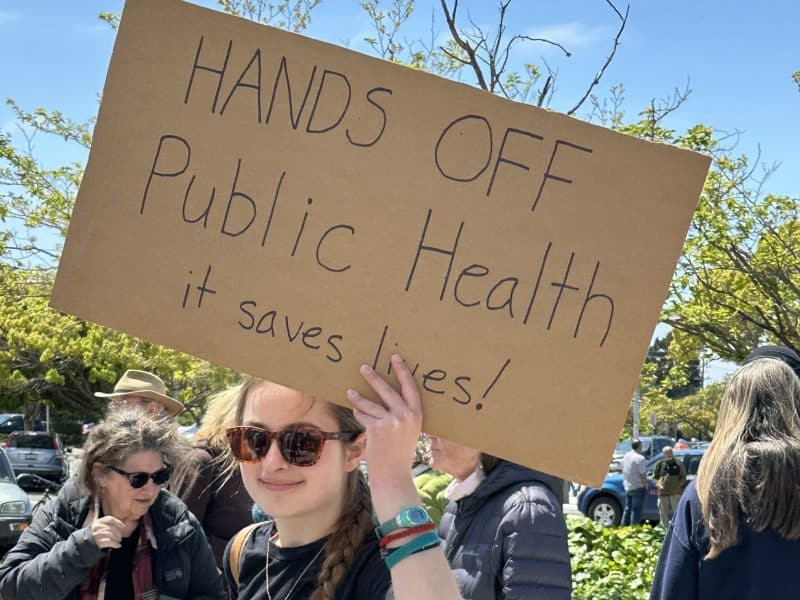
Demonstrators turn out again in hundreds of rallies nationwide to protest Trump cuts and actions
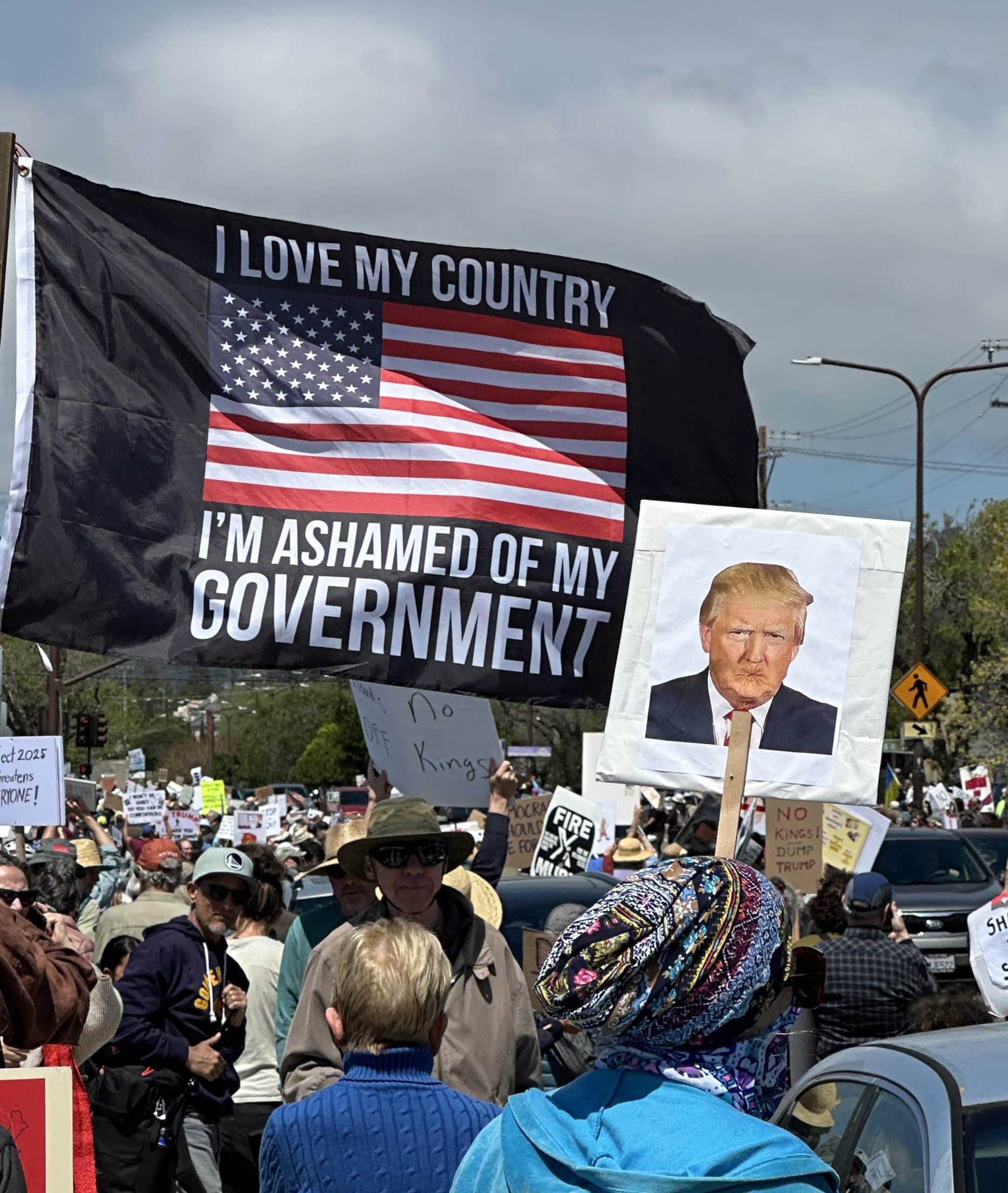
Protesters denounced Trump health care cuts, the mass firing of federal workers, deportations and many other Trump administration policies at more than 700 planned rallies across the country on Saturday, the second day of mass action this month. Many taking part in the 50501 movement – a campaign started on Reddit to organize “50 protests in 50 states on 1 day”– demanded the return of Kilmar Abrego García, whom the administration admits was wrongly deported to a notorious megaprison in El Salvador.
Chris Gilbert, a disabled, 40-year-old Air Force veteran, drove six hours from his home in North Carolina to protest in Washington D.C. “I didn’t serve for this —-,” said his sign, punctuated with an expletive. He relies on his local VA hospital for health care and worries that cuts there could affect him. But it was García’s wrongful deportation – and the Trump administration’s refusal, despite a Supreme Court order, to facilitate his return – that brought him to D.C. “We are not angry people, we are loving people,” he told the Washington Post.
‘A constant cycle of shame’ – finding community around compulsive skin picking on TikTok
When Sarah Redzikowski was a child, she often found herself hiding out in the bathroom, trying to escape her mother and stepfather’s fighting. Picking at pimples – initially on her back, later on her face – passed the time, and gave her a sense of control, but seeing her skin worsen in the mirror created a “constant cycle of shame,” she told the New York Times. In her teens, she tried to hide the damage – curling her hair to conceal her raw cheeks or burning her skin with a curling iron to draw attention away from the scabs.
Body-focused repetitive behaviors, or BFRBs – mental health conditions like dermatillomania (uncontrollable skin picking) and trichotillomania (hair pulling) – affect an estimated 3% of the world’s people, and, according to medical experts, many of them feel a sense of shame so debilitating that they will not admit to the behaviors, even in anonymous surveys.
Redzikowski thought of her picking as just a bad habit until her late 30s, when she started seeing a psychiatrist for depression. Some months after that, armed with a diagnosis, she posted her first video about her condition to TikTok (how to apply makeup to cover the damage). It got 400,000 views. “Thank you for telling this story. I thought I was alone,” one commenter said. “I’ve never felt so seen,” another read. Redzikowski has not stopped picking (or posting, as a beauty influencer) and doubts she ever will completely. She frequently reminds herself: “This is a disorder – it’s not a choice.”
Covering mirrors may help some. An amino acid called N-acetylcysteine (NAC) may reduce the urge to pick or pull. But there’s no cure for a BFRB, and physical interventions can do only so much – psychologists say that real progress requires addressing the underlying need that’s driving the behavior. Still, to help people learn to resist that urge, providers often suggest certain types of therapy, as well as peer support groups.
In Philadelphia, police and clinicians ride together to respond to mental health crises
People with serious mental illness are more than 10 times as likely to experience use of force and injury during police interactions, according to recent research. Cities and police departments around the country have invested in programs to address issues like this, often in the wake of police shootings. Philadelphia’s effort to improve responses to mental health crises started as a pilot program in 2022, two years after police shot and killed Walter Wallace Jr., who was experiencing a mental health episode, after receiving a call for help from his mother.
Philadelphia’s unit is unusual, the Associated Press reports. For one, it has robust follow-up, often done by the mental health clinician in each officer-clinician pair. For another, most of the officers joined in part because of experiences, either personal or professional, around mental health and addiction.
Officer Vanity Cordero, for example, said she grew up with her intellectually-disabled uncle – today, he’d be diagnosed with autism. “When I’m on the street and I’m serving in the community, I think of someone being my uncle,” she said. “Everyone is a family member to someone.”
Members of Philadelphia’s Crisis Intervention Response Team drive SUVs without police lights and decals and wear less formal uniforms. Other officers often request their assistance, and teams also choose 911 calls to respond to. They focus on de-escalation and provide connections to support services as an alternative to arrest.
Though many 911 calls are about mental health, regular patrol officers usually have just a few minutes to spend handling each one. The crisis intervention teams, however, typically spend more than an hour with each person.
Audrey Lundy, program director at Merakey, the behavioral health agency that partners with police, recounted an early call that reframed her perspective. Her team went to see a mother who’d been sick and was out of work and in financial disarray. They ended up bringing groceries, leading to an in-depth conversation about resources she might need to get back on track.
The crisis intervention unit is small. Its eight officers cover the entire city on weekdays, but crises don’t take nights and weekends off. The lieutenant overseeing the team hopes it can grow, and wants those in-depth conversations to continue. “We want our officers to spend time with people,” said Lt. Victoria Casale. “We’re not leaving you. We’re trying to solve this problem with you.”
In other news…
A letter to the editor takes issue with our coverage of a “flawed and biased” chatbot study: Linda Michaels, a psychologist based in Chicago, wrote in to say that my April 1 item about a randomized clinical trial for an AI therapy chatbot overlooked methodological weaknesses and researcher bias. Read her letter here.
“Broken heart syndrome” leads to rehospitalizations at a rate similar to heart attacks, according to a study in Annals of Internal Medicine. Takotsubo cardiomyopathy, as physicians call it, is often triggered by intense emotional or physical stress, and presents like a heart attack, but with no apparent physical cause. The temporary dysfunction fully resolves after the acute phase. Yet several registries have reported reduced long-term survival after an episode of acute takotsubo syndrome. The new study uses data from one registry, following 620 patients diagnosed with the syndrome. Over nearly 13,000 hospitalizations, it found that the rate of rehospitalization for those patients was close to double that of the control group, and almost identical to the group that suffered a heart attack.
Speed kills. While overdoses linked to opioids are declining modestly, those linked to stimulants are up 870% in a decade – from about 3,600 in 2013 to almost 35,000 in 2023. Cartels keep revising lab formulas to make their product more addictive and potent, often using hazardous chemicals. A New York Times explainer offers some background. Methamphetamine is a stimulant, like cocaine, but far stronger. Fatal overdoses are relatively uncommon unless it’s mixed with fentanyl, but when users binge, they put themselves in danger from risky behaviour or outright neglect, not sleeping for days and forgetting even to drink water. Unlike opioids, there’s no medication to ease meth cravings or reverse overdoses. The explainer accompanies a beautifully written and photographed story about how meth has inundated the city of Portland, Maine.
Drug policies that include both treatment and harm reduction measures can increase trust in government, an analysis in Harm Reduction Journal finds. A common principle holds that policy support depends on trust in government, but this flips that on its head. Stigma around harm reduction interventions, and a fear of backlash, often holds government back from putting them in place. This five-year survey, covering 6,609 community residents and 138 community authorities in 13 Appalachian and Midwestern states, finds that fear is unfounded. Health professionals and policymakers might worry about public skepticism of needle exchanges, but the study found that implementing comprehensive drug policies had a positive correlation with trust in government.
If you or someone you know is in crisis or experiencing suicidal thoughts, call or text 988 to reach the 988 Suicide & Crisis Lifeline and connect in English or Spanish. If you’re a veteran press 1. If you’re deaf or hard of hearing dial 711, then 988. Services are free and available 24/7.
Recent MindSite News Stories
‘A Public Health Emergency’: The Crusade to Assess Trump’s Mental Fitness for Office

Dr. Bandy X. Lee says Trump has deteriorated, and the level of danger has vastly increased — especially because his symptoms have spread.
Monitoring Psych Meds for California Foster Youth: ‘It’s the Job of All Who Are Involved’
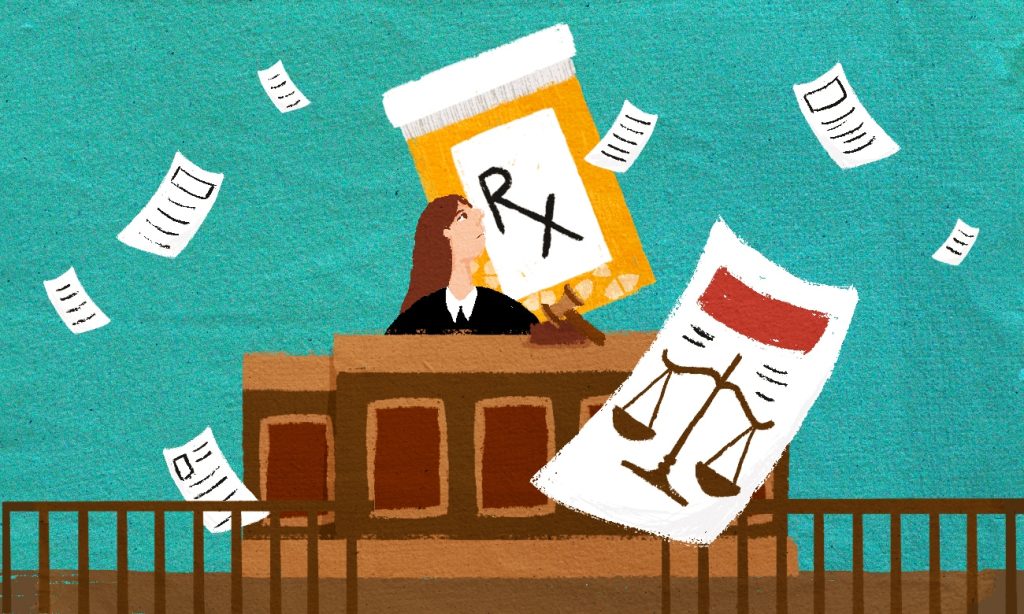
Prescribing to foster youth of psychiatric medications has fallen since judges were tasked with oversight. Still, says one, “constant vigilance” is needed.
If you’re not subscribed to MindSite News Daily, click here to sign up.
Support our mission to report on the workings and failings of the
mental health system in America and create a sense of national urgency to transform it.
For more frequent updates, follow us on Facebook, Twitter and Instagram:

The name “MindSite News” is used with the express permission of Mindsight Institute, an educational organization offering online learning and in-person workshops in the field of mental health and wellbeing. MindSite News and Mindsight Institute are separate, unaffiliated entities that are aligned in making science accessible and promoting mental health globally.
Copyright © 2021 MindSite News, All rights reserved.
You are receiving this email because you signed up at our website. Thank you for reading MindSite News.
mindsitenews.org

The name “MindSite News” is used with the express permission of Mindsight Institute, an educational organization offering online learning and in-person workshops in the field of mental health and wellbeing. MindSite News and Mindsight Institute are separate, unaffiliated entities that are aligned in making science accessible and promoting mental health globally.


Author

Related Articles

In Teens, Social Anxiety Often Looks Like Anger
A study finds that some teens’ aggressive behavior may be due to social anxiety, not straightforward reactivity.
Expert Calls for Harm Reduction, Not Punishment, to Resolve Our Overdose Crisis
As the Trump administration pulls funding from harm reduction, an expert on the overdose crisis says it’s the best way to save lives.
The Trump Administration Continues to Fail Epstein’s Victims
The millions of Epstein files included thousands of mentions of Donald Trump as well as identifying information about Epstein’s victims.
