
Advocates Worry About Impact of Medicaid Cuts on People Leaving Prison
Coming federal budget cuts will devastate Medicaid, advocates say. Among the likely casualties: the effort to get people being released from jails and prisons enrolled in health care services, with access to addiction treatment.
Monday, April 28, 2025
By Josh McGhee

Welcome Back MindSiters,
Good morning. We’re coming to you on a Monday this week after we transitioned to a new website and newsletter system last week. This is our first newsletter sent through the new system – let us know what you think. Today is also a great day to check out our new website and all the stories we posted last week.
This month in Diagnosis: Injustice, we’re looking into what budget cuts could mean for addiction treatment, which has expanded under Medicaid. We’ll also explore how funding cuts may kill the 988 dream. Finally, our friends at Illinois Answers continue to investigate use of restraint chairs across prisons and jails in Illinois and how Cook County Jail has evaded required reporting of its usage.
Let’s get into it…
Medicaid Cuts Could Harm Reductions in Opioid Overdoses
For months, the Trump administration and Congressional Republicans have signaled their intention to make major cuts to Medicaid, which provides health care for low-income people and people with disabilities, as well as to Supplement Nutrition Assistance Program (SNAP), the program once known as food stamps that helps more than 41 million Americans buy food.
While the numbers are far from final, House Republicans are seeking to cut federal spending by $880 billion over ten years, which could only come through massive cuts in Medicaid and are likely to have devastating effects on millions of people across the country who get their health care through the program.
The potential Medicaid cuts have gotten a fair amount of attention, but one aspect that so far has flown largely under the radar concerns what these cuts could do to people’s ability to get treatment for addiction and substance use disorders. Today, Medicaid is the largest single source of funds paying for this kind of treatment.
In recent years, some states have even received federal permission to get people leaving jails and prisons enrolled into Medicaid so they’d have a source of health care and addiction treatment on the outside. Now this limited progress is threatened.
“We’re very worried about proposals to cut funding, to reduce the federal match for these services, or proposals like work requirements,” said Gabrielle de la Gueronniere, who’s worked for decades to expand health responses to substance use disorders and end discrimination against people with substance use disorders. “Anything that cuts Medicaid funding or restricts coverage is going to hurt people including people who are leaving incarceration.”
MindSite News spoke with de la Gueronniere about how Medicaid has benefited those returning home after incarceration in need of treatment for opioid use disorder.
Massive Funding Cuts Could Spell Dire Situation for 988 Lifeline
For the last three years, we’ve covered the transition and expansion of the National Suicide Prevention Lifeline into 988, a nationwide three-digit phone number that people could call when they or the people they care for are feeling distress, contemplating suicide or in need of emergency assistance.
Since the launch, more than 14.5 million people have called, texted or chatted with hotline counselors, according to a data dashboard from the Substance Abuse and Mental Health Services Administration (SAMHSA), the federal agency that administers 988.
The calls demonstrate a massive need, said Lyn Morris, CEO of Didi Hirsch Mental Health Center, the nation’s largest 988 call center, in an interview with CBS News earlier this month.
“We have dealt with people calling our line who have either taken measures to end their life or are sitting at home with a gun in their lap,” Morris said.
But as the Trump administration swings its budget ax and fires workers at SAMHSA, experts are warning that the life-saving national hotline could be in serious jeopardy. Workers at the agency tasked with overseeing mental health and addiction services told MindSite News about the chaos that has engulfed the agency over the last few weeks as Elon Musk and his Department of Government Efficiency (DOGE) purged thousands of federal employees – including many at SAMHSA.
“It’s obvious this is meant to traumatize the workforce that’s in service to the country, but to do it in such a cruel and demoralizing way is unconscionable,” one employee told MindSite News.
The Department of Health and Human Services announced plans to slash the number of workers at the agency from 82,000 to 62,000 and said SAMHSA would be reorganized within the new Administration for a Healthy America that HHS Secretary Robert F. Kennedy Jr. is creating.
Another SAMHSA employee told CBS that a quarter of the communications team that works to raise awareness about the hotline has been fired. The consequences of cuts to 988 and mental health services could be dire, Morris warned CBS News. “There would be more hospitalizations, more death and more mental health issues,” she said.
Read the full story here.
Cook County Sheriffs didn’t report 900 restraints
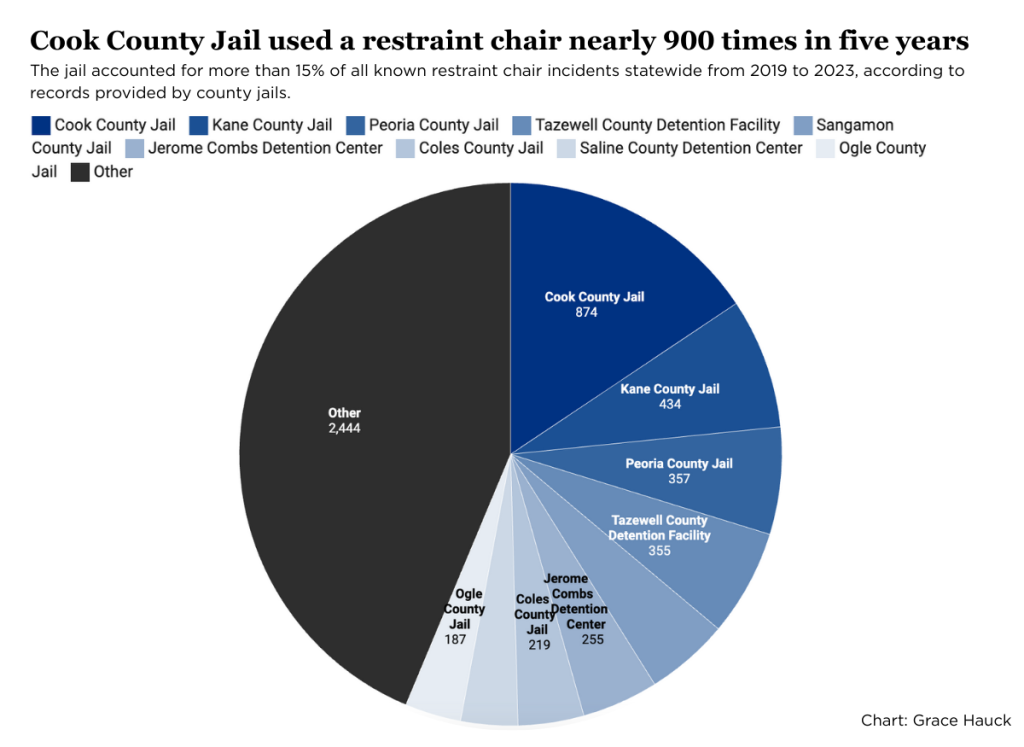
For months, the Illinois Answers Project has investigated the use of restraint chairs in prisons and jails across the state, including a man strapped to a chair for 68 hours at Franklin County Jail and a man restrained in a Peoria jail for five days.
This week, they reported that Cook County Jail used the chairs nearly 900 times between 2019 and 2023 without reporting the incidents as required.
“They’ve admitted somewhat of a… failure and misunderstanding,” Illinois Rep. La Shawn Ford (D-Chicago) told the investigative outlet.
Across the state, jails said they only rely on the chairs in emergency situations or transports. But the investigation from Illinois Answers revealed that the jails often violated state standards, county policies and manufacturer guidelines, and used the chairs to restrain people – often pretrial detainees with mental illness – for hours to days at a time.
While state regulations require jails to report the use of restraint chairs as an “extraordinary or unusual occurrence” within three days, the county jail that serves Chicago never did that. It wasn’t alone. Of the more than 5,500 known restraint chair incidents throughout the state from 2019 to 2023, about half were not reported to the state. Cook County, which used the device more than any other jail, accounts for the largest share of missing reports, according to the reporting.
The new reporting from Illinois Answers comes a little over a week after Uptown People’s Law Center and Equip for Equality filed a class action lawsuit against the Illinois Department of Corrections Director Latoya Hughes on behalf of nearly 13,000 people with mental illness in state prisons — about 44% of the prison population.
The case alleges IDOC knowingly punishes detainees with harsh and violent methods like isolation, restraints and pepper spray instead of providing mental health care, that it employs too few mental health staffers and fails to provide mental health treatment. One detainee reported being held in four-point restraints for two and a half days in February, according to reporting by WTTW.
Ford and other politicians in Illinois have called for statewide reform on restraint chair usage. He’s also been trying to find “common ground” with the sheriff’s office and the Illinois Sheriff’s Association.
“We have to come to some compromise that will protect the safety of law enforcement as well as those that have been detained,” he told the Illinois Answers Project. “It’s clearly a problem, and it’s inappropriately used. And I think it violates personal human rights.”
Until next month,
Josh McGhee
If you or someone you know is in crisis or experiencing suicidal thoughts, call or text 988 to reach the 988 Suicide & Crisis Lifeline and connect in English or Spanish. If you’re a veteran press 1. If you’re deaf or hard of hearing dial 711, then 988. Services are free and available 24/7.
Recent MindSite News Stories

Report Blasts Racial Disparities in Forced Mental Health Treatment in New York
When someone is forced into treatment, it strips them of their autonomy, say critics of Kendra’s Law in New York.
Inside America’s Mental Health Agency: Mass Firings and Work Stoppages Impede Mission

The agency tasked with leading the fight to ease the country’s mental health and addiction emergencies is going through an existential crisis. About 100 of its 900 workers have been fired and those that remain are frightened and demoralized.
Opioid Orphans: Grandparents Struggle to Raise Children Left Behind

Despite billions set aside in settlement funds, very little goes to relatives raising bereaved children.
If you’re not subscribed to MindSite News Daily, click here to sign up.
Support our mission to report on the workings and failings of the
mental health system in America and create a sense of national urgency to transform it.
For more frequent updates, follow us on Facebook, Twitter and Instagram:

The name “MindSite News” is used with the express permission of Mindsight Institute, an educational organization offering online learning and in-person workshops in the field of mental health and wellbeing. MindSite News and Mindsight Institute are separate, unaffiliated entities that are aligned in making science accessible and promoting mental health globally.
Copyright © 2021 MindSite News, All rights reserved.
You are receiving this email because you signed up at our website. Thank you for reading MindSite News.
mindsitenews.org

The name “MindSite News” is used with the express permission of Mindsight Institute, an educational organization offering online learning and in-person workshops in the field of mental health and wellbeing. MindSite News and Mindsight Institute are separate, unaffiliated entities that are aligned in making science accessible and promoting mental health globally.


Author

Related Articles
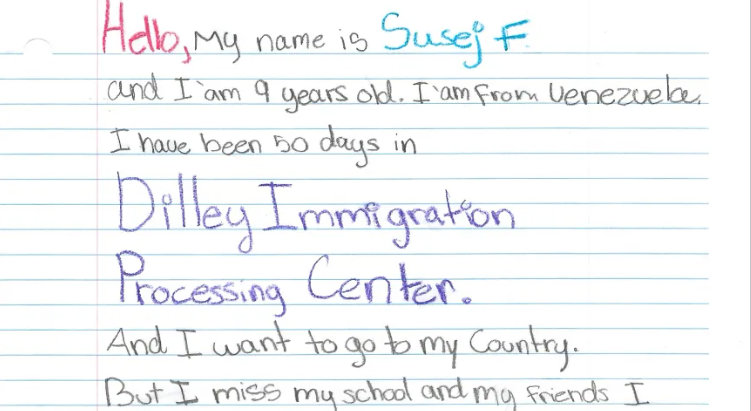
Health Organizations Condemn Traumatic ICE Raids, Family Separation
According to letters from children living in an ICE detention facility, living conditions are inhumane and their mental health is suffering.

In Teens, Social Anxiety Often Looks Like Anger
A study finds that some teens’ aggressive behavior may be due to social anxiety, not straightforward reactivity.
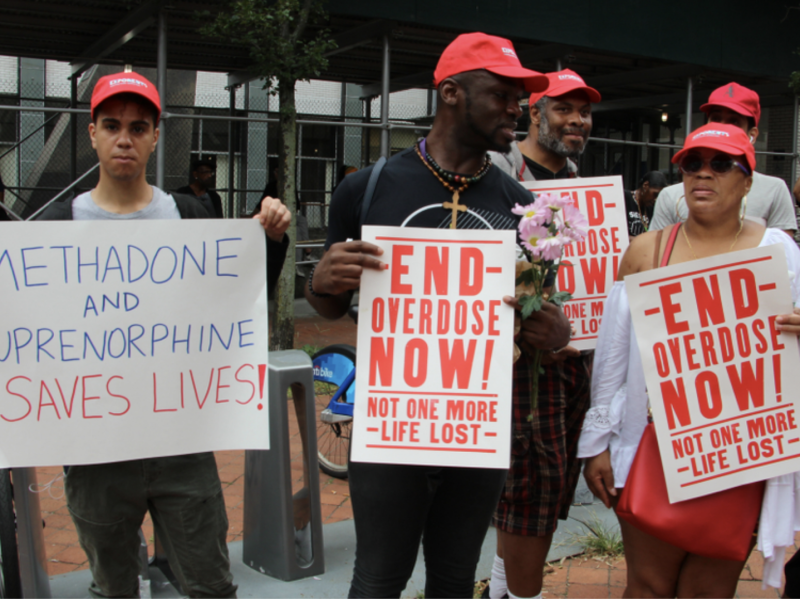
Expert Calls for Harm Reduction, Not Punishment, to Resolve Our Overdose Crisis
As the Trump administration pulls funding from harm reduction, an expert on the overdose crisis says it’s the best way to save lives.
