
Vietnam Vets and Refugees Remember the War That Changed Their Lives
From the 1985 edition of the Tenderloin Times, a four-language newspaper with reporters from Vietnam, Laos and Cambodia, a look back at the first 10 years following the end of the Vietnam War.

Good morning MindSite News readers,
We’re coming to you today with a special MindSite News Originals edition to share a couple of brand-new, 40-year-old stories. The two articles were reported 10 years after the end of the Vietnam War for San Francisco’s Tenderloin Times, the community newspaper that I edited during the 1980s. The neighborhood was then (as it is today) home to thousands of Southeast Asian refugees and Vietnam veterans. Both groups were grappling with the intense traumas they had experienced.
We also want to share with you – in case you missed it – a look back at the four-part investigative series, Deadly Denials, that we published this week. It was supported by the Pulitzer Center.

For the May 1985 issue, my co-editor, Sara Colm, wrote about the experience of the Southeast Asian refugee community. Sara went on to be an editor at the Phnom Penh Post in Cambodia, a UN human rights officer and the Phnom Penh-based specialist on Vietnam and Cambodia for Human Rights Watch. Her preparation for that later work was, in part, overseeing the sections of the Tenderloin Times that were published in Vietnamese, Laotian and Khmer, making the Tenderloin Times the only four-language newspaper in the country.
Among the people Sara interviewed was Kao Chiem Saechao, who talked about the challenges of resettling in the U.S. including a failed attempt at farming land in West Virginia. He went on to help found the Iu Mien Cultural Center and Temple in Oakland, which continues to serve the Iu Mien community of the Bay Area.
I wrote about the experiences of Vietnam veterans, many of whom were then living on the streets. Among the people I interviewed for this story (and got to know) then was the late Jack McCloskey, an amazing man whose relentless advocacy for his fellow Vietnam vets helped push the Veterans Administration (as it was then known) to open storefront “Vet Centers” all across the country. Another interview then was with Michael Blecker, who retired last year after 42 years as executive director of San Francisco veterans service agency, Swords to Plowshares.

War Not Over For Vietnam Veterans: A View from 40 Years Ago
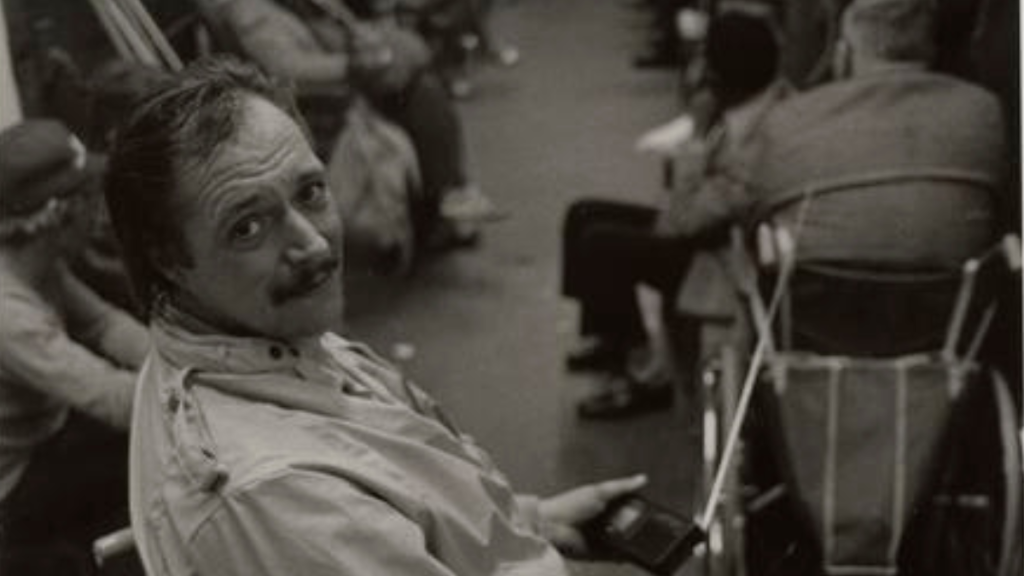
Tenderloin Times co-editor Rob Waters, now founding editor of MindSite News, wrote about the American soldiers who had fought in Vietnam and how they were coping with the trauma they had experienced. Read more.
Refugees Struggle in New Land: A View from 40 Years Ago

Tenderloin Times co-editor Sara Colm wrote about the experiences of Southeast Asian refugees living in the Tenderloin and their journey to the U.S. Today we present those stories — as they were written 40 years ago. Read more.
You can view an online archive of the Tenderloin Times here.
Deadly Denials: When Insurers Fail to Cover Treatment for Eating Disorders, People Suffer. Sometimes They Die.
People needing mental health services have an extraordinarily difficult time getting the care they need. No condition is more affected by this failure to provide coverage than eating disorders, which claim the lives of more than 10,000 Americans every year.
MindSite News dug into this problem in a week-long series, with the generous support of the Pulitzer Center. We are also grateful to our publishing partners, the Seattle Times, Louisville Public Media, Public Health Watch and the Daily Yonder. (The series is available for republication at no cost to any interested news organization. Contact info@mindsitenews.org.)

Part 1
The Deadly Cost of Eating Disorders: How Health Insurers Delay, Restrict and Deny Care
Eating disorders are America’s deadliest mental health condition. For people struggling to get care, health insurers create some of the most formidable hurdles.
Part 2
‘A Front Row Seat to Desperation’: Meet the Advocates Fighting to Remove Barriers to Eating Disorder Treatment
Across the country, a small group of lawyers and care navigators help patients, often desperately ill, battle with health insurers to access services. It’s a high-stress job, and “you don’t save everybody.

Part 3
Eating Disorders: It Doesn’t Just Happen to Skinny, White, Affluent Girls
For years, the media image of an anorexic youth was an emaciated white female teen. The stereotype was so pervasive that eating disorder specialists have an acronym for it: SWAG, or skinny, white, affluent girl.

Part 4
“We’re Not Serving Our Rural Communities”: One Eating Disorder Specialist for 250,000 People
For people in rural America, finding treatment for eating disorders is nearly impossible. Nearly 20% of patients live in states with no residential treatment in their state.
The name “MindSite News” is used with the express permission of Mindsight Institute, an educational organization offering online learning and in-person workshops in the field of mental health and wellbeing. MindSite News and Mindsight Institute are separate, unaffiliated entities that are aligned in making science accessible and promoting mental health globally.


Author

Related Articles

Family of 6 in ICE Detention for 9 Months ‘Dying on the Inside’
After nine months in Dilley Immigration Processing Center, “we forgot what it feels like to be free,” a recent high school graduate wrote.

Generation Cancer: Millennials Struggle With Death at an Early Age
More young adults are being diagnosed with cancer. Even for those who survive, the experience can be destabilizing and isolating.

Millennials Weigh Having Children On Their Own Terms
Not having children is also a valid path, and one that everyone should consider, Merle Bombardieri argues in her 1981 book.
