Panic Over Proposed Medi-Cal Changes Harms Mental Health of California’s Low-Income Seniors

Greetings, MindSite News Readers.
In today’s Daily, health and disability advocates sound the alarm on Gov. Gavin Newsom’s proposal to reinstate Medi-Cal asset limits – they say the money-saving measure could catapult more vulnerable people into poverty or institutional care. Also, a concert pianist overcame her crippling panic attacks by making one major change – performing with sheet music. Plus, why TikTok is an awful place to be learning about mental health.
Newsom’s new Medi-Cal asset limit would make aging in California more frightening

The fastest growing group of the homeless population? Seniors.
That was the headline of a recent CalMatters story in 2023, and it’s still true today, with many people experiencing homelessness in California for the first time after age 50 – including many people who have worked their entire lives. In California, people over 50 make up 40% of adults among those needing shelter. Now more seniors – especially those who are disabled – are terrified by a proposed change to Medi-Cal that could strip away their benefits and drive them into homelessness.
Now California Gov. Gavin Newsom has floated a proposal that could dramatically increase the number of older people on the streets, according to researchers and advocates. He recently proposed reinstating a $2,000 asset limit for Medi-Cal recipients aged 65 and older, sparking outcry from residents and disability advocates, who say the change would force thousands into poverty and institutional care.
Newsom says that addressing the state’s $12 billion deficit will take “difficult choices” – he highlighted growing Medi-Cal costs as a budget pressure. If approved, the proposal would “save” $94 million this fiscal year and more than $500 million next year. But advocates say the limit is so low it’s “draconian,” leaving the most medically vulnerable citizens with no safety net. “This is going to lead to more homelessness of seniors and the disabled,” State Assemblymember Pilar Schiavo (D-Santa Clarita) told CalMatters. “That’s what’s going to happen, and that will cost our state money too.”
Born with a disability, Cydne Soto has used a wheelchair her entire life and been on Medi-Cal most of her life. Following a spinal cord injury in adulthood, she’s now also a quadriplegic. Though Soto has never been wealthy, she recently inherited $8,000. Dependent upon in-home care to bathe and eat each day, Soto planned to use the modest sum to make repairs to her Long Beach condo and purchase medical supplies not covered by Medi-Cal. But under Newsom’s proposal, Soto’s inheritance would make her ineligible for the health care that enables her to survive. She’d either have to spend most of the money or lose her health insurance. “It’s not cheap being disabled,” she said. “I’m really scared. I cannot live without my help.”
Moreover, it’s not cheap living in California. Basic living expenses, including rent, typically far exceed the proposed $2,000 asset limit; in fact, the average rent for a studio apartment in San Francisco is $2,340 a month. Newsom had, in 2022, agreed to raise that limit to $130,000, before it was erased entirely in 2024. He’s now suggesting a return to the original limit – set in 1989.
To see how that would play out in real life today, meet Al Sanderson, a former physical education teacher and baseball coach. He was paralyzed three years ago from a broken neck in a surfing accident and can no longer work. His monthly rent is more than the asset limit – keeping just one month of it in savings would make him ineligible for continued Medi-Cal coverage. He currently uses his savings, built over his years of working, to pay for utilities, transportation, and his children’s needs. Without Medi-Cal, Sanderson said, he would lose his independence. “How am I going to pay people to come help me? How am I supposed to survive and live? I’d have to go to a nursing home.”
Ironically, that nursing home care, also covered by Medi-Cal, costs significantly more. The state pays roughly $114,000 per person each year for nursing home care, according to Justice in Aging, while the annual cost of in-home care is less than one-quarter of that, or $25,400 a year.
In addition, research shows that asset limits increase homelessness, which is already an enormous problem in California. The state already accounts for more than 50% of all unsheltered people in the United States, with more than 75,000 homeless residents in Los Angeles County alone.
Congressional Republicans claim that removing the asset test allowed the “wealthiest Californians” to get free health care, but that’s just not true, according to Linda Nguy, a lobbyist with the Western Center on Law and Poverty. Whatever assets they hold, Medi-Cal recipients must still meet income limits, which are currently 138% of the federal poverty level, or about $1,800 per month. “Our clients are not millionaires,” Nguy said. “We’re talking about people with very low incomes who aren’t able to access the health care services that they need.”
For one musician, shirking convention to care for her mental health reinvigorated her career
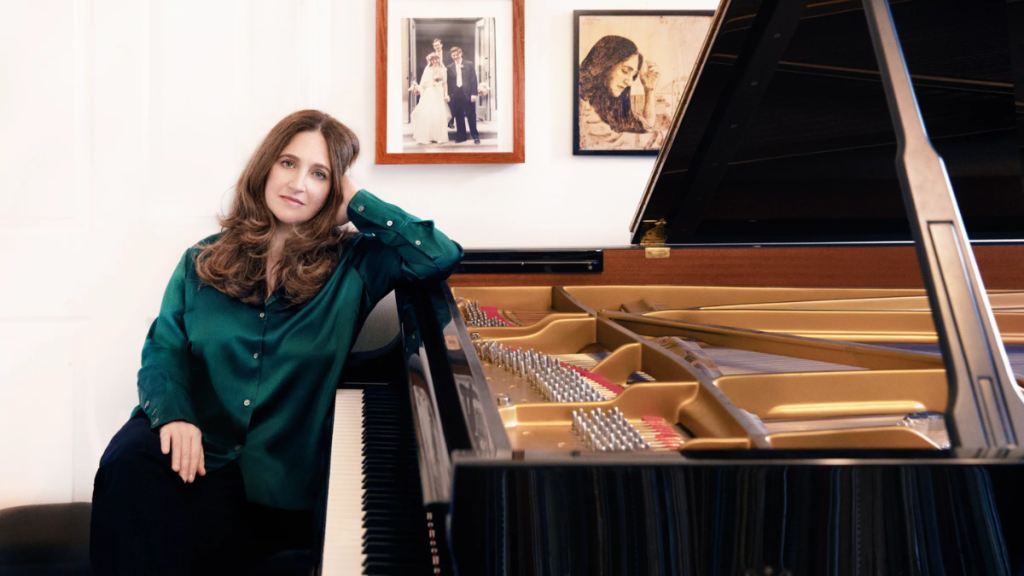
Even before she shot to fame, world renowned concert pianist Simone Dinnerstein struggled with crippling performance anxiety. Despite hours of daily practice, she was beset by panic attacks onstage. “It got worse and worse and culminated in a concert where it just went so badly that, afterward, I was talking to my husband about it and he was, like, ‘You should just quit’,” Dinnerstein told NPR. “I realized that either I was going to have to quit or I was going to have to perform with the [sheet] music.”
Much of her anxiety, she said, was tied to perfectionist customs within classical music. Musicians are expected to play from memory, and though she memorized all her pieces, the pressure robbed her of the joy in performance. Determined to release herself from the debilitating pressure Dinnerstein adopted new personal conventions. In 2017, she began bringing a tablet onstage for every performance.
Larger iPads, like the one Dinnerstein uses, display music at a readable size, similar to traditional sheet music, and a Bluetooth pedal can turn pages – especially useful for classical scores, which can have over 100 of them. Though she still memorizes all of her music, Dinnerstein said the mere presence of the score during a performance is “enormously freeing and comforting.” She’s channeled her newfound “mental space and emotional energy” into leading a new chamber music group, Baroklyn.
That resurgent creative spirit is clear on the group’s latest record, Complicité. “Once I started having that permission to use the music, I began being much more daring.” After all, the goal is to be imaginative, thoughtful and exciting, according to Dinnerstein. “If that could become part of the culture of classical music, that would be terrific, as opposed to it being about conventions. Like everybody has to wear black or white in orchestras. It doesn’t have anything to do with the music. And it’s so old fashioned.” She hopes that sharing her story might help her fellow performers, and nudge the genre to evolve its traditions for future generations.
In other news…
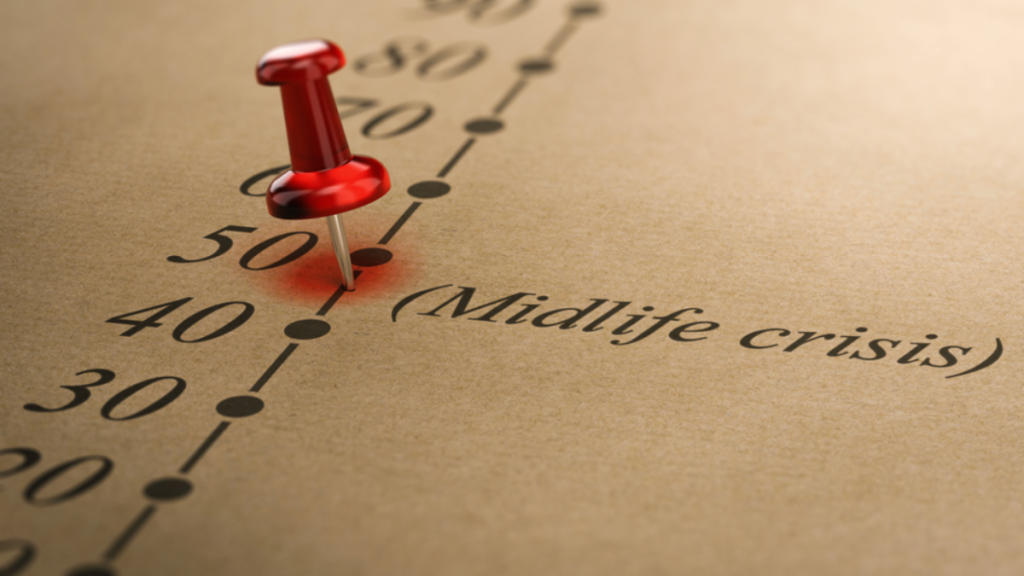
Millennials and the new mid-life crisis: I ran across this article from Vox while checking out a colleague’s Instagram stories. “Trying to explain this to my Gen Z and Gen X/Boomer circles has been a thing!” he wrote. Much like our lives look different than those of our grandparents, parents, and even older siblings, so too do our midlife crises. While pop culture has reduced the phenomenon to a 40- or 50-something-year-old man wishing he could trade his family life and corporate job for a winning lottery ticket, much younger partner, and fancy sports car, Alex Abad-Santos suggests that a similar rebellion bypasses millennials because we never acquired those things in the first place.
“This is a generation that often can’t afford the home or family life to throw away, never mind the new sports car; one that grew up hyperconscious about mental health and the benefits of therapy, encouraged self-expression and open discussion about relationships, and found value in experiences,” he writes. Facing that, he says, our crises are far more focused on securing an authentic life. “Many are looking for an opportunity — a fitness journey, a new career, a personal awakening that might involve tattoos — instead of something necessitating an intervention.”
TikTok is rife with mental health misinformation, according to an investigation by The Guardian. Reporters shared the top 100 videos tagged #mentalhealthtips with a team of licensed mental health professionals, who found that at least 52 contained some misinformation, and many that didn’t were still vague and unhelpful. The clips covered conditions including anxiety, depression, bipolar disorder, trauma, and neurodivergence. “TikTok is spreading misinformation by suggesting that there are secret universal tips and truths that may actually make a viewer feel even worse, like a failure, when these tips don’t simply cure,” said Amber Johnston, a psychologist, who reviewed videos on trauma. Though most videos included a nugget of truth, she said, they simultaneously over-generalized and minimized the complexity of PTSD and other trauma.
The Peace & Prosperity Podcast: It could totally be my own self-selection bias, but I rarely encounter mental health media produced and led by men who are also licensed mental health professionals. So in my podcast feed, the Peace and Prosperity Podcast from licensed clinical social worker and self-described “Confidence Expert” Jason Phillips stands out. While the show isn’t exclusively for men, episodes frequently feature male guests and cover subjects in which men are the main focus, like this one about navigating male friendships or this one, about moving through life with confidence as a Black gay man. (Readers, feel free to tip us off to your favorite podcasts from licensed mental health professionals.)
The name “MindSite News” is used with the express permission of Mindsight Institute, an educational organization offering online learning and in-person workshops in the field of mental health and wellbeing. MindSite News and Mindsight Institute are separate, unaffiliated entities that are aligned in making science accessible and promoting mental health globally.

Author
Related Articles

Health Organizations Condemn Traumatic ICE Raids, Family Separation
According to letters from children living in an ICE detention facility, living conditions are inhumane and their mental health is suffering.

In Teens, Social Anxiety Often Looks Like Anger
A study finds that some teens’ aggressive behavior may be due to social anxiety, not straightforward reactivity.
Expert Calls for Harm Reduction, Not Punishment, to Resolve Our Overdose Crisis
As the Trump administration pulls funding from harm reduction, an expert on the overdose crisis says it’s the best way to save lives.
