In the Face of Trump Cuts, Researchers Risk Jobs to Stand Up for Science

Greetings, MindSite News Readers.
In today’s Daily, employees from the National Institutes of Health have put their own mental health on the line by speaking up against Trump’s cuts and censorship. Two grassroots organizations foster much-needed social connection in older people, and one writer argues that our societal fascination with narcissists is killing democracy.
Plus, expert tips on starting and finishing tasks for folks with ADHD, and new research suggests that the mental health impacts associated with COVID linger longer than the physical ones. And check in tomorrow to hear our take about what is going on in Los Angeles.
But first, check out how Fearless Tattoo Removal in Maplewood, Minnesota, is helping folks reclaim control of their bodies, shed painful memories, and turn a page in their lives.
Trump denounced for endangering Americans in “scathing” letter from NIH employees
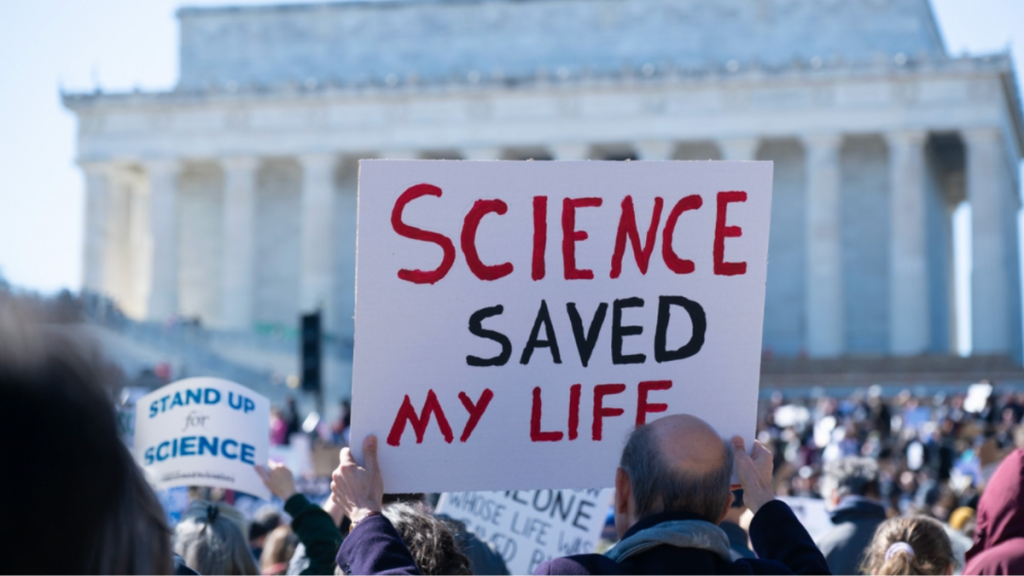
Since the second Trump administration took office – and then took aim at our public health ecosystem – plenty of employees have spoken out, but most have remained anonymous out of a fear of retaliation. It is particularly striking, then, to see more than 60 employees of the National Institutes of Health risk firing by signing their names on a letter charging Trump with “illegally withholding money, endangering participants in studies and censoring critical research.” Another 243 signed on anonymously, along with some recently-fired former employees.
“We dissent to administration policies that undermine the NIH mission, waste public resources, and harm the health of Americans and people across the globe,” employees wrote in the four-page letter. “Many have raised these concerns to NIH leadership, yet we remain pressured to implement harmful measures.”
The letter was sent to Dr. Jay Bhattacharya, the NIH director, who took issue with “misconceptions” in the letter, but responded that “respectful dissent in science is productive. We all want the NIH to succeed.” The letter was modelled on “The Great Barrington Declaration,” an anti-lockdown letter co-authored by Battacharya in 2020, in the hope it might appeal to his alleged “culture of respect for free speech in science and scientific dissent at the NIH”
Among other things, the New York Times reported, employees object to the Trump administration’s:
- killing of over 1,300 grants and delaying of funding to another 1000 projects, effectively censoring research involving issues such as health disparities, the health effects of climate change and COVID
- stopping clinical trials midstream, “which would endanger participants who had agreed to take medicines or have medical devices implanted”
- cutting U.S. scientists off from collaborators abroad
Jenna Norton, a program officer at the National Institute of Diabetes and Digestive and Kidney Diseases, signed and helped coordinate the letter. Asked if she was nervous that she could be fired, she said, “I’m terrified. But, you know, there’s a book that I read to my kids that talks about the fact that you can’t be brave if you’re not scared.”
–Diana Hembree
Older adults connect and reminisce at the Life Story Club

It’s free to join the Life Story Club, and there’s only one major prerequisite: decades of life experience. At each meeting, members are prompted to share stories from their lives, building genuine relationships and fostering community. Lily Zhou was inspired to start the club after discovering a family book that traced her lineage back several centuries, all the way to the 1600s. “My father had lost touch with his family during Mao’s Cultural Revolution,” she told Reasons to Be Cheerful. “I returned to Brooklyn inspired to preserve and share the life stories of the older adults around me. These aren’t generations to be discarded – they are living legacies that must be heard, valued and celebrated.”
The weekly meetups also address a public health crisis: loneliness. “Loneliness is as damaging as smoking 15 cigarettes a day, increasing the risk of dementia by 50 percent and cardiovascular disease by 30 percent,” Zhou said. Older people, often overlooked and cut-off from the wider world, might struggle to connect in their day to day lives, but they take center stage at Life Story Club.
Founded six years ago in NYC, the nonprofit now has 26 chapters throughout the city and in Cleveland, Ohio. Meetings are conducted in English, Spanish, Cantonese and Mandarin, and take place in person, over the phone, or on Zoom, to accommodate members who might not be able to leave home. More than a thousand people have come to the Life Story Club as a social prescription from their doctor, and some of the groups are themed around interests, like music or cooking.
Bernd, a retired urban planner, was reluctant to join, but he’s come around. “I really do need this contact with people. Hearing your stories – feeling connected – is so important to me. I was skeptical, especially being the only man in the group at first. But I’ve discovered we have so much in common.”
He’s one of many grateful members – 82% say they feel less lonely, 95% say they’re happier, and 100% say they feel a sense of community. For some members, it’s the first time they’ve felt heard in years. Zhou hopes to grow the Life Story Club’s impact nationwide. “My hope for all of us is to live in neighborhoods and cities where older adults are seen, heard and valued,” she said. “We all have an older adult in our lives — and if we’re lucky, we’ll grow old ourselves. My ask to others: Let’s build a world that continues to value us as we age, a world where dignity and connection have no expiration date.”
Memory cafes help dementia sufferers, their caregivers and the relationship between them
Unless you’re caring for someone with dementia, memory cafes likely aren’t on your radar, but there are more than 600 of them across the country. Hosted in church basements, senior rec centers, and assisted living dining rooms, memory cafes morph casual environments into spaces to enjoy treats, crafts, trivia, and conversation. Crucially, unlike other similar gatherings, they’re also for caregivers – dementia often radically changes close relationships, and these offer a chance to create new, positive memories together in a supportive space.
“One thing I have heard again and again from people who come to our memory cafe is ‘all of our friends disappeared,’” social worker Beth Soltzberg told KFF Health News. Regular attendees say they’ve become part of “a big, extended family.”
Importantly, according to Kyra O’Brien, a neurologist who teaches at the University of Pennsylvania, the “socialization really does help ease the stress that they feel from being a caregiver,” which is important, because when caregivers are less stressed, the patients they’re caring tend to have a better quality of life.
“I came in and I was miserable,” said Rob Kennedy, who has visited the memory cafe in Clarks Summit, Pennsylvania twice a month since being diagnosed with early-onset Alzheimer’s. “I come in now and it’s like it’s family… I get to meet them. I get to meet their partners. I get to meet their children. So, it’s really nice.”
The cafe Kennedy attends costs just $150 per month to operate, presenting a low-cost, yet effective support intervention for dementia patients and their families. That will become particularly important as the federal government slashes health spending. “We’re fighting off some pretty significant Medicaid cuts at the congressional level,” said Georgia Goodman, director of Medicaid policy for LeadingAge, a nonprofit network of services for older adults. “Medicaid is a program that doesn’t necessarily pay for memory cafes, but thinking about ensuring that the long-term care continuum and the funding mechanisms that support it are robust and remain available for folks is going to be key.”
Memory cafes have been held in at least 39 states, and Susan McFadden, cofounder of the Fox Valley Memory Project, hopes to see more. Her nonprofit oversees 14 memory cafes in Wisconsin, which boasts more cafes than any other state in the country. “They’re not so hard to set up; they’re not expensive,” McFadden says, for any folks interested in setting one up. Dementia Friendly America has a directory and can offer guidance. Besides, “it doesn’t require an act of the legislature to do a memory cafe,” she said. “It takes community engagement.”
In other news…

Narcissism is threatening our democracy, Amanda Marcotte argues in her column for Salon. She indicts Trump, of course, but also, Western society more broadly. Narcissism’s traits have spilled beyond a personality disorder into a maladaptive societal condition, buoyed by neoliberal moneymaking, authoritarian politics, social media, and pop culture, she says. We enjoy narcissists like Marvel’s Loki and Lucille Bluth in “Arrested Development” because they act out in ways we sometimes want to – but don’t, out of empathy.
We apply that “gloss of entertainment on behavior that is not fictional,” Marcotte writes, specifically to the hatred and cruelty Trump and his supporters dole out. That distance isn’t real – it’s important that we stay in touch with our humanity, and remember that the harm is very real. “When Musk destroys life-saving programs or Trump deports innocent people to put them in foreign torture prisons, it’s mediated for their followers through their screens and online jokes and memes. Many of them might not find it so fun to watch an innocent person be tortured if they had to see it with their own eyes.”
Executive function is how we “convert intentions into actions,” psychologist Ari Tuckman told the New York Times. Those personal management skills help with planning, focus, and self-control; setting routines, breaking tasks into steps, solving problems, and generally doing things when and where you should, for your own benefit, he added. Plenty of people struggle with executive function, including those with ADHD and autism, for whom it is a common symptom. But, experts say, there are ways to nurture it, or get around dysfunction. The first step is to look inwards – figure out which facets of executive function challenge you most, and ask why. Once you know, you can find an efficient path to an effective solution.
Mental toll of COVID lasts longer than physical, new UCLA study finds: While most people largely physically recovered from the virus within three months, mental health difficulties, including fatigue, anxiety, and depression, tended to linger for up to nine months –and in some cases, more than a year, according to a new study published in Open Forum Infectious Diseases, the San Francisco Chronicle reports.
Scientists followed more than 1,400 people who experienced COVID-like symptoms between December 2020 and August 2022. Roughly 75% tested positive for the virus. Researchers surveyed participants every three months for a year on mental and physical “quality of life” health aspects, like sleep, fatigue, physical and cognitive function, anxiety, depression and social engagement. Notably, 42% of those with both poor physical and mental quality of life after a year identified as having Long COVID, emphasizing the lasting toll of the virus on overall well-being. “The findings showed that health care professionals need to pay more attention to their patients’ mental well-being after a COVID-19 infection and provide more resources that will help improve their mental health, in addition to their physical health,” said Lauren Wisk, co-lead author of the study.
The name “MindSite News” is used with the express permission of Mindsight Institute, an educational organization offering online learning and in-person workshops in the field of mental health and wellbeing. MindSite News and Mindsight Institute are separate, unaffiliated entities that are aligned in making science accessible and promoting mental health globally.

Author

Related Articles

Teens Close to Parents More Likely to Have Strong Social Network as Adults
New research finds that close relationships with parents during middle and high school can predict a strong social life two decades afterward.
Health Organizations Condemn Traumatic ICE Raids, Family Separation
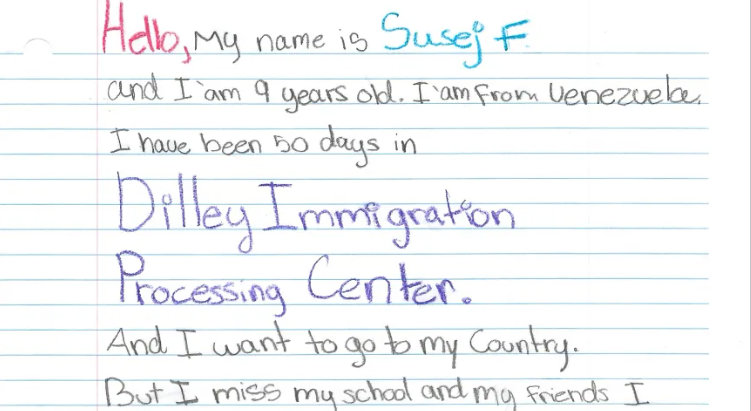
According to letters from children living in an ICE detention facility, living conditions are inhumane and their mental health is suffering.

In Teens, Social Anxiety Often Looks Like Anger
A study finds that some teens’ aggressive behavior may be due to social anxiety, not straightforward reactivity.
