
Trump’s military assault on LA’s mental health
A report on the city’s mental health after Trump sends in the National Guard and Marines to quell anti-ICE protests over the objections of Governor Gavin Newsom.


Greetings, MindSite News Readers.
In today’s Daily, a report from our California team on what is happening in Los Angeles, expert guidance for parents on changing behavior to reduce anxiety in our kids, and what research says new dads can do to care for their babies and themselves. Plus, how Gen Z is reconciling the “American Dream” with a bleak-seeming future.
But first: Meet Cameron Mofid, who credits travel with helping him manage his obsessive-compulsive disorder. He recently joined a very small group of global citizens who have visited all 195 UN-recognized countries and territories. “OCD feeds on control: controlling your environment, routines, and outcomes,” Mofid told CNN. “But when you’re navigating chaotic borders, sleeping on floors, or figuring things out in countries where you don’t speak the language, you’re forced to surrender control. It’s uncomfortable, but also freeing.”
Trump sends troops to downtown Los Angeles, traumatizing residents and immigrant families

This week, without consulting state or local officials, President Donald Trump ordered 4,000 National Guards to Los Angeles in response to protests over ICE raids targeting immigrants – but failed to provide the first wave of them with food, water or sleeping quarters. Next, he deployed 700 Marines to the city, to vehement objections from California Governor Gavin Newsom. Newsom, who worked closely with the state’s National Guard during the recent wildfires, says Trump is unnecessarily escalating tensions, putting both military and protestors in harm’s way.
Meanwhile, ICE raids are taking a heavy emotional toll on migrants, not just in Los Angeles but nationwide. The administration’s actions are resulting in widespread depression, trauma and fear, according to Latino therapists. “What we are seeing are elevated levels of anxiety, hypervigilance, and panic attacks in individuals and families, especially those in mixed-status households,” Hector Ayala, co-chair of the Latino Behavioral Health Coalition, told Prism Reports.
Los Angeles Mayor Karen Bass described the Trump administration’s move to send in troops as a “provocation” that was “traumatizing the whole city.” On Monday, California filed a lawsuit against Trump for what the state calls an “unlawful, unprecedented” power grab.
“Trump is pulling a military dragnet across Los Angeles,” Newsom told Californians on Tuesday. “It’s weakness masquerading as strength…What we’re witnessing is not law enforcement – it’s authoritarianism. What Donald Trump wants most is your fealty. Your silence. To be complicit in this moment. Do not give in to him.”
For his part, Trump has suggested that the Governor be arrested, and House Speaker Mike Johnson added that Newsom should be “tarred and feathered.” Yesterday, Trump promoted his upcoming military birthday parade, which will cost the United States up to $45 million – and made it clear that dissent will not be tolerated.
“We’re celebrating big on Saturday, we’re gonna have a lot of — and if any protester wants to come out, they will be met with very big force, by the way… For those people who want to protest, they’re gonna be met with very big force.”
The open threats bring to mind the great Czech dissident and eventual president Václav Havel, who wrote from prison around 1979 that “however absurd, tragic, depressing or cruel [things] might be, it would delight me, perhaps to the point of tears… to hear things called by their proper names once more.”
It’s important to remember that the right to protest is, in fact, enshrined in the Constitution – a document that this White House appears to regard as an inconvenience. Forbidding protest, or forcibly suppressing it, as Gov. Newsom said, is authoritarian. In addition, the barrage of lies and distortions from the White House are wreaking havoc on our mental health. As such, it brought me “to the point of tears,” as Havel wrote, to listen to our governor’s speech and “hear things called by their proper names once more.”
—Diana Hembree
How parents unintentionally promote anxiety in our kids – and how we can fix it
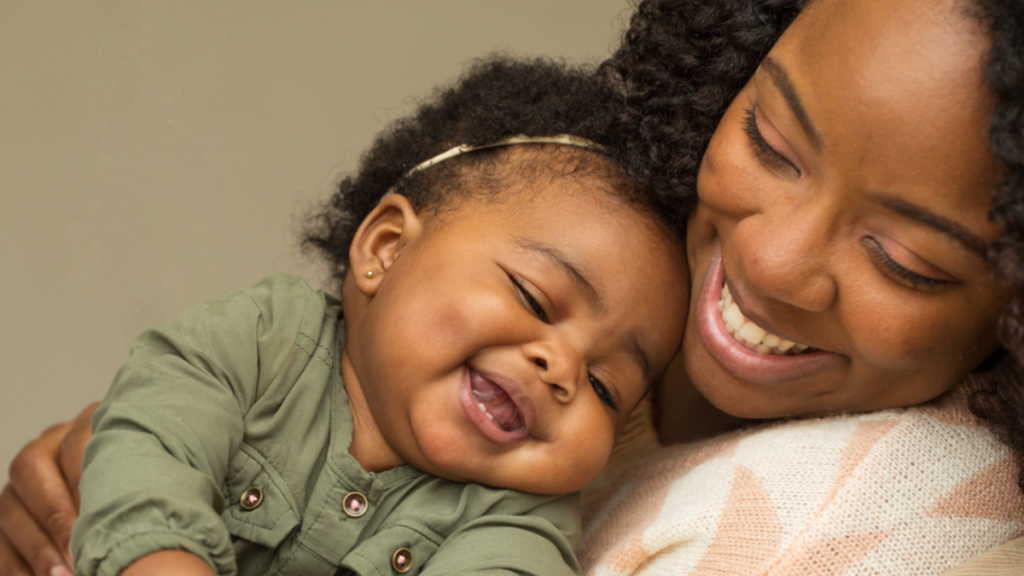
Parents’ actions often unintentionally and unknowingly promote anxiety in our children. I’m contending with the issue now. I tend to catastrophize, something that grew worse during the pandemic, and my daughter is now picking up that tragic habit. I’m hoping that by changing my behavior, I can improve her future – both practically and mentally.
“We have to remember that our kids are quite attuned to what is going on with us as their caregivers,” Khadijah Booth Watkins, associate director of the Clay Center for Young Healthy Minds at Massachusetts General Hospital, told HuffPost. “They are both listening to our words and paying close attention to our body language. If we are struggling with anxiety ourselves, we have to be deliberate in managing our stress and distress, and model healthy coping skills and strategies.”
If there are behaviors we aspire to for our children, we have to model them, experts say. Some things to try and avoid: being too cautious, sending mixed messages, denying or suppressing emotions, avoiding emotional conversations, emphasizing outcomes over effort, and taking an authoritarian approach to parenting. These behaviors might seem to relieve anxiety in the short term, but over time they teach our children to avoid emotional discomfort and bottle up stress.
When feeling fearful about something, it can help both us and our children to narrate our emotions, and how we might manage them i.e., “I’m feeling nervous but I’ll take deep breaths.” By introducing an emotional vocabulary, we can encourage our kids to voice their own fear. When they do, we can reinforce our confidence that they’ll manage, and then practice a healthy coping mechanism together. Something like saying, “I hear you’re scared, and I believe you can face it,” maybe helping them take a few deep breaths before a stressful task, if they need it.
Unspecific praise might seem like it’d boost confidence, but it can sow seeds of anxiety by making kids feel that achievements are more valued than they themselves are. There’s no need to eliminate praise; just change how it’s delivered – the emphasis should be on learning and growing rather than stacking up accomplishments.
“Start praising the effort the child has put in – ‘I saw you studying last night – you are really working hard on that project’ or, ‘You’ve been practicing every single night no matter what!’” advised Kristene Geering, director of education at Parent Lab. “I am also a fan of radical acceptance, of letting your child know that you love and accept them no matter what. You may not be happy about a particular behavior or decision at the moment, but you still love and accept them as a person. That increases that sense of safety, which can help reduce their anxiety.”
Gen Z’s more modest American Dreams
Many in Gen Z aren’t planning for the American Dream of career, long-term relationship, kids, home ownership and retirement – not because they don’t want it, but because they think it’s out of reach, thanks to a bleak economic, environmental, and political outlook. Though not based on a scientific study, that’s what roughly 200 18 to 30 year olds told the New York Times, when asked what the dream means to them. Elizabeth Swan, a 27-year-old Chicago-area teacher struggling to find a permanent job, said her main goal is “to be debt free, unafraid of homelessness, and not fearing lack of insurance.” How sobering (and relatable).
“I went to school to teach during a time we were told, ‘There’s a teacher shortage. You will always have a job and be in high demand.’ And that has simply not been true,” Swan said. Other young people question the wisdom of pursuing college, unsure if they’ll be able to repay the loans it’ll require. And while many Gen Z-ers still hope for marriage and family, kids seem like the preserve of the rich – perhaps a reasonable opinion, considering the nation’s lack of paid parental leave, dearth of affordable quality affordable childcare and decline in schools. “If you have the money, then you should get a kid. But if you really don’t have the money, you should just have a cat,” one college student quipped.
Others posit that the dream is still possible – just not in America. “It’s really like, almost, no matter where I go, I don’t see how people can afford to live,” said Jakob Gilleylen, a 22-year-old recent college grad. Housing in Michigan, where he grew up, and in Chicago, where he went to college, are both out of reach. But Christian Avalos, 25, from Northern California, has family members doing well in Mexico, which makes him wonder about moving abroad. Though Avalos worries about violence he could face living there, “at the same time, a lot of my family in Mexico, their kids have degrees, they own their homes, and I don’t see them struggling that much to put food on their plates.” As things stand today, he doesn’t ever expect to retire – though he is “hoping” global warming, which is also top of mind, takes him out first.
A bit of a salve for the bleak outlook: The pessimism at least indicates that young people are paying attention, and thinking about what has to change, said Kyla Scanlon, 27, and the author of “In This Economy? How Money and Markets Really Work.” “Young people aren’t zombie-walking the path,” she said. They “still want security, love, purpose, but they’re more skeptical of the institutions that are supposed to provide them.”
In other news…
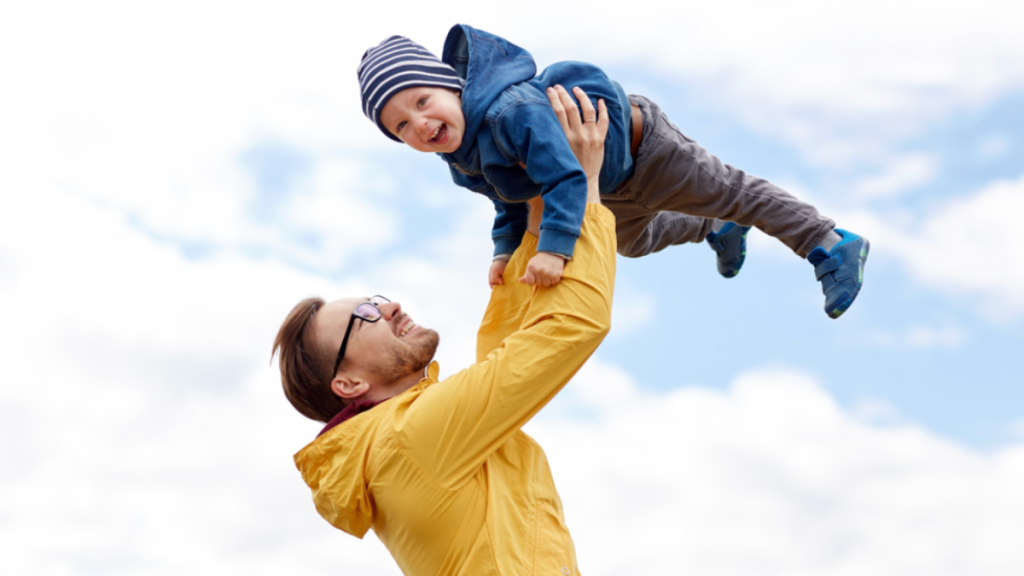
New dads can benefit from embracing their softer side: Parents in this country do not get enough support. Besides the issue of paternity leave, dads in particular face pressure to constantly remain strong and masculine – adding strain at an already stressful, transformative moment. Parenting (which often just means ‘mommying’) calls for patience and tenderness, qualities that tend to be stigmatized in men. But it’s activities with precisely those facets – emphasizing mindfulness, nurturing, and practical support – that best help fathers manage stress, reduce anxiety and depression, and build a stronger emotional bond with their babies. This summary of parenting strategies for new dads in Greater Good Magazine puts a particular emphasis on self-compassion and parenting with mindfulness.
Self-compassion “can remind fathers that no one is perfect and that our mistakes are part of our growth,” says developmental psychologist Maryam Abdullah, noting research finding that more self-compassionate dads tend to feel more bonded with their baby. In addition to keeping dads on track when the daily demands become overwhelming, “parenting with mindfulness helps fathers notice what is happening in each moment. It reminds us that every moment passes – parenting hassles are often temporary because our children and the situations we and they are in are always changing.”
Equipping talented young gymnasts with mental health skills: Circus Juventas, a renowned youth circus school in Saint Paul, Minnesota, is launching a mental health partnership with People Incorporated, the MinnPost reports. The school already has a similar partnership with an orthopedic provider. Recognizing that the mental component of training is intense – with long hours, severe physical demands, and performance pressure – the school will now extend support to the mental health of instructors, performers and their families. These professionals won’t be conducting therapy, but will run workshops and meetings, and will be able to point students towards more resources if they need them. The hope is to give those acrobats the skills to manage anxiety, cope with stress and develop emotional resilience.
Despite ketamine’s troublesome moment in the spotlight, early research finds it might be powerful for treating obsessive-compulsive disorder, offering rapid symptom relief. Listen to Stanford’s Carolyn Rodriguez discuss the frontiers of OCD research, including on ketamine, in this 14-minute episode of NPR’s Short Wave. Anyone interested in possibly participating in one of Dr. Rodriguez’s upcoming OCD studies can reach out: Email ocdresearch@stanford.edu or dial 650-723-4095.
Young adults are increasingly seeking “cozy content,” entertainment that provides a “warm blanket” reprieve from the mental overwhelm of daily life, according to the Los Angeles Times. The trend touches TikTok, book tastes, and even gaming, but is perhaps most pronounced – and familiar – on our TVs. “Somber themes, intellectual depth, cultural satires – those have always defined prestige entertainment, and it’s left many to discount the value and the viewership of this more lighthearted, comforting programming,” United Talent Agency data exec Abby Bailey said. “But as audiences are prioritizing their well-being and taking brain-breaks from the weight of the world, the definition of what’s capital ‘I’ important in entertainment is shifting.”
The name “MindSite News” is used with the express permission of Mindsight Institute, an educational organization offering online learning and in-person workshops in the field of mental health and wellbeing. MindSite News and Mindsight Institute are separate, unaffiliated entities that are aligned in making science accessible and promoting mental health globally.


Author

Related Articles
He Almost Killed His Father. Now He Helps Others At Risk.
In today’s newsletter, we explore how one man healed after a dangerous psychotic break that nearly led him to murder.

Fallout Over Supreme Court Ruling on Conversion Therapy
Despite the Supreme Court ruling, conversion therapists can still be sued for a practice the United Nations calls “torture.”

On No Kings Day, Millions Rallied to Denounce Trump and “Epstein War”
Anti-Trump protests took place in all 50 states, Puerto Rico and other US territories and in countries around the world.
