
Can Low-Carb Keto Diets Succeed in Treating Mental Illness?
Ketogenic diets offer hope to young people struggling with severe mental illness. ICE raids continue to terrify families, forcing teens to become breadwinners and work for the release of parents. And more.

In today’s youth and parenting newsletter, ICE raids continue to terrify and fracture families, forcing teens to become breadwinners and work for the release of fathers, mothers and grandparents handcuffed and taken away – as well as assaults and/or arrests of five U.S. Congresspeople and state officials who oppose such operations.
And although last weekend’s “No Kings” protests were some of the largest in U.S. history, according to independent data journalist G. Elliott Morris, Republicans continue to push for staggering cuts to Medicaid and other social programs, per the wishes of President Donald Trump. We hear from one psychologist who offers strategies to stay strong under direct threat following the White House’s decision to unleash military troops on peaceful protests in Los Angeles. And we revisit a prescient question one writer raised late last year: Should political violence be addressed like a threat to public health?
In other news, we bring you new MindSite News stories on the hope that low-carb keto diets offer to young people struggling with schizophrenia and other psychotic illnesses, a look at the therapeutic value of beekeeping for healing trauma in youth and military veterans. And we share an essay about young people feeling the weight of the world and a story on the Supreme Court’s majority vote to keep a Tennessee ban on gender-affirming care for trans youth.
The adult children of a Democratic lawmaker and her husband in Minnesota who were assassinated, allegedly by a Trump supporter, share their grief: “We are devastated and heartbroken…They were the bright lights at the center of our lives, and we can’t believe they are gone. Their love for us was boundless. We miss them so much.”
Outreach workers in LA help connect high schoolers, youth and older adults to successful family counseling and/or addiction treatment in primary care. Senator Tim Kaine introduces a resolution to deny Trump his attempt to use the War Powers Act to declare war on families and other residents of Iran, which was attacked by Israel and Mossad agents inside Iran on June 13, 2025, starting a regional conflict.
Can ketogenic diets treat mental illness?
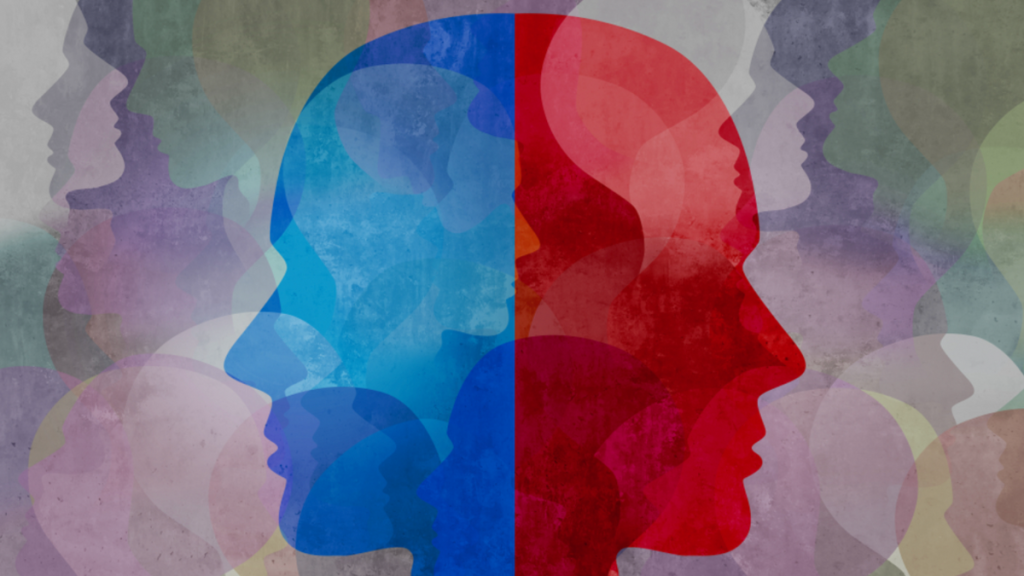
Lauren Kennedy West was still a teenager when she began to smell and hear things that weren’t there. Then to see things, too, that were invisible to others. Meanwhile, her moods began to intensify, sometimes turning very, very dark. “It was confusing, disturbing, and depressing,” she recalls.
She had periods of elation, too. But when she came down from these, she’d keep descending until she hit emotional bottom. It got so bad that in her early 20s, at college, Kennedy West tried to end her life twice. Finally, when she was 25, she was diagnosed with schizoaffective disorder, a form of schizophrenia with powerful mood swings. The medications she was prescribed eased her worst symptoms, she says, but they also had troubling side effects that ranged from extreme weight gain and “dry mouth” to feeling lethargic and an episodic condition called oculogyric crisis which causes people to continually, involuntarily, gaze upward. Worst of all, she says, was the feeling of being “emotionally blunted.”
But inspired by a conversation with Harvard scientist Dr. Christopher Palmer and the growing body of suggestive science he cited, Kennedy West decided in December 2023 to see whether a ketogenic metabolic diet (KMT) could help her both to control the persistent primary symptoms of her schizoaffective disorder and the side effects from her medications. “I took my last dose of antipsychotics in August 2024,” she says. “I no longer experience hallucinations, delusional thinking, or even abnormal fluctuations of my mood anymore. I have increased capacity and feel sharper, more connected to my emotions, to my creativity. I feel like I am in my life better and able to live it more fully in a way that feels really good.”
A growing body of scientific evidence suggests the ketogenic diet, long used to treat epilepsy, could be effective for treating youth and others who have schizophrenia and other psychiatric disorders and reducing the often debilitating side effects of antipsychotics. Read the whole story here.
How ICE raids and arrests are spreading fear among families – and the fight for resilience
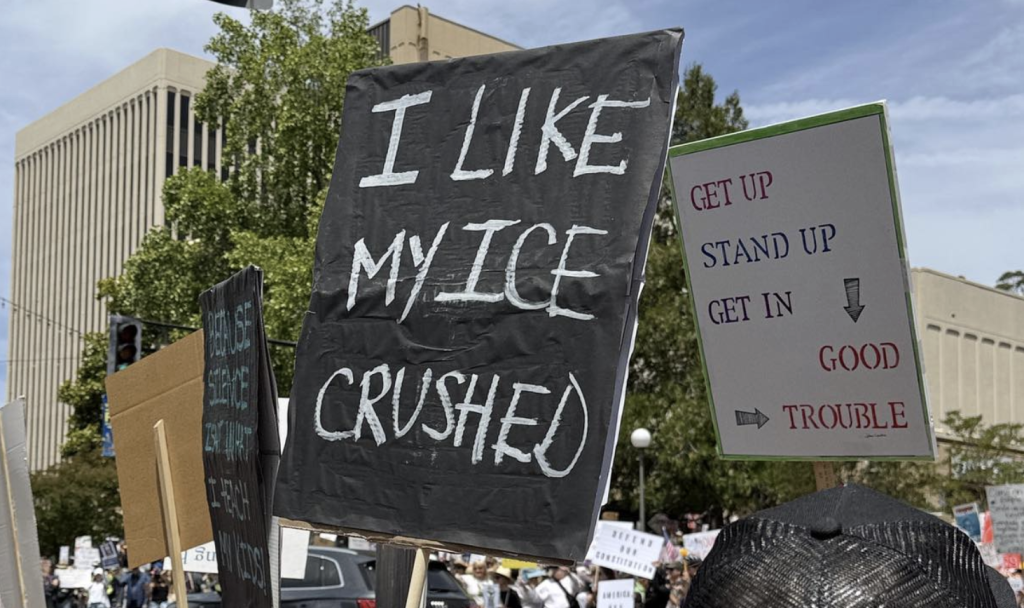
Los Angelenos barely rang in the new year before having to beat back wildfires. Now, five months later, many Latino families are petrified, thanks to the rising threat of Immigration and Customs Enforcement (ICE) agents – which have stalked suspected undocumented residents any and everywhere: schools, grocery stores, churches, Home Depot parking lots.
Plenty of national messaging, both spoken and implied, suggests that Latinos in particular don’t belong – an ugly smear about whether people have papers or not. Last Thursday Senator Alex Padilla – a Democrat and the son of Mexican immigrants – was shoved to the ground and handcuffed while attempting to question DHS Secretary Kristi Noem at a press briefing on immigration. Some administration officials and MAGA supporters have falsely claimed he “lunged” at Noem – videos show that was not the case.
This new trauma could be adding to some already inherited. Sanchez herself experiences anxieties picked up from her parents: a hypervigilance from her mother, and, from her dad, high stress re-entering the US after time abroad. “I get anxious,” Sanchez said. “I tell myself, ‘I’m good, I’m coming home. Why am I so stressed?’ But then I remember witnessing my dad start to sweat, start to jumble up his words and start to get really tense.” While children might not fully understand what’s going on, Sanchez recommends keeping communication open. Kids are “going to want to help their parents. So having clarity in those roles is really helpful.” It might take some of the pressure off.
LA residents have been vocal in their opposition to ICE’s targeting – in response, military troops have been deployed to suppress peaceful protest. Psychologist Lisette Sanchez, based in Long Beach, is noticing an increasingly anxious clientele, she told The 19th. Even citizens don’t feel safe. One client told her it was “the first time I’ve been afraid about the fact that I am Latina.”
Three other lawmakers and a judge have also been arrested while exercising their right to question ICE officials, exercise their own judgement and/or visit ICE detention facilities. New York City mayoral candidate and comptroller Brad Lander was detained and arrested by ICE agents when he asked to see a warrant from an ICE agent arresting a man in the hallway of a Manhattan courthouse, Milwaukee County Circuit Court Judge Hannah Dugan in her own court, and Mayor Ras Baraka of Newark and Rep. Monica McGiver were arrested while trying to inspect a private detention facility for immigrants, McGiver for allegedly “impeding and interfering with federal officers” – charges that she denies and called “a brazen attempt at political intimidation.”
The wider material threat to immigrant families might be hard to eliminate, but Sanchez says that “resilience is powerful and encourages people to “seek support, share their stories when they feel ready, protest, call their representatives and have those tough conversations with loved ones.”
Despite overwhelming public support for Medicaid, Republicans are still pushing for massive cuts
The Trump administration’s proposed health cuts would be devastating for America. The public knows this, and recently flooded the streets to protest against cutbacks and executive orders that many judges, scholars and legal experts have called “lawless” and “authoritarian” – making it clear that there are some things, like Medicaid, that we don’t want to live without, even if they don’t serve us directly. “This is our tax dollars. Most of us have worked,” one low-income resident of rural Pennsylvania told researchers, in a study cited by the Milbank Memorial Fund. “I’ve worked in this country since I was 14. I’m 61. And people that are on Medicaid aren’t less than. Even if I wasn’t on Medicaid or never had to use it a day in my life, I know that these people are not less than. Why are they treated like less than?”
Support for Medicaid is consistent, shared by Democratic and Republican voters, those on Medicaid and those not, those in red states and those in blue, according to an April 2025 survey from Milbank. Most Americans, including two-thirds of Republicans, believe Medicaid does what it’s designed to do – protect citizens’ access to health care, particularly those on low incomes. Moreover, nearly half of those who oppose cuts were willing to act to preserve Medicaid, with 45% saying they would raise awareness to protect it, 40% saying they would contact elected officials to defend it, and 21% saying they would volunteer their time campaigning for politicians who support it.
Amid all the talk of cuts, Medicaid is only getting more popular. In January, 77% had favorable views of the program, according to a poll from KFF – now, that figure is 83%. Pollster Ashley Kirzinger told NPR that the largest growth in support has been among Republicans. Yet Republican lawmakers continue to push for $800 billion in cuts to it.
Part of the support might be because most Americans have family or friends who benefit from Medicaid, but “attitudes towards the [One Big Beautiful Bill Act] are really subject to messaging,” Kirzinger said. Researchers found that support for measures in the bill varied wildly depending on framing. “If you tell people that it would decrease funding for local hospitals, unfavorability increases to nearly 8 in 10. If you tell people it would increase the uninsured [population] by about 10 million people, unfavorability increases to 3 in 4.”
In other news…
The weight of the world on young shoulders: “Since Donald Trump’s return to the White House, the atmosphere of fear that marked his first term has surged back,” a mother and daughter team in Austin, Texas, wrote in an essay in Public Health Watch. “Teens and young adults are dismayed with the ways their world is unraveling: global conflicts, escalating domestic gun violence, callous treatment of immigrants, disregard for environmental regulations, new limits on student loan forgiveness, an end to abortion rights. For many, fear has become a constant undercurrent in daily life, with real consequences for their health.”
“Generation Z – often defined as those born between 1997 and 2012 — has never known the comfort of growing up in peace. Born into post-9/11 uncertainty, Gen Z faced the disruption of the pandemic during formative years,” they continue. In this moving essay, columnist Lisa Doggett and her 17-year-old daughter, Clara Williams, a rising high school senior, share their perspectives on what this means.
New Department of Veterans Affairs guidelines remove patient discrimination protections based on marital status and political belief, which could theoretically allow doctors to refuse to treat unmarried women or Democrats, according to reporting from The Guardian. The rules aren’t spelled out in the article, but were developed following an executive order Trump issued in January to “defend” women. When asked, VA press secretary Peter Kasperowicz did not deny the change. He did, however, claim they were only a “formality,” ensuring that the VA complies with federal law. He failed to note which federal laws would require such changes. These rules are “extremely disturbing and unethical,” said Arthur Caplan, founding head of the division of medical ethics at NYU. “It seems on its face an effort to exert political control over the VA medical staff,” Caplan said. “What we typically tell people in healthcare is: ‘You keep your politics at home and take care of your patients.’”
Can a public health approach prevent political violence? It’s a question Michael Luo posed last fall in the New Yorker; recent events have me thinking about it again. “The principal aim of public health is prevention,” he writes. “The premise is tantalizingly straightforward: utilize scientific data to identify risk factors and the most vulnerable populations, and adopt multipronged solutions to stop problems before they arise.” Adopting preventative strategies made car travel much safer, for example – might we now apply the same principles to politics, as significant numbers of citizens express support for ideological violence? It seems there’s room for intervention – many who said they’d get involved in large-scale civil conflict were open to being persuaded otherwise, either by family, religious leaders, or news and social media.
Remembering the importance of forgetting: Despite our tendency to value a good memory, “forgetting is an equally important skill,” scientists told National Geographic. Without it, our minds would be clogged with unnecessary, sometimes painful memories. It usually doesn’t take much effort – sometimes trying not to remember can make forgetting feel impossible – but cognitive neuroscientists have been studying how we cultivate the habit: like so-called “directed forgetting,” in which simply telling participants to forget a word helps them to; or “retrieval-induced forgetting,” where, by choosing to look back on some memories, we reinforce them over other similar ones.
The name “MindSite News” is used with the express permission of Mindsight Institute, an educational organization offering online learning and in-person workshops in the field of mental health and wellbeing. MindSite News and Mindsight Institute are separate, unaffiliated entities that are aligned in making science accessible and promoting mental health globally.

Author

Related Articles
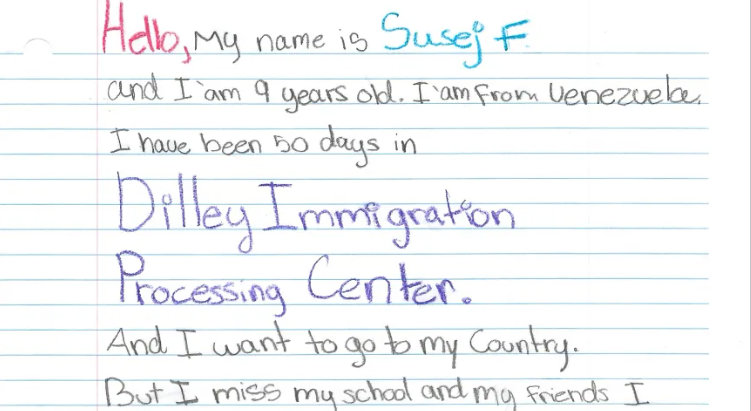
Health Organizations Condemn Traumatic ICE Raids, Family Separation
According to letters from children living in an ICE detention facility, living conditions are inhumane and their mental health is suffering.

In Teens, Social Anxiety Often Looks Like Anger
A study finds that some teens’ aggressive behavior may be due to social anxiety, not straightforward reactivity.
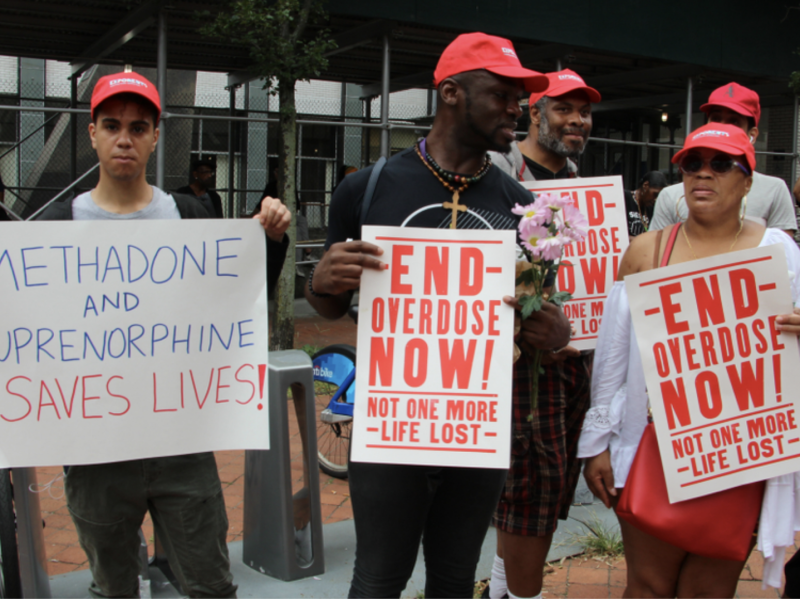
Expert Calls for Harm Reduction, Not Punishment, to Resolve Our Overdose Crisis
As the Trump administration pulls funding from harm reduction, an expert on the overdose crisis says it’s the best way to save lives.
