
Gulf War Vet Horrified by Prison’s Mental Health Crisis
In a first person essay, Derek Carter narrates his time volunteering as a peer counselor at his former South Carolina prison.
In this month’s Diagnosis: Injustice, we take a look at solitary confinement in New York, peer counseling in prison and sustaining mobile crisis teams.

Welcome Back MindSiters,
It’s finally summer time in Chicago and it started with a heatwave. This month, we’re taking a look at a new study on how Medicaid funding helped sustain mobile crisis response teams – those teams that use mental health workers instead of police to respond to mental health crises. The report has some interesting recommendations for making teams sustainable.
Also, a class action lawsuit challenging the use of solitary confinement in New York state prisons takes a big step forward.
But first, in collaboration with the Prison Journalism Project, MindSite News published an essay yesterday from an incarcerated man in South Carolina who has been serving as a volunteer peer counselor in the mental health unit of a prison where he’d previously been held – and he’s been shocked by what he saw.
Let’s get into it…
‘War Couldn’t Prepare Me For Prison’
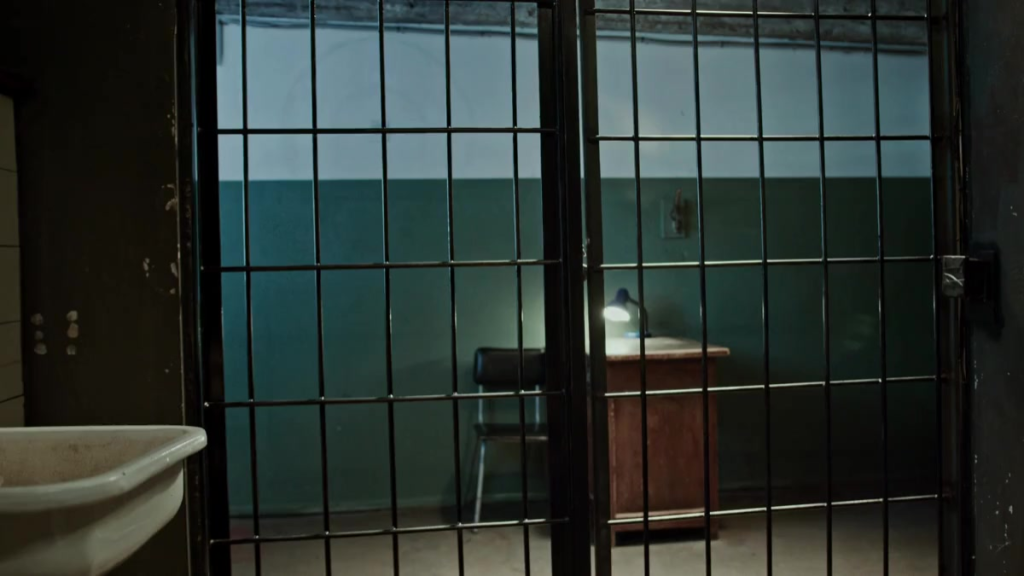
As a Gulf War veteran, Derek Carter knows brutality and can recognize indifference to evil. It gave him bouts of PTSD, but other than that he hadn’t really encountered many people with serious mental illness.
His crash course would begin almost immediately when he volunteered to be a counselor in the crisis stabilization unit at Broad River Correctional Institution in Columbia, South Carolina, the prison where he was previously incarcerated. As a “watcher,” he observed and served as a calming presence for those experiencing a mental health crisis.
What he saw and experienced was more severe or dire than he could’ve imagined – both surprising and horrifying, he said. But it gave him a growing sense of purpose and taught him about the ways that trauma affects us all.
Read all about Carter’s nine-year journey into the heart of a prison’s mental health crisis in our latest guest essay here.
A Landmark Lawsuit against Confinement
Maurice Anthony is legally blind and has been incarcerated in New York since 2014. Although a new state law went into effect in 2022 forbidding people with disabilities from being held in solitary confinement, he’s been locked in a cell by himself since then.
Anthony says the experience is like being held in a “trunk” or “casket” and “you can’t get out,” according to a press release from Disability Rights Advocates in New York, which said the isolation caused blackouts and claustrophobia for the 42-year-old Black man and left him feeling hopeless. The group’s lawyers, along with the Legal Aid Society and Winston & Strawn LLP have been fighting to enforce the law, the Humane Alternatives to Long-Term Solitary Confinement (HALT) Act. They contend that by failing to implement the law, the Department of Corrections and Community Supervision and the state Office of Mental Health, which runs mental health services in state prisons, are violating the rights of hundreds of people like Anthony.
While housed at Mid-State Correctional Facility from October 2021 to May 2023, Anthony was confined in his cell for about 19.5 hours per day Monday through Thursday. On Fridays, weekends and most holidays, he was locked in his cell for 22.5 hours.
From May 2023 to January 2024, he was detained in a Residential Rehabilitation Unit, created under the HALT act to replace isolation with therapeutic programming. But the units have become a de facto form of solitary confinement because the corrections department has failed to provide enough out-of-cell time and programming, the legal teams contend.
Despite strong evidence that people with disabilities are especially vulnerable to the medical and psychological consequences of isolation, the corrections department has continued to place people with post-traumatic stress disorder, depression, cerebral palsy, epilepsy, speech disabilities, mobility disabilities and hearing and vision deficits in solitary, according to the disability rights group.
This month, the lawsuit crossed two major hurdles when the court granted class certification and denied a motion from the state to change the venue of the case out of Brooklyn.
“This case is about protecting the rights of some of the most vulnerable people in New York’s prison system,” Katherine Haas, a staff attorney at the Legal Aid Society, said in a June 16 press release. “These rulings allow the case to move forward on behalf of all those affected and bring us one step closer to ending the unlawful and profoundly harmful use of solitary confinement on people with disabilities.”
Sustaining Crisis Teams with Medicaid
Mobile crisis teams first emerged in the 1970s as a way to provide services to people coming out of closed-down psychiatric hospitals. In recent years – especially in the aftermath of George Floyd’s murder – they have gained ground in communities across the country as a more humane and effective way to address the needs of people experiencing behavioral health crises without relying solely on police. Traditionally, these teams have included clinical professions, peer support specialists or EMTs and sometimes law enforcement.
Today, according to NRI, a research organization focused on behavioral health, mobile crisis teams are operating in hundreds of cities across all 50 states, serving as first responders to behavioral health crises — even as their sustainability has come into question.
In April, the granddaddy of crisis response programs – Eugene, Oregon’s CAHOOTS program (Crisis Assistance Helping Out on the Streets) – which launched in 1989 and became a national model, abruptly closed down its Eugene operations due to financial constraints. It will continue to operate in the nearby town of Springfield, under a contract with that city. The news shocked the local community and mental health advocates.
“I have a family member that has needed their help multiple times. The times that he’s been most successful is when CAHOOTS was able to help him to the hospital and do the warm handoff of behavioral health,” Stacy Bierma Welch told KLCC, an NPR station in Oregon. “They’re not imposing. They’re non-threatening. They’re there to meet people’s needs, as opposed to police their behavior.”
CAHOOTS’ demise reflects the uneven status of what many had hoped would be a mobile crisis movement and hints at the difficulties sustaining them – particularly now, in the face of federal cuts imposed by President Donald Trump and the Republican-controlled Congress. Some teams have grown by billing Medicaid for services while others are shrinking as cities grapple with budget deficits. The specific services reimbursed by Medicaid vary widely from state to state based on factors like crisis definitions, provider qualification criteria and the state’s Medicaid billing policies, according to a recent report published by Milbank Memorial Fund.
The 2021 American Rescue Plan Act provided an enhanced federal match through Medicaid allowing states to be reimbursed for up to 85% of the cost of services provided by mobile crisis teams over a three-year period. It provided an opportunity for states to build a sustainable crisis response system anchored by mobile crisis teams, according to the Milbank report.
In it, researchers Andrew Anderson and Jacob Jorem offered four recommendations for ways to make mobile crisis response sustainable:
- Standardize Medicaid Reimbursements: SAMHSA should issue guidelines on optimal support, training, and compensation standards. This will ensure staff receives a living wage and the positions are competitive.
- Extend Medicaid Match beyond three-year period: This could help teams secure funding streams and develop sustainable infrastructure.
- Improve Monitoring: Understanding disparities in access will require tracking demographic, geographic and socioeconomic characteristics of recipients and providers.
- Use a Firehouse Model: a staffing approach ensuring crisis teams are available 24/7 like firefighters.
Find the full report here.
Until next month,
Josh McGhee
The name “MindSite News” is used with the express permission of Mindsight Institute, an educational organization offering online learning and in-person workshops in the field of mental health and wellbeing. MindSite News and Mindsight Institute are separate, unaffiliated entities that are aligned in making science accessible and promoting mental health globally.

Author

Related Articles

Millennials Weigh Having Children On Their Own Terms
Not having children is also a valid path, and one that everyone should consider, Merle Bombardieri argues in her 1981 book.

Waiting for Word on Relatives Under Attack in Iran
Iranians in the US are caught between two “unrepentant regimes,” says Iranian-American writer and professor Shervin Malekzadeh.
Will the Pursuit of Profit Suck the Benefits Out of Psychedelics?
Many new programs have removed the most transformative, curative and life-affirming parts of the psychedelic experience.
