
Childhood Treatment May Prevent Future Psychopathy
Therapy for children with callous and unemotional traits,can help prevent adult psychopathy, new research suggests. Plus, a landline revival?

In today’s Daily, research finds that children with callous and unemotional traits, often a precursor to adult psychopathy, can be nurtured to better recognize emotions and lead a healthy adult life.
Also, an exclusive interview with bilingual therapist and social worker Mara Sammartino on the fear, anxiety and mental anguish immigrants feel over ICE raids – and the self-care and community bonds that are helping them through this dark time. And closing gaps in perinatal mental care for distressed moms in Georgia.
But first, get your kid a landline: To help her daughter avoid the risks associated with cell phones while maintaining connection with her friends, one mom in Portland, Maine started a landline pod. How the community of home phones works is laid out here, in The Atlantic.
Why treat children who are callous and unemotional? It may stop them from turning into psychopaths in adulthood

It only took eight months for Lillyth Quillan to know something was awry in her son, Alex. Like many nursing infants, Alex bit his mother while feeding. But it seemed deliberate, like the biting was the point. Despite her crying out in pain, he’d laugh. She switched to bottle feeding. A couple of years later, Alex was nearly expelled from preschool for harming other children. By middle school, he’d escalate to physically harming his mother and stealing and selling his parents’ electronics. “I remember hitting my mom as a kid,” Alex told Maia Szalavitz in Scientific American. “I know I shouldn’t have enjoyed it, but at the time, I did.” He would feign coming close for a hug, only to headbutt her instead. “If you’re looking for a reason, I wish I had it.” By high school he’d advanced to armed robbery.
Psychopathy, a diagnosis reserved for adults, is extremely difficult to treat, but new research suggests there is hope for children who display callous and unemotional (CU) traits, sometimes a precursor to that adult diagnosis. CU traits include a lack of empathy and general low ability to feel or recognize certain emotions, especially negative ones, in oneself and others. When identified and treated early, though, long-term studies show that roughly half of CU children do not go on to develop psychopathy – nurturing caregivers or other environmental factors can set them up for fairly typical lives.
A study led by Eva Kimonis, an Australian psychology researcher, used a modified version of parent-child interaction therapy (PCIT) to attempt to treat children with CU traits. The therapy, adjusted to CU youth, helps rebuild warm, emotionally expressive relationships between caregivers and children, using praise and consistent, personalized rewards to encourage the desired behavior. Sessions also involve teaching children to recognize emotional cues and developing coping strategies for aggression or frustration.
Kimonis’s study followed 45 families with children aged three to seven years old over 21 weeks. Each child was diagnosed with serious CU traits and conduct disorder. Week to week, individual households of parents and children played together for one hour in a room equipped with a two-way mirror, allowing therapists to monitor their interactions. Mothers, more often than fathers, were also fitted with a headset to enable the therapist to direct their play.
CU traits can be “primary,” assumed to be tied to genetics; Or “secondary,” developed in response to childhood neglect or trauma. Kimonis’ was the first study to compare outcomes between the two groups, and found that CU children with primary traits, like Alex, were, perhaps counterintuitively, more responsive to treatment. “Both groups improved,” she said, “but this primary group maintained its gains, whereas the secondary group deteriorated.”
Now 25 years old, Alex is thriving. In addition to having a healthy relationship with his parents, he has sustained gainful employment over the past four years. Alex’s outcome demonstrates that “early intervention is something we really ought to be investing in,” as developmental psychopathology researcher Essi Viding said, but it faces two big challenges: accurately diagnosing CU traits, and helping a child’s caregivers respect that addressing undesired behaviors with punishment will not work for them. Parents, teachers, and other adults working with the child must instead commit to relationship-based and reward-focused strategies.
“Danger Is At The Door:” A Latina Therapist on Counseling Clients in ICE’s Shadow
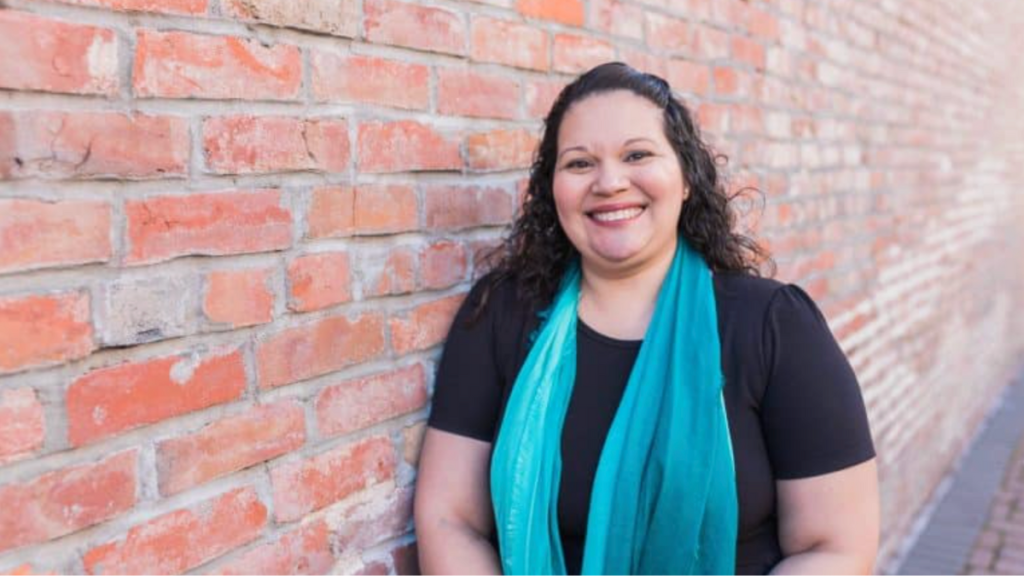
In her more than 10 years as a psychotherapist, Mara Sammartino, a bilingual licensed clinical social worker, has had a front-row seat to the impact federal immigration policy has on the everyday lives of immigrants in California. She remembers the fallout from Donald Trump’s first term, in which his family separation policies tore children and toddlers away from their parents. Now, in his second term, she is working with patients living in the shadow of ICE raids, when abuses of power extend even to Latino Senators and state leaders. It is, she says, a traumatic time for Latino families across the board.
Day to day, she works with first-gen Latinos from her practice in Vacaville, California, but Sammartino broadens her scope outside of the therapy room by posting videos on TikTok and Instagram as @thelatina_therapist.lcsw. She is followed by almost 20,000 people, and her videos have racked up more than 480,000 views. In 2022, she turned one of her TikToks into an essay for MindSite News, writing about the ways that first-gen Latinos see their reckoning with intergenerational trauma in the Disney movie Encanto, and how those lessons can apply to sharing her experiences and vulnerability with patients.
MindSite News co-founding editor Diana Hembree sat down with Sammartino to talk about how she and her clients are navigating the present moment – and how people can take care of themselves and their neighbors. Read the interview here.
Closing gaps in rural perinatal mental health care in Georgia – providing vital support to mothers and infants
Vanessa had always imagined her mother would be part of her birthing story – she’d been excited to share the arrival of her first child with her. “Your mother is like your best friend,” she told Georgia Public Broadcasting. “And this is something that I’ve wanted to, you know, go through with her. And I couldn’t.”
That’s because her mother had a massive stroke shortly before the birth, leaving her paralyzed. The incident devastated Vanessa, challenged her ability to process her emotions, and made it hard for her to experience joy at the healthy arrival of her son. “I couldn’t, like, connect with the baby,” she said. “I couldn’t even see the baby. I couldn’t stand him crying. It was just hard for me. And before this season of my life, I was a, you know, happy go lucky person.”
The “baby blues” – a brief period of depression and anxiety caused by hormone and life changes around birth and while caring for an infant – are to be expected. For some mothers, including Vanessa, that can amplify into postpartum depression (PPD). The more serious condition affects 1 in 7 new moms, while 1 in 5 experience some postnatal mental health issue. “Most of us who work in that field understand that that’s a huge underestimation,” said Bridget Cross, a perinatal mental health specialist based in Savannah. “Because that’s only people who are actually going to get treatment.” (Dads aren’t spared; 1 in 10 men are reported to experience PPD, too.)
Access to care is crucial, but is often limited to those who can afford to pay for it. Twenty percent of Georgia women of childbearing age don’t have health insurance, and 152 out of 159 counties in the state are experiencing a shortage of mental health care. The passage of Trump’s “Big, Beautiful Bill” is sure to make things worse, especially for rural Georgians.
Joy Baker, an OB/GYN in LaGrange, 90 minutes from Atlanta, said there are zero labor and delivery units in Troup County, the county she works in. “Our nearest hospitals are 40 to 50 miles away,” Baker said. “So, we have a hospital that’s in Newnan, and we have a hospital in Columbus. Essentially, we’re serving about five counties where we are.” Money is a huge part of the issue. Rural hospitals receive lower levels of reimbursement than those located in big cities – many are in danger of closing altogether. Nine rural hospitals have closed in Georgia in the past 15 years, according to Georgians for a Healthy Future. Circumstances in states with no Medicaid expansion are expected to worsen even further.
To help address these issues, Cross launched the Georgia Fund for Perinatal Mental Health in 2022. It connects more moms to professional treatment, providing direct access to therapists via telehealth and covering the cost of services. Among their patients is Vanessa. “I love therapy,” Vanessa said. It’s taught her that caring for her mental health helps her care for her children. “I’ve learned that you have to take some time for you. … Take a break a little bit so that you could be fulfilled and you could be your best self again.”
In other news…
Gen Z wants colleges to align with their personal – and political – values, with a new study showing that nearly 30% factor a school’s politics into their decision-making, WSIU reports. “They’re eliminating certain institutions that they believe are misaligned with their political values, either because they’re too conservative or they’re too liberal, they’re in a blue state or a red state,” said Pam Royall of EAB, the education consulting firm that conducted the study. Of the students surveyed, 45% said anxiety or feelings of isolation had had a “moderate to extreme impact” on their search. Moreover, for this generation, prioritizing safe campuses increasingly means not just concern for physical safety, but diversity, equity, inclusion, free speech, and mental health support.
Trump’s next budget could cost rural communities mental health and substance use disorder funding. Ten years ago, Nancy Winmill’s son survived an opioid overdose, but there was next to no follow-up support for him in her Burley, Idaho community. “I had no idea what to do or where to go. I had no help. I had no resources,” Winmill told The Daily Yonder, a nonprofit news service covering rural America. She went on to create Simply Hope Family Outreach – a nonprofit for families struggling with addiction, divorce, grief, and suicide in rural southern Idaho. If the FY2026 budget passes, funding for the nonprofit would evaporate. Read our republication of The Daily Yonder story here.
A new community database hopes to connect Asian Americans to culturally-competent therapists. To address rising rates of mental illness among Asian Americans, interns with the Missouri Asian American Youth Foundation created a statewide database of over 40 Asian and Pacific Islander therapists. The goal is that the directory will ease the search for Asian American mental health professionals who are culturally and linguistically competent, St. Louis Public Radio reports, and thus better equipped to overcome the stigma of mental illness and mental health treatment within the community.
Stigma about mental health in some Asian cultures makes it difficult for people to seek help. Mild, moderate, or severe mental challenges are lumped into the same bucket, and those struggling are seen as weak or not good enough, said Jun Zhao, a Chinese social work grad student who helps build the database. Seeing a therapist might even risk shame for the family, she said. Beyond listing the names of available providers, the database includes details about their training, specializations, language(s) spoken, and what clients can expect to pay for services. “It’s a major step in people getting the care that they need,” added Saish Satyal, who helped create the database.
The name “MindSite News” is used with the express permission of Mindsight Institute, an educational organization offering online learning and in-person workshops in the field of mental health and wellbeing. MindSite News and Mindsight Institute are separate, unaffiliated entities that are aligned in making science accessible and promoting mental health globally.

Author

Related Articles

How Medicaid is Helping People Leaving California Prisons
Changes to federal law allows Medicaid to provide health and other services to people exiting prisons. California and some other states are making use of the program, but expansion efforts will depend on the Trump administration.
Google and Meta Found Negligent in Apps’ Mental Health Harms
Meta, Instagram’s owner, and Google, Youtube’s owner, neglected to protect a user from their apps’ addictiveness, a jury rules.

The College Mental Health Crisis
Experts say more preventive care is needed to combat the growing mental health crisis affecting college students.
