Can San Francisco Make Good on its Promise to Redesign Its Mental Health System?
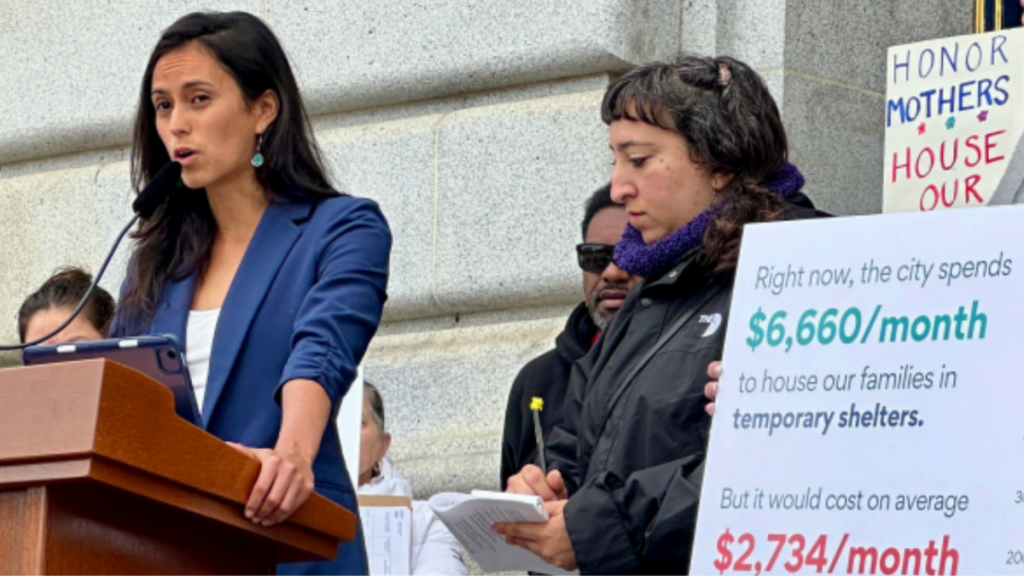
Advocates say Mayor Daniel Lurie’s proposed 2-hour parking limit for RVs will hurt homeless people living in them, including those with mental health problems.

Greetings, MindSite News Readers.
In today’s Daily, a look at the hoped-for changes in San Francisco’s mental health system redesign at a time in which Mayor Daniel Lurie continues to make daily life more risky and painful for many homeless residents. Vengeance is addictive, but forgiveness is powerful. Plus, what experts say about a viral “cortisol cocktail” that TikTok claims can reduce stress.
But first, see what Anna and Jordan Rathkopf, a married pair of Brooklyn-based photographers, learned and experienced about grief, caregiving, and commitment as they documented Anna’s near-decade-long battle with breast cancer. You can read the full story in their book, HER2: The Diagnosed, the Caregiver, and Their Son.
San Francisco has to overhaul its mental health system, but the mayor’s new move against homeless residents is not promising
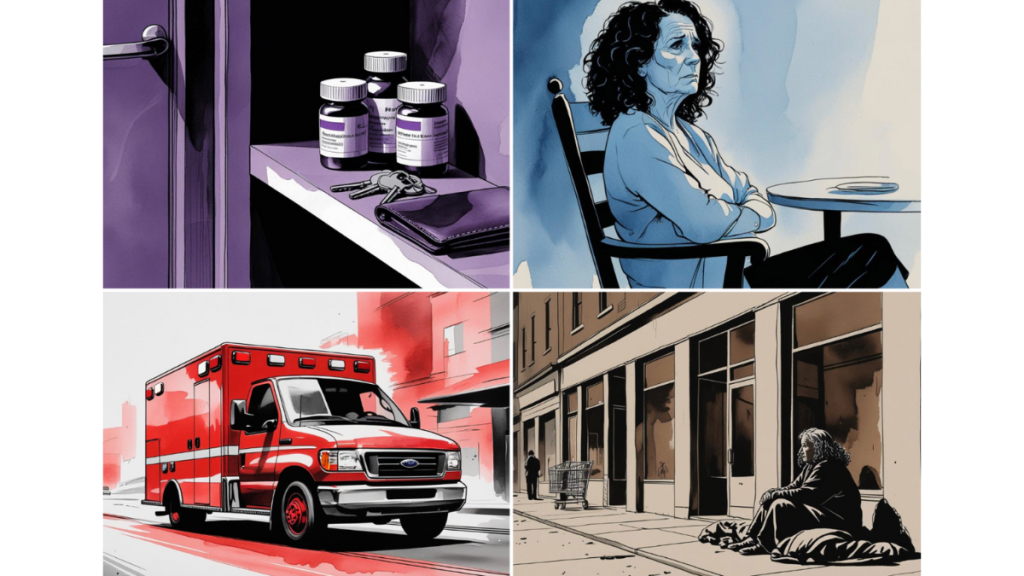
San Francisco’s mental health care system, like plenty across the nation, too often only kicks in after a crisis: Many people with mental illness or addiction issues can access care only after losing their jobs, homes, or freedom. It’s “mind shattering” that “jail, the streets, [and] psychiatric emergency services … end up being the points of entry into the city’s mental health care treatment,” Chuan Teng, former CEO of a local mental health and social services provider, now a private consultant, told the San Francisco Public Press in a story we recently republished on MindSite News.
Over the next year or so, the city’s mental health advocates see a window of opportunity. California’s Proposition 1, narrowly approved by voters last year, requires counties like San Francisco to redesign their behavioral health systems to move away from forced mental health detention, involuntary treatment, and homelessness, and towards housing and personalized treatment. The law also provides some funding for new homes and new treatment facilities. But the mayor’s actions to address the homelessness crisis have done little to help – and his proposed time limitations on RV parking may exacerbate the crisis.
The city of San Francisco is obliged to consider public perspectives on local health care, and local service providers have been pushing for fundamental changes to help those who currently cycle back and forth from inadequate treatment and into homelessness. Roughly 8,300 San Franciscans are homeless, among 187,000 unhoused people in California, nearly a quarter of the national total, according to counts from last year. Nearly half also have complex mental health needs. As such, advocates say proposed reforms must go beyond emergency response to have a long-term, transformative impact on the problem.
Mayor Daniel Lurie’s efforts since January have included consolidating and redirecting mental health street teams, but also backing regular homeless “sweeps” and limiting how local nonprofits can offer harm reduction for drug users. He has also been criticized for bussing some 500 homeless people out of town and calling for two-hour parking restrictions for RVs, which many people in the costly Bay Area use as homes – a move that would result “in fines, towing, displacement and eviction of those vulnerable San Franciscans experiencing poverty and homelessness,” according to Street Sheet, a newspaper published by the Coalition on Homelessness.
Lurie has also promised to create 1,500 new shelter and treatment beds, which are due mid-September. Thus far, the state has committed $27.6 million of Prop. 1 funds for San Francisco to establish just 73 beds – and most of those are conversions from beds currently occupied by seniors, who will need to be relocated. In the meantime, Lurie hopes to shift money from permanent housing to emergency shelter. A move like that goes against the long-term strategies being called for – in 2024, only 13% of those reporting after leaving shelters found permanent housing.
You want revenge on your tormentors. Is forgiveness an antidote?

Your brain on revenge looks a lot like your brain on drugs, says James Kimmel, Jr., author and lecturer in psychiatry at Yale University. And just like uncontrolled addiction, a commitment to vengeance can destroy you, he writes in the Wall Street Journal. He remembers chasing vengeance at 17 years old. Bullies were relentless in their torment of him one season, blowing up his family’s mailbox and even killing their dog. In agony, Kimmel went after them, loaded gun in tow, seeking payback.
Many people have a similar, if less lethal, urge for payback. A 21-year-old study found that participants in economic games, which are played to simulate and study social behavior, were willing to take a personal loss for the opportunity to retaliate against others who had betrayed a group’s trust. Choosing punishment was associated with brain activity in areas linked to habit formation. More recent research linked choosing revenge with activity in the nucleus accumbens, a part of the brain implicated in pleasure and craving. Those who resisted the urge, though, showed a connection between the nucleus accumbens and the prefrontal cortex, which manages executive function and self-control, and is often “hijacked during addiction,” according to Kimmel.
Despite resisting the urge to shoot the bullies who killed his dog, Kimmel became addicted to revenge. For 20 years, he “sold vengeance to the masses” as a lawyer, he said. “By the end (of my law career), I was little more than a briefcase-carrying version of the kids who had bullied me. I threatened and retaliated my way through grievances involving the people who hired me, as well as personal grievances I had with my family, friends, neighbors and sometimes even myself.” He descended into a mental crisis, once even contemplating suicide.
It looks like our brains can crave vengeance in the same way they crave substances. And just like overindulgence of drugs can destroy lives, so too can chasing revenge. It feels good at first, thanks to a surge of dopamine neutralizing whatever pain we carried around from that initial harm. But in the long run, “taking revenge… produces negative consequences… including anxiety about becoming a victim of continued escalation of the conflict,” Kimmel writes.
Thankfully, we have strategies to treat substance addiction, which we can apply to resolve our revenge addiction, too, including public health campaigns, in-school education, and clinical treatments, like cognitive behavioral therapy, motivational interviewing, and self-help programs. But the simplest, most potent antidote, Kimmel says, is forgiveness.
These days, that is what Kimmel is promoting. “It took me decades more to realize what I needed to do instead,” he writes. “Imagine what would happen if each of us, and our political leaders, understood two simple words: “I forgive.”
In other news…
Does TikTok’s “cortisol cocktail” really work? The alcohol-free beverage combines coconut water, orange juice, lemon juice, magnesium powder, a pinch of sea salt, and sparkling water. TikTok users claim the tonic helps lower levels of cortisol, a stress hormone that regulates blood pressure and sugar concentrations. But doctors tell CNBC that they only rarely recommend cortisol-lowering medication, and besides, it’s unlikely the cocktail has any effect. It’s probably just making people feel more hydrated. “It’s kind of like Gatorade with the orange juice, the salt, and the magnesium,” says Marilyn Tan, an endocrinologist and clinical associate professor of medicine at Stanford. “People often think that it may help with sleep or help with relaxation.”
Do you get the Monday Blues? Some people feel anxiety and dread mount at the start of a new work or school week. But Science Daily reports on new research outlining the mood’s long term impact. Researchers at the University of Hong Kong looked at data from more than 3,500 older adults participating in the English Longitudinal Study of Aging and found that those who had anxious Mondays also had higher levels of cortisol in their hair, reflecting months of exposure. Interestingly, researchers found that even retirees were affected, supporting what science already knows about the negative impact of chronic stress. “Mondays act as a cultural ‘stress amplifier,'” said Tarani Chandola, who led the study. “For some older adults, the week’s transition triggers a biological cascade that lingers for months. This isn’t about work – it’s about how deeply ingrained Mondays are in our stress physiology, even after careers end.”
The name “MindSite News” is used with the express permission of Mindsight Institute, an educational organization offering online learning and in-person workshops in the field of mental health and wellbeing. MindSite News and Mindsight Institute are separate, unaffiliated entities that are aligned in making science accessible and promoting mental health globally.

Author

Related Articles
Family of 6 in ICE Detention for 9 Months ‘Dying on the Inside’
After nine months in Dilley Immigration Processing Center, “we forgot what it feels like to be free,” a recent high school graduate wrote.
Generation Cancer: Millennials Struggle With Death at an Early Age
More young adults are being diagnosed with cancer. Even for those who survive, the experience can be destabilizing and isolating.

Millennials Weigh Having Children On Their Own Terms
Not having children is also a valid path, and one that everyone should consider, Merle Bombardieri argues in her 1981 book.
