
Some Antidepressant Users Suffer Withdrawal Years Later
Some people suffer withdrawal symptoms long after quitting antidepressants – so one doctor recommends slow tapering. And New York Times reporter Ellen Barry shares what she’s learned from reporting on mental health.

Greetings, MindSite News Readers.
In today’s Daily, some people suffer difficult, lingering symptoms after quitting antidepressants — even when done under a doctor’s care, and Pulitzer Prize-winning journalist Ellen Barry shares what she’s learned of people and our nation’s systems of care after years of reporting on mental health.
Plus, why some doctors are prescribing group exercise classes and fun, along with medication.
But first, one Michigan widower is determined to overcome his loneliness by finding new love. At 80 years old, he’s rejected fast-paced dating apps in favor of a more classic approach: plastering flyers on utility poles in the town of Cass City up in the Michigan thumb. “I’m not a good loner,” Brian Kitchen told the Detroit Free Press, following up with the reasons he is a good catch – largely consisting of what he does NOT do: “I’ve never yelled at a woman, never hit a woman, never been arrested, never been ticketed for driving…I’ve never had a check bounce, and that’s a biggie right there…I’ve been busting my butt trying to get somebody. All I know is if a woman decides to give me a try, she’ll have the best guy in Michigan.”
Some antidepressant users suffer debilitating withdrawal up to 8 years after ending use

Many people who stop taking antidepressants are discovering that ending the meds can lead to longterm, debilitating withdrawal that not enough doctors take seriously. Phillipa Munari told NPR she began taking Effexor in 2013 on the recommendation of her doctor. She’d gone in complaining of fatigue and didn’t expect an antidepressant to help, but followed their advice anyhow. Ten years later, she decided to conclude the drug and tapered off usage with the help of her doctor.
The first few months were fine. But six to nine months later, she began to experience anxiety, along with body and nerve pain she had never felt before. “I had complete panic,” Munari said. “I couldn’t leave the house.” The distress was so great, she had to leave her job and receive disability. Things didn’t improve for two years.
Sven Huber, who took antidepressants for 13 years, has a similar tale. Recognizing that he was struggling with depression, Huber reached out to his doctor who prescribed him an antidepressant. The initial medication made him sleepy, so the doctor swapped it for another: Lexapro. The next day, “It felt like a switch was flipped,” he said. He experienced an onslaught of issues: blurry vision, emotional numbness, numbness in his genitals, low libido, anxiety, suicidal ideation, and “brain zaps,” which in my personal experience feel like sudden and abrupt supercharged shocks to the brain. After nine years, he was able to fully end the meds. But today, a full 18 months after his last dose of Lexapro, Huber said he still isn’t resolved.
The brain zaps, anxiety and suicidal thoughts have gone away, but the blurry vision, burning feet, sexual dysfunction and emotional numbness are still around. “I can’t relate to any family members or friends,” he said. “Before I took it, I had feelings – bad feelings often – but I felt something. And now I do not feel anything at all. …I would just like to feel like a human,” he said.
It’s not hard to find lots of people exchanging similar stories online, often saying doctors never warned them of the risks of prolonged withdrawal. Worse yet, most doctors and patients just don’t realize “you can have symptoms that persist for long periods after you stop [antidepressants],” said psychiatrist Mark Horowitz, who specializes in antidepressant withdrawal.

He developed a method for tapering antidepressants, which users often reference in the online forum, Surviving Antidepressants. Founded by Adele Farmer, a patient who spent seven years bumbling through withdrawal, the website allows users to exchange best practices for getting through it. The Horowitz method encourages a much slower weaning than standard guidelines encourage, recommending a 10% reduction each month for one year or more, rather than concluding over a few weeks. “People don’t learn this stuff in medical school,” Farmer said. Two years ago, she launched the Psychotropic Deprescribing Council to further develop and amplify best practices for tapering psychiatric meds.
Research shows that some patients experience antidepressant withdrawal for an average of eight years, but not enough practitioners know about it. Moreover, most existing studies are smaller scale and were designed to measure withdrawal or the effects of long-term use, leading to disagreement in the field about the severity of the issue. Horowitz and other experts hope to see more research that tracks the long-term experience of antidepressant users once they stop the drugs.
“It should be very concerning to the medical system and the public that there are tens of millions of people walking around on drugs whose long-term exposure and withdrawal effects we do not understand,” he said.
Ellen Barry: Reporting on the complexities of mental illness with compassion
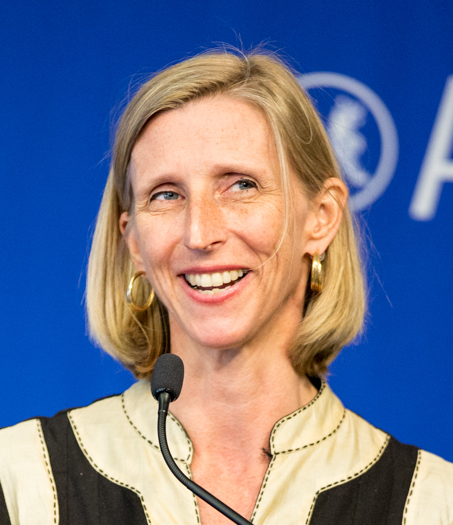
After more than a decade traveling the globe covering world news, New York Times journalist Ellen Barry returned to the United States in 2019, where her next assignment emerged on the streets of New England. Homeless encampments dotted the region, Barry told Dr. Awais Aftab of Psychiatry at the Margins, and she was struck by the mothers she often found walking among them, searching for their children.
“I had the feeling that, as a country, we were at an inflection point around mental health,” she said. “The housing crisis had pushed people with severe mental illness onto the street. Young people were narrating their treatment history on TikTok. New frameworks (particularly around trauma) were bubbling up on social media, competing with medical models. I found all those things both morally and intellectually compelling.”
So she dove into documenting stories that simply show reality. Writing what she sees is the point, not for advocacy or persuasion of any particular mental health policy, but for the sake of readers knowing what people are experiencing and what’s at risk. “I want to show the readers the human stakes, lay out different perspectives and step back and leave it to them to decide.” As much as possible, Barry aims to keep herself out of the story, but it’s not always possible due to the immersive nature of her reporting.
In “24, and Trying to Outrun Schizophrenia,” for instance, Kevin Lopez, the subject of the story, asked her to sit with him during a mental episode, when none of his caretakers were available. In “The Man in Room 117,” which reported Andrey Shevelyov’s cycle of forced psychiatric treatment and homelessness, Barry sides neither with his parents, who support involuntary treatment, nor Shevelyov, whose mental illness made him prefer homelessness. Forced treatment “had demonstrated its failure,” Barry wrote, “but I’ve seen how regular attention from a social worker can really move the dial for a person.” Expanded options, rather than the binary of treatment or housing became the answer. “There needed to be a third way that combined housing and treatment,” she concluded.
More than anything, Barry’s reporting has enabled her to travel into people’s lives and spark public conversations about mental health infrastructure and treatment. The fact is, “We need more of everything,” one street psychiatrist told her: more housing, more support, more options. The lack of support and options is affecting the entire field. While psychiatrists tend to enter the profession to help people, in practice, they are often relegated to medication management, Barry said, while patients are left without fully managed care.
In other news…

Palabra, an initiative of the National Association of Hispanic Journalists, reported earlier this year on “The Burden of Bearing Witness,” or what’s at stake for journalists, particularly immigrants and journalists of color, in doing this work. It wasn’t until the pandemic that newsrooms began to acknowledge the emotional and mental impact reporters experience, being required to run toward trauma.
“Everyone thinks of combat war reporters or people doing on-the-ground reporting about drug trafficking as the kind of journalists who are at greater risk,” explained Elana Newman, research director and co-founder of the Dart Center for Journalism and Trauma at Columbia University. “But from the very beginning, we’ve always thought about the daily community reporter as well. Because it’s the common, ordinary, horrible events — accidents, fires, shootings, issues related to children, the coverage that doesn’t get you awards or promotions — that can be the most toxic. Community reporters are professional, daily witnesses to grief and human suffering.”
Yesterday MindSite News discussed social prescriptions and how physicians in more than two dozen countries are using them, in addition to pharmaceuticals, to address chronic diseases like Type 2 diabetes, chronic pain, dementia, loneliness, ADHD, anxiety, and depression. According to research, doing so not only improves patient health outcomes, it also decreases overall healthcare costs. As such, I wanted readers to meet Frank Frost, who has had Type 2 diabetes for decades and long felt like a failure, struggling to lose weight and improve his condition. Doctors were little encouragement, he said, making him feel “weak and worthless.” He was stuck in a cycle of drudgery and declining health, working 12-15 hour days, and going to bed after a dinner of fast food — until he met a doctor who changed his life.
“He asked me what mattered to me, which I’d never been asked before by a doctor,” Frost said on NPR.. “I told him that I wanted to live long enough to see my grandkids grow up.” That prompted Frost to share some of his childhood passions, including a love of biking, which resulted in a written prescription for Pedal Ready, a 10-week cycling course designed for adults returning to the sport. Frost made friends for the first time in years, dropped 100 pounds, and was able to stop taking insulin. Though the prescription for Pedal Ready expired long ago, he continues to bike with, “The Chain Gang,” a group of friends he made in the course. “We’re all of a certain age,” Frost said. “We don’t leave anybody. It’s changed my life.”
Beware of “life coaches” selling manifestation: While stories of people being helped by ethical life coaches are abundant, the field of coaching remains unregulated, leaving unsuspecting, yet vulnerable, people prey to emotional and financial exploitation. For some, the term “life coach” implies “therapist,” leading to confusion, Elias Aboujaoude, a psychiatry professor at Stanford University, told the Los Angeles Times. “When life becomes your topic, you are a de facto therapist,” he said. “While any new helping profession is a welcome addition to our well-being landscape, this totally unregulated Wild West risks doing serious harm.” Anela Pasalic, 30, is recovering from her experience with “life coach” Kathrin Zenkina. Once believing Zenkina to be a “glamorous spiritual guru” who could teach her how to manifest her dreams, Pasalic says her life is unchanged seven years later — and she’s out $6,000. “In many ways, manifesting takes the problems with life coaching to a new level, further moving the process away from the concrete, practical advice that coaching should be about and into the abstract, occult, less researched and even riskier realm,” Aboujaoude said.
ICYMI: Check out our earlier story on another Wild West of the coaching industry – grief therapy and coaching – by checking out Astrid Landon’s series “How I Passed a Test to Be a Grief Therapist Without Really Trying.”
The name “MindSite News” is used with the express permission of Mindsight Institute, an educational organization offering online learning and in-person workshops in the field of mental health and wellbeing. MindSite News and Mindsight Institute are separate, unaffiliated entities that are aligned in making science accessible and promoting mental health globally.

Author

Related Articles

Health Organizations Condemn Traumatic ICE Raids, Family Separation
According to letters from children living in an ICE detention facility, living conditions are inhumane and their mental health is suffering.

In Teens, Social Anxiety Often Looks Like Anger
A study finds that some teens’ aggressive behavior may be due to social anxiety, not straightforward reactivity.
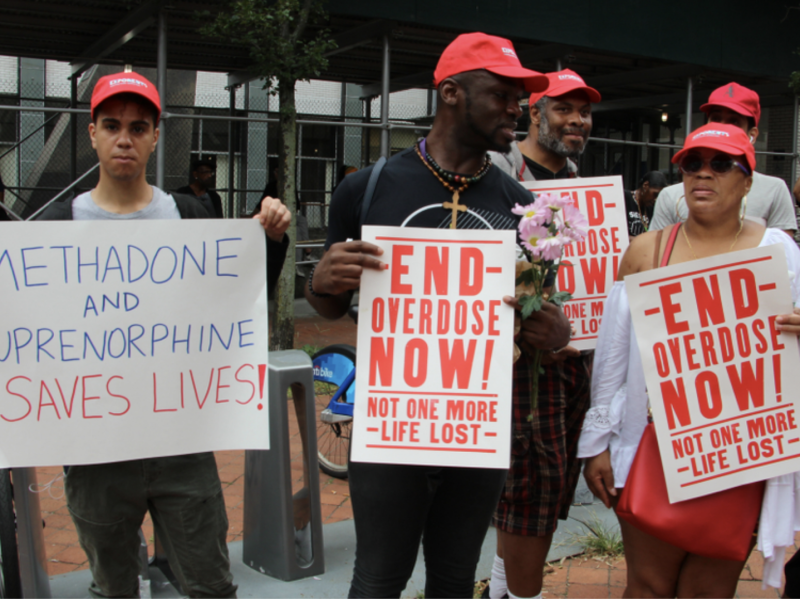
Expert Calls for Harm Reduction, Not Punishment, to Resolve Our Overdose Crisis
As the Trump administration pulls funding from harm reduction, an expert on the overdose crisis says it’s the best way to save lives.
