
What We’re Reading: AI and the Male Mental Health Crisis
Our weekly roundup of what’s happening in the world of mental health news.

Every week, Courtney Wise rounds up quirky, inspiring and essential stories, plus the mental health news you’ll want to know from around the web.
Meet 76-year-old Ed Levien, EMT. “I never had an impact on anyone until I started doing this,” the retired ad man told the Washington Post. After recovering from a crippling injury, Levien took a course and began working as a volunteer EMT at the Bethesda-Chevy Chase Rescue Squad when he was 65 years old – his colleagues call him “Pops.” He was responding to calls until April and still works in the rescue squad. “You sleep well at night,” he said, “because what you’re doing truly makes a difference.”
👨🏻🤝👨🏿 What does AI have to do with the male mental health crisis? Quite a lot, writer Jill Filipovic argues in Slate. By eliminating so many jobs, AI threatens men’s ability to work, negating the positive psychological impact of “satisfying employment,” which one survey found to be “the strongest predictor of a positive mindset in men.”
Rising unemployment will only exacerbate the male loneliness epidemic, Filipovic continues. While women will surely also lose jobs to AI, the stress of the fallout is likely to be less harsh on them, because of their willingness to “tend and befriend” – seeking connection with others, nurturing relationships, and asking for help. Men, on the other hand, have fewer social networks, and often tie their sense of self-worth to work. That leaves them vulnerable to social isolation and disconnection, she writes, yielding poor mental and physical health, worse employability, heightened risk of suicide, death, drug use, alcohol addiction, sleep problems, chronic health problems and obesity as well as a greater propensity for violence.
⚾ Major League Baseball’s attitude to mental health is evolving: The deeply masculine sports league is letting go of some of the stoic attitudes of its past and embracing mental health awareness. Serious incidents like those involving Ketel Marte, Jarren Duran, and Drew Robinson have sparked public dialogue, while the league’s mandate that all 30 teams employ mental health professionals has institutionalized support. “We actually have a mental skills staff,” Arizona Diamondbacks left-handed reliever Andrew Saalfrank told Cronkite News. “Those are some really good resources to have, and even if things aren’t necessarily going bad, it’s just nice to have someone there to talk through your thoughts, how you process the game and how you handle the negativity and the failure of the game.”
Earlier this week, Girl Scouts of the USA (GSUSA) and body care brand Flamingo launched a body appreciation program aimed at teaching girls to appreciate the amazing things their bodies can do, rather than focusing so intensely on what they look like. It’s inspired by new research from GSUSA, which highlights the body image pressures girls aged 5 to 13 face each day. “This research underscores what we’ve long suspected — that girls are paying close attention to the messages they hear about their bodies, and those messages shape how they see themselves,” Bonnie Barczykowski, CEO of GSUSA, said in a press release. The program will involve a new badge curriculum, and Flamingo’s funding will contribute to access and long-term development.
“If we want girls to move through life with purpose and joy, we have to invest in their confidence — how they think and feel about themselves. We are so grateful to Flamingo for their partnership in developing this Body Appreciation Program, because helping girls build a strong sense of self is not optional — it’s essential.”
Are millennials doing away with gentle parenting? I’ve never been a gentle parent. Tell that to my in-laws, and they’ll scoff, saying we millennial parents are too soft. My parenting friends and I disagree. We deem ourselves conscious parents, making intentional efforts to recognize and heal our own mental and emotional wounds, in an effort to mitigate the trauma we pass down to our own children. Among the Black parents with whom I share a community, this is about an entire people’s liberation, as much as it is about the individuals we are becoming and raising. Anyway, we don’t hit our kids, we do our best to not yell at them, and amid all the talking we have to do since the belts have been put away, there are plenty of moments we watch our kids experience the consequences our parents spanked us to avoid. That’s the healthy “FAFO” sentiment within us, shared by fellow parents in this recent offering from the Wall Street Journal.
FAFO means exactly what you think it does: F___ around and find out. But for conscious parents, it’s just another term to describe natural consequences, which we’ve all experienced at one time or another. That looks like my daughter discovering at age 5 that I will not spend 15 minutes arguing with her about wearing a coat on a freezing day the way her grandma would. She doesn’t want the coat after I tell her it’s cold, even after I let her step outside to feel the cold for herself? No problem. The cold will teach her a lesson that I cannot. Just yesterday, she refused to eat the healthy breakfast filled with foods she asked for, then proceeded to ask me to stop for McDonald’s moments after leaving the house. No ma’am; Mama made breakfast with would-be McDonald’s money. Neither moment derailed her future. In fact, she’s become the kind of girl who carries a coat on a cool day “just in case,” and even ate a few bites of good food this morning.
The name “MindSite News” is used with the express permission of Mindsight Institute, an educational organization offering online learning and in-person workshops in the field of mental health and wellbeing. MindSite News and Mindsight Institute are separate, unaffiliated entities that are aligned in making science accessible and promoting mental health globally.


Author

Related Articles

Does Contemporary “McMindfulness” Reinforce Our Suffering?
A Buddhist teacher and professor argues that a commodified mindfulness solely focused on the self is only a stopgap fix.
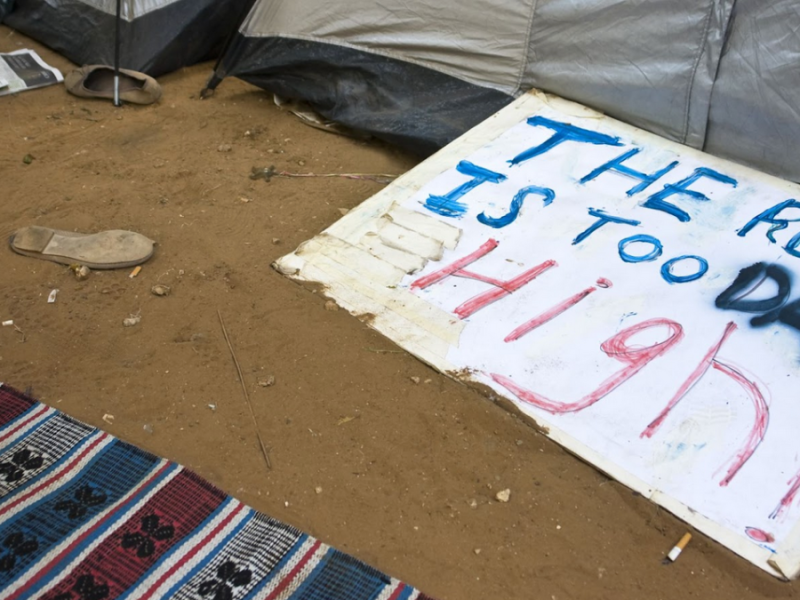
“No Beds”: Despite Improvements, Detroit’s Shelter System Continues to Let Families Down
When a Detroit mom and her two sons faced homelessness last year, she spent months calling the city daily for beds – in vain.

988 call responses plummet in Georgia after insurer cutbacks
After an insurance company made cutbacks, Georgia’s 988 response rate to mental health crisis calls “fell off a cliff.”
