Online Communities Are a Lifeline for Youth in Rural Areas
A new Hopelab report finds online support is vital to the mental health of rural youth
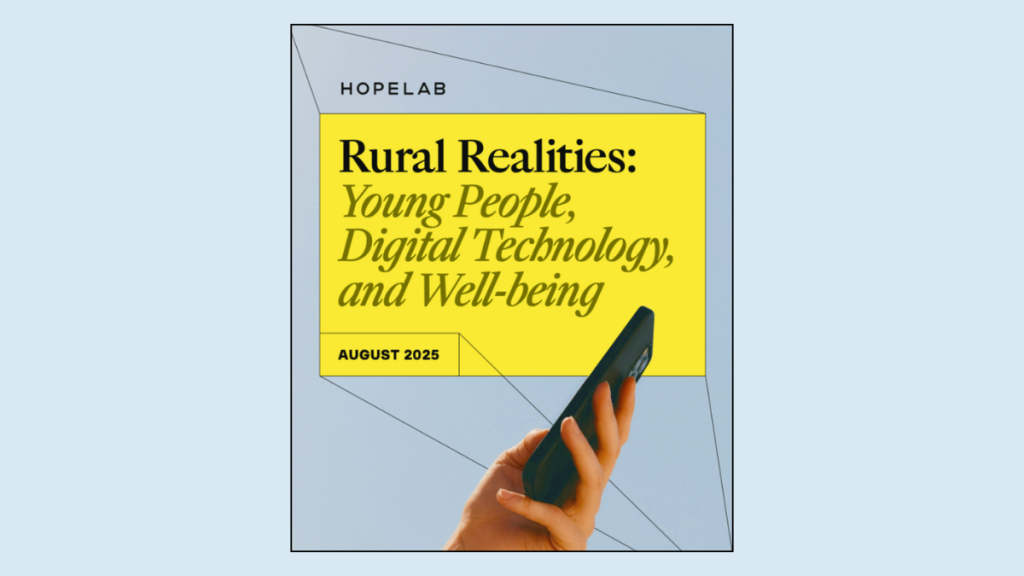
HopeLab, a San Francisco-based research and innovation hub, is out with a new report on the importance of social media to youth and well-being in rural communities. One key finding: technology in the form of online communities is a lifeline for these young people, who have higher rates of depression and struggle to make connections.
When I read the report, I thought of my cousin, whom I’ll call Daniel. He loved pets, dressing up with his sisters, and mischief, including playing with cherry bombs and trying to nab a biscuit or two during my grandfather’s eloquent but lengthy prayers over dinner. Daniel was gay and grew up in a high-spirited evangelical family – first in the suburbs and then in a rural county in the south.
As a small boy, he would listen raptly to the weekly stories I told him and my other little cousins, in which they and I would fly around the world in a magic bubble, fleeing from bad guys and solving mysteries. When he grew up, Daniel brought his boyfriend to family gatherings, where he’d be introduced as “Daniel’s friend.” On the mantelpiece in my grandparents’ home, a framed photo of Daniel’s high school prom date – a pretty young woman in a floor-length gown – smiled down on the pair. Daniel worked as a dispatcher and later moved to Boston in his 20s, where he didn’t have to keep part of himself under wraps.
Then the AIDS epidemic hit, and his sisters and my aunt flew to Boston to take care of him after he fell ill with the virus. We talked on the phone regularly, and as his health began to deteriorate, I told him I planned to visit soon. The subject of AIDS came up, followed by a pause, then both of us chorused in unison “maybe they’ll find a cure.” “Jinx!” Daniel told me, laughing. I asked what else I could do. “Tell me a Magic Bubble story,” he whispered, so I did, one in which all the cousins flew the bubble to Boston to join him in solving the theft of a magic curing stone. A few weeks after our call, he died. He was only 33.
Were Daniel here, I do believe that he would love the just-released Hopelab report, which finds that online communities offer precious support for many LGBTQ+ teens and other young people who had previously felt lonely, isolated or compelled to hide their authentic selves.
Earlier this year a research report from the Born This Way Foundation and Hopelab highlighted the kindness, social support and safety found in “online spaces” by LGBTQ+ young people in rural communities. (See more on that study here). As one LGBTQ+ youth told interviewers, “In my in-person communities, I felt I would never show my real self to these people. But when I found my online communities, it was like, okay, I am proud of who I am…. I had this online community to affirm me and talk to, and who insisted there wasn’t something wrong with me.”
The new Hopelab study, Rural Realities: Young People Digital Technology, and Well-being, stresses the importance of social media for all rural youth: Nearly one in six young people live in rural areas, the study says, noting that they often face higher poverty rates, fewer opportunities for jobs and education and less access to healthcare services – especially mental health resources.
“Despite these challenges, many rural young people find ways to connect and express themselves, often turning to online spaces that offer a sense of community, understanding, and affirmation,” the report said. Not only can rural youth connect freely with peers and get access to support online, they can create a sense of belonging both at home and beyond their immediate horizons.
Among the report’s key findings:
- Rural young people are less likely to use social media daily compared to their suburban/urban peers (75% v. 85%). Their favorite platforms are TikTok (45%) and Snapchat (39%), while urban/suburban youth prefer TikTok and Instagram. One reason they spent less time on social media had to do with a lack of broadband access.
As one rural participant said: “I didn’t live in an area where there was fiber (for internet access). So, data was really bad. Internet was really bad too. I think it’s better now, but I completely did not think that the Internet was reliable. So I just feel like even if I had a phone, (social media) was not something that I would use pretty often.”’ - Rural young people, nonetheless, are more likely to prefer communicating on social media rather than in person (49% vs. 38%). A young woman who was multiracial and lesbian said that in growing up in rural areas, her personal interactions were often tense. “You’ll either be judged for your behaviors or your appearance, so it makes sense that people would rather use social media rather than personal interaction,” she said. “I did not like to leave the house or anything. I much prefer to use social media for my communication.”
Rural youth were less likely to use social media when they were bored or looking for entertainment than their suburban or urban peers but more likely to use it to seek support. As one Asian youth said, “Whenever I saw my parents watching a certain news channel, I would get so uncomfortable. And I just wanted to see other standpoints that actually aligned with mine. And the only way I could do that was through social media or online.” - Compared to urban and suburban youth, rural young people experience depression (30% vs. 28%) and moderate to severe anxiety (24% vs 24%) at similar rates, in part because mental health “isn’t widely discussed or prioritized for young people.”
- Rural young people are less likely to use mental health and well-being mobile apps, even when experiencing depression or anxiety, in part because of the stigma around mental health. As one young woman in a rural community reported: “I believe in mental health, but it’s ingrained that my family does not believe in mental health. They don’t believe in therapy. They don’t believe in well-being, and stuff like that. It’s just from the generation that they come from, and I could say the same thing for some of my other peers, they don’t believe in that type of thing.”
- Rural young people are less likely to have attended online therapy to support their mental health and well-being. Barriers included the cost of care, limited internet access, “resistance from parents or guardians,” and worries and anxiety about seeking support.
- Rural young people are more likely to permanently stop using social media due to harassment, negative experiences or concerns about time spent online. One young lesbian woman said: “Social media can be pretty annoying and hateful, and it makes sense that younger people, especially rural younger people, are more likely to stop using it because it’s kind of their only real escape from the hatred in real life. So whenever there’s hatred online too, it just feels like you can’t escape it. And it is better at that point to get rid of social media so that you don’t have to have hatred thrown at you.”
The report also mentions that rural young people “are less likely to encounter affirming content about diverse identities on social media” and are also less likely to report high levels of life purpose, in part because it was hard to be their authentic selves. As one young women said, “People talk about the weather and this and that. But bringing up that you’re going to therapy or that you’re on medication puts a blanket over the entire room. Everybody’s kinda like, ‘Oh, what’s wrong with you?’ It’s not a normal conversation. So I think just being able to talk openly about things without it being seen as weird or super different (is good) when it’s really a common thing for people.”
In an email to MindSite News, Hopelab principal researcher Mike Parent shared some observations about ways rural communities could better support rural youth.
“Since schools are present across these communities and are the places almost all young people will go a lot of the time, having (LGBTQ+ and other) affirming spaces in schools seems like the most efficient and powerful route for this to happen,” Parent said. In addition, he added, adult allies can help young people establish “third spaces” – places that aren’t school and aren’t home – where they can spend time together in person feeling accepted and affirmed.
Parent hopes the Hopelab report will “springboard” other intervention scientists to explore ways these kinds of in-person environments can be built. Besides building a safe environment for all young people, he noted the importance of caring adults “such as teachers or community leaders, who are visible in their support for LGBTQ+ young people and young people of color…. Those kinds of interpersonal relationships, characterized by respect and trust, might be the most important single actions adults can take.”
Despite the White House’s push to roll back research and policy on racial and gender equity, it seems that many people in the country, including those in the rural south, are more open. The last time I went home to Georgia, I visited the family plot in the cemetery where Daniel and my parents, grandparents and other relatives are buried. Sitting beside the memorials, which were near a nest of fire ants, I wept. Tracing their names on the granite stones, I noticed a new plaque next to Daniel’s. It turned out to be a memorial to his boyfriend, whom his evangelical southern family had buried beside him.
The name “MindSite News” is used with the express permission of Mindsight Institute, an educational organization offering online learning and in-person workshops in the field of mental health and wellbeing. MindSite News and Mindsight Institute are separate, unaffiliated entities that are aligned in making science accessible and promoting mental health globally.

Author

Related Articles
Co-Regulation: A Vital Skill in the Parenting Toolkit
Parental yelling often compounds childhood distress. A look at how modeling self-restraint builds long-term emotional resilience.
Seeing Guilt for What It Is: Motivation to Change
Psychology professor Chris Moore explores the difference between guilt and shame, revealing how healthy guilt can motivate healing, repair relationships, and drive restorative justice.