
ICE Raids Bring Trauma and Fear to Los Angeles Latino Families
Therapists describe greater stress, anxiety, anger and fear among Latino patients in Los Angeles since immigration raids intensified in June.
This article first appeared on Capital & Main, a nonprofit publication that reports from California on pressing economic, environmental and social issues.
Therapist Jessica Romero’s patient saw two men abducted in front of their apartment in broad daylight and froze out of fear. Psychiatrist Erica Lubliner works with a parent whose child sobs for fear his dark skin makes him a target of immigration agents. Therapist Yanira Hernández has a patient whose focus during work wanders to the immigration raids and her parents’ safety.
These are just a few examples of the increase in stress, anxiety, fear and anger over immigration raids that mental health professionals and organizations have seen among their Latino patients since June. That’s when the Trump administration began an aggressive ramp-up of immigration enforcement operations that has sent heavily armed, masked federal agents into communities across Southern California to round up people for deportation.
“It’s been nonstop since,” said Hernández, founder of Pa’lante Therapy, a private therapy office in Los Angeles.
Hernández sees about 20 clients — all of whom are Latino — through teleconference apps. When we spoke in mid-July, she had added four new clients who sought her out since the raids began. Like her, many of her clients are first-generation Latino immigrants, professionals who grew up in low-income neighborhoods — “from the hood,” she said.
She described one patient whose fear and anxiety over the raids spiked so much since June that it manifests physically.
The patient feels her body warm, face reddening and hands sweating and has difficulty breathing, Hernández said. Those feelings build to anger and rage, which the patient expresses through screaming. The screaming subsides into sobbing.

She described one patient whose fear and anxiety over the raids spiked so much since June that it manifests physically.
The patient feels her body warm, face reddening and hands sweating and has difficulty breathing, Hernández said. Those feelings build to anger and rage, which the patient expresses through screaming. The screaming subsides into sobbing.
During work meetings, instead of participating, the patient is reloading social media feeds for sightings of immigration agents, cross checking with her location and her parents’ home, Hernández said.
That patient was exhibiting what mental health professionals call hypervigilance, a heightened sense of awareness linked to survival that many have started experiencing since the raids began, Hernández said.
Mental health impacts of immigration raids
Lubliner, who runs the UCLA Spanish Speaking Psychosocial Clinic, has seen a similar shift among her roughly 40 patients, including adults, seniors, and children as young as 6. Some of her clients are undocumented, some are natural-born or naturalized citizens, and others may have special protected status as deferred-action childhood arrivals, or DACA, or be part of mixed-status families, where some of the children may be citizens but their parents are not.
Among her adult clients, Lubliner said there has been a rise in depression and anxiety since immigration raids intensified in June. These conditions can manifest as guilt, shame and insomnia. In some cases, she has prescribed sleeping aids for insomnia.
Parents dealing with the mental health impacts of the immigration raids often tell Lubliner that their children are experiencing nightmares, sleep disturbance, stomachaches and headaches — common signs of anxiety among children. She recalled a parent describing their pre-teen crying from the news of immigration agents indiscriminately rounding up Latinos.
“He was scared because of the color of his skin,” Lubliner said, noting he was dark-skinned; his family is Indigenous and from Oaxaca.
Simply telling their children, “No llores” — Don’t cry — doesn’t address the need, issue or concern, Lubliner said.
Older children, she said, are afraid that their parents will be taken away.
“Kids are concerned with indiscriminate stops,” Lubliner said. “All Latinos are at risk of being racially profiled and discriminated against.”
That risk has only heightened since Monday with the Supreme Court’s decision to allow federal agents to resume using “roving patrols” in Southern California to round up anyone they suspect of being in the U.S. illegally based on how they look, the language they speak or where they work. In her dissent, Justice Sonia Sotomayor said that the government “has all but declared that Latinos, U.S. citizens or not, who work low wage jobs are fair game to be seized at any time, taken away from work, and held until they provide proof of their legal status to the agents’ satisfaction.”
The clinic Lubliner leads attracts many Latina and Latino medical students, and they, too, have been feeling overwhelmed. After the raids began, Lubliner started a support group, Círculo de Apoyo, for the clinic’s medical students, professionals and colleagues struggling with feelings of frustration and exhaustion as they try to deal with the surging mental health needs of Los Angeles’ immigrant and Latino communities.
Hernández and Lubliner both said other members of professional organizations, including Latinx Therapy, a national directory of Latina and Latino therapists; the National Latinx Psychological Association; and Psiquiatras Unidos, which Lubliner founded, have also raised concerns about the impacts of the ongoing raids on Latino mental health. (See recent MindSite News coverage including an interview with a Latina therapist working with undocumented clients and a story on self-care at a time of ICE raids.)
Deportation, detention or parental separation and threats to a parent’s life are considered traumatic events in a child’s life, leading to post-traumatic stress disorder, according to a July report in Psychiatric News.
Immigration raids have hit communities across California since June, including San Diego, Bakersfield and Sacramento. Gregory Bovino, who led the Border Patrol’s aggressive Los Angeles deportation campaign, boasted in a social media video on Sept. 2 about “taking this show on the road to a city near you” and trading “palm trees for skyscrapers.”
Research from 2019 found heightened anxiety among Latinos who perceived Trump’s pledges of mass deportation as threatening, even among citizens.
It’s not only mental health that’s suffering. Fear of immigration raids and deportation has also led to a sudden drop in people going to doctor’s appointments for physical health needs, such as chronic illnesses. St. John’s Health Community Health mobilized a team earlier this year to visit scared patients in their homes, some of whom needed mental health support to deal with increased stress and anxiety.
That shift is familiar to Romero, a therapist with St. John’s Community Health, a clinic serving low-income people, who sees eight to 10 patients a day, through a teleconference app or in-person at clinics in Compton or South L.A. These days, many of their fears and stories are the same, she said.
If patients come to her clinic, they often take different streets, different bus lines and park in different places to avoid being followed or spotted by immigration agents, Romero said. Panic attacks, in which patients struggle to breathe, are not uncommon.
Through St. John’s and partner community aid organizations, Romero can link patients to food banks, legal aid and eviction support. But otherwise, she said her work is to listen and provide calming interventions to help patients manage their panic and anxiety.
“We have a lot to offer, but in this situation, we’re very limited,” she said. “In all honesty, my hands are tied other than providing a safe space to express their thoughts, their fears and their feelings.”
The name “MindSite News” is used with the express permission of Mindsight Institute, an educational organization offering online learning and in-person workshops in the field of mental health and wellbeing. MindSite News and Mindsight Institute are separate, unaffiliated entities that are aligned in making science accessible and promoting mental health globally.

Author

Related Articles

1 in 8 Youth Turn to AI for Mental Health. ‘It Just Tells Me What I Want to Hear’
Youth with the deepest emotional needs are using chatbots for therapy the most – but many are unhappy with the outcome.
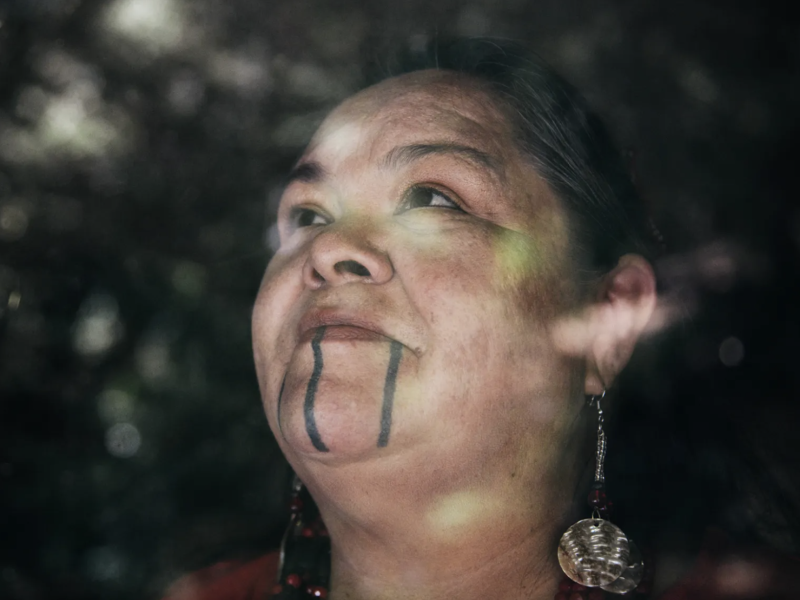
California Tribal Advocate Who Fought to Prevent Suicides Dies in Apparent Murder-Suicide
Celinda Gonzales of the Yurok Tribe worked to prevent suicides among Native Americans after losing a son and a brother. She “was a friend to many,” the tribe said.

Countering the ‘Dark Passions’
Across liberal democracies and nations, like the U.S., that are sliding out of the democratic zone, autocrats are weaponizing our most divisive emotions. In “Anger, Fear, Domination,” William A. Galston offers a guide to how these passions spread and what it takes to keep them from overwhelming us.
