The Rise of Self-Aware Narcissists
“Self-aware” narcissists debate whether the condition is curable.
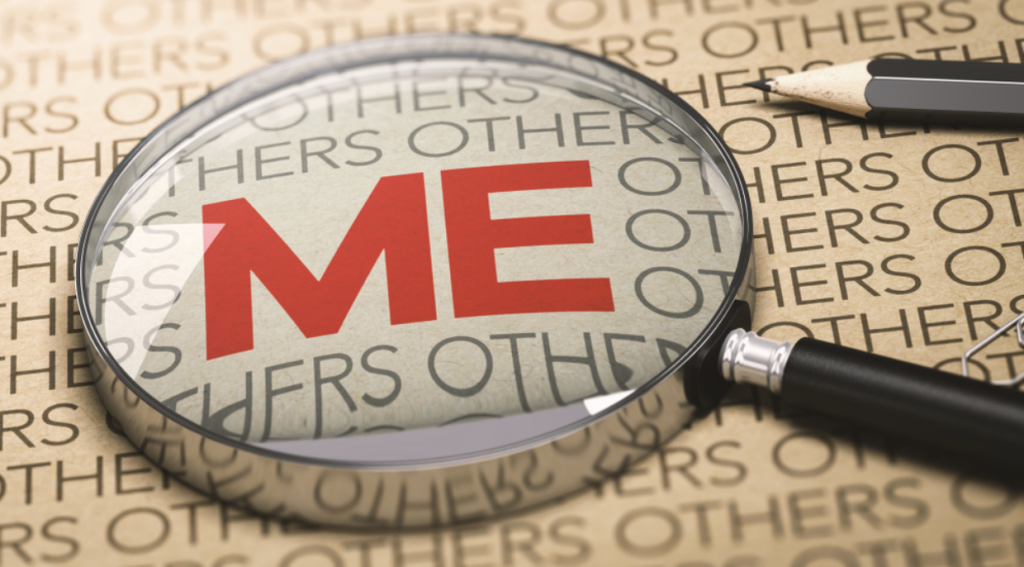
Lee Hammock hadn’t thought of himself as a narcissist until his wife shouted the word at him, yelling about how hard it was to live with one. On that night 8 years ago, he’d been directing his frustrations with his life at their 7-month-old son – she overheard him say to the crying infant, “See? This is why I’m not successful.” His wife’s fury proved pivotal. After googling the word and finding it described him “pretty accurately,” he dug deeper, investigating whether he truly was a narcissist, and if so, how it might have affected his life.
He’d long ago come to terms with his lower-than-normal levels of emotion and empathy. But Hammock had thought those qualities made him more resilient, as he told New York Magazine. Now, scrolling through a Facebook group for people with narcissistic personality disorder (NPD), he was learning that he had a problem.
Hammock entered professional therapy, got formally diagnosed with NPD, and launched posts on social media under the moniker Mental Healness. He has amassed nearly 3 million followers by talking about #narcissism across TikTok, Instagram, and YouTube. “I’ve learned in therapy how to use my personality disorder for the betterment of my life,” Hammock says on his YouTube channel, and adds that his “goals have always been to get more people like myself into therapy, and to validate the [victims] and survivors of toxic people.” Explaining that he’s self-aware, but not cured, Hammock compares NPD to addiction, but worse. As author Owen Long puts it in the piece: “You can’t avoid the thing you’re addicted to, which is yourself.”
Hammock is part of a larger movement of so-called “self-aware narcissists” who’ve caused controversy by speaking openly online, ostensibly with the goal of helping others – but who, if their channel gets many hundreds of thousands of hits, make a lot of money from doing so. The r/NPD sub-Reddit, where sufferers discuss the condition, has seen its membership nearly double in the past three years. But content like this doesn’t necessarily help this millions-strong audience: Check out MindSite News’ 2022 investigation on TikTok’s narcissism obsession, written by Diana Kapp, for more on what this fixation might say about us.
Sam Vankin, a psychology professor and diagnosed narcissist with 419,000 subscribers on YouTube, predates this recent boom – he’s spent the past 15 years building a platform by explaining NPD, often using confessions from his own life. His viewers include people who suspect a loved one has NPD, as well narcissists who find his openness comforting.
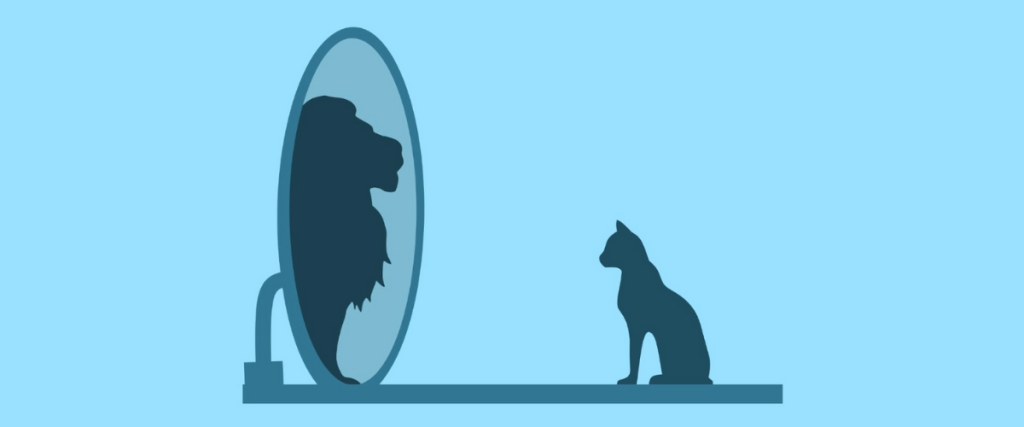
But Vankin isn’t too interested in producing relatable content – he’s focusing on cautionary tales. People should avoid relationships with people like him, he says. “I’ve leveraged my mental-health issue to help others. I’m incentivized to obtain attention and to self-enhance my fantastic, grandiose self-concept by affording succor, disseminating information, educating, and so on. It’s lucky. The alternative, of course, is less savory.”
That’s because, he says, narcissists are restricted to feeling only negative emotions – they can’t feel love or even joy, according to Varkin, just the dark stuff, like envy, anger, and hatred. The article emphasizes that there is disagreement within psychology circles on this point, but that it’s true within Vankin’s experience. Moreover, he said, NPD is permanent: “Narcissim is who you are.”
Can ‘self-aware narcissists’ be cured?
While the field of psychology largely agrees on that latter point – that NPD is incurable – psychologist Wendy Behary dismisses it, claiming to have meaningfully changed 30 to 40 of clients with NPD using schema therapy and its “empathetic confrontation.” “Most therapists don’t come from the ‘school of realness,’” Behary says. “I look across at the narcissist sitting in front of me and say, ‘Why would you talk to me like that? What’s going on with you? What is it you want me to hear? Because I can’t hear you. All I see is someone being kind of an ass.’”
As the conversation around narcissism has intensified, so have its very present, real-world implications. Some of the world’s most powerful figures, including Donald Trump, are suspected malignant narcissists – they demonstrate how the grandiosity and risk-taking associated with that type of narcissism can drive both extraordinary ambition and catastrophic destruction. As Behary herself notes, competitive arenas like politics, Wall Street, and Silicon Valley – home to some of her toughest clients – “reward narcissistic, cutthroat behavior,” making it extremely difficult to hold narcissists accountable.
Whatever your perspective, we’ve been discussing narcissists for centuries, and now they’re talking, confessing, teaching, profiting, and sparking debate about whether they deserve compassion, caution, or both. They’re also showing us an important, universal truth: how fragile – and how powerful – the human ego can be.
The name “MindSite News” is used with the express permission of Mindsight Institute, an educational organization offering online learning and in-person workshops in the field of mental health and wellbeing. MindSite News and Mindsight Institute are separate, unaffiliated entities that are aligned in making science accessible and promoting mental health globally.

Author

Related Articles
Does Contemporary “McMindfulness” Reinforce Our Suffering?
A Buddhist teacher and professor argues that a commodified mindfulness solely focused on the self is only a stopgap fix.
“No Beds”: Despite Improvements, Detroit’s Shelter System Continues to Let Families Down
When a Detroit mom and her two sons faced homelessness last year, she spent months calling the city daily for beds – in vain.
988 call responses plummet in Georgia after insurer cutbacks
After an insurance company made cutbacks, Georgia’s 988 response rate to mental health crisis calls “fell off a cliff.”

Comments (1)
Comments are closed.