After the Sirens: Lessons from 9/11 about First Responders and Trauma
“Trauma lives in the culture. In the rituals. In the unspoken. In the doctrine silence.”
Hello, MindSite News readers!
In this issue, we bring you a riveting account of trauma and recovery within the New York City Fire Department over the last 25 years following the 9/11 attack on the World Trade Center. In other news, we mourn the passing of the magnetic Jane Goodall, examine narcissistic “peacock parenting,” trace federal cutbacks to opioid treatment and look at a Miami street medicine group that brings health care directly to vulnerable unhoused people.
But first, it’s annual Banned Book Week this October 5-11! The website goodgoodgood suggests 14 ways you can celebrate freedom to read and take action.
How 9/11’s firefighters began to heal from unspeakable trauma

“In the days after 9/11, grief was everywhere, not the kind that wails or weeps, but the kind that settles into silence. At the FDNY, we lost 343 members. Sixty-two firehouses across New York City had at least one loss. Many firehouses became places of mourning as well as service – some losing multiple members from the same shift, entire crews gone in a single morning.
“It felt, at times, like walking through a city of ghosts. The air was thick with smoke, but also with absence.
“At the time, I was helping lead the FDNY’s behavioral health response. The devastation was so total that action seemed like the only antidote. We devised a practical and compassionate plan: place a trained clinician in each firehouse that experienced a loss. The hope was that if mental health support was made physically present, it would be emotionally accessible. A kind of therapeutic proximity.
“The clinicians, often seasoned and experienced, brought with them deep compassion and professional skill. But even with that background, they found themselves sitting alone in firehouse kitchens, waiting for someone, anyone, to speak. Most of the firefighters didn’t. Some couldn’t. And quietly, another problem emerged: the therapists themselves were becoming overwhelmed. They had parachuted into a world they didn’t truly belong to, where the grief was only the beginning, and fresh trauma kept arriving with every new call. Eventually, we had to create support groups for the support providers. That was our turning point.”
So begins an essay on the World Trade Center attack and firehouse trauma for Psychiatry Research, a piece so beautifully realized that it should be read in its entirety. Its author, Frank Leto, joined the FDNY in the 80s and later became deputy director of its counseling service; now retired, he continues to stay involved in behavioral health and peer-support work with responders. What he and his fellow firefighters came to realize, he wrote, “is that trauma doesn’t respond well to clinical schedules. It doesn’t announce itself at 3 p.m. for a fifty-minute session. Trauma lives in the culture. In the rituals. In the unspoken. In the doctrine silence.”
A code of silence, he said, “discouraged sharing even the things that were breaking you.”
Before, including, and after 9/11, the job of a firefighter involves “walking into the worst day of someone’s life, ten times a shift, hundreds of times a year. You learn to push it down. But it doesn’t stay down. It finds a way out, in your body, your relationships, or your silence. And if there’s nowhere safe to put it, it starts to take things from you.”
What emerged from these discoveries, he says, was the decision to train firefighters to support firefighters, and paramedics to support paramedics – “not to replace clinicians, but to walk alongside them, as translators, as bridges, as peers.” It formalized, he said, the candid conversations, quiet support and burden-sharing that had been happening informally for generations. “Somehow we needed to bottle that. Because that was where the healing was happening.”
At first, the peer check-ins were met with politeness, he said, but then firefighters heading for the door might say, as if it were an afterthought, “I’m having trouble with my daughter.” These last-minute, hesitant disclosures – the start of real trust – became known as “peer doorknob therapy,” Leto wrote. As word spread, “people who had never asked for help in their lives began to open up, because someone they trusted was willing to listen… Over time, we built one of the largest and most resilient peer support networks in the country.”
Such programs are needed nationwide, Leto writes. The mythology around first responders can work against them, Leto says. They’re rightly seen as heroes, he says, but the word “hero” can trap them in armor and isolate them. Firefighters often carry the weight of disasters alone, “not because no one cares, but because no one quite knows how to ask, or what to say.” There’s guilt for surviving, for not doing more, and disconnection “from a world that’s moved on.”
What helps, he says, is practical support, like support with childcare or insurance claims, “and giving people permission to be where they are” on the trajectory to recovery. “What works, most of all, is connection… someone who’s been there saying, ‘Me too.’ That kind of connection can’t be faked. And it can’t be forced. But when it’s there, it can save lives.”
I wish Jane Goodall could have lived forever
Farewell to Jane Goodall, the brilliant British primatologist, anthropologist and author best known for her field research on chimpanzees, which showed that they experience and express emotions like grief and love, just like humans do. Growing up, she was one of my greatest heroines, next to journalist Nellie Bly and Coretta Scott King. She died at age 91 last week, while on a speaking tour in the U.S.
A conservation giant, Dr. Goodall was a trailblazer at a time when women were routinely shunted to the margins. A quote often attributed to her is: “it actually doesn’t take much to be considered a difficult woman. That’s why there are so many of us.” Goodall is now rightfully lauded around the world. Her investigation of chimpanzee behavior in the wild was once heralded as “one of the Western world’s great scientific achievements.”
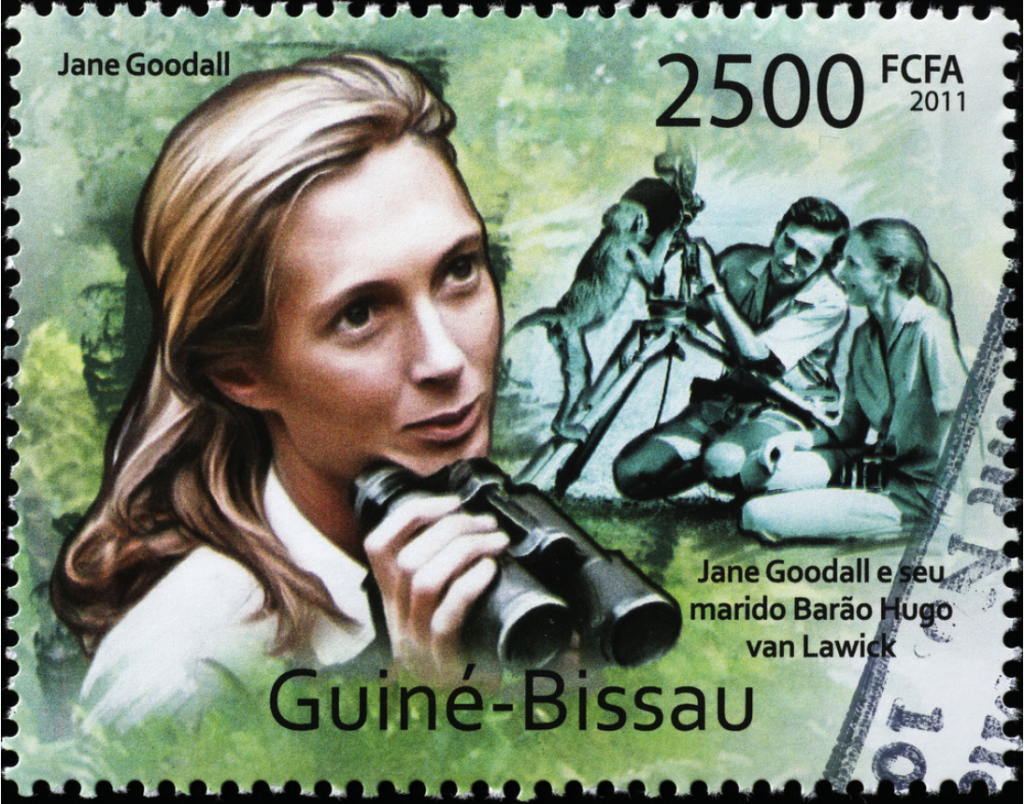
A conservation giant, Dr. Goodall was a trailblazer at a time when women were routinely shunted to the margins. A quote often attributed to her is: “it actually doesn’t take much to be considered a difficult woman. That’s why there are so many of us.” Goodall is now rightfully lauded around the world. Her investigation of chimpanzee behavior in the wild was once heralded as “one of the Western world’s great scientific achievements.”
Her work also showed the world that scientific rigor need not be incompatible with respect, humility, and empathy, according to Psychology Today. She set out a formative example for future researchers’ mental health – encouraging people to connect with nature, be compassionate toward themselves and others, and to be courageous in taking collective action for the good of all. Even as an internationally-renowned scientist, she continued to be generous with her time and attention. Watch the moving moment in this YouTube video when she hugged an injured chimpanzee named Wounda, who her team had nursed back to health and were about to release into an island sanctuary. She also had a dry sense of humor: In a recent interview released posthumously on Netflix, she names who she would like to send off the earth in a spaceship – for good. May her memory be a blessing.
Peacock parenting: The perils of being raised by a narcissist
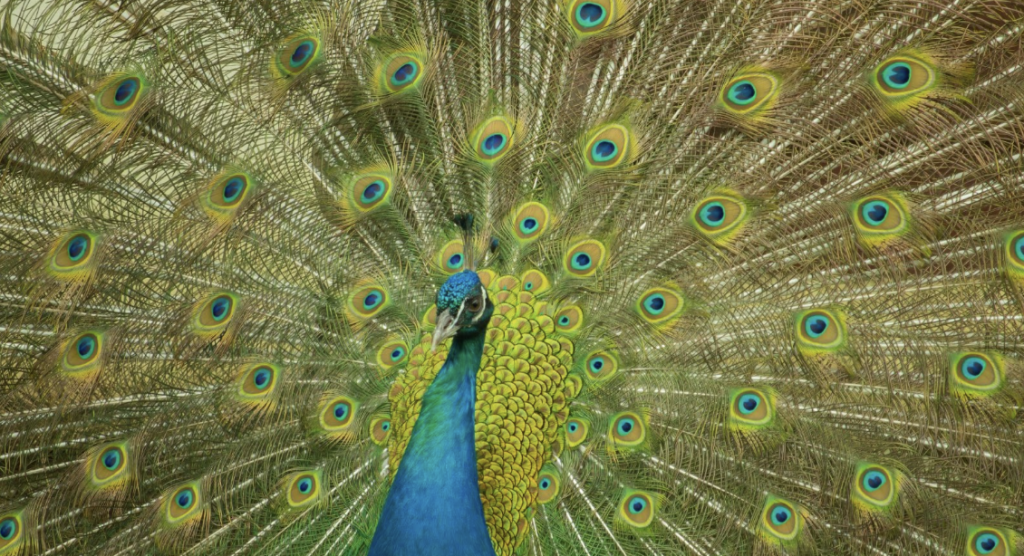
We learn a lot from our parents, including our early relationship skills, making it hard to know if something wasn’t quite right in how we were raised. Therapist Kathleen Saxton’s new book, My Parent The Peacock, aims to address some of that problem by helping people recognize the signs of a narcissistic parent, and learn how to recover from one. As the Guardian says, such children “might have grown up being controlled, in an environment where love was conditional, gaslighting was common, and they were often blamed, belittled and criticized. Their parents’ needs came above their own, and their mother or father was emotionally exploitative. The consequences of these experiences may have continued into adulthood.”
Saxton says her personal experience with narcissistic personality disorder (NPD) came not from her family, but from a boyfriend, although he wasn’t officially diagnosed. The toxic relationship “left me a shell of my former self,” she said. Despite her background as a therapist, it took her two years to recognise the problem – signs can be minor, and excusable in isolation, but can add up to a troubling pattern that shouldn’t be ignored.
“If you really want a relationship to work, you excuse it,” Saxton told the Guardian. “Maybe I’m being a certain way, or maybe they’re struggling because of their previous breakup. You come up with all these reasons. If I work harder, try harder, I’m more accepting … You find arguments as to why you’re putting up with this.” She described it as, “the most challenging experience of my lifetime. It takes you apart. It quietly dismantles you, and everything you thought to be true or normal is no longer true or normal because you’ve been sucked into living in their fantasy world, the world that needs to be true for their mask to stay on. You have to abide by this false ecosystem, and the cost, if you don’t, is expulsion or being ridiculed or dismantled.”
In a separate interview with ITV, written up by the outlet Twyla, Saxton advises people to be on the lookout for clues like exploitative behavior, a lack of empathy, over-the-top arrogance and selfishness, or responding to criticism with rage. “So you’ll either get a sort of what we call a narcissistic collapse if you criticise them, or they’ll attack you one way or the other.”
Children “absolutely“ have a chance at rebuilding a relationship with their narcissistic parent, she told the Guardian, but “directly addressing or fighting with a narcissist is going to get you nowhere.” Good boundaries and not giving narcissists the drama they crave is important to recovery and healing, for both parties. “Whether the parent’s alive or dead, it doesn’t matter how old you are, you can absolutely reclaim your life.” But be aware: “You’re never going to get an apology. You’re never going to get validation, you’re never going to get an explanation.”
In other news….
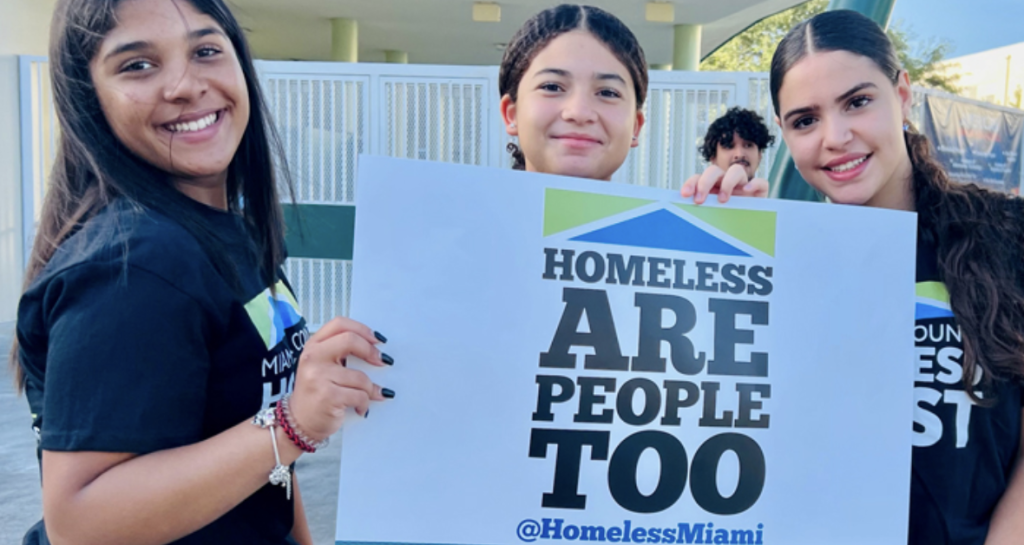
By bringing care to the unhoused, a Miami nonprofit is easing strain on emergency rooms. Even though he has diabetes and high blood pressure, Jonas Rivers hasn’t seen a doctor since he lost his truck-driving job and became homeless several years ago. But a recent visit from Miami Street Medicine doctors got “everything done right here very fast,” Richards said. “It was a big help.”
Founder Dr. Dan Bergholz says he’d been doing charity outreach as a student, but felt it “wasn’t quite moving the needle for folks.” This “bigger vision” emerged out of the pandemic, filling “gaps in the local social safety net” – staff and volunteers now prescribe, work with specialists, and even offer follow-up visits. “We’re out there to meet the needs of our patients. And if that’s a cough drop, we’ve got you. We are happy to help you with that cough drop. But really the mission is so much greater. It’s showing that we care, and we’re there for them. So when that cough becomes pneumonia, they’ll let us listen to their lungs and maybe trust us to take them to the hospital.”
ICYMI: Last year opioid deaths dropped below 80,000 – the largest single-year drop since the beginning of the opioid crisis. Health Affairs, in a recent blog, traced this partly to Biden-era policy changes that, among other things, provided support for harm reduction strategies and syringe exchange services – practices the Trump administration is now reversing. For example, Trump fired the CDC director, issued a widely criticized executive order pressuring municipalities to arrest more people for drug possession and sleeping in public (read: being homeless), and terminated Housing First and federal support for syringe exchange programs.
These steps come at a time when innovative programs for addiction treatment and recovery urgently need scaling up, Health Affairs adds. Among them are using telehealth for buprenorphine prescribing in Maryland jails, problem-solving courts in Indiana, patient navigators in California emergency departments and models for delivering methadone in nursing homes.The Health Affairs bloggers described the impact in stark terms: “Cutting federal resources and leadership at this critical moment risks squandering a major public health success.”
The name “MindSite News” is used with the express permission of Mindsight Institute, an educational organization offering online learning and in-person workshops in the field of mental health and wellbeing. MindSite News and Mindsight Institute are separate, unaffiliated entities that are aligned in making science accessible and promoting mental health globally.

Author

Related Articles
Will the Pursuit of Profit Suck the Benefits Out of Psychedelics?
Many new programs have removed the most transformative, curative and life-affirming parts of the psychedelic experience.
New Mexico to Probe Allegation that Epstein Ordered the Burial of Teen Girls Near His Ranch
New Mexico has announced it is probing into an allegation that Epstein ordered the bodies of two girls to be buried on Zorro Ranch.
A Better Way to Treat Addiction in Seniors
As overdose deaths rise among older adults, Baltimore’s REACH Health Services offers groundbreaking addiction care for seniors that combines medication with intensive peer support. Plus a look back at a historic fight against solitary confinement. And more.
