
Michigan’s LGBTQ+ student clubs create affirming spaces inside public schools
Such alliances can provide LGBTQ+ students safe, welcoming places to connect
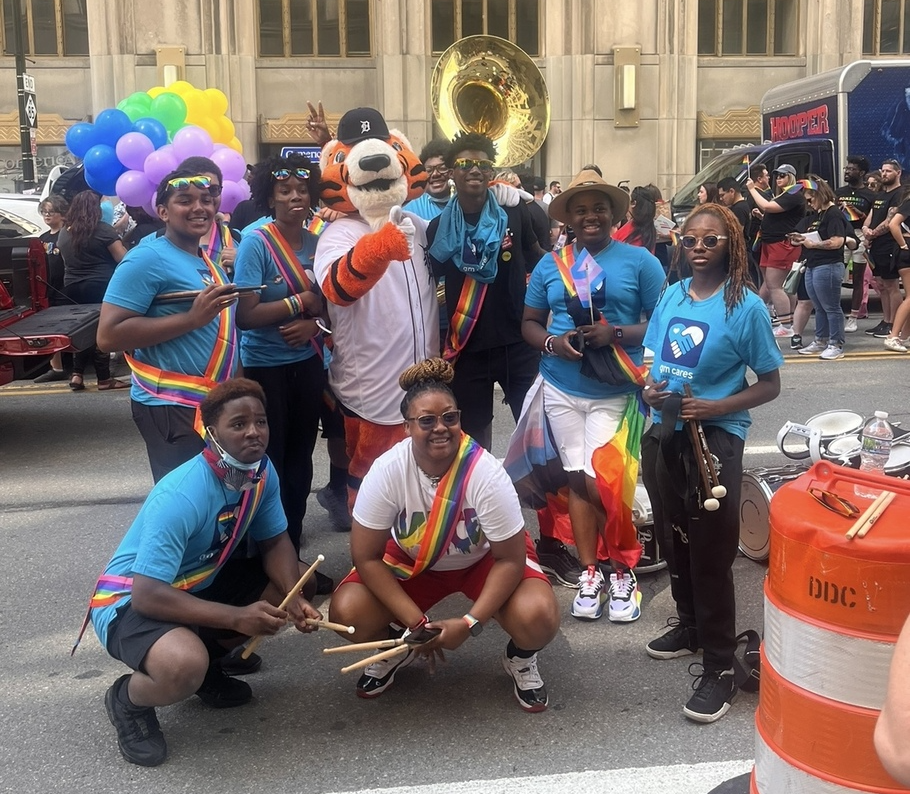
At Renaissance High School in Detroit, Miah Gill found reasons to be hopeful inside room 334.
Miah had long coped with feelings of hurt. Peers bullied her, she said, for who she is: an LGBTQ+ teenager. Miah recalled some students made her into “a group chat meme,” while others joked and laughed at her. She tried not to absorb negative messages about herself, but the pain was overwhelming.
“There are days where I have just cried,” said Miah, a recent high school graduate. “Just cried.”
But room 334 made a difference.
At the time, the classroom was the headquarters for the school’s gender-sexuality alliance (GSA), a youth-led club for LGBTQ+ students and allies. Also known as gay-straight alliances, the clubs aim to provide an inclusive space for LGBTQ+ students inside schools. Miah was the GSA president at Renaissance.
High school can be a harsh environment for LGBTQ+ students—some struggle to find their tribe of friends and trusted adults. About two in 10 LGBTQ+ students missed school because of safety concerns in 2023, according to the Centers for Disease Control and Prevention’s national survey of youth risk behavior. More than 3 in 5 LGBTQ+ students felt unwavering sadness or hopelessness, and 1 in 5 attempted suicide. Current politics can also erode LGBTQ+ students’ well-being.
On his first day in office, President Donald J. Trump signed an executive order that ended Biden-era efforts to protect transgender students under Title IX and defined sex as either male or female. Ahead of the presidential election, millions of dollars were poured into anti-trans ads.
In June, the U.S. Supreme Court, which has a conservative majority, ruled parents can opt out their children from classes when learning materials conflict with their religious views. The case centered on a group of parents who sued a Maryland county school board, seeking to have their elementary school children opt out of classes which taught books that featured LGBTQ+ characters.
Laws that censor discussion of LGBTQ+ people or issues in schools have already passed in several states, including Florida and Kentucky.
But LGBTQ+ advocacy groups say communal spaces—homes, schools, workplaces—that affirm diverse gender or sexual identities can be social lifelines and that LGBTQ+ teens faced with an increasingly hostile political climate can be healthier and happier if adults and peers show care when they need it the most.
Teachers in Detroit and Flint who advise the LGBTQ+ youth clubs said students continue to meet despite anxieties over the federal government’s actions targeting LGBTQ+ people.
When the club convened, Miah said students played icebreaker games, hurled jokes or dug into the major issues of the day—pollution, politics, the education system, voting rights. The camaraderie was strong.
“We’re all in a place of comfort,” Miah said.
‘I don’t have to hide’
Compared to the cheer squad, marching band, or the debate team, gender-sexuality alliances are less common within the social fabric of high school.
The exact number of GSAs in the United States varies, as the counts can change each year if new clubs are formed or shuttered.
Only nine states and the District of Columbia reported more than half of their secondary schools had such an alliance, according to a 2021 analysis by Child Trends.
Over 8 in 10 students in the Northeast and West are attending schools with a LGBTQ+ alliance club, compared to 72% of LGBTQ+ youth in the Midwest and 63.5% in the South, per a Human Rights Campaign report.
According to a national survey, such alliances throughout the nation are mostly white.
Recent high school graduates in Detroit and Flint said their GSAs provided them and their peers a safe place to belong and express themselves. And oftentimes, they found refuge in each other.
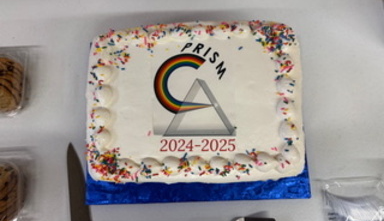
At Carman-Ainsworth High School in Flint, Michigan, three transgender students started the GSA. Club members then convinced school administrators to make the high school building’s bathrooms gender neutral, said Frank Burger, a support coach for young educators and the school’s GSA advisor.
A.J. Meinka was a recent GSA president for the Flint high school. They kept busy trying to make LGBTQ+ students feel welcomed. Each meeting drew about 15 to 20 students. The vibe was easy-going, but at times A.J. would conduct mental health check ins. They knew only a handful of LGBTQ+ students at Carman-Ainsworth were out.
“By having the club, they have a safe space to go to where they can talk about what’s going on in their lives,” they said.
A.J. helped organize a Pride luncheon and posted mini-bios and pictures detailing the achievements of Barbara Jordan, Pete Buttigieg, Alicia Garza and other LGBTQ+ public figures on the school’s online platform. “There’s always been people like them,” A.J. said. “And there always will.”
The club helped A.J. mature.
“It’s made me a lot more open about who I am, and it’s made me think more about what other people are going through,” they said. “It’s given me a lot of drive to be a good person and a good queer advocate.”
As COVID lockdowns faded, a group of teachers revived Renaissance’s GSA in fall 2021 after hearing pleas from some students itching for the club’s return—a move aimed to uplift them all.
In addition to a president, there’s a vice president, secretary, historian, social media manager and district liaison. Club attendance ebbs and flows, and each meeting can attract 10 to 35 students.
Of all the club’s wins, Miah is most proud of the times when students flaunted their entrepreneurial side. They fashioned little T-shirt buttons and Pride flags and sold them during a previous holiday bazaar at the school. They organized a mini-fundraiser to pay for field trips.
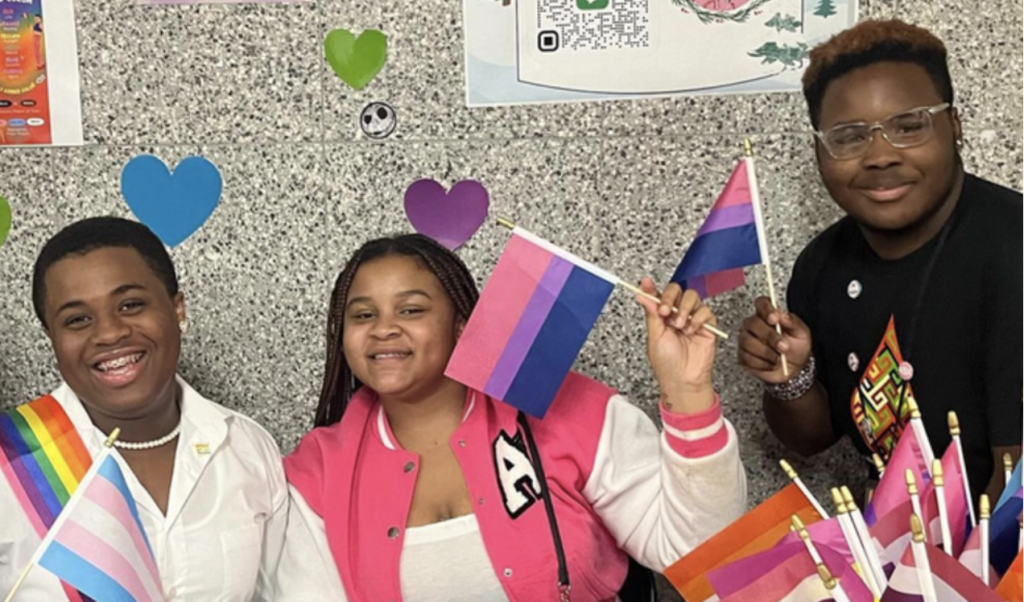
Miah is also fond of a time when boldness took center stage: The students invited Ciara, a local drag entertainer, to the school. She strutted the halls, decorated in an elegant gown dripping with rhinestones. She brought jewels and dresses for students to try on. An impromptu fashion show commenced.
The performance was a happy, unifying moment.
“We really put our heart and soul into it,” Miah said.
In middle school, La’Reah Snerling said she built up some walls and was always on guard. “Because I was timid, I was easier to pick on,” she said.
When La’Reah came to Renaissance, she didn’t know anyone. She wasn’t from this part of town at all.
After joining the GSA, La’Reah said she hit it off with classmates. Gossip about bodies and outfits and social hierarchies weren’t part of the group’s conversations. The only thing that mattered was a student’s personality. “It was so refreshing,” said La’Reah, who recently graduated.
The club gave La’Reah, who identifies as bisexual, a safe outlet to talk about romance without getting stigmatized. “Most of us don’t have that emotional space where we can go and talk like, ‘Oh, yeah, I got a crush on this girl,” she said.
Her mother supports her too. That is meaningful to La’Reah, aware of how lucky she is.
“I don’t have to hide it or have to worry about going home and being bullied and belittled,” she said. “It also hurts knowing that I do have friends and people around me who do go through that every day.”
This story was supported by The Solutions Journalism Network’s HEAL fellowship.
The name “MindSite News” is used with the express permission of Mindsight Institute, an educational organization offering online learning and in-person workshops in the field of mental health and wellbeing. MindSite News and Mindsight Institute are separate, unaffiliated entities that are aligned in making science accessible and promoting mental health globally.


Author

Related Articles

1 in 8 Youth Turn to AI for Mental Health. ‘It Just Tells Me What I Want to Hear’
Youth with the deepest emotional needs are using chatbots for therapy the most – but many are unhappy with the outcome.
California Tribal Advocate Who Fought to Prevent Suicides Dies in Apparent Murder-Suicide
Celinda Gonzales of the Yurok Tribe worked to prevent suicides among Native Americans after losing a son and a brother. She “was a friend to many,” the tribe said.
Countering the ‘Dark Passions’
Across liberal democracies and nations, like the U.S., that are sliding out of the democratic zone, autocrats are weaponizing our most divisive emotions. In “Anger, Fear, Domination,” William A. Galston offers a guide to how these passions spread and what it takes to keep them from overwhelming us.
