
Tackling Postpartum Depression by Bursting Out in Song

Greetings, MindSite News Readers.
In today’s Daily, we also look at how group singing can soothe postpartum depression – as the new mothers who joined the chorus in Melodies for Mums found out in London. Plus, a NY Times columnist on the latest head-scratching comments from RFK Jr. that may drive parental guilt, worry and shame. The National Alliance on Mental Illness shares its concerns about the recent layoffs at SAMHSA. And we explore YouTube phenomenon Gracie’s Corner.
Plus: You’re invited to an exciting webinar on Diet as Medicine, which explores scientific research on the keto diet’s benefits for people with serious mental conditions such as schizophrenia and bipolar disorder: See the details below and join us on October 23 at 12 pm PT!
But first, in anticipation of this weekend’s pending Detroit Free Press Marathon, check out this love letter to running from retired journalist Randy Essex. He credits the hobby he began decades ago with the intent of becoming a better parent for his son with keeping him sober from nicotine and alcohol, and improving his ability to withstand treatment for throat cancer. “Through these last 30 years, running has enriched my life in multiple ways,” Essex writes. “I like how it feels physically, but even better is the time outside, the time to think – or not think, and just be present.”
New study finds group singing improves symptoms of postpartum depression

New research finds that group singing classes specifically designed for mothers with postpartum depression can significantly improve symptoms over the long term, the BBC reports. A study led by researchers at King’s College London and published in the British Journal of Psychiatry followed nearly 200 women with postpartum depression over eight months. Half the participants engaged in a 10-week singing course, Melodies for Mums, while the other half received traditional community support.
Though both groups reported reduced symptoms, those who joined the singing sustained that improvement for six months after the program’s conclusion, demonstrating what researchers call a “long-lasting impact.” Group singers were also more likely to report singing to be a good, easy fit for their needs, helping them to stick with the program.
Launched in 2017, Melodies for Mums uses online classes to serve nearly 400 women a year across five London boroughs. Each cohort learns lullabies, folk and gospel songs from around the world, blending rich harmonies intended to soothe and bond both mom and baby and help them bond. Many moms continued to share songs with their infants after the study concluded.
Though researchers in this particular study didn’t explore precisely why group singing helps, they suspect it’s down to factors both social and biological. “I think part of it was women were in the presence of other mothers who were going through the same kind of experiences, even if they were not necessarily having to talk about it,” says study co-author Rebecca Bind. “And on top of that, the act of singing itself can have a very relaxing effect.”
Researchers have begun to expand the study into the question of why with saliva analysis looking at levels of the stress hormone cortisol. Early results show that moms in the singing group show a “nice steady decline in [cortisol] levels throughout the intervention period,” researchers said.
“I can’t stress enough how much this was a game changer for me,” says Holly, a Melody for Mums participant who started the course earlier this year upon recommendation from a health care coordinator. She’d started to feel ill during her pregnancy, and that improved slightly after giving birth, but not enough to quiet her anxiety. While organizers note that Melody for Mums isn’t a replacement for medication or talk therapy, it’s certainly complementary to both – and a stop-gap, temporary alternative for women who may be stuck on long waitlists for mental health services.
“Being a new mum is one of the loneliest times, because you’re sort of in this insular bubble,” Holly adds. But, she said, “at the very first session here, I walked in and I was like, ‘oh, this is my safe place’. Like, I’m safe here.” (You can watch a video about Melody for Mums here).
Kennedy’s comments on circumcision are just the latest in a stream of misinformation

Robert F. Kennedy Jr.’s recent comments linking circumcision and Tylenol (acetaminophen) to autism are scientifically baseless – a result of either deliberate misinformation, or reflective of the fact that he may be “totally unqualified for the job,” Jessica Grose argues in an op-ed published by the New York Times. She makes her case in response to Kennedy’s assertion that two studies show “children who are circumcised early have double the rate of autism. It’s highly likely because they’ve been given Tylenol.”
Scientists who study autism don’t concur – noting that the two studies he seems to be talking about were small and observational – not to mention that they did not look at whether infants in the studies were even given acetaminophen after the procedure. Newer, better-designed research does not connect circumcision with short- or long-term psychological trouble. Kennedy’s statement that pregnant women who take acetaminophen are “irresponsible” is equally unfounded – there is no credible evidence that typical use of the medication during pregnancy causes autism.
Of course, Kennedy is head of our nation’s Department of Health and Human Services, so his comments have massive influence. Despite being repeatedly debunked by experts, his opinion holds weight among the public, particularly Republicans. A KFF poll found that after his comments linking Tylenol taken during pregnancy to autism, 77% of the public heard the claim. While the majority of respondents expressed some uncertainty about the Tylenol-autism link, most Republicans, including a majority of Republican women, said it was “probably” or “definitely true.”
“It seems clear that what Kennedy says, no matter how distantly tethered to scientific consensus, is successful at driving the public health conversation,” Grose writes. “Even as his statements are debunked by the most experienced researchers and disbelieved by many Americans, every time he mentions a fringe, unproven theory, it gains a firmer foothold and a measure of undeserved legitimacy.”
It’s a frightening state of affairs, she notes: With no expertise and citing flimsy, often flat-out discredited evidence, Kennedy makes false claims about emotionally-charged topics, using pseudoscientific language, and cherry-picks weak studies to sow confusion and advance his harmful national health agenda. Worse yet, his tactics seem to be working, undermining science and exacerbating parental anxiety in the process. This time, as ever, Kennedy’s attack on circumcision has turned the issue from a nuanced personal parental choice into another flashpoint for misinformation, driving parental stress and guilt.
In other news…
As a millennial mom and self-certified Telfar girlie, “ABC’s for the Telfar bag set” is a headline I couldn’t pass up. ( For those unfamiliar with this creation, Telfar bags are bright-colored vegan leather shopping bags whose creator promotes community and accessibility in fashion.) And I was right to be delighted – it led me to read one of my favorite parenting articles of the year, in which Angela Flournoy, (a Detroiter by lineage), writes about her experience at the NYC tour stop of YouTube phenom Gracie’s Corner. The program is voiced by Graceyn Hollingsworth, 13, and is co-created and produced by her parents, Arlene Gordon-Hollingsworth, a psychologist, and Javoris Hollingsworth, a former chemistry professor who turned music producer during the pandemic. It sets itself apart from other toddler mega-sensations; teaching children the alphabet, colors, and music that, crucially, isn’t instantly annoying for their parents. The sounds are inspired by genres from across the African diaspora – hip-hop, R&B, soca, reggae, New Orleans bounce – and the lyrics incorporate affirmations, rhythm and positivity.
NAMI speaks out after SAMHSA layoffs: In a statement released earlier this week, the National Alliance on Mental Illness (NAMI) expressed grave concern over the Trump Administration’s decision to lay off remaining staff at the Substance Abuse and Mental Health Services Administration (SAMHSA) amid the ongoing federal government shutdown. SAMHSA’s role is to funnel federal dollars to states, supporting their mental health and substance use treatment services – including education and training for professionals, prevention and early intervention programs, community based mental health clinics, and the national 988 suicide and crisis hotline. The cuts will threaten lives, says NAMI CEO Daniel H. Gillison, Jr.
“The United States is in the midst of an ongoing mental health, overdose, and suicide crisis, one of the most widespread and enduring public health challenges of our time. More than 84 million adults, and millions of children and teens, live with mental health or substance use conditions that affect people in every community, across every background and belief,” Gillison’s statement reads. “We cannot afford to undermine the only federal agency charged with addressing what is, for so many Americans, a daily struggle. At a time like this, we need to reinforce, not weaken, the agency dedicated to addressing mental health and substance use conditions.” (Yesterday a federal judge in California issued an order that the Trump administration halt its mass layoffs of federal workers during this government shutdown while she reviews union claims that the jobs cuts are illegal.)
Ketamine is the party drug of the moment, but why? It’s illegal for recreational use – and has potential risks, including death, especially when combined with other drugs. So NPR’s It’s Been A Minute ventured to find out, discussing the drug’s growing popularity with two very different experts: Journalist PE Moskowitz – whose book Breaking Awake: A Reporter’s Search for a New Life, and a New World, Through Drugs, details their personal journey back to health through recreational drug use, following a near-death experience and nervous breakdown; and historian Benjamin Breen, a UC professor and author of Tripping on Utopia, whose work investigates the histories of science, medicine, and drugs. In the brisk conversation, they ask what ketamine users experience, and if societal interest in the drug might be a consequence of our anxious, depressive political climate.
If people are experimenting with ketamine, Breen warned that it is crucial not to do it alone and to have someone there to serve as a “trip sitter.” He also advised that users always test for the presence of fentanyl in ketamine. “There’s freely available drug-testing kits,” he said. “You need to test this stuff because anything that is a white powder that is obtained illicitly is a potential danger for fentanyl.”
Mental health can't wait.
America is in a mental health crisis — but too often, the media overlooks this urgent issue. MindSite News is different. We’re the only national newsroom dedicated exclusively to mental health journalism, exposing systemic failures and spotlighting lifesaving solutions. And as a nonprofit, we depend on reader support to stay independent and focused on the truth.

It takes less than one minute to make a difference. No amount is too small.
The name “MindSite News” is used with the express permission of Mindsight Institute, an educational organization offering online learning and in-person workshops in the field of mental health and wellbeing. MindSite News and Mindsight Institute are separate, unaffiliated entities that are aligned in making science accessible and promoting mental health globally.

Author

Related Articles
Countering Bias in San Diego 1 Laser Pulse at a Time
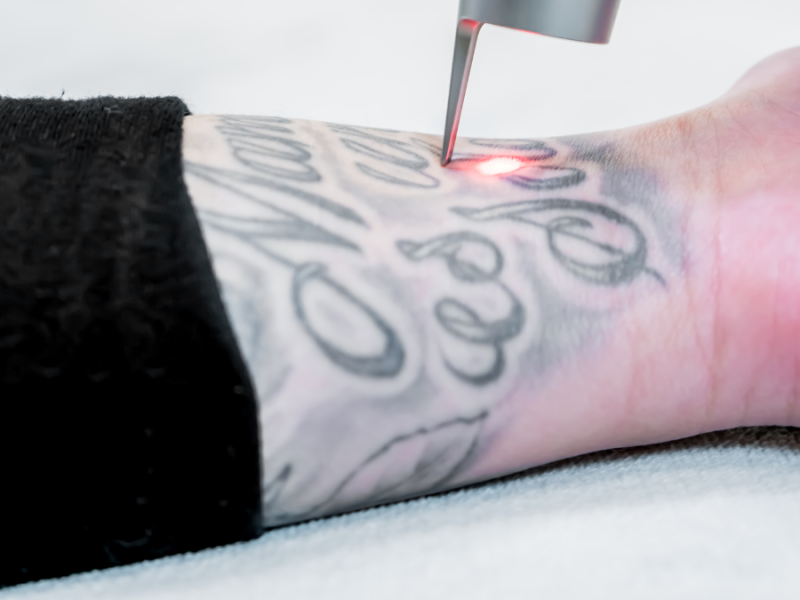
The Clean Slate program in San Diego provides gang tattoo removal benefits to formerly incarcerated individuals, helping them reduce stigma.
How to Best Protect You and Your Family from ICE
As enforcement actions surge, these two new resources help families know their rights with ICE.
