
Soft Drink Consumption Linked to Depression Risk
Soft drink consumption is associated with a significantly increased risk of major depressive disorder in a new study published by JAMA Psychiatry.

New research connects soda consumption to depressive symptoms – so consider keeping soft drinks to just an occasional treat. Also in this edition: A psychoanalytical interpretation of Trump’s excrement revenge fantasy. A federal judge orders the Trump administration to continue funding mental health counseling in schools. And how love, sometimes, might just prolong our lives. Plus: the memoir of Virginia Giuffre is published, just months after the prominent advocate and Epstein accuser died by suicide.
But first, with SNAP benefits due to end November 1, a volunteer-run Portland coffee shop vows to serve free SNAP breakfasts “until everyone’s benefits are reinstated, or we go broke doing it,” according to the outlet Good Good Good. Starting November 1, Heretic will be serving SNAP breakfasts every day from 8 am until 2 pm – hundreds of locals have already stepped up to help.
“There’s been a lot of conversation about Portland in the news lately, that we’re some kind of rioting, looting, burning-down city,” said Josh, Heretic’s owner. “But this act is just one small glimpse of the REAL Portland. We’re a big city with a small-town heart. When people are pushed to the margins, we’ll be the first to respond. That’s what it means to be a Portlander.”
Soft drink consumption linked to depression – thanks partly to changes in the gut

Soft drink consumption is associated with a significantly increased risk of major depressive disorder (MDD) in women as well as the severity of its symptoms – and it’s linked to microbial changes in the gut, according to a study published this September in JAMA Psychiatry. The condition is associated with feeling worthless, guilty, depressed and/or hopeless; difficulty completing even routine tasks; and thoughts of death or suicide, among other symptoms.
Regular soft drink consumption has long been associated with other health problems, including obesity, cardiovascular disease, type 2 diabetes and even cancers, and recent research has started to connect sodas with poorer mental health. One 2023 US study found that women who regularly consumed soft drinks were 34% more likely to develop major depressive disorder after 4 years.
More and more research is also connecting the microbiome – that is, the army of microbes that flourish in the gut’s environment – to changes in mental health, and it’s what led to this research.
In a cohort study of 932 patients, 405 people clinically diagnosed with depression and 527 healthy controls, the study found that women – but not men – who regularly downed soft drinks were more likely to be diagnosed with depression, and that higher consumption could also predict symptom severity. When researchers investigated whether soft drink consumption was connected to microbiome changes, they found an abundance of the microorganism Eggerthella – but only in women.
“Soft drinks – ultra-processed, calorie-dense, and rich in simple sugars like glucose and fructose – can overwhelm the small intestine’s absorptive capacity,” disrupting it and promoting the growth of specific families or subfamilies of pro-inflammatory bacteria, the researchers noted. Since MDD “is associated with increased emotional eating and preference for high-sugar food,” this may lead to still more soft drink consumption, researchers said, which “underscore(s) the importance of interrupting this vicious cycle.”
Trump administration must restore grants for school mental health counselors, judge rules
The Trump administration must release millions of dollars to support mental health in schools, a federal judge ruled Monday. Trump had cited “diversity” considerations in grant awards when it canned the funding, and told school districts the grants would end in December 2025.
But the ruling by Kymberly K. Evanson, a U.S. District Court judge in Seattle, called that decision arbitrary and capricious, AP reports. She ordered the restoration of grants to some school districts in the 16 Democratic states that challenged the Department of Education decision.
The funds had been appropriated by Congress and awarded by the Biden administration to combat a shortage of school counselors, psychologists and social workers, especially in rural and underserved parts of the country. “Congress created these programs to address the states’ need for school-based mental health services in their schools, and has repeatedly reaffirmed the need for those services over the years,” Evanson wrote in her decision.
Dr. Bandy Lee unpacks Trump’s fantasy of bombing #NoKings protesters with feces
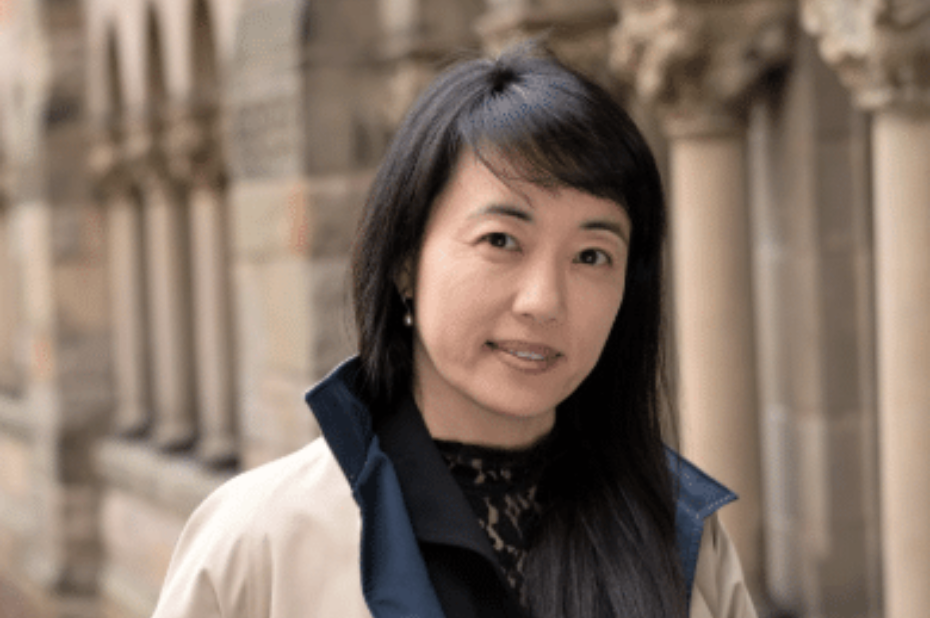
Shortly after this month’s No Kings protests – which involved an estimated 7 million people, making it the largest one-day protest in American history – President Trump released an AI-generated video on Truth Social, depicting himself flying a fighter jet, wearing a crown, and drenching peaceful protesters in liquid excrement.
This was rich material for Dr. Bandy Lee, a psychiatrist, expert on psychopathology and editor of the best-selling book “The Dangerous Case of Donald Trump.” She analyzed his video in her October 20 substack column. “Commentators remark (if they do at all) that it is ‘shocking’, ‘insane’, and ‘infantile,’” she wrote. But, she continues, “this is not simply child’s play or an ostentatious display.”
In early Freudian analysis, feces are “associated with the ‘anal stage’ and denote(s) control, autonomy, and self-exertion,” Lee notes. “Expelling waste can symbolize violence and aggression toward others through a wish to dirty or degrade them. ‘Anal-expulsive’ personalities thus tend to be aggressive, defiant, and antisocial.”
Such fixations are completely normal “at the appropriate stage of development,” she writes, but when they’re present later in life, it suggests someone is ‘stuck’ in that stage for reasons that might include abuse, neglect or other misfortunes. In that case, such fixations“can indicate pathology.…”(and a) buildup of rage, which now seeks expression with revenge.”
“And as reality fails – as it always does – to meet the infantile fantasies of unlimited control, total dominance, and utter destruction of the world that has failed him, the buildup of fury only grows,” Lee wrote. “This is why ‘dictators’ who are most commonly wounded at the anal stage are so effective at mobilizing those who are similarly developmentally wounded, and equally effective at similarly wounding the world, in vengeance for what they did not receive in childhood.”
She concludes: “The better we understand what we are facing, the more swiftly we will be able to find solutions. We would not put a literal toddler in charge of the nation; why would we a functional one?”
A neuroscientist was told cancer would kill him within 18 months. Nearly six years later, he credits his wife’s unconditional love for his survival.
If deep, unconditional love could change the path of Alzheimer’s, my parents would both still be with me. But there’s evidence of love’s potential health benefits, and I have no doubt that such love can, in certain cases, change the course of disease. It’s a belief shared by neuroscientist David J. Linden, author of a 2021 Atlantic article about the lessons that terminal cancer taught him.
I remember reading that raw and eloquent article, entitled “A Neuroscientist Prepares for Death.” Linden recalled his fury and disbelief: “I was absolutely white-hot angry at the universe. Heart cancer? Who the hell gets heart cancer?! Is this some kind of horrible metaphor? This is what’s going to take me away from my beloved family, my cherished friends and colleagues? I simply couldn’t accept it. I was so mad, I could barely see.”
He recounted his love for his wife Dena and how they “fell for each other hard” – something that “wasn’t mere ‘chemistry’; it was more akin to particle physics – a revelation of the subatomic properties of love. Dena has uplifted me with her pure and unconditional affection, her kindness, beauty, optimism, and keen intelligence. She is the best wife anyone could want, and she is way better than I deserve. Leaving her behind will be the very hardest part of this whole awful situation.”
Linden also recalled the joy he found in his children, along with his friends and his work. As a neuroscientist, he was struck at how he was able to inhabit two contradictory mental states at the same time – something, he noted, that “runs counter to an old idea in neuroscience that we occupy one mental state at a time.” Even in the face of inarguably awful news, Linden found himself “simultaneously furious at my terminal cancer and deeply grateful for all that life has given me.”
Since then, life has given him yet another reason to be grateful, as he writes in a postscript to the Atlantic’s republication of his story:
In 2021, my oncologist told me that I could expect to die within six to 18 months. That didn’t happen. Now, several years on, I get a CT scan every six months, and so far, the scans have shown that the remnant tumor in my heart wall has not grown since the surgery, nor has it spread to other organs. People ask me why I think I’m still alive, and I respond that I don’t really know, but that I think at least a part of it can be attributed to the deep and unconditional love I receive from my wife, Dena. I don’t say this lightly. I’m not speaking metaphorically or out of some sense of social or spiritual obligation.
Rather, I’m saying it with all seriousness, as a biomedical researcher. I believe that the positive experiences that surround me, of which Dena’s love is the most salient, are activating my brain in a fashion that ultimately helps suppress the growth and spread of my cancer. I’m both fascinated and encouraged that scientists are beginning to understand the specific biochemical and electrical pathways by which signals flow from the brain to tumors like mine to modulate cancer progression. In fact, my next book, “The Real Science of Mind/Body Medicine” (Johns Hopkins University Press, 2027), will examine this very topic.
Here’s hoping we can celebrate with Dr. Linden when his book is published in 2027.
In other news…

Well worth reading: Virginia Giuffre’s harrowing memoir, “Nobody’s Girl,” was published posthumously this month. It recounts her years of being sex trafficked as a teenager by Jeffrey Epstein and Ghislaine Maxwell. She writes that they began at 16, when Maxwell saw her working at Trump’s Mar-a-Lago, then brought her to Epstein’s home under the pretence of interviewing to be a masseuse. Guiffre says her abuse at their hands began that day.
Although she felt uncomfortable from the start, she wrote that Epstein warned her: “We know where your brother goes to school… You must never tell a soul what goes on in this house.” She reports being beaten and choked so badly by one client, “a well-known Prime Minister,” that she thought she might die, and that Maxwell, not just Epstein, also abused the girls. Giuffre was afraid she would “die a sex slave,” but managed to escape, becoming one of Epstein and Maxwell’s most prominent accusers. Giuffre went on to marry and raise three children she loved dearly, write and work as an advocate before dying by suicide on April 25, 2025.
(See MindSite News’ other recent stories “Will the Forgotten Victims of Epstein’s Sex Trafficking Ever Find Healing – and Closure? and “Donald Trump Knew I was 13”: Among Women, Anxiety Over Trump Is Turning To Rage.”)
The name “MindSite News” is used with the express permission of Mindsight Institute, an educational organization offering online learning and in-person workshops in the field of mental health and wellbeing. MindSite News and Mindsight Institute are separate, unaffiliated entities that are aligned in making science accessible and promoting mental health globally.

Author

Related Articles
Family of 6 in ICE Detention for 9 Months ‘Dying on the Inside’
After nine months in Dilley Immigration Processing Center, “we forgot what it feels like to be free,” a recent high school graduate wrote.
Generation Cancer: Millennials Struggle With Death at an Early Age
More young adults are being diagnosed with cancer. Even for those who survive, the experience can be destabilizing and isolating.

Millennials Weigh Having Children On Their Own Terms
Not having children is also a valid path, and one that everyone should consider, Merle Bombardieri argues in her 1981 book.
