
Utah’s Controversial Plan to Involuntarily Commit Unhoused and Mentally Ill People
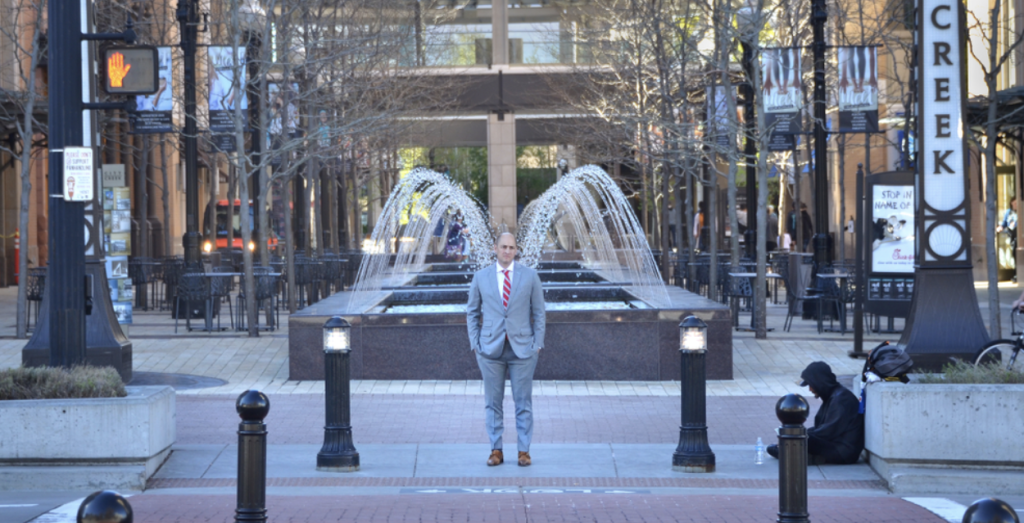
The state of Utah is hatching plans to move homeless people out of Salt Lake City and into a large-scale facility on the edge of town, where as many as two-thirds won’t be allowed to leave – a move that embodies President Donald Trump’s vision for removing unhoused people from public streets, according to an in-depth article in the New York Times.
In his July 24 executive order called “Ending Crime and Disorder on America’s Streets,” Trump called for an end to “so-called ‘harm reduction’” and “housing first“ policies, and an increase in civil commitments, where homeless people are forcibly removed from streets and placed into involuntary treatment for mental illnesses. The order “unfairly targets individuals who are unhoused, more specifically those living with mental health conditions,” according to the Massachusetts chapter of the National Alliance on Mental Illness (NAMI), echoing the national organization. The policies are misguided as well as “harmful, stigmatizing, and threaten decades of progress in disability rights and mental health advocacy,” the NAMI chapter said.
Utah is hoping to build its involuntary treatment facility with the support of the business community – and since outdoor sleeping is now banned in the city, medical center detention may be the only way homeless people can avoid jail, according to the Times. Randy Shumway, a management consultant appointed by Utah Governor Spencer Cox,heads a committee of political appointees and business that replaced the state’s homelessness planning board – he proposes that “rescue” teams give homeless people a choice between going to jail or involuntary treatment in a “resource-rich environment.”
But those resources don’t seem to exist. State Senator Jen Plumb, who is also a physician, pointed out the state’s existing shortage of psychiatric beds means that without new spending, the center could be less about treatment and more like “a prison or a warehouse.”
Shumway has suggested money could come from redirecting funding away from community groups. But much of that money is spent housing the homeless. Josh Romney, son of the Republican former Senator Mitt Romney and chair of the nonprofit that owns the city’s existing shelters, warned that “if you start fiddling with that money, you’re going to be pulling people out of housing into homelessness.”
Other critics highlighted shameful historical instances of moving marginalized people into remote, isolated camps. “It’s what they did in World War II in Japanese detention camps,” said Jesse Rabinowitz of the National Homelessness Law Center, a Washington advocacy group. “This reads similar to rounding up Jews or other people the Nazis didn’t like.”
Utah itself has a long history of poorly regulated wilderness camps and troubled teen facilities, in which children as young as 14 were maltreated – and sometimes died – in the care of poorly trained and sometimes abusive counselors.
To me, the proposed center sounds to like a large-scale, more extreme version of the one in The Factory of Maladies, a memoir by artist Deborah Hartung that explores her harrowing seven days of involuntary commitment in a mental institution in San Francisco after a suicide attempt, a book we’ll revisit in an upcoming story.
What stayed with me most in Hartung’s finely etched account was her terror, confusion and despair – and being ordered to swallow strong antipsychotics every day. She was released in a week thanks to intervention from a loved one. That would not be an option for many of the unlucky denizens of the Utah camp and would effectively keep them locked up with little recourse.
The name “MindSite News” is used with the express permission of Mindsight Institute, an educational organization offering online learning and in-person workshops in the field of mental health and wellbeing. MindSite News and Mindsight Institute are separate, unaffiliated entities that are aligned in making science accessible and promoting mental health globally.

Author

Related Articles


Future Friends, a Concert Series to Reduce Loneliness and Increase Belonging
The Future Friends concert series pairs live music, phone-free social events, and mental health resources to fight loneliness on college campuses.