
At Moyembrie Farm, Incarceration Means Support and Rehabilitation
Moyembrie farm, a unique French facility without cells or bars, helps inmates successfully transition back into society by focusing on mental health support and life skills.
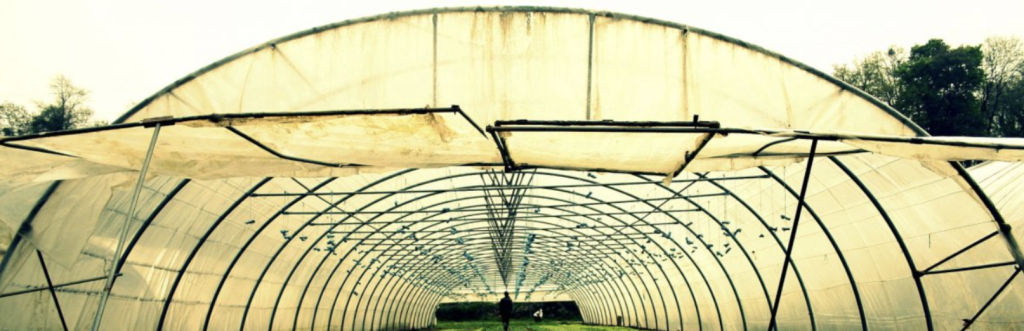
Moyembrie farm hosts prison inmates, but it doesn’t look like a prison. There are no cells or bars – and inmates can even leave the grounds when not working. “Coming here is a shock when you’ve lived in a box for years,” said Nicolas, a resident.
Located in the small French village of Coucy-le-Château-Auffrique, Moyembrie welcomes residents for anywhere between nine and 12 months toward the end of their sentences, preparing them for life after incarceration by engaging them in meaningful farm work, practicing essential life skills, and helping them arrange a phone, ID, health insurance, social services, housing, and employment. An on-site social worker helps them with everything, from difficult paperwork to psychiatry and counseling appointments.
Like many people released from jails or prisons in the US, most of those leaving incarceration in France suffer with mental health or substance abuse issues. Émilie Yverneau, one of those social workers, told Reasons To Be Cheerful that “continuity of care when they leave prison is crucial.” In addition to four hours of farm work each day, many inmates also take advantage of life skills classes or workshops, preparing for the driver’s license exam, learning French, or making cheese.
Staff at Moyembrie tend to manage conflicts within the prison internally, without additional court intervention. The goal is to help people navigate challenges without the additional threat of longer prison time, or being returned to a less desirable facility. Overcrowding in French prisons is worse than that in the US, according to a 2023 report from the Council of Europe & University of Lausanne. “Since the people at Moyembrie will soon be released, it’s better they make mistakes here, with support, rather than when they’re out and facing potentially more harmful consequences,” says Jérémie Claude, the farm’s probation officer. Some incidents, like those involving physical violence, need to go to a judge, however, and escaping results in an immediate return to regular prison.
More than 60% of people leaving prison in France reoffend within five years, partly because of how difficult it is to find work and a home. Moyembrie doesn’t yet have those statistics for people leaving, but more than half are in work or training three months after release, and each and every one leaves to stable housing – because they can stay until they find a place to live, even after the end of their sentence.
Despite such impressive success, only four other places like Moyembrie exist in France, offering a total of 70 beds. Building new facilities takes time – each facility can take four to six years to set up – and money. Running them is much cheaper than conventional prisons – about $80 per resident per day compared to around $150 – but the government only covers roughly $50 of that. Fundraising efforts to open three more farms in the near future are currently underway.The farm model is much more humane than options like electronic bracelets – Olivier Christophe, a former resident who now works at Moyembrie as a counselor, says the place “gave me back my freedom.”
Perhaps best of all, Moyembrie empowers inmates to build and regain critical connections with their loved ones. Family can visit for a full day, rather than the 45 minutes typically allowed in traditional facilities. “I lost many things in the years I spent in jail. One of them was my family,” said Christophe. “Visiting someone in prison is really hard,” he added. “Coming here was easier for them. Slowly, we grew close again.”
The name “MindSite News” is used with the express permission of Mindsight Institute, an educational organization offering online learning and in-person workshops in the field of mental health and wellbeing. MindSite News and Mindsight Institute are separate, unaffiliated entities that are aligned in making science accessible and promoting mental health globally.

Author

Related Articles

The US Psychiatric System Could Really Use More Psychologists
An op-ed in JAMA Psychiatry argues that integrating psychologists into inpatient units is essential for improving psychiatric hospital care.

Will Your Mental Health Treatment Be Covered? Critics Fear Trump Administration Will Make It Harder
The hopeful news is that both Republicans and Democrats have pledged to address mental health coverage.

988 Crisis Line Rolls out Georouting Technology, Giving Crisis Counselors a Better Idea of Caller’s Location
The 988 Suicide & Crisis Lifeline will deploy technology that routes calls based on their proximity to cell phone towers, preventing confusion and delays, the Biden administration announced.
