
Mass Deportation Campaign Endangers Victims of Domestic Abuse
Deporting women who’ve applied for sanctuary from domestic abuse is illegal, lawsuit says.

In today’s Daily, the Trump administration continues to pursue its mass deportation campaign, including against survivors of human trafficking and domestic violence, without regard to their legal rights. In other news, a French farm in which inmates in their last year of prison work take classes and prepare for the world outside. And one psychologist’s argument for using AI to help people with “long-standing relational impairments.”
But first: History was made last night in elections across the country, including in Detroit, where the city voted in City Council President Mary Sheffield as its first woman mayor, and in New York City, where at 34, Zohran Mamdani will become the youngest person elected mayor since 1892. Both pledged to address mental health issues. Part of Mamdani’s platform is a new Department of Community Safety to transform how the city handles mental health crises.
“Safety and justice will go hand in hand as we work with police officers to reduce crime and create a Department of Community Safety that tackles the mental health crisis and homelessness crises head on,” Mamdani said in a rousing victory speech last night.
ICE’s ‘deport first, ask questions later’ policy is illegally putting victims of abuse at risk, lawsuit charges
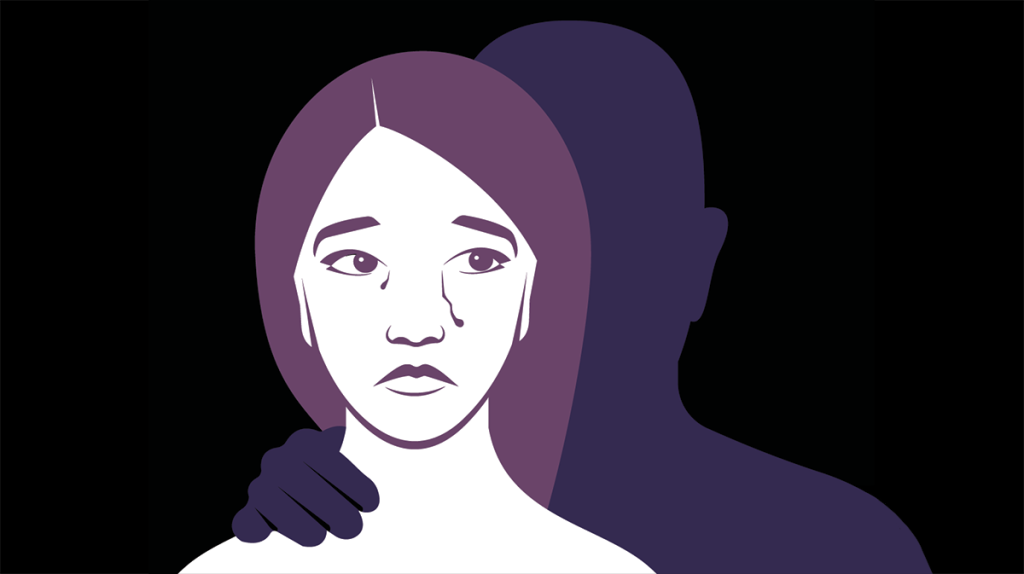
Carmen and her husband, both immigrants, shared a life for several years. For her, their union was rarely joyful. Her husband beat her, she told the Los Angeles Times. Sometimes his abuse got particularly bad, like the night he threatened to kill her in front of their young son. A court awarded her a restraining order, but it didn’t stop him from returning months later and beating her again. Police became involved once more, and he was eventually deported.
Carmen exhaled, believing she had finally found refuge. She had applied for U nonimmigrant status, or a U-Visa – the legal status, created in October 2000, allows victims of certain crimes involving mental and physical abuse, like sex trafficking and domestic violence, to stay in the United States, as long as they help advance relevant investigations or prosecutions.
Nearly half a million people are currently awaiting decisions on their survivor-based protections. They have the legal right to remain in the US while their applications are pending, but the Trump administration has begun routinely ignoring pending applications. It has even ceased checking detainees’ visa status before deportation, undoing decades of protection for victims like Carmen. After a routine immigration check-in, she and her son were detained by ICE, and spent weeks in a Texas facility. “My son suffered so much,” she said. “He would try to sleep in the morning so the day would go faster and he wouldn’t have to endure the many hours imprisoned.”
Eventually, they were deported, straight into the arms of the abusive husband that the U-Visa was supposed to protect them from. She says she feels more trapped than ever – he has taken her passports away, and demands she seek permission from him to even leave the house. “I never know what will make him angry,” she said. “We live in constant fear.” (Carmen’s real name and certain details about her case are being withheld because attorneys say her life is still at risk.)
Last month, lawyers for Carmen and several other immigrant victims of human trafficking and domestic violence filed suit against the Trump administration for detaining and deporting survivors with pending protective status applications – including some who already have the right to stay and work in the country. The suit argues that the Trump administration has violated the law by using an executive order about a fictional immigrant “invasion” of America as pretext to enact an “arbitrary, xenophobic and militarized mass deportation campaign that has terrorized immigrant communities and further victimized survivors of domestic violence, human trafficking and other serious crimes who Congress sought to protect.”
“They just detain and deport them,” said Rebecca Brown, an attorney with a group helping to litigate the case. “It’s a policy of arrest first, ask questions later.”
At Moyembrie farm, incarceration means support and rehabilitation
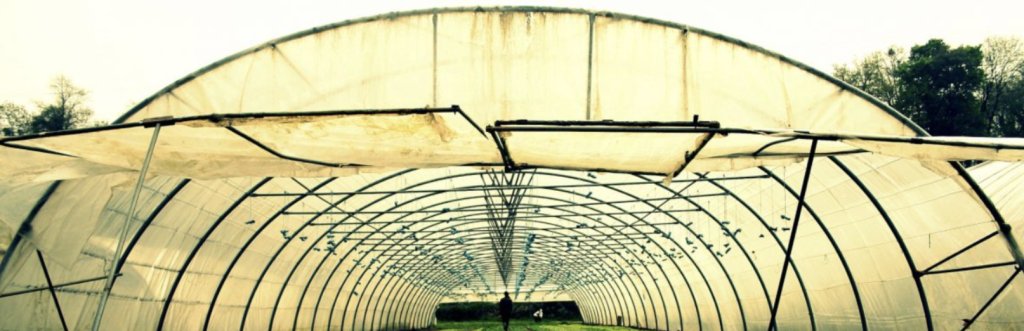
Moyembrie farm hosts prison inmates, but it doesn’t look like a prison. There are no cells or bars – and inmates can even leave the grounds when not working. “Coming here is a shock when you’ve lived in a box for years,” said Nicolas, a resident.
Located in the small French village of Coucy-le-Château-Auffrique, Moyembrie welcomes residents for anywhere between nine and 12 months toward the end of their sentences, preparing them for life after incarceration by engaging them in meaningful farm work, practicing essential life skills, and helping them arrange a phone, ID, health insurance, social services, housing, and employment. An on-site social worker helps them with everything, from difficult paperwork to psychiatry and counseling appointments.
Like many people released from jails or prisons in the US, most of those leaving incarceration in France suffer with mental health or substance abuse issues. Émilie Yverneau, one of those social workers, told Reasons To Be Cheerful that “continuity of care when they leave prison is crucial.” In addition to four hours of farm work each day, many inmates also take advantage of life skills classes or workshops, preparing for the driver’s license exam, learning French, or making cheese.
Staff at Moyembrie tend to manage conflicts within the prison internally, without additional court intervention. The goal is to help people navigate challenges without the additional threat of longer prison time, or being returned to a less desirable facility. Overcrowding in French prisons is worse than that in the US, according to a 2023 report from the Council of Europe & University of Lausanne. “Since the people at Moyembrie will soon be released, it’s better they make mistakes here, with support, rather than when they’re out and facing potentially more harmful consequences,” says Jérémie Claude, the farm’s probation officer. Some incidents, like those involving physical violence, need to go to a judge, however, and escaping results in an immediate return to regular prison.
More than 60% of people leaving prison in France reoffend within five years, partly because of how difficult it is to find work and a home. Moyembrie doesn’t yet have those statistics for people leaving, but more than half are in work or training three months after release, and each and every one leaves to stable housing – because they can stay until they find a place to live, even after the end of their sentence.
Despite such impressive success, only four other places like Moyembrie exist in France, offering a total of 70 beds. Building new facilities takes time – each facility can take four to six years to set up – and money. Running them is much cheaper than conventional prisons – about $80 per resident per day compared to around $150 – but the government only covers roughly $50 of that. Fundraising efforts to open three more farms in the near future are currently underway.The farm model is much more humane than options like electronic bracelets – Olivier Christophe, a former resident who now works at Moyembrie as a counselor, says the place “gave me back my freedom.”
Perhaps best of all, Moyembrie empowers inmates to build and regain critical connections with their loved ones. Family can visit for a full day, rather than the 45 minutes typically allowed in traditional facilities. “I lost many things in the years I spent in jail. One of them was my family,” said Christophe. “Visiting someone in prison is really hard,” he added. “Coming here was easier for them. Slowly, we grew close again.”
In other news…
Can AI companions be helpful, in the right situations? There’s been important coverage about the dangers of developing close relationships with AI, but are there cases where such artificial friendships could be useful? Clinical psychologist Harvey Lieberman writes that for people struggling with certain mental and brain health conditions, the answer is yes. In an op-ed for STAT News, Lieberman argues that “prosthetic relationships” – as he calls these connections – could serve as mental health tools, providing people who struggle with sparking and sustaining human connection with a stable companion, a “reliable anchor” as he calls it.
The goal would not be to replace human relationships, but to enable those with “persistent relational impairments” to practice skills foundational to social interaction, and reduce their loneliness in the meantime. The approach might be especially useful for people navigating schizophrenia, complex trauma, or autism-related burnout, he said. “We already accept prostheses for body and mind. A prosthetic leg doesn’t restore a limb; it enables walking. A hearing aid doesn’t cure deafness; it supports participation,” Lieberman says. “AI is not yet medical grade: It ‘hallucinates,’ and using it for prosthetic relationships would require the same safeguards we demand of insulin pumps or pacemakers.”
The best way to get over fear isn’t to “conquer” it, but to face it – accept that it will always be there, and develop the skills to understand and work with it. That’s the lesson that Arash Javanbakht, a psychiatrist and director of the Stress, Trauma and Anxiety Research Clinic at Wayne State University, shared with the Washington Post. Fear kept our ancestors alive – and we still need it, sometimes. Unfortunately, fear has a knack for emerging when nothing dangerous is actually happening, and in those cases, avoidance only makes the fear stronger. Javanbakht suggests exposure where possible either in real life or through technologies like augmented reality. It probably won’t eliminate fear, but Javanbakht encourages people to identify, and even try to enjoy the feeling. We shouldn’t just try to avoid the negative emotion, he says: “Focus on what’s in your body. See what the feeling is. Because, when you label the emotion, the emotion decreases.”
Our brains are hard-wired to search for meaning in most everything, so sometimes, we find it in random places. Think about noticing a “man in the moon,” or seeing creatures in clouds. That experience, of seeing faces and patterns in everyday objects, has a name – pareidolia. This 25-minute episode of The Science of Happiness podcast explores the phenomenon, and offers tips on embracing its potential to spark creativity, calm, and connection.
The name “MindSite News” is used with the express permission of Mindsight Institute, an educational organization offering online learning and in-person workshops in the field of mental health and wellbeing. MindSite News and Mindsight Institute are separate, unaffiliated entities that are aligned in making science accessible and promoting mental health globally.

Author

Related Articles
Family of 6 in ICE Detention for 9 Months ‘Dying on the Inside’
After nine months in Dilley Immigration Processing Center, “we forgot what it feels like to be free,” a recent high school graduate wrote.
Generation Cancer: Millennials Struggle With Death at an Early Age
More young adults are being diagnosed with cancer. Even for those who survive, the experience can be destabilizing and isolating.

Millennials Weigh Having Children On Their Own Terms
Not having children is also a valid path, and one that everyone should consider, Merle Bombardieri argues in her 1981 book.
