
National Guards’ Mental Health Suffers from Deployment to US Cities

In today’s Daily, as President Trump continues to deploy the National Guard into cities across the United States, a small group of guard members in Ohio are sharing their concerns over an encrypted text chat, wrestling their oath to the Guard against their values. Plus, a grave failure of justice: In Illinois – and across the country – people found incompetent to stand trial are languishing (and sometimes dying) in jail.
But first, in nearly 20 years, Lithuania has cut its suicide rate in half, thanks to a powerhouse combo of community and government support. Their strategy? A strong focus on the isolation and loneliness experienced by seniors. “We may say it’s a natural problem that your support network shrinks when you get older. But let’s imagine the couple who lived happily for 50 years, and now one has gone,” said Marius Čiuželis, who co-founded the senior support nonprofit Sidabrinė Linija (Silver Line) with his wife Kristina in 2016.
Čiuželis says that seniors make up at least 39% of suicide deaths. “We get many calls saying, ‘I tried to do my best to live on my own, but I can’t anymore and I need help… We see that the loneliness of an aging person is often ignored, which was one of the reasons why we founded Sidabrinė Linija,” he told Reasons To Be Cheerful.
“This is just not what any of us signed up for”: Ohio National Guards
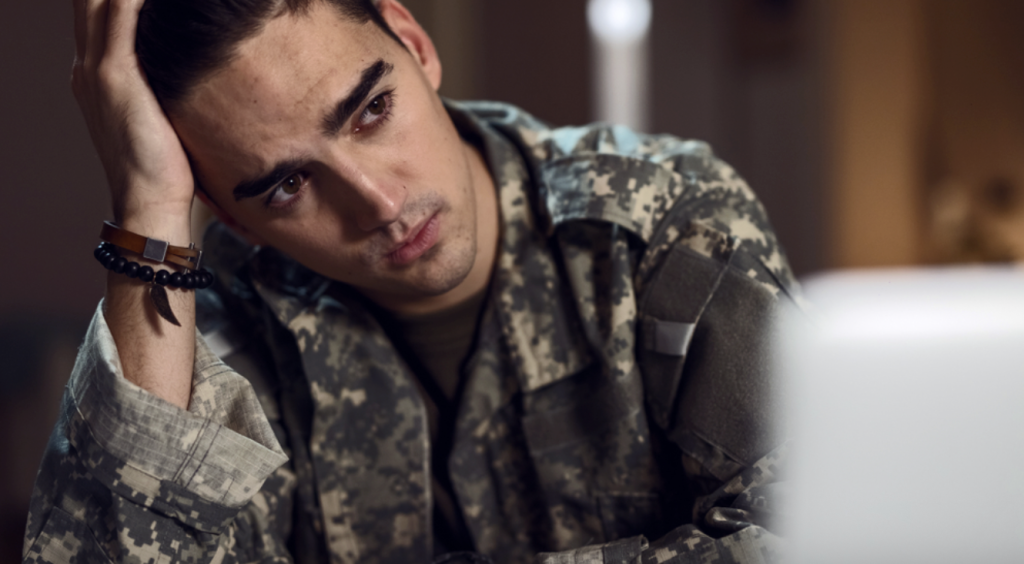
“This is just not what any of us signed up for”: Ohio National Guards
The ad says “uncommon is calling,” but harassing the unhoused isn’t what Ohio-based National Guard member J had in mind. Under President Trump, however, it is something the National Guard are being asked to do, part of a series of orders prompting J, and several other members to question the virtue of their service.
“I have been on two humanitarian-esque missions with the guard, which were awesome, doing the things you see on the commercial, helping these communities,” J says. “And then you want me to go pick up trash and dissuade homeless people in DC at gunpoint. Like, no dude. It’s so disheartening every time I see another city – and I just wonder, ‘who’s going to stand up to this?’”
As Trump moves to send the National Guard to more cities, J, along with several other guard members in their unit, have been talking about their concerns on an encrypted group chat on Signal. They spoke to NPR on the condition that they were only identified by their first initials – they are not authorized to talk to the press, and fear retribution for expressing their opinions. They had earlier expressed their opinions on an encrypted group chat.
Earlier this year, Trump began making use of military troops in Democrat-controlled cities, including Los Angeles, Washington DC, Chicago, and Portland – arguing their presence is necessary to stop violence, reduce crime, and ensure that his deportation agenda goes to plan. Lawsuits currently block their use in Illinois and Oregon, but Republican governors in Missouri and Tennessee have consented to deployment in their states, and the threat of deployment looms over cities in Louisiana, Maryland, and New York. “This is just not what any of us signed up for, and it’s so out of the scope of normal operations,” J says.
J and their fellow unit members aren’t alone. About Face, a nonpartisan nonprofit comprised of post-9/11 service members and veterans with misgivings about the orders they followed, says more than 100 active military members have contacted the organization in recent weeks. In particular, the group stresses the mental health toll of following orders that they feel are wrong or immoral – including the militarization of our communities at home.
“In the military culture, it’s really easy to feel like if you have questions or dissent, you’re the only person who thinks that,” says veteran Brittany Ramos DeBarros, an About Face director who served in Afghanistan. “We take very seriously making sure that people do understand what they could be facing if they follow their conscience,” DeBarros continued, “but the thing we also help people think through is, what is the cost of not following your conscience? Because as Iraq and Afghanistan vets in particular, many of us are living with that cost every day.”
Ohio’s Republican Gov. Mike DeWine consented to Trump’s request that guard troops be sent to DC; roughly 150 are there now. J was given the option to deploy, along with their unit colleagues A and C, but they all chose not to, saying the voluntary order they received wasn’t even clear. That ambiguity ripens their discontent. “Anywhere that we go, there’s crucial information that we get about the why behind it,” A says. “And whenever we don’t get that, especially for these city moves, members ask questions.”
DeBarros compared potential street patrols to “presence patrols” in Afghanistan. The Ohio unit members also find the idea problematic – J likens the idea to “fearmongering.” When contacted by NPR for comment, the White House and Pentagon continued to stand by the deployments, and the National Guard’s “collective ability to carry out any and all orders by President Trump, the Department of War, and state leaders.”
But J will not deploy for immigration enforcement. “There is no way I would participate in that,” says J. “I just think when everything is said and done, people are going to have to answer for what we’re seeing now, and I don’t want to be any part of it.”
C is proud of their career thus far – even considering past missions they served and didn’t necessarily support. Like A and J, C is opposed to supporting mass deportations and immigration enforcement.
But what if such deployment orders don’t remain optional? C is determining the lines they are unwilling to cross. “I’ve been in therapy,” C said. “Lots of therapy has taken me to the point where at least I can be okay if I have to say goodbye. That sucks. Is this tarnishing my service? Is it undoing everything I thought I was fighting for?” they wonder. “Everything that has been happening is so counter to doctrine, and so counter to what we’ve been taught.”
Dying for a bed
In the summer of 2022, Khayla Evans was charged with aggravated battery and child endangerment in Lake County, Illinois – hundreds of miles from her home in Texas. Because of her intellectual disability and history of psychiatric issues, Evans was deemed unfit to stand trial, and was ordered to be sent to a state hospital where she could receive treatment and help ensure she could meaningfully assist her lawyer in crafting a defense.
But a common problem arose – there were no available beds for women. Instead, Evans remained at Lake County Jail, where her health declined. The 24-year-old regularly refused to eat, drink or take her medications.
She was still there in December 2022, when then-Deputy Sheriff Nicholas Kalfas emailed the Illinois Department of Human Services, describing Evans as one of “the worst we had in a long time” and asked if anything could be done to “expedite her getting a bed.”
One day later, Evans was dead. She had waited – in vain – 67 days.
While a 2023 change to state law requires the Department of Human Services to find a bed in a state hospital within 60 days for someone found unfit for trial, an Illinois Answers Project investigation found hundreds of people were held in jails for periods exceeding 60 days over the last five years.
The problem isn’t exclusive to Illinois. A 2020 study found a nationwide increase in the number of patients referred to state hospitals because they’d been found incompetent to stand trial.
A judge in rural Cass County told Illinois Answers Project that the delays are “bordering on the line” of cruel and unusual punishment – “and I think we’re over the line,” he said.
According to Illinois Answers, mentally ill defendants in the state are, on average, waiting nearly twice as long for a hospital bed as they did five years ago. In most cases, it’s more than three months, but it can be significantly longer. As of September, about 300 people were in jail waiting to be placed in a state hospital.
Illinois Answers Project reviewed hundreds of pages of court records and transcripts, analyzed state hospital data, and spoke with advocates, lawyers and family members to present a full account of a dire situation. Click here to read the three-part investigation:
- Too Mentally Ill for Trial, She Spent Months in an Illinois Jail as the State Looked for a Hospital Bed. She Died Waiting.
- Illinois is Turning to Local Jails to Treat Mentally Ill Defendants. Some Early Results Offer Hope — and Warnings
- How Illinois is now prioritizing outpatient fitness restoration
-Josh McGhee
Women often don’t get the chance to express negative emotions – are “rage rituals” a solution?
Late in her 40s, artist and single mother of two boys Marcia Davila was nearing burnout from years of putting everyone else’s needs above her own. She’d been repressing her anger, and the hormonal disruption of menopause only agitated her discombobulated feelings. She was so overwhelmed, she no longer recognized herself. “I didn’t know if the person I was in my daily life was the real me,” Davila told Oprah Daily. She only knew she wanted a change. That led her to try a “rage ritual” retreat with Mia Banducci.
The programs depart from traditional women’s retreats – they are not about finding peace in nature. Quite the opposite – at one point on these “Rage Retreats” women scream, cry, and beat the ground with sticks. But participants find the unconventional approach to be transformative. “This was the first time that I was told it was safe to feel it all – to cry, scream, rage, beat the ground, and name the pain that I’ve been carrying for 50 years,” Davila said. “Something about it helped me connect to a deeper level of trust in myself.” Moreover, when done with the right support, rage rituals can help trauma survivors process what they’ve survived and reconnect with their body.
Still, mental health experts warn rage rituals aren’t safe for everyone. People with post traumatic stress or panic disorder may find them overwhelming and overstimulating. Banducci recommends doing other “healing work,” with licensed professionals, as well as finding small, safe outlets for your rage in everyday life.
In other news…
Remembering Marshawn Kneeland: Last week, Dallas Cowboys defensive end Marshawn Kneeland died by suicide at just 24. His passing has sent shockwaves across the league and devastated those who loved him. Greg Ellis, a former player and coach who worked with Kneeland all of last year, worries he could have done more. “I hate that he had to suffer… We just have to continue to learn about mental disorders, mental health and what mental wellness looks like,” Ellis told USA TODAY. “Let’s continue to erase the stigma, so people can feel better about reaching out for help and receiving help, and we can feel better about extending that hand of help.”
What’s self-gaslighting? Do you do it? There’s lots of talk about gaslighting – when someone tries to make you doubt your experience, memory, or in some cases, sanity. But, experts told Time, gaslighting doesn’t always come from the outside. Sometimes, you’re the culprit. “Gaslighting is when someone manipulates you into questioning your own reality, and self-gaslighting is when you do the same thing to yourself,” said therapist Lauren Auer. It’s worse than harsh self-criticism, Auer added, because it involves denying your lived reality. “Before anyone else even has the chance to invalidate you, you’re already doing it to yourself.”
Survivors of relational trauma frequently engage in self-gaslighting – often unknowingly, and with no intent to do themselves harm. The behavior is generally a defense mechanism, built by internalizing past experiences of being dismissed or denied. “It feels risky to trust yourself, especially if you’ve been doing this your whole life,” said Jill Vance, a clinical psychologist in Chicago. Though it can be a long and scary process, she emphasised that change is possible. “It’s these little practices of building up self-esteem, building up courage, and realizing that the world doesn’t end.”
Private Epstein letter says Trump ‘knew about the girls’ in newly released documents. Members of the House Oversight Committee have published emails between convicted sex traffickers Jeffery Epstein and Ghislaine Maxwell, one of which says he knew about the ‘girls’ and another in which he spent ‘hours’ with one of the victims at Epstein’s residence. (A woman has previously filed a lawsuit saying that she was a virgin when she was raped by Trump at age 13 at Epstein’s mansion, an account backed up by testimony from one of Epstein’s ‘handlers’ and an alleged eyewitness – stories that Cornell writer and philosopher author Kate Manne, who reviewed the alleged victim’s transcript, says we ignore to our peril.) – Diana Hembree
The name “MindSite News” is used with the express permission of Mindsight Institute, an educational organization offering online learning and in-person workshops in the field of mental health and wellbeing. MindSite News and Mindsight Institute are separate, unaffiliated entities that are aligned in making science accessible and promoting mental health globally.

Author

Related Articles
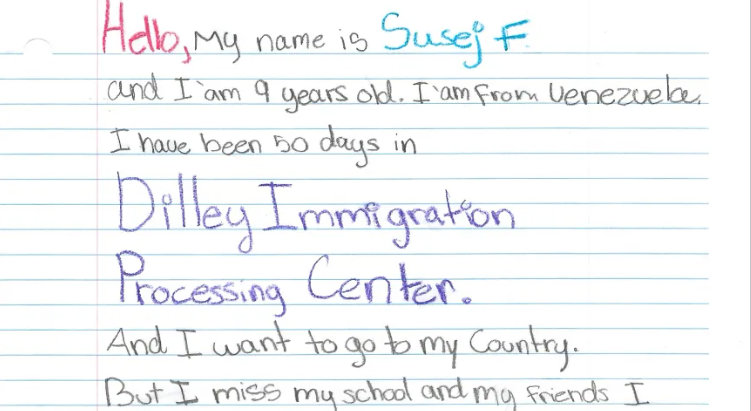
Health Organizations Condemn Traumatic ICE Raids, Family Separation
According to letters from children living in an ICE detention facility, living conditions are inhumane and their mental health is suffering.

In Teens, Social Anxiety Often Looks Like Anger
A study finds that some teens’ aggressive behavior may be due to social anxiety, not straightforward reactivity.
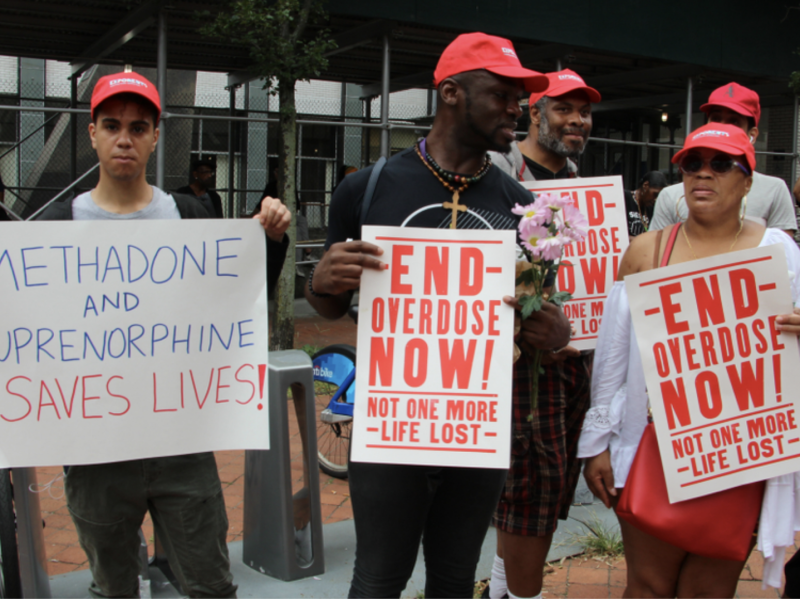
Expert Calls for Harm Reduction, Not Punishment, to Resolve Our Overdose Crisis
As the Trump administration pulls funding from harm reduction, an expert on the overdose crisis says it’s the best way to save lives.
