
“This is just not what any of us signed up for”: Ohio National Guards on deployment to American protests
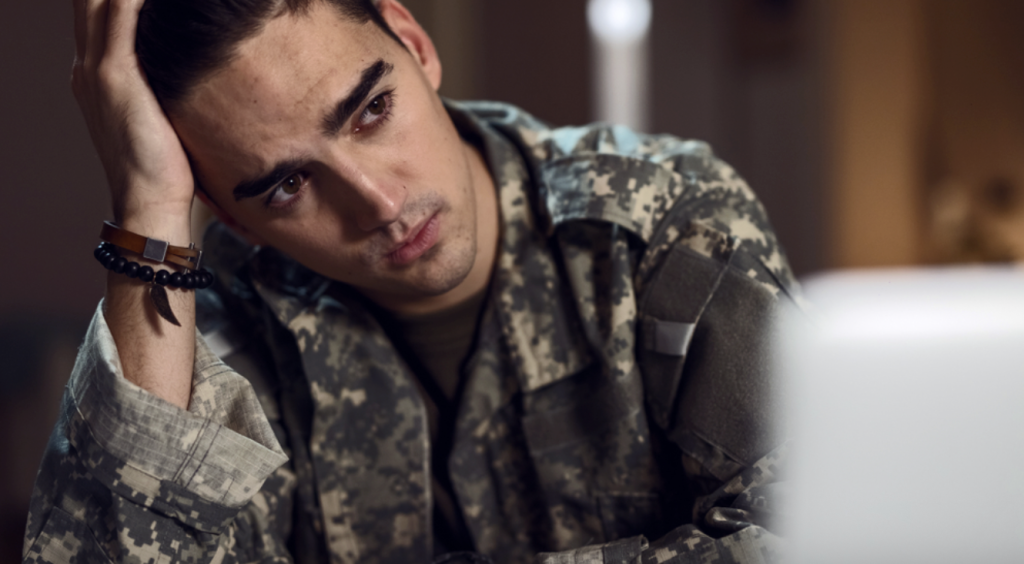
The ad says “uncommon is calling,” but harassing the unhoused isn’t what Ohio-based National Guard member J had in mind. Under President Trump, however, it is something the National Guard are being asked to do, part of a series of orders prompting J, and several other members to question the virtue of their service.
“I have been on two humanitarian-esque missions with the guard, which were awesome, doing the things you see on the commercial, helping these communities,” J says. “And then you want me to go pick up trash and dissuade homeless people in DC at gunpoint. Like, no dude. It’s so disheartening every time I see another city – and I just wonder, ‘who’s going to stand up to this?’”
As Trump moves to send the National Guard to more cities, J, along with several other guard members in their unit, have been talking about their concerns on an encrypted group chat on Signal. They spoke to NPR on the condition that they were only identified by their first initials – they are not authorized to talk to the press, and fear retribution for expressing their opinions. They had earlier expressed their opinions on an encrypted group chat.
Earlier this year, Trump began making use of military troops in Democrat-controlled cities, including Los Angeles, Washington DC, Chicago, and Portland – arguing their presence is necessary to stop violence, reduce crime, and ensure that his deportation agenda goes to plan. Lawsuits currently block their use in Illinois and Oregon, but Republican governors in Missouri and Tennessee have consented to deployment in their states, and the threat of deployment looms over cities in Louisiana, Maryland, and New York. “This is just not what any of us signed up for, and it’s so out of the scope of normal operations,” J says.
J and their fellow unit members aren’t alone. About Face, a nonpartisan nonprofit comprised of post-9/11 service members and veterans with misgivings about the orders they followed, says more than 100 active military members have contacted the organization in recent weeks. In particular, the group stresses the mental health toll of following orders that they feel are wrong or immoral – including the militarization of our communities at home.
“In the military culture, it’s really easy to feel like if you have questions or dissent, you’re the only person who thinks that,” says veteran Brittany Ramos DeBarros, an About Face director who served in Afghanistan. “We take very seriously making sure that people do understand what they could be facing if they follow their conscience,” DeBarros continued, “but the thing we also help people think through is, what is the cost of not following your conscience? Because as Iraq and Afghanistan vets in particular, many of us are living with that cost every day.”
Ohio’s Republican Gov. Mike DeWine consented to Trump’s request that guard troops be sent to DC; roughly 150 are there now. J was given the option to deploy, along with their unit colleagues A and C, but they all chose not to, saying the voluntary order they received wasn’t even clear. That ambiguity ripens their discontent. “Anywhere that we go, there’s crucial information that we get about the why behind it,” A says. “And whenever we don’t get that, especially for these city moves, members ask questions.”
DeBarros compared potential street patrols to “presence patrols” in Afghanistan. The Ohio unit members also find the idea problematic – J likens the idea to “fearmongering.” When contacted by NPR for comment, the White House and Pentagon continued to stand by the deployments, and the National Guard’s “collective ability to carry out any and all orders by President Trump, the Department of War, and state leaders.”
But J will not deploy for immigration enforcement. “There is no way I would participate in that,” says J. “I just think when everything is said and done, people are going to have to answer for what we’re seeing now, and I don’t want to be any part of it.”
C is proud of their career thus far – even considering past missions they served and didn’t necessarily support. Like A and J, C is opposed to supporting mass deportations and immigration enforcement.
But what if such deployment orders don’t remain optional? C is determining the lines they are unwilling to cross. “I’ve been in therapy,” C said. “Lots of therapy has taken me to the point where at least I can be okay if I have to say goodbye. That sucks. Is this tarnishing my service? Is it undoing everything I thought I was fighting for?” they wonder. “Everything that has been happening is so counter to doctrine, and so counter to what we’ve been taught.”
The name “MindSite News” is used with the express permission of Mindsight Institute, an educational organization offering online learning and in-person workshops in the field of mental health and wellbeing. MindSite News and Mindsight Institute are separate, unaffiliated entities that are aligned in making science accessible and promoting mental health globally.

Author

Related Articles

Does Contemporary “McMindfulness” Reinforce Our Suffering?
A Buddhist teacher and professor argues that a commodified mindfulness solely focused on the self is only a stopgap fix.
“No Beds”: Despite Improvements, Detroit’s Shelter System Continues to Let Families Down
When a Detroit mom and her two sons faced homelessness last year, she spent months calling the city daily for beds – in vain.

988 call responses plummet in Georgia after insurer cutbacks
After an insurance company made cutbacks, Georgia’s 988 response rate to mental health crisis calls “fell off a cliff.”
