Teen Vogue, A Vital, Passionate Voice for Young People Is Silenced

Greetings, MindSite News Readers. In today’s Daily, the end of Teen Vogue silences the diverse voices of youth and young adults about the issues affecting them the most, including culture, the economy, politics, climate change, and of course, mental health. And in Iowa, one family rallies to support trans youth after losing their own son to suicide. Also, a vote to release the Epstein files, ‘romantasy’ books for intimacy-starved couples, and navigating kids’ puberty while mom hits perimenopause.
But first, research is still emerging, but scientists suspect that GLP-1 agonists (diabetes and weight loss medications) can treat alcohol and drug addiction as well as obesity. “We see how hard it is for people to maintain their recovery long-term after they leave the support of our housing,” Nick Horton, who leads a nonprofit helping formerly incarcerated women reenter society, told The Washington Post. “But with this medicine, I’m hopeful.”
It’s so hard to say goodbye to Teen Vogue
An important voice for teens and young people — one that provided vital, groundbreaking coverage of mental health and other issues facing young people, especially young women — has been radically changed, if not completely silenced. The Teen Vogue digital site is ending as a freestanding news organization and being folded into Vogue.com. As part of that transition, six staffers were laid off by Condé Nast, the magazine publisher and media conglomerate that owns Vogue and Teen Vogue. Most of the fired staff members are BIPOC women or trans, and the entire politics section was laid off the day before the mayor’s race election in New York City. According to Columbia Journalism Review (CJR), only one person of color remains from the original editorial staff.
The following week, four journalists who work for Condé Nast publications and are leaders of Condé United, the company-wide union, were fired after questioning management about the layoffs at Teen Vogue as well as the layoffs ongoing at WIRED and other Condé Nast properties. Despite the company’s assertion that “the title will remain a distinct editorial property, with its own identity and mission,” the elimination of diverse leadership doesn’t typically precede editorial restructuring that continues to value distinct and divergent voices. Although it will continue to carry the name, Teen Vogue, as we knew it, is over.
“Teen Vogue was a once-in-a-generation experiment in what happens when you hand the mic to young people from diverse backgrounds and take their voices seriously,” wrote former Teen Vogue lead editor Elaine Welteroth, in a statement on Instagram. She led Teen Vogue’s metamorphosis into a must-read publication that covered fashion, culture, politics and mental health. “That era set a new standard in media and showed the power of trusting young people with real news and real stories,” Welteroth said.
Versha Sharma, the editor-in-chief of Teen Vogue, also left. Discussing layoffs, she said, “the diverse staffers were “passionate, whip smart and consistently pushed impactful storytelling forward … Many of them are now without jobs.”
Sarah Goody was one of the teens who gained a voice at Teen Vogue. Five years ago, at age 15, she penned an op-ed for the publication declaring that engaging in climate activism reignited her will to live. “I learned something about how to live a happy, healthy life that some people don’t realize until they’re much older than me,” she began. “In the 5th grade, when I was diagnosed with clinical depression…I was experiencing a hopeless sense of loneliness, lack of motivation, and a deepening sadness that not only affected me, but also the people around me. I was even experiencing suicidal ideation. Now, I’m a freshman in high school and completely unrecognizable from that sad, lonely girl. I’m hopeful about life again, and I have activism to thank. In fact, I think it saved me.”
In written comments to Columbia Journalism Review, Condé Nast claimed that Teen Vogue suffered from declining readership and needed to be folded into Vogue for its own good. That assertion bears further investigation. Its interview in March with Vivian Jenna Wilson, estranged daughter of Elon Musk, was not only one of Conde Nast’s most-read stories of the year, it’s the best-performing cover in the magazine’s history. The interview and writeup covered Wilson’s disdain for her father’s support of what she called the “cartoonishly evil” Trump administration, including Musk’s mass firing of federal workers and the wave of legislative attacks on trans youth like herself.
Plainly, the shuttering of Teen Vogue erases essential journalism for adolescents and young adults that won’t easily be replaced. Lex McMenamin, who assigned the interview with Wilson and was politics editor at Teen Vogue until their layoff earlier this month. McMenamin told CJR that they noticed the “inauthentic, misrepresentative, and frankly antagonistic” ways that mainstream media covered politics as an undergraduate student journalist.
It was all “pronoun wars and cancel culture,” McMenamin said. “It was totally missing the material reality of what it was like to be on campus.” Then, they began freelancing for Teen Vogue, reporting on matters like student debt that their friends needed and wanted to know about.

Teen Vogue’s work will be missed. As the Roosevelt Institute noted in its eulogy of the publication – mere months after honoring it with its 2025 Freedom of Speech medal – “Teen Vogue’s work showed us a different path: journalism that isn’t just trustworthy and thought-provoking, but that listens to young people’s priorities. In its coverage of everything from student debt to the climate crisis to wages for fast food workers, Teen Vogue connected the dots between the issues that matter to young people and the policy choices that underpin them.”
After her bullied trans child died by suicide, a mother pleads for kindness over cruelty
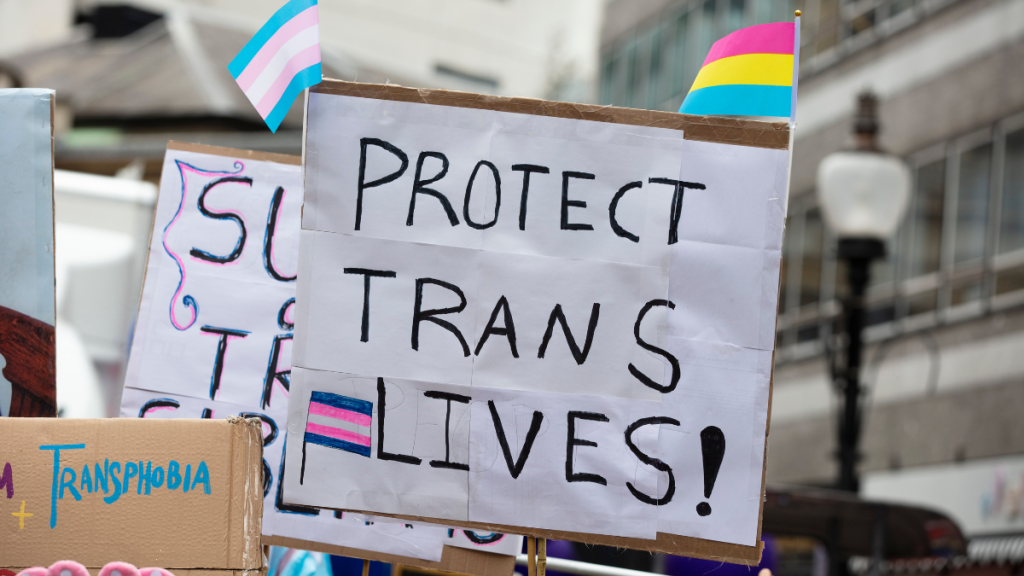
Ashley Campbell’s son Miles Phipps was 5 years old the first time she warned him about bullies. She’d meant for the information to protect him from harm, Campbell told the Des Moines Register, after he insisted on wearing a suit to an upcoming father-daughter dance. It’s up to you, she told him, reminding him that “people are mean” and “they’re probably going to pick on you.” Miles said he didn’t care, and at the time, he didn’t. But 10 years of bullying from children and adults took a lethal toll. On November 4, a substitute teacher refused to use his pronouns, saying, “I can call you whatever I want to, Miles.” The next day, the 15-year-old died by suicide.
His school, Urbandale High, issued a statement that left out what disciplinary action, if any, was given to the substitute, and added, “We remain steadfast in our dedication to cultivating a safe, caring and supportive learning environment for all students and staff.” Miles’ parents now work to ensure that every other trans child is heard before it’s too late.
“I think it’s horrific that I had to lose my kid, or anyone has to lose their kid or their person,” Campbell said, “but I just want to give him a voice.”
Bullying was the reason Miles made two previous attempts on his life, Campbell added, once as recently as this past July. In that case, peers had posted videos online of other students destroying one of his sweatshirts and mocking his journal entries, she said. When Miles’ mental health seemed to improve, law enforcement and school staff warned Miles’ parents against attempting to have the videos removed or pursuing consequences for those who posted them.
As the 2025-26 school year drew near, Miles’ mental health again declined, prompting his parents to have him transfer to Urbandale High. And even though his parents signed forms required under a recent Iowa law to authorize schools to use pronouns that match a student’s gender identity, Miles had to still navigate teachers who refused to do so.
“Protecting trans kids is important and their rights. But so is just not being cruel, just being understanding,” Campbell told the Register. ” He never should have had to endure that.”
In recent years, legislative protections for LGBTQ+ students have been rolled back, especially those intended to help transgender and nonbinary youth. The Iowa law, SF 496, is best known for banning instruction related to sexual orientation and gender identity through sixth grade. It also bans most books and media from schools if they mention or depict sex acts. At the federal level, President Trump has largely dismantled the Education Department, ending enforcement of policies intended to protect vulnerable students, and has also ended federal support for schools engaging in practices that promote diversity, equity, and inclusion. These actions don’t bode well for LGBTQ+ youth.
According to The Trevor Project’s 2024 National Survey, 39% of LGBTQ+ youth aged 13 to 24 seriously considered attempting suicide in the past year, and 42%of trans and nonbinary Iowans said the same. Worse yet, 13% of trans and nonbinary respondents reported actually attempting suicide.
In other news…
A tough combination: managing a household in which the kids hit puberty as mom reaches perimenopause. Hormonal chances can cause emotions to get intense, but the right tools make it manageable, readers and experts told The 19th. Martha, 50, and her daughters, aged 11 and 13, have bonded over a shared enjoyment of the film, Are You There God? It’s Me, Margaret. They also have a supportive circle of peers experiencing the same changes. (Have a problem? Someone in your community likely has a solution, I say.) Anyhow, experts note that both life stages produce massive changes, prompting lots of stress for everybody.
Women dealing with menopause should model and openly discuss the changes they make to maintain their health, said clinical psychologist Lisa Damour. “Talking openly about smart and healthy and adaptive coping choices … is the best gift you could give your kid. The best gift is being pretty boring and managing your own emotions on your own time.”
You’ve also got to accept that raising kids is hard, and it’s possible that as you adjust to the changes in your own body, parenting will temporarily become slightly harder. Embracing this reality can actually help you receive the changes in stride. “Kids do nothing but change and by its nature, having a kid and being a kid are both very, very stressful,” Damour said. “I think we are all in a better position if we start with that understanding, as opposed to continuing to guess, ‘Huh, why is this always so stressful?’ because then we get stressed about the fact that we are stressed.”
Struggling to maintain physical intimacy in your relationship? Sex therapists suggest reading “romantasy” books together. For some readers who spoke to the New York Times, they’re “a vehicle for sexual reawakening.”
You may have missed it, but today is Rural Health Day! Learn more about the unique challenges faced by rural youth in the United States in these three in-depth reports from HopeLab:
Rural Realities: Young People, Digital Technology and Well-being
A Place to Be Seen: Mental Health & Online Support Among Southern Youth in the U.S.
Exploring Pride and Support of LGBTQ+ Young People in Rural Communities
And read MindSite News editor Diana Hembree’s account of HopeLab’s report on southern youth and mental health from the lens of growing up southern.
And at long last, the House and Senate voted to release the Epstein files, which include extensive records on child sex trafficking. Stay tuned….
Mental health can't wait.
America is in a mental health crisis — but too often, the media overlooks this urgent issue. MindSite News is different. We’re the only national newsroom dedicated exclusively to mental health journalism, exposing systemic failures and spotlighting lifesaving solutions. And as a nonprofit, we depend on reader support to stay independent and focused on the truth.

It takes less than one minute to make a difference. No amount is too small.
The name “MindSite News” is used with the express permission of Mindsight Institute, an educational organization offering online learning and in-person workshops in the field of mental health and wellbeing. MindSite News and Mindsight Institute are separate, unaffiliated entities that are aligned in making science accessible and promoting mental health globally.

Author

Related Articles
A Cat Love Story, and The Battle Over Opioid Settlement Dollars
A major policy shift in Pennsylvania now allows opioid settlement funds for public defenders, a move that could transform how counties address addiction and the legal system.

Generative AI More Harmful Than Helpful in K-12 Classrooms
A new study from the Brookings Institution finds that generative AI does more bad than good in today’s classrooms.