
In Our Future, We Are Free: The Movement to Dismantle Youth Prisons in America
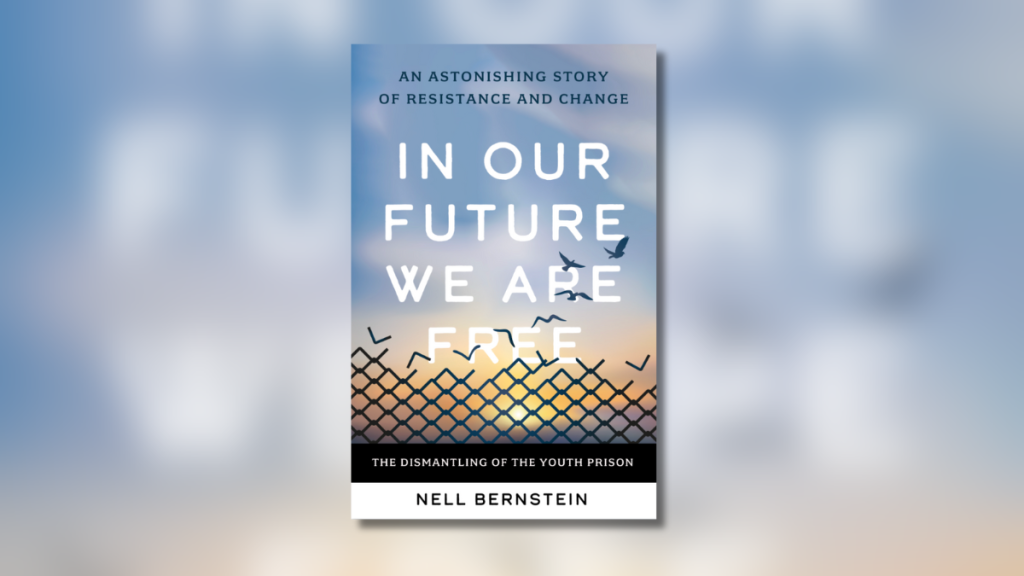
Over the past 20 years, one state after another has shuttered its youth prisons and stopped prosecuting kids as adults, slashing the number of children locked in cages by a stunning 75%. This new book tells the story of how a coalition of parents, activists, and prison officials brought a destructive institution to its knees.
A master class in social change
Perhaps no journalist has done more to expose the damaging impact of incarcerating youth than Nell Bernstein.
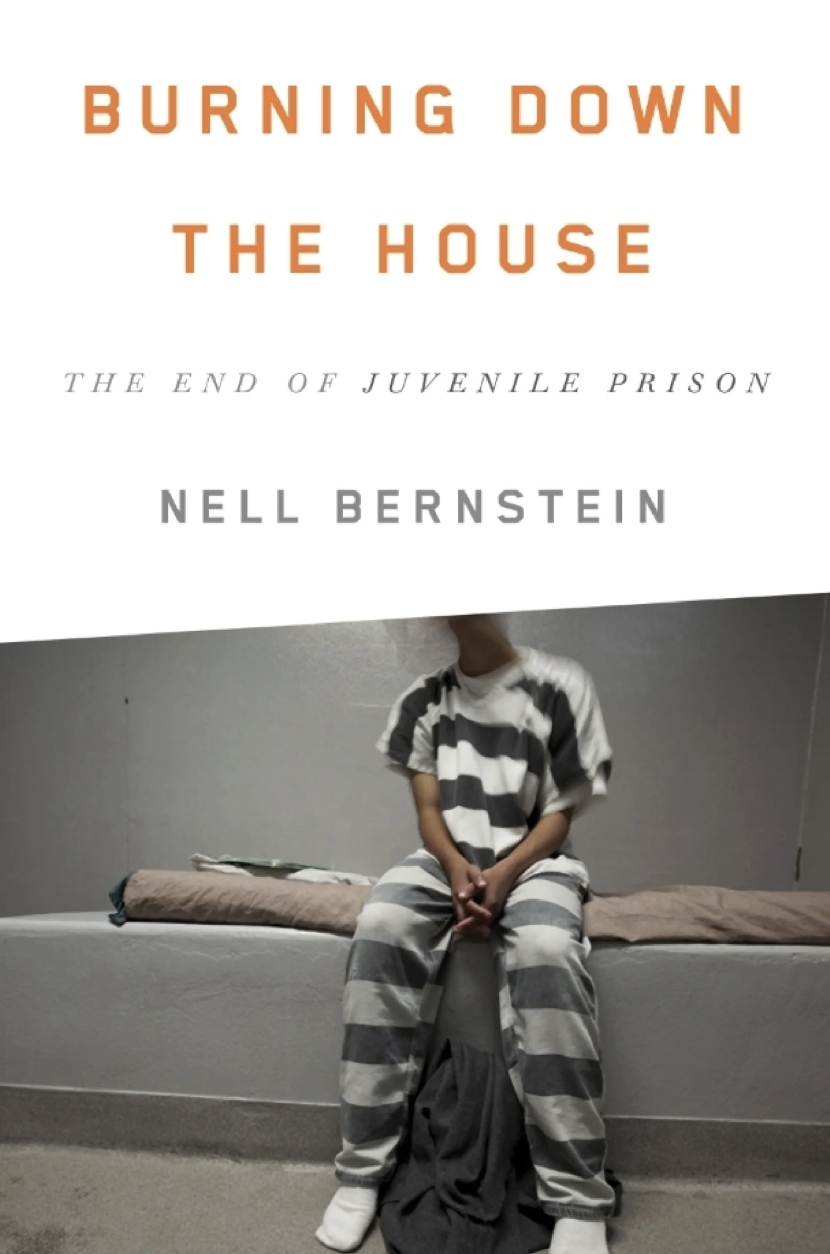
Her 2014 book, “Burning Down the House: The End of Juvenile Prison,“ offered a deep look at the cruelty of the juvenile detention system in the U.S. and issued a clear-eyed call for its abolition. A decade later, her latest book, “In Our Future We Are Free,” examines and celebrates the amazing progress that has occured since then in the state-by-state battle to shutter youth prisons and stop prosecuting kids as adults. As a result of that effort, the number of children locked up has been reduced by 75%.
Bernstein was honored as a White House Champion of Change by the Obama administration and her articles have appeared in Newsday, Salon, Mother Jones, USA Today, New York Times, and the Washington Post, among other publications.
She is also a contributing writer for MindSite News, and we are pleased to publish an excerpt from her new book, starting with its introduction.
Introduction: The Blossoming of a Movement
Ten years ago, I published a book documenting the lives of young people trapped inside the matrix of our nation’s brutal and counterproductive youth prison system. Today, thanks to a powerful movement of system survivors, their families, and an army of allies, that system is greatly diminished. State after state has shuttered youth prisons, moved away from trying kids as adults, and stopped locking up teens at all for the low- level offenses that once filled institutions well beyond capacity.

At a moment when regressive forces threaten to stall or unravel progress on multiple fronts, the unlikely success of this movement holds a crucial message: no matter how profound the obstacles, transforming an entrenched institution in the service of justice is possible.
In 2000, 108,800 young people were held inside locked buildings, either county juvenile halls or large, state-run youth prisons. By 2022, the number of incarcerated youth had fallen to 27,600, an extraordinary drop of 75 percent, and at least two- thirds of the nation’s youth jails and prisons had closed their doors for good.
How did this stunning rejection of an entrenched practice come to pass, no less in a country that invented the modern prison, exported that model around the world, and continues to maintain its dubious distinction as the world’s leading incarcerator? There may be no single driver – a sustained drop in youth crime coincided with an array of changes on the legal, legislative and political fronts but there is an overarchng story. The 75 percent drop in youth incarceration that has taken place over the past two decades is a testament to the wide array of change actors – from young people, their parents, and community organizers to lawyers, legislators, and unlikely allies within corrections – who worked together to close down youth prisons and open up new possibilities for the young people consigned to them.
This book tells their story, the story of a movement. My hope is that a portrait of the stunningly successful movement to close down youth prisons might serve as a case study in how major social change can be achieved, even when those demanding that change are the least powerful among us and the enforcer of the status quo is the government itself.
The pages that follow are both history and homage to the countless individuals who came together to shift the nation’s course when it comes to youth justice, first and foremost currently and formerly incarcerated young people, who went beyond recounting what was wrong with the system and transformed themselves into activists on the cutting edge of creating something new. By insisting on being heard and recognized in their full humanity, they help us find a pathway back to our own, which we squander when we try to suppress theirs.
Close Tallulah Now!
It was 1999 in Sulphur, Louisiana, and Grace Bauer was worried about her son. Corey, an eleven-year-old honor student, was taking the death of his beloved grandmother hard. As kids that age will do, he had channeled his grief into rebellion: skipping school to smoke behind the gym; shoplifting cigarettes he was too young to purchase.
The first time the police called, Bauer, a white mother of three, was concerned but not overly alarmed. She trusted the authorities and knew most of the local shopkeepers by name. When she got downtown, she was shocked to find her eighty-pound child handcuffed to a bench, but the store owner told her not to worry. He had no interest in pressing charges; he’d just wanted the police to take Corey home, where his mother could deal with him herself. The judge who placed Corey on probation was also reassuring. As long as her son followed the rules, he told Bauer, he would be fine. The probation officer who showed up at her door – an old school friend of her husband – told her the same thing.
But when Corey returned to court a few months later, the tenor had shifted. Her child had violated the terms of his probation, Bauer was informed, by missing a pep rally. The judge sentenced him to ten days in juvenile hall to “set him straight.” When Corey returned from juvenile hall, he refused to say a word about what had transpired during those ten days. Not long after, he was suspended from school for smoking. When he went back to court, the judge was visibly angry. He declared Corey delinquent and sent him to a group home so violent that the state would shut it down a few years later.
After Corey came home that time, Bauer did all she could to keep him close. When he sneaked out of his room after bedtime, she nailed the windows shut. After he slipped out the front door one night, she slept on the floor outside his room. Her efforts paid off; Corey started going to school every day without incident, coming home each afternoon to help his mother care for her elderly father. When Corey’s grandfather became ill with pneumonia, Corey spent hours by his bed, listening to the old man’s stories and helping dress and bathe him.
A few months later, Bauer’s father died from aspiration related to the pneumonia. Before Bauer could open her mouth to break the news to her three children, Corey took one look at her face and bolted. It took Bauer three days to find him. After that, she said, “it was right back into the same things”: trouble at school, breaking curfew, and, eventually, breaking the law.
Again, a ringing phone led Bauer to find her child in handcuffs. This time, the twelve-year-old was shackled to a chair in a police interrogation room, slumped and incoherent. He and two older friends had stolen a stereo out of a pickup truck. When the police pulled up, Corey had swallowed the Xanax he’d been carrying in his pocket. Now he was barely able to hold his head up. If I don’t get him some help, Bauer remembered thinking, my child is going to die.
Help was available, a probation officer told her. The county didn’t have the resources to get Corey the services he needed, but the state system did. If Corey admitted to his role in the theft, he would be sent to a ninety-day drug treatment and counseling program.
“Tell the truth,” Bauer urged her son as he went before a judge without an attorney. “Let these people help you.”
After five and a half hours of driving, Bauer rounded a bend and the “program” to which her twelve-year-old had been dispatched came into view. The therapeutic placement she had been promised turned out to be a massive compound surrounded by razor wire. Armed guards patrolled the perimeter. “Twelve years old, and he was in a prison,” Bauer told me. “I was stunned.”
Corey had been sent to the Tallulah Correctional Center for Youth, one of the most notorious youth prisons in the nation. When guards brought her child into the visiting room, the first thing Bauer noticed was a massive black eye. As Corey came closer, she saw that he was bruised and emaciated, the prison uniform hanging off his tiny frame. A bruise on his rib cage bore the shape of a guard’s boot. When the one-hour visit was over, she found herself physically unable to leave her son behind. Her then husband had to lead her from the room.
Tallulah opened its doors as a for-profit institution in the mid-1990s, when youth incarceration was at its height. Even in those prison-crazed years, Louisiana stood out, confining more youth per capita than any other state in the nation. And conditions at Tallulah were extreme even for Louisiana. By December 1994, a federal judge had declared a state of emergency at the institution. The next year, Human Rights Watch determined that Tallulah was in violation of international human rights standards. In 1996, the US Department of Justice launched its own investigation into what it called “an institution out of control.”
When New York Times reporter Fox Butterfield visited in 1998, he found 620 boys, some as young as eleven, packed into overcrowded corrugated iron barracks. Food was so scarce that growing boys lost weight. Education consisted of an hour a day with uncertified teachers. Young people with mental health issues were locked in solitary confinement with only a thin mattress propped on concrete blocks.
By the time Butterfield showed up, the Justice Department had determined that “life threatening and dangerous” conditions at Tallulah violated constitutional standards. During a single twenty-day period, Justice Department investigators found, twenty-eight youth had been sent to the hospital with serious injuries. Even a new warden brought in from Louisiana State Penitentiary at Angola to bring order to the chaos had been unnerved by what he had found. “When I got here, there were a lot of perforated eardrums,” he told Butterfield. “Actually, it seemed like everybody had a perforated eardrum, or a broken nose.”
Tallulah had been marketed to investors and the public as a secure home for the “worst of the worst.” In fact, nearly 75 percent of the children held there had been adjudicated for nonviolent offenses. More than half had serious mental health problems, and over 80 percent were Black. When Human Rights Watch investigators asked those young people what they most wanted to see change, “virtually every child . . . responded that they would like the guards to stop hitting them and that they would like more food.”
Bauer began looking for an attorney to help get her twelve-year-old out of a place where she feared for his survival. The first one she spoke with, an acquaintance of her mother who handled mainly capital defense cases, wouldn’t take her money. Most of his death row clients, he told her, had started out in Louisiana’s youth prison system. “You might as well buy him a ticket to the Angola State Penitentiary,” he said, “because that is where all these kids end up.”
A second attorney offered a similarly grim prognosis, but as Bauer left his office, he handed her a phone number. A new group had set up shop in New Orleans: the Juvenile Justice Project of Louisiana. Try giving them a call, he suggested. Maybe they would know something he didn’t.
The Juvenile Justice Project of Louisiana was born in 1997 when a group of public defenders invited David Utter, a white civil rights attorney who had moved to Louisiana to represent mentally ill prisoners at Angola, to visit Tallulah. What Utter found there was a “violent, dangerous place, one very much like Angola, except that it was populated by children,” he told me. He was so disturbed by what he saw that he left his job and opened the Juvenile Justice Project of Louisiana.
As word got around that attorneys were finally looking into the state’s youth prison system, Gina Womack, the project’s office administrator, found herself fielding frantic calls from parents. Their children were being beaten bloody, they told her, or held for weeks in solitary confinement, and parents’ calls to the prisons were going unanswered. Could the Juvenile Justice Project help?
A Black mother of three, Womack thought about how isolated she would feel if one of her children were trapped in a place like the ones those parents were describing. While the attorneys geared up for a lawsuit, Womack began inviting parents to informal gatherings. Changing prison conditions via litigation is a difficult, time-consuming process. If families had a way to connect with one another in the meantime, Womack thought, they might feel less powerless. The network of parents Womack helped launch would grow into a formal organization – Families and Friends of Louisiana’s Incarcerated Children – which she heads to this day. Under her leadership, Families and Friends has become a powerful force in Louisiana politics. But in the beginning, its main function was mutual support.
When Grace Bauer called looking for help, Womack listened to her story. Then she invited Bauer to come meet other parents. In the years to come, Bauer would grow into an accomplished advocate, establishing a second chapter of Friends and Families in Lake Charles, Louisiana; founding a national parents’ organization; and traveling the country to testify and work with probation officials to set up family advisory councils at county juvenile halls. But when she first met Gina Womack, she was a stay-at-home mom who wasn’t even registered to vote.
Bauer was not the only parent who would experience a political awakening through her work with Friends and Families. As parents listened to one another’s stories, plumbing a shared grief but also a bottomless anger, something began to shift. One parent watching helplessly as their child was starved and beaten was a personal tragedy. A dozen realizing that they shared the same experience revealed a systemic problem. Over time, those intimate conversations “ignited a sense of power,” said Womack. “We decided we wanted to do something, and we began to fight.”
Each time a new parent came to a meeting, Womack asked what they most wanted for their child. For many, it was the first time anyone had shown that kind of concern. “That’s the first win,” Womack said, “when you look in their eyes and see that expression: ‘I’m being seen, I’m being heard.’ ”
Womack saw that expression the first time she told Ernest Johnson, who came to his first meeting feeling isolated and powerless in the wake of his son’s arrest, that he could fire an unresponsive attorney. She witnessed it again when Johnson, whom she later hired as an organizer, brought new families to the Capitol in Baton Rouge. “This is our house,” he told them. “We don’t have to feel like guests in our house.”
The predominantly Black and brown parents who began organizing in Louisiana and elsewhere in the late 1990s were not the first to sound an alarm over the conditions inside youth prisons. Civil rights attorneys, most of them white, had been fighting to stem the worst of the abuses for years. But the parents pushed the conversation forward by proclaiming in public what was hidden in plain view: the institutions that held their children were impervious to reform. In the near term, it was essential to fight to make things better for those inside youth prisons. In the long term, the only answer was to close the places down.
Parent activists and movement attorneys worked closely together, transforming each other in the process. Having lawyers fighting alongside them expanded parents’ sense of their own power, while “the parents gave us lawyers the idea that something more than improving conditions was possible,” said David Utter. “They broadened our frame of mind.”
In 1998, the Juvenile Justice Project of Louisiana filed a class action lawsuit on behalf of young people held at Tallulah. As often happens when conditions are too egregious to defend, the state agreed to a settlement. Its provisions gave the attorneys access to the institutions so that they could monitor compliance, and Juvenile Justice Project lawyers spent long days inside Tallullah, talking with young people and seeing firsthand what the parents had reported. The perforated eardrums that had shocked even the warden from Angola, the attorneys learned, were not an unintended side effect of beatings. Guards would “put on a black leather glove, cup their hands, and then hit a kid up the side of his head on his ear so hard that it would perforate the young person’s eardrum,” Utter recalled. In an effort to comply with the settlement, “the state was spending tens of millions of dollars on education, medical, mental health care, and things like that, but the levels of violence never abated.”
It didn’t take long for the attorneys to reach the same conclusion the parents had before them: Tallulah would never be made safe for children. The only solution was to close it down.
“We can’t ask for that through litigation,” Utter told the parents, “but you can certainly ask for that in the streets.”
In the fall of 2001, Louisiana families took their anger, love, and sorrow to the streets of New Orleans, where they staged a mock jazz funeral for the Tallulah youth prison. In a powerful reimagining of a local tradition, parents laid flowers into an open coffin to symbolize their children’s vanished dreams. A pair of white horses drew the coffin through rain-slicked streets as trumpets and trombones blew mournful notes. More than 150 mothers and fathers, brothers and sisters, aunts, uncles, and other supporters danced through city streets toward the Orleans Parish Juvenile Court waving handkerchiefs that read “Tallulah RIP.”
All four local television stations covered the event. The next day, the New Orleans Times-Picayune published an editorial that endorsed the parents’ demand: “If the state can’t figure out how to run the prison in a manner that is humane to inmates and their families, it ought to shut Tallulah down.”
“Seeing all of those parents and others out there in the rain, demanding change for their children, made me realize how committed they were to this cause,” State Senator Donald Cravins, who would become a crucial advocate for closing Tallulah, told a reporter. “I guess my fate was sealed to help them be heard.”
In May 2002, the parents were given a rare hearing in the state capitol. More than two hundred parents and supporters in red T-shirts bearing the logo of Friends and Families of Louisiana’s Incarcerated Children – a parent and child holding hands through bars – boarded buses early in the morning in New Orleans, Lafayette, and Lake Charles to reach the state capitol in Baton Rouge by 9:00 a.m. Schoolchildren with backpacks slung over white polos poured up the steps and into a hearing room to watch Flora Watson, Mary Matthews, and Grace Bauer tell legislators what their children had experienced inside state-run institutions:
When Tommy first arrived at Tallulah to be evaluated and processed, he was brutally beaten by not one but two guards.
Imagine our sorrow when every time we drove five hours to go see our son, his face and body would be covered in bruises, scrapes and scars. He suffered a broken tooth, numerous black eyes, a busted nose, scratches, cuts and bruises.
Upon his return home. I realized that my son’s life had changed. Mental health professionals stated that my son was suffering from post- traumatic stress disorder as a result of his experiences at Tallulah.
Then it was the parents’ turn to sit in stunned silence while the warden claimed that no abuse had taken place inside his institution, an assertion so brazenly false that he was forced to retract it the next day. The local district attorney warned legislators that closing Tallulah would mean defaulting on the bond the state had taken out to build the private for-profit prison. “You’re going to cost the state more money,” he scolded, shifting the conversation from children’s safety to the state’s bond rating.
Fiscal concerns won out. When the state budget was released, Tallulah was fully funded for another year.
The parents had lost round one of their battle, but they had advanced on an essential front: by making their children’s suffering visible, they had forced the public and the legislature to take notice. Now they set about the next phase of their struggle. They made themselves a constant presence at the capitol, packing committee meetings, speaking at public hearings, and flooding their representatives with letters and briefing papers. “We took the legislature by storm,” one parent leader recalled. “Everywhere you looked were [our] members in red T-shirts.”
In April 2003, on the first day of a judicial hearing that would determine whether conditions at Tallulah violated children’s rights, parents staged an event they dubbed “Tallulah on Trial.” Parents, youth, local ministers, and others spoke, sang, chanted, and prayed. “Forgive us, God, for not being more attentive to [children’s] needs,” entreated Reverend Marvin P. George of the New Orleans Perfect Love World Revival Church. “Forgive us for meeting their youthful mistakes with adult penalties absent our love and understanding.”
Then they marched seven times around a scale model of Tallulah until its walls literally came tumbling down. “Like Jericho, it is an obstacle to justice,” said Avis Brock, Friends and Families’ New Orleans chairperson. “It is corrupt and irredeemable and needs to be brought down.”
A year later, a group of parents from across Louisiana gathered in the Delta town of Tallulah to watch as the notorious youth prison closed its doors for good. State Senator Donald Cravins was there, as were educators and clergy members who had joined the family-led movement. Bauer’s young daughter did backflips on the grass while her mother reflected on the many times she had made the drive before only to find her son with fresh injuries or broken teeth. “You just had to be there to make sure it was real,” said another parent advocate who made the journey to see the gates close for the final time, “that not another single one of our children would be sacrificed to such a brutal place.”
It wasn’t the first time the region had lost an institution that anchored a fragile local economy. During the Civil War, the cotton plantations that sustained previous generations in and around Tallulah were destroyed by Union soldiers or by their owners, who burned their homes and fields rather than relinquish them to a conquering army. The parents who gathered in the summer of 2004 to witness the closure of the youth prison lacked uniforms and rifles, but they, too, were soldiers in a civil war – one that pitted supporters of a racist, archaic system against those whose children had been crushed in its gears.
On that June afternoon, the parents were celebrating a hard-won victory. Under pressure from Friends and Families of Louisiana’s Incarcerated Children, the Juvenile Justice Project of Louisiana, and others, the state had passed a juvenile justice reform law, Act 1225, that ordered the closure of Tallulah and promised to shift the state’s entire juvenile justice system away from large youth prisons and toward smaller, more homelike facilities like those in Missouri, which was renowned for its therapeutic model of care.
More than twenty years later, Womack and a new generation of parent leaders are still fighting to force the state of Louisiana to abide by the promises it made in Act 1225. But the afternoon that Tallulah closed its doors for good is etched in Womack’s memory. Taking down the institution that had stolen their children, she said, gave the parents of Friends and Families “reasons to hope and dream.” That hope fueled a battle that continues to this day.
The name “MindSite News” is used with the express permission of Mindsight Institute, an educational organization offering online learning and in-person workshops in the field of mental health and wellbeing. MindSite News and Mindsight Institute are separate, unaffiliated entities that are aligned in making science accessible and promoting mental health globally.

Author

Related Articles

Promising Research from the VA’s National Center for PTSD
The findings may pave the way for a better understanding of PTSD and potential intervention strategies.

Chatbot Safety: When Machines Supplant Therapists, What Can go Wrong?
This may be the year when more people turn to chatbots than to human therapists for psychological support and guidance.

Can ChatGPT Be Your Therapist? This Therapist Found Out for Herself
Can ChatGPT offer a viable alternative to traditional therapy? In this first-person essay, a licensed therapist explores that question.
