
New Book Documents the Movement to Dismantle Youth Prisons
Welcome Back MindSiters,
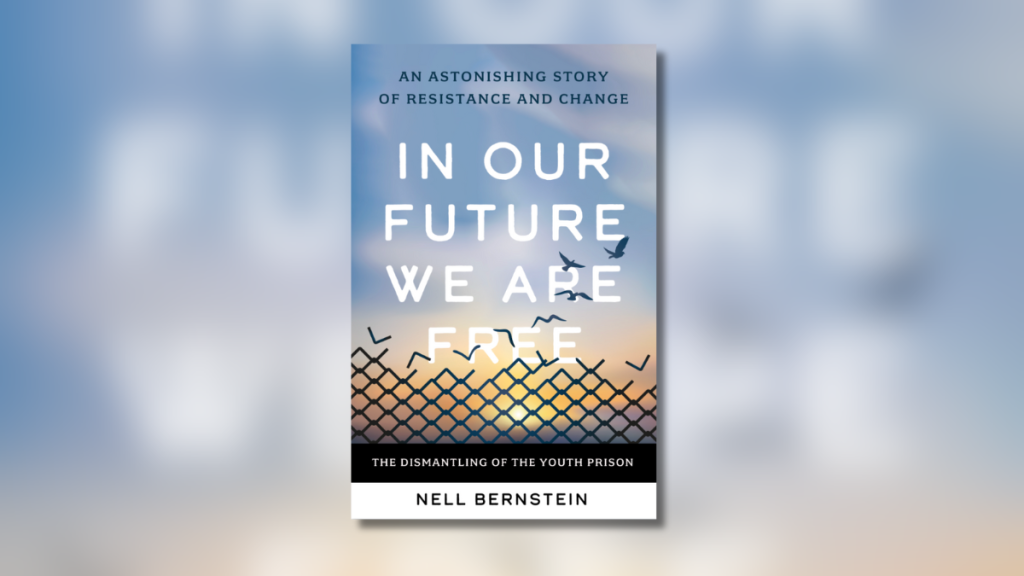
This month, we’ll preview a chapter from Nell Bernstein’s book “In Our Future We Are Free,” which looks at the dismantling of children’s prisons across the country. We also listen to the story of Pharoh and his mom Anita as she tried to get help for him as a Black Army vet with serious mental illness. Finally, what does a more “humane” sweep of a homeless encampment look like?
But first, a quick programming note: This will be the only newsletter for the MindSite News team this week as we take some much needed time off to rest, eat too much turkey and enjoy time with our families, friends and cats. Let’s get into it…
Dismantling Youth Prisons
It’s 1999 in Sulphur, Louisiana, and 11-year-old Corey Bauer was taking the death of his beloved grandmother hard. He channeled his grief into rebellion, ditching school to smoke and shoplifting cigarettes he was too young to purchase.
His first run-in with police left his mother, Grace, concerned but not alarmed. She knew all the shopkeepers and this one said he wasn’t interested in pressing charges. The judge put him on probation, assuring Grace that if her son followed the rules, he’d be fine.
When he returned to court a few months later, the tenor had changed. Corey had missed a pep rally, violating the terms of his probation. He was sentenced to ten days in juvenile hall.
He returned a different boy, refusing to speak about what happened. Days later, he’d be suspended from school for smoking. When he went back to court, the judge declared him a delinquent and sent him to a group home so violent it would be shut down a few years later.
When he returned this time, Grace did everything she could to keep him close. She nailed the windows shut. She slept on the floor outside his room. Everything seemed to be paying off until his grandfather got pneumonia and died. Before she could even break the news, Corey ran off for three days.
Soon, she’d get another call from police. This time she arrived at the police station to find Corey shackled to a chair and slumped over, high off the Xanax he took when police caught him stealing a stereo.
The county didn’t have the resources to help him, but the state did, a probation officer told her. If he admitted to his role in the theft, he’d be sent to a 90-day drug treatment and counseling program.
“Tell the truth,” Bauer urged her son as he stood in front of a judge. “Let these people help you.”
After a five-and-a-half-hour drive, Grace pulled up to a massive compound surrounded by razor wire. The therapeutic program she had been promised was patrolled by armed guards.
Corey had been sent to the Tallulah Correctional Center for Youth, one of the most notorious youth prisons in the nation.
“Twelve years old, and he was in prison,” Grace told Nell Bernstein. “I was stunned.”
The story of the Bauer’s family is one example of many vivid profiles Bernstein uses to illuminate the tireless work of parents, advocates, litigators, researchers and journalists to challenge the racist brutality of youth prisons. Over the last two decades, they’ve worked together to help states shutter their youth prisons, slashing its population by 75%.
Bernstein is a contributing writer for MindSite News. She’s also the author of “Burning Down the House: The End of Juvenile Prison” and “All Alone in the World: Children of the Incarcerated.“ On our website, you can read an excerpt from her latest book, “In Our Future We Are Free,” which was released earlier this month.
What we’re listening to: The latest installment of Brain Stories reveals a broken mental health system
A few days before Thanksgiving of 2023, a middle-aged man named Pharoh walked out of a psychiatric hospital with nowhere to go. He had no place to live. No plan. Just a prescription for schizophrenia medication that he would never fill.
His mother, Anita, had no idea where he was. And (almost) immediately, he was back on the street, homeless. Again. And she was angry. So angry, she began filling out the long application for a new program called the Community Assistance, Recovery and Empowerment (CARE) Act – a California law intended to break the cycle of hospitalizations and homelessness for those living with schizophrenia.
She grabbed all the paperwork, hopped in her car, picked up her siblings for moral support and drove down to the courthouse to personally watch the application get stamped.
That next Thanksgiving, she set a plate for Pharoh and the rest of the family around the table. He never showed up. Once again, he was on the street – unhoused and untreated – even though he’d been in the CARE program for a year. The system had once again failed.
The story of Pharoh, Anita and the broken system they got caught in is featured in a recent episode of Brain Stories, a podcast dedicated to telling stories of people living with mental illness. The podcast identified them only by their first names to protect their confidentiality.
Back when Pharoh was a junior in high school, the family had moved to San Diego. He was a good student, well-liked, played sports and worked part-time. But when the time came to apply to colleges, the always ambitious boy suddenly became unmotivated.
“I said ‘well, okay, Army, Navy, Air Force, Marines… until you figure out what you want to do with your life,” Anita told interviewer and executive producer Frank Kosa during an episode of Brain Stories.
Pharoh chose the Army, where he seemed to excel during boot camp. Anita proudly cheered him on the day he graduated from basic training.
“I saw a changed young man,” she said.
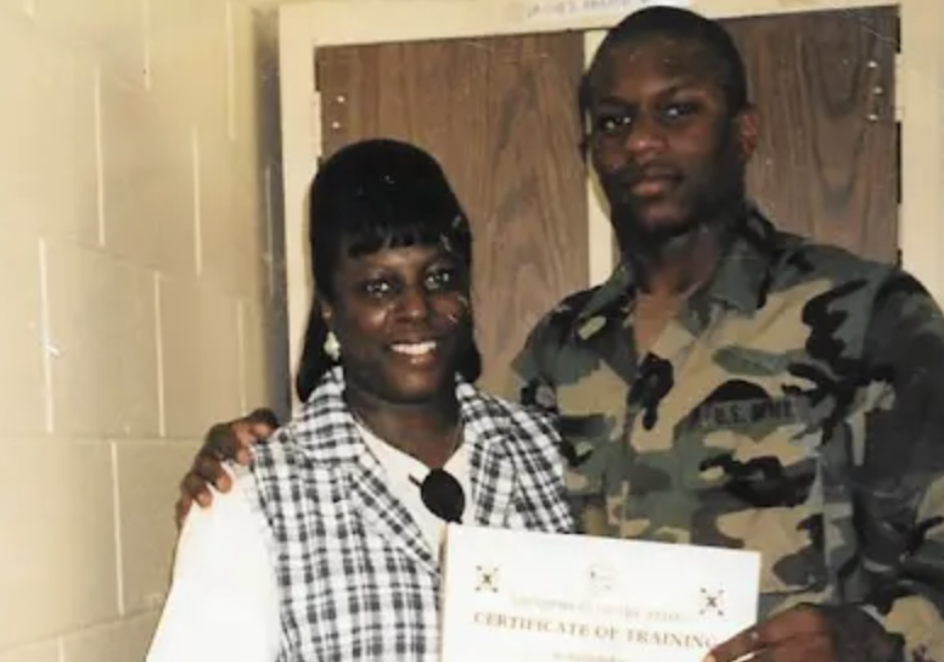
He applied to be a medical specialist and became one of just two in his class chosen to train at the prestigious Walter Reed Army Medical Center in Washington, D.C. For years, he got medical training, signed up for college classes and was rising through the ranks of the military.
“We went on a trip to DC. We saw him, went to the hospital, watched, saw him all dressed in his whites. Everybody said to us, ‘Oh, he’s such a great guy. He’s gonna do great.’ Hearing that I was like, ‘Wow, he’s on his pathway,’” Anita said.
Then, Pharoh came home on break. He didn’t look as put-together as he used to. And he drank – a lot. Worried, she urged him to see his sergeant when he returned to the Army. She had a bad feeling when she dropped him off for his flight back to D.C., which only got worse when she returned home and opened his closet door to find a mountain of liquor bottles.
“It was like somebody trying deaden something, and I was like, okay, he’s in trouble,” she said.
Pharoh never made that flight to D.C. He ended up with some friends who had been kicked out of the Army, drinking in a hotel room during a snowstorm in Pennsylvania. Though he paid for the room, they eventually kicked him out.
Alone in the freezing cold, he called his mother, who booked him a room for the night and wired him money for a train ticket to D.C. When Pharoh made it back to Washington, he was placed on restriction and given substance use treatment. This relaxed the worried mom, but it was short-lived. A week later, she was told, he was drinking again and got into a fight.
“That’s something in his entire life to that point, Pharoh had never been in a fight. He wasn’t that kind of guy. He was a man’s man, but he wasn’t violent. He didn’t like violence.”
Pharoh was court-martialed for assault. And even though an Army psychiatrist diagnosed him with an early-onset form of schizophrenia, he was convicted, given more time in the brig and denied a medical discharge, which would have given him veterans’ benefits including health care. It also meant the Army missed the chance to treat his illness early – when such treatment can be most effective.
When he was finally released and sent home on a three-day bus ride back to San Diego, he was seriously ill. He would spend the next two decades cycling on and off the streets and in and out of jails and prisons. At one point, he was even sent to the notorious and brutal super-max Pelican Bay State Prison in remote northern California.
Through all his trials, his mother has fought for him, got involved with NAMI – the National Alliance on Mental Illness – and pushed to change a broken system that is especially harmful to young Black men like Pharoh.
This episode of Brain Stories was produced and narrated by Ruth Shim, a psychiatrist at the University of California, Davis, whose research focuses on the impact of racism in psychiatry and medicine. Listen to the full journey of Anita and Pharoh here or wherever you listen to podcasts.

Is There a Better Way to Sweep?
Jazmine Mapes has always been on the move.
As a child, she shuttled from city to city through Southern California as her parents broke up and got back together. Her dad was abusive and when she was about 9, she told journalist Ryan Levi, she and her brother began bouncing around the foster care system.
Mapes is now 31, and she has spent much of her adult life unhoused. A regular feature of her life is dealing with “sweeps” of homeless encampments, when police or other city workers order unhoused people to leave an area. During these sweeps, she has lost photos of the children she gave up for adoption, along with clothes, sleeping bags and the medication she takes for anxiety and depression.
After a sweep, “I would just stay in my depression,” Mapes told Levi, a reporter for Tradeoffs, a news and podcasting outlet that explores tough choices in healthcare. “I would stay getting high because getting high was a way of me coping. Me not feeling.”
As the number of people living on the streets exploded by nearly 60% between 2015 and 2024, local governments increasingly turned to sweeps and arrests. They argue that allowing people to live in dangerous conditions on the streets is inhumane and that forcing them indoors gives them a chance to get medical care and services.
Pressure to expand sweeps began to grow after a 2024 Supreme Court decision allowed cities to remove unhoused people from tents and encampments on public property without offering them shelter. In the aftermath of the court’s ruling, more than 200 cities banned sleeping outside. Then, early this year, President Donald Trump signed an executive order threatening to withhold funds from any city that didn’t make it harder for people to set up encampments.
But a growing number of studies show that forcing people to move can harm their mental and physical health, as Tradeoffs notes. Repeated displacement can aggravate mental health problems. When people with chronic conditions are forced to move, street medicine teams that once served them struggle to find and reconnect with them. Important medications and supplies are regularly thrown away. The sweeps also increase the risk of infection, hospitalization and overdoses among those who inject drugs, according to a 2023 national study in JAMA, the Journal of the American Medical Association.
Some city officials and experts across the country contend it is possible to execute sweeps in ways that are less harmful by using a handful of “best practices” to clear encampments while limiting the potential health consequences. The core principle is ensuring people go from an encampment to long-term housing with appropriate services, as opposed to large shelters or another sidewalk, said Marc Dones, a senior advisor for Benioff Homelessness and Housing Initiative at the University of California, San Francisco.
Dones, who used to lead the Regional Homeless Authority in King County, Washington, told Tradeoffs that the first step is getting to know the people who occupy the encampment.
“I need to know everyone who lives there. I need to know what their needs are and what motivates them,” he said. Do they have a mental illness, need to get treatment for an addiction or have a job that depends on access to public transportation?
Dones outlined some basic “best practice“ steps needed to clear encampments in a human and effective way: These include creating a list of everyone in the camp, matching people with the right housing and not trying to move everyone in a single day.
One big problem: The Trump administration is gutting federal support for housing for homeless people at the same time it is ordering cities to get them off the streets. It announced earlier this month that it was redirecting about two-thirds of the $3.9 billion that previously went to the Continuum of Care program – the primary source of federal dollars for homelessness.
Those funds were used to help local organizations connect homeless people with housing and resources, and advocates say the cuts could push 170,000 more people into homelessness. That could put a lot more pressure on people and local communities.
Until next month,
Josh McGhee
P.S. Have you seen this? Six Chicago news outlets collaborated to document the use of chemical weapons against advocates protesting the mass deployment of armed immigration agents by the Trump administration in Chicago. U.S. District Court Judge Sara K. Ellis forbade agents from using them unless necessary to stop someone from harming another person. The reporting found that agents used more tear gas and pepper spray in one day than the Chicago Police Department has used all year and mapped out the locations where many of the incidents happened.
The name “MindSite News” is used with the express permission of Mindsight Institute, an educational organization offering online learning and in-person workshops in the field of mental health and wellbeing. MindSite News and Mindsight Institute are separate, unaffiliated entities that are aligned in making science accessible and promoting mental health globally.

Author

Related Articles

He Almost Killed His Father. Now He Helps Others At Risk.
In today’s newsletter, we explore how one man healed after a dangerous psychotic break that nearly led him to murder.

Fallout Over Supreme Court Ruling on Conversion Therapy
Despite the Supreme Court ruling, conversion therapists can still be sued for a practice the United Nations calls “torture.”

On No Kings Day, Millions Rallied to Denounce Trump and “Epstein War”
Anti-Trump protests took place in all 50 states, Puerto Rico and other US territories and in countries around the world.
