
The ICE Chronicles: Cruelty as Policy

Good Morning, MindSite News readers.
In today’s MindSite News Daily newsletter, we bring you the second edition of the ICE Chronicles. In this edition, we look at the damage that the Trump administration is doing to the bodies and spirit of those deported and to the mental health of all immigrants, as fear, anxiety and a profound sense of betrayal erode our democracy from within.
The administration’s actions in recent months amount to an overwhelming betrayal of many of our country’s deepest values. According to an analysis of betrayal in Behavior Research and Therapy, “The effects of betrayal include shock, loss and grief, morbid pre-occupation, damaged self-esteem, self-doubting, anger…Betrayal can cause mental contamination, and the betrayer commonly becomes a source of contamination.”
This can result in “betrayal trauma,” according to Impact Psychological Services – “a specific form of psychological injury that occurs when the people or institutions we depend on for survival violate that trust. It doesn’t just cause sadness or hurt; it fundamentally shakes our sense of reality and our ability to trust.”
For many, ICE’s abuse of immigrants has led to grief, anger, distrust, and – as mentioned above – a feeling of contamination from even being a citizen of a country that does such things. We’ll explore those feelings and more in this second edition of the ICE Chronicles.
Disappeared to an Unaccountable Foreign Prison
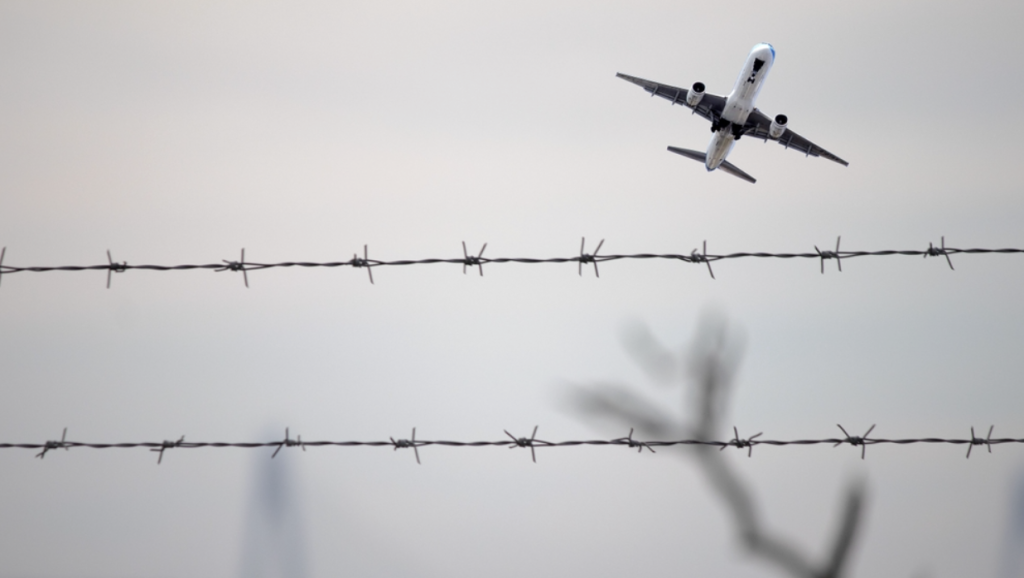
“There are big snakes here, and scorpions!” a male voice with an American accent called out.
“My stomach is really hurting, and we have to beg for food,” another man said.
A third added, “We fear we’ll be tortured and killed.”
One of the men, a car salesman and a real-estate agent from Miami, whom I’ll call Jim, gave me a tour of the scene: an open-air military complex known as Bundase Training Camp, some forty miles from Accra. “I have five U.S.-citizen children, and they don’t know where their father is,” Jim said.
Just months earlier, one of these men had a job with UPS in Chicago. Another had lived in Houston, where he worked for his mother’s catering business, composed R & B music, and babysat his little brothers. Some had lived in the U.S. from an early age. Jim, a political refugee, had come to Miami from Liberia in the early nineties, when he was twenty-three, after his parents were murdered for their tribal and political affiliations during the country’s civil war. Others, including a twenty-one-year-old woman who had fled Togo fearing genital mutilation, had arrived in the U.S. recently, seeking asylum.
All of them had been taken from the United States against their will.
This is the opening of a bombshell story by Sarah Stillman in The New Yorker. As Stillman explains, a principle of international law called non-refoulement holds that “no nation should intentionally deport or expel people to a place where they are likely to face torture, persecution, death, or other grave harms.” Yet this is exactly what the United States is doing, shirking responsibility by sending immigrants like those Stillman spoke with to third countries like Ghana and Eswatini (formerly called Swahililand).
Even if those countries abuse people, or decide to return them to their home countries – which they’d originally fled out of fear of being harmed or tortured – the U.S. “does not have the power to tell [third countries] what to do,” a Trump administration lawyer told a federal judge.
Eight non-Sudanese immigrants were deported to war-torn south Sudan, Stillman reported, and five men from Cuba, Laos, Yemen, Jamaica and Vietnam were sent to the southern African nation of Eswatini and put in a maximum-security prison, “without clear justification”.
The U.S. claimed that the five men sent to Eswatini had committed crimes so serious their own countries wouldn’t take them back, something that at least one of the home countries has disputed. Worse, Stillman noted, men who “had completed their sentences in the U.S. years ago were now being subjected to indefinite detention abroad.”
In March, a young, gay Guatemalan filed a class-action lawsuit challenging this practice – deportation to a third country without a chance to contest the decision. In April, a Massachusetts federal judge issued a preliminary injunction, but two months later the Supreme Court reversed that order via shadow docket, without explanation.
In Stillman’s words: “The result is that, for now, DHS can deport people to countries not listed on their removal orders without giving them any notice.”
The treatment of third-country deportees – including some who have never been charged with any crimes – is “absolutely shocking and illegal,” an immigration attorney told Stillman. “And it fits this Administration’s general pattern — draconian, cruel processes that create a spectacle and coerce people into leaving of their own accord.”
Cruelty as Policy: ICE’s Intentional Infliction of Emotional Distress
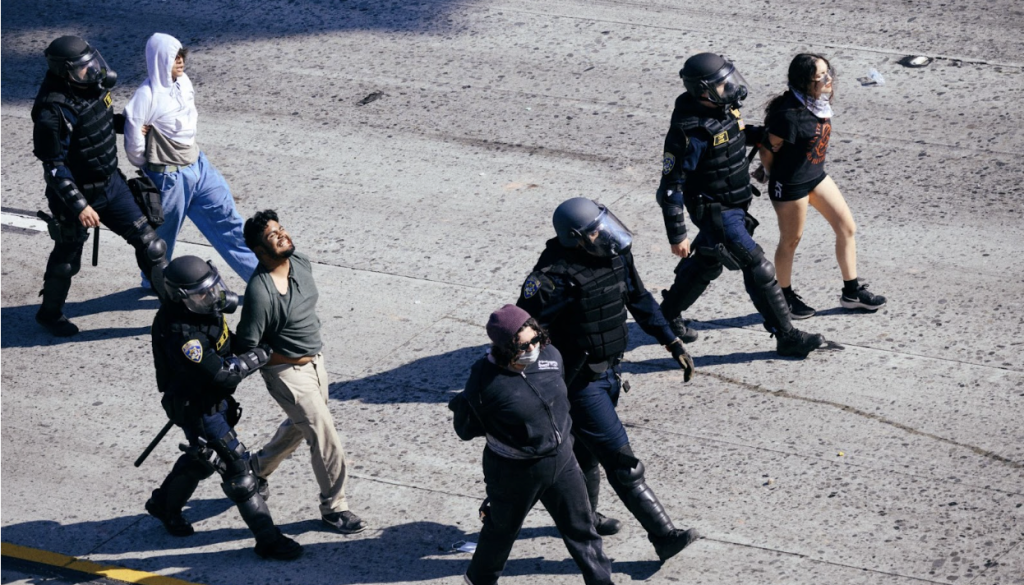
Many Americans feel overwhelming rage and horror at the Trump administration’s mass deportation campaign. But the specific ways that groups of people or longstanding democratic norms are being betrayed can end up forgotten in that haze, so we’re taking a deeper look at eight examples:
1. For immigrants fleeing persecution in their home countries who were promised temporary or permanent asylum by the US: betrayal.
Last month, the Trump regime terminated the Temporary Protected Status of hundreds of thousands of Venezuelan immigrants fleeing persecution. The decision was blocked twice by a California court, but ultimately endorsed by the Supreme Court. Overnight, hundreds of thousands of Venezuelans and others were now at risk of arrest and deportation.
Indeed, despite a court order forbidding it, Homeland Security Secretary Kristi Noem, sent 252 Venezuelans – almost none convicted of any serious offense – to the Terrorism Confinement Center (CECOT) in El Salvador, where they were beaten and tortured from the day they arrived, according to a recent report by Human Rights Watch. (Some considered suicide as the weeks wore on, they told reporters after the president of Venezuela brokered their release.) Trump has also said that he would “love” to send American “homegrown criminals” to foreign prisons like CECOT.
2. For the “Dreamers,” youth brought here as infants or children by their families who often have known no other home and who registered to be part of the Obama-era DACA program: betrayal.
The Deferred Action for Childhood Arrivals (DACA) program has, since 2012, protected hundreds of thousands of people from deportation as policy makers try to carve out a path to citizenship. But now, as PBS reports, ICE has started seizing DACA recipients – including current college students – and seeking to end their protection, because of their advocacy work, the political content of their social media posts, or because they were charged with misdemeanor crimes like driving under the influence.
3. For law-abiding immigrants attending court hearings, seeking asylum or on the path to citizenship: betrayal.
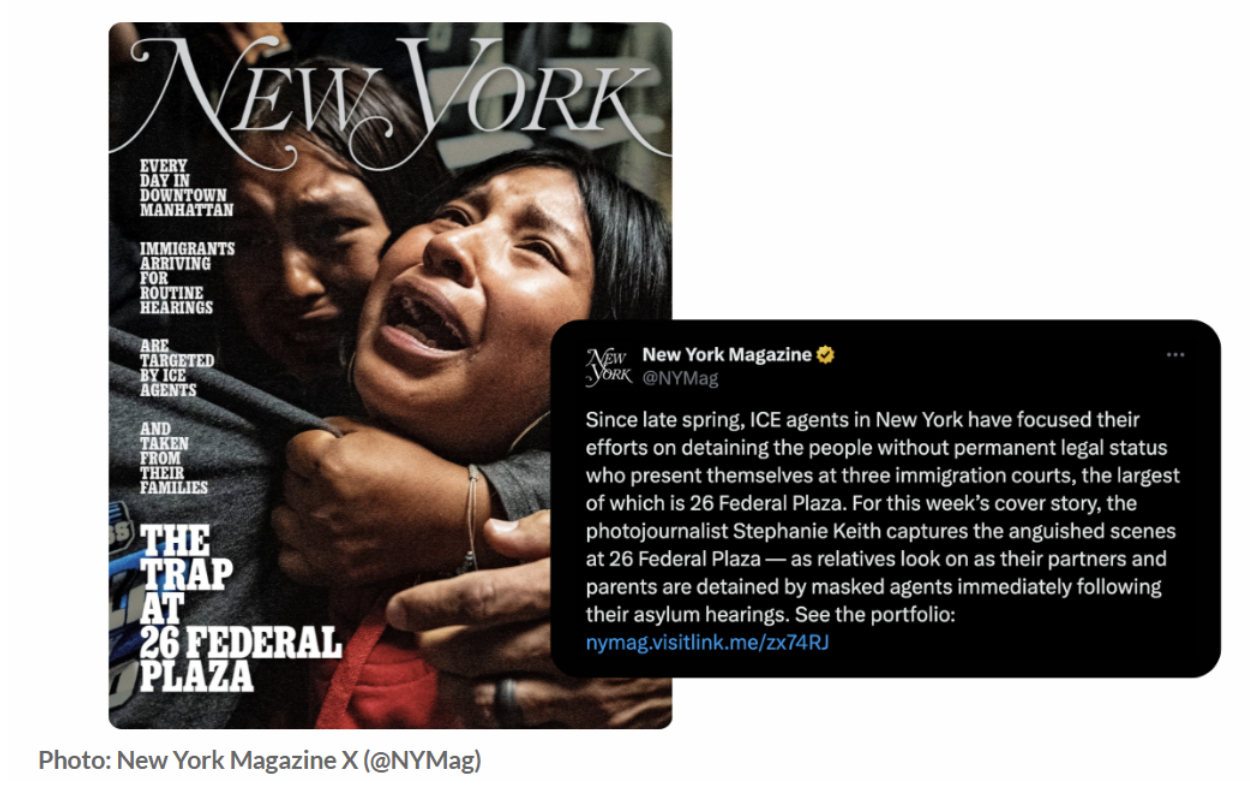
New York magazine photojournalists captured the terrifying reality of ICE actions in the hallways of 26 Federal Plaza, where immigrants attending immigration hearings were torn away from their families with no discernible logic, sometimes moments after a judge scheduled a future hearing – some of the agency’s most brazen cruelty to be captured on film.
ProPublica also reported that child and family separation is surging nationwide, not just at the border, but all over the country, with 600 kids sent to federal shelters this year, more than in the preceding four years combined. Children – often taken from guardians against ICE guidelines – are spending an average of six months in custody and, according to ProPublica, some are losing hope.
4. For whoever believed this mass deportation of immigrants was focused on violent criminals: betrayal.
Relentless raids on workers at restaurants, car repair shops, bakeries, Home Depot, agricultural fields and construction sites are targeting law-abiding workers. Many employers and communities are fighting back, and making sure people know their rights.
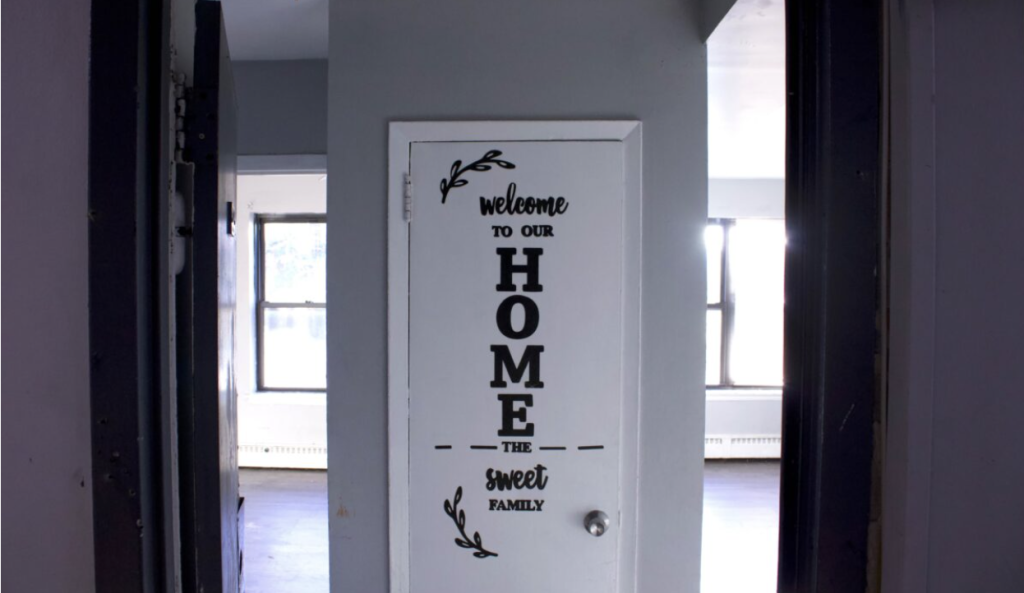
In one instance, on September 30, ICE agents descended in military fashion on sleeping families in an apartment building in Chicago, jumping out of a Blackhawk helicopter, rappelling down the wall and breaking down doors. Agents hauled out terrified adults and children, some naked, shoving them into vans. The Trump administration crowed that it had captured members of the Tren de Aragua gang, but only two people were arrested, according to ProPublica, and not a single person has been charged with a crime.
Left behind a week later were emptied apartments, with signs of life, abruptly interrupted – bags of beans and oats on kitchen shelves, children’s toys scattered across a living-room floor – as South Side Weekly investigations editor Jim Daley discovered when he visited after the raid. Discussing the apartment with the “sweet family” sign on the door (above), he asked: Who slept in this room? The child who played in the living room? The “sweet” family, cozy, all together? Perhaps this apartment was their first small bit of refuge after walking thousands of miles to America, getting bussed to Chicago, sleeping on police station floors and in crowded shelters, before finally finding a place to call their home. A cramped, shabby two-room apartment. But a home.
5. For the millions of Americans lawfully protesting this mass deportation campaign: betrayal.
The South Side Weekly and Chicago Block Club, along with several other collaborating news outlets, reported that federal agents used chemical weapons on largely nonviolent protestors and bystanders 49 times, even after a judge ordered them to stop. (Some National Guard members are refusing deployment and considering leaving the service because they have moral objections to the administration’s orders.)
6. For Americans looking to the Supreme Court to protect our democracy: betrayal.
Among other things, the right-wing majority of the once-respected court has allowed federal agents to stop people solely on the basis of race – something the Immigrant Legal Resource Center called “a huge setback for all Americans” and a plaintiff in the case called “racism with a badge.”
As Justice Sonia Sotomayor said in her dissent, “We should not have to live in a country where the Government can seize anyone who looks Latino, speaks Spanish, and appears to work a low wage job.” (It’s also instructive to read the accounts of the Latino U.S. citizen plaintiffs who were detained and roughed up before they were able to prove their status.) Since January, more than 170 Americans have been detained by ICE, and many have been “tackled, tased, beaten and shot by immigration authorities,” with some held without counsel or not allowed to call their loved ones, according to a ProPublica investigation reported on by the LA Times.
“At least three citizens were pregnant when agents detained them. One of those women had already had the door of her home blown off while Department of Homeland Security Secretary Kristi Noem watched,” according to ProPublica.
7. For immigrants with green cards: betrayal.
Last week, an Afghani man who reportedly had been trained by the CIA to be part of an assassination squad shot two young National Guard members in Washington DC for unknown reasons. One has since died and the other remains in critical condition. In the days following the shooting. Trump paused all asylum decisions and ordered an investigation into every green card holder from 19 “Third World countries,” a move decried by the National Immigration Law Center and civil liberties groups.
8. For anyone expecting basic humane treatment from ICE detention: betrayal.
More than 20 immigrants have died in ICE custody this year. This includes the alleged “suicide” of 32-year-old Chinese immigrant Chaofeng Ge, who an attorney says died in ICE custody in Pennsylvania on August 5 with his hands and feet hog-tied behind his back and a cloth around his neck. In addition, numerous reports have documented horrific conditions in ICE detention centers, including denial of medical care.
9. For clergy and people with deep religious and spiritual values: betrayal.
Since the earliest days of the second Trump administration, religious leaders from Catholics and Muslims to Southern Baptists and Jews have vowed to resist ICE efforts to arrest immigrants at previously protected “sensitive locations” such as places of worship, schools and hospitals.
“In just its first few weeks since taking office, the Trump administration has quickly become the most harmful to religious freedom in modern American history,” wrote the Rev. Paul Brandeis Raushenbush, an ordained Baptist minister and president and CEO of Interfaith Alliance, in a commentary in Religion News Service.
“With his executive order rescinding Immigration and Customs Enforcement and Customs and Border Protection guidance that prevented armed government agents from entering houses of worship without prior authorization,” Raushenbush continued, “Trump has exposed sanctuaries to desecration and violence — outraging faith communities across the board … While these Christian communities appeal to the fundamental concepts of mercy and care for their neighbors, Trump couldn’t care less.”
In an interesting twist, the so-called Center for Baptist Leadership, which has railed against immigrants and backed Trump’s immigration policies, turns out not to be a Baptist nonprofit at all, according to Baptist News Global, an independent news organization covering “matters of faith.” The news site looked into the group and found that, according to the Texas Secretary of State, CBL is a “d/b/a (doing business as) moniker” of American Reformer, an extreme-right group founded by evangelical Presbyterians.
All these betrayals of democracy, from large to small, are demoralizing, and traumatic: Small wonder that 40% of younger women in the US surveyed by the Gallup organization say they want to leave the country. As the studies on betrayal suggest, the feeling can be contaminating. But reclaiming your power and agency where you can is ultimately freeing.
The name “MindSite News” is used with the express permission of Mindsight Institute, an educational organization offering online learning and in-person workshops in the field of mental health and wellbeing. MindSite News and Mindsight Institute are separate, unaffiliated entities that are aligned in making science accessible and promoting mental health globally.

Author

Related Articles

The College Mental Health Crisis
Experts say more preventive care is needed to combat the growing mental health crisis affecting college students.
Trump Administration Breaks its Promises to Veterans with Mental Health Issues
Since Trump’s return to office, the strained staffing situation within the Department of Veterans Affairs is now “at a breaking point.”

College Employment Scams Undermine Students’ Mental Health
At UC Berkeley, students have lost thousands to employment scams. Victims said they now experience shame, fear, anxiety and depression.
