
Smartphone Ownership Before Age 13 Again Linked With Poorer Mental Health
The earlier a child received a phone, the more at risk they became for poor sleep, depression and obesity

Greetings, MindSite News Readers.
In today’s Daily, another study sounds the alarm on giving children a smartphone before age 13. Teachers who survived their worst nightmare – a school shooting – are coming together to help their peers. Frightened immigrant students in Detroit are staying home from school. Plus, 11 ways to reinforce your kids’ mental health.
But first, “The majority of us are lifelong caregivers and the challenges can be very unique because we’re providing lifelong care,” mom, caregiver, and disability advocate Patricia Parker told PBS. She struggled for years, unable to bring her autistic son Matthew to church, where people “didn’t know” what to do with him. Discouraged but not defeated, Parker organized with another mother facing the same obstacles. Today, they’ve built a church community that truly welcomes all. “We want to make sure that people who want to worship feel comfortable coming into a place of worship and worshipping as a family.” Catch Caregiving, the feature-length documentary, on PBS – and if you’re pressed for time, watch this eloquent video short.
Smartphone ownership before 13 associated with poorer mental and physical health
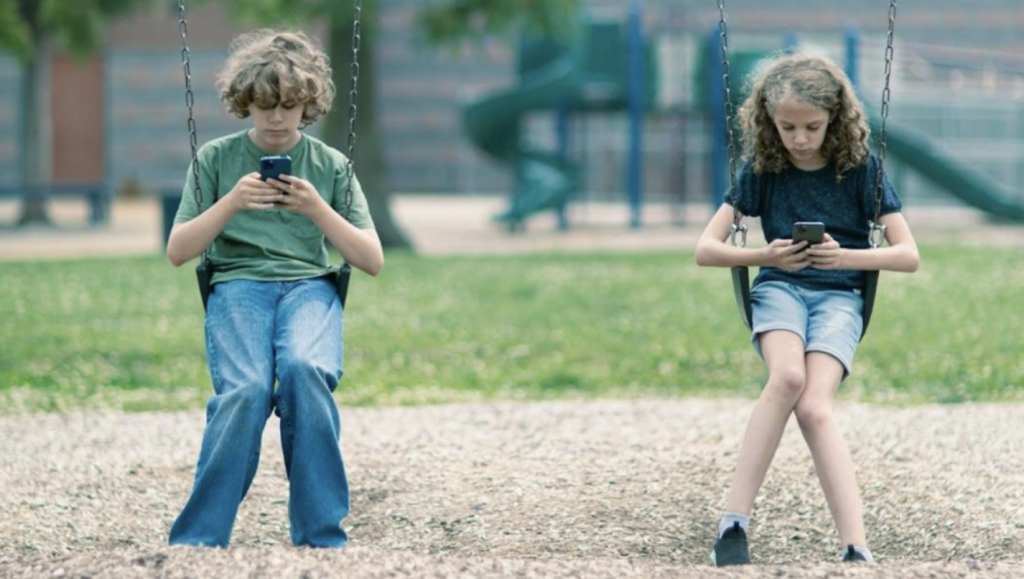
New research strengthens the case against giving children a smartphone, especially to kids 12 and younger. The study, published recently in Pediatrics, shows a clear relationship with poorer mental health, even without separately tracking concerning phone activity, like TikTok spirals or tumbles down YouTube rabbit holes. “We basically asked one simple question,” study co-author Ran Barzilay told CBS News. “Does the mere factor of having one’s own smartphone at this age range have anything to do with health outcomes?” Their answer: Absolutely. The study even took into account that some children use other devices like iPads. “It did not change the results,” said Barzilay, whose lab at Children’s Hospital of Philadelphia studies childhood brain development.
These findings reflect those of a study MindSite New reported in July of this year: Sapien Labs, using data from its global Mind Project involving more than 100,000 young people found that kids given their first smartphone at age 12 or younger had poorer mental health and “were more likely to report suicidal thoughts, aggression, detachment from reality, poorer emotional regulation, and low self-worth.”
In the new Pediatrics study, researchers analyzed data from more than 10,000 participants in the Adolescent Brain Cognitive Development Study (ABCD) from between 2018 and 2020; the ABCD describes itself as the nation’s largest long-term examination of child health and brain development. Nearly 64 percent of those study participants had a smartphone, with the median age of receipt being 11 years old. The earlier a child received a phone, the more at risk they became for poor sleep, depression, and obesity. Youth who did not receive a smartphone by age 12 were found to have better mental health one year later than their peers who did.
Next, researchers plan to examine which facets of smartphone use prompt the greatest mental health risks, in addition to studying the impact of smartphone ownership on children younger than age 10. “Most probably, all teens will eventually have a smartphone,” said Barzilay. “Once this happens, it is advisable to monitor what our children do on their phones, ensuring they’re not exposed to inappropriate content and that smartphones don’t disrupt sleep.”
Such studies will be increasingly critical in helping parents make informed decisions, particularly at a time where most adults and many children own smartphones. A Pew Research Center survey from last year found that 95% of teens between the ages of 13 and 17 owned a smartphone, along with more than half of 11 and 12 year-olds, 30% of 8 to 10 year-olds, 12% of 5 to 7 year-olds, and 8% of under-5s. Experts, including former US Surgeon General Dr Vivek Murthy, advise parents to create “tech-free zones” and to encourage kids to foster more and stronger in-person friendships.
How the teachers who survive school shootings are getting support

Nearly 400,000 children have experienced gun violence at school since the 1999 massacre at Columbine High School. But no such data exists to account for the teachers alongside them, even those who have been injured protecting their students. There is, however, a dedicated team of teachers applying their experience of surviving that nightmare to support newer members of the trauma club none of them ever wanted to join. They’re the inaugural crisis team of Teachers Unify to End Gun Violence, a collective of educators and school staff across the nation demanding gun reform that will keep schools and communities safe. Chalkbeat was at a recent meeting in Philadelphia.
Kiki Leyba, who helped his students find safety back at Columbine in 1999, is a part of the crisis team. He remembers going right back into the classroom to teach and being totally unprepared for it. Now, after years of recovery spent connecting with other survivors, he’s ready to help others find their healing. “They don’t have to be alone with those thoughts or those fears in the aftermath of gun violence,” Leyba said. “There are others out there who they can connect with.”
That’s where the crisis team at Teachers Unify will be indispensable – offering peer support. “It’s the people that you don’t have to explain ‘this is why I feel the way I do’ … they just get it,” said gun violence researcher Jaclyn Schildkraut, who studies mass shootings. “And so sometimes you can just sit there with these folks and not have to say a word, and still feel more supported than going to therapy.”
In the wake of these tragedies, teachers also bear the responsibility of being the adult on duty for their students, who might be afraid or grieving. Peers of their own can help them navigate those new challenges. “What do you say when they say the things that they say?” explained Abbey Clements, co-founder of Teachers Unify and a Sandy Hook survivor. “Why did this happen? … Why is there a desk removed? Why aren’t we stopping at somebody’s bus stop on a bus route?”
A trauma-trained psychologist and other experts have been teaching the crisis team how to offer peer support and facilitate group conversations, as well as how to manage feelings of their own that might resurface while helping others. The crisis line offers educator callers conversations with members of this new team, as well as help from professionals.
“With all of the balls that are being juggled in the aftermath [of a school shooting], supporting teachers might be one of the lowest things on that priority list,” Schildkraut added. This new team aims to meet that often-forgotten need.
In other news…
Podcast drop! Newest episode of Brain Stories: Gwen was 10 when she arrived in California from China, the hopes of her entire family on her shoulders. But her dream collapsed in college as she discovered that her grandmother, mother and she herself all grappled with Borderline Personality Disorder. In order to disrupt a dangerous cycle, she would have to forge a new understanding. Find it here, or wherever you get your podcasts.

Eleven mantras to help reinforce your kids’ mental fortitude: Most of today’s newsletter has covered some of the nation’s most pressing problems, all bound to challenge mental health. At times, it might seem like there’s little we can do to change things on our own, but we can all work to become resilient, make healthier choices, and generally, train ourselves to treat ourselves and each other with kindness and respect. Those lessons are important for kids, too. Time magazine spoke with psychology experts who shared eleven pieces of “therapy wisdom” they want kids to know, put simply, with little minds in mind. Some key lessons we could all stand to learn from: try to choose kindness; ask for help when you need it; remember your own power.
Fearful of ICE raids, students in Southwest Detroit stay home: Though ICE has yet to enter Detroit Public Schools, absences throughout classrooms in Southwest Detroit have risen sharply since Trump began his second term in office. Teachers who spoke to Outlier Media didn’t point to illness or a desire to skip school. “They are eager to learn,” said Kristen Schoettle, who teaches English at Western International High School. Southwest Detroit is home to a sizable immigrant population – Schoettle teaches a number of students who arrived in the country within the last three years. “They want to be there, they want to be speaking with their friends.”
Perhaps for those reasons, English language learners (ELL) in Detroit are normally more likely to attend school than their peers. But now, families are afraid to leave their homes – children are witnessing peers and parents being snatched away from their neighbourhoods. In the four months after Trump’s second inauguration, attendance at Detroit’s majority ELL schools fell roughly 1% below its other schools, which Outlier notes is consistent with research in other states examining the impact of ICE raids on school attendance, and amounts to an extra 4,900 school days missed.
When comparing January 2024 and January 2025, some schools showed even steeper declines. Attendance at Harms Elementary, where almost 80% of students are ELL, dropped 5% in the month Trump took office. “Absenteeism is an indication of how families and kids are doing, and they are scared,” said Christine Bell, executive director of Urban Neighborhood Initiatives, a nonprofit serving mostly Latino young people in Southwest Detroit. Educators said that the absences speak to a larger fear of irreversible or long-term family separations that will likely embed lasting emotional trauma.
And in other news, please sign up for our Minecraft therapy webinar on December 9 at 10 pm PT!
See below for more details:

The name “MindSite News” is used with the express permission of Mindsight Institute, an educational organization offering online learning and in-person workshops in the field of mental health and wellbeing. MindSite News and Mindsight Institute are separate, unaffiliated entities that are aligned in making science accessible and promoting mental health globally.

Author

Related Articles
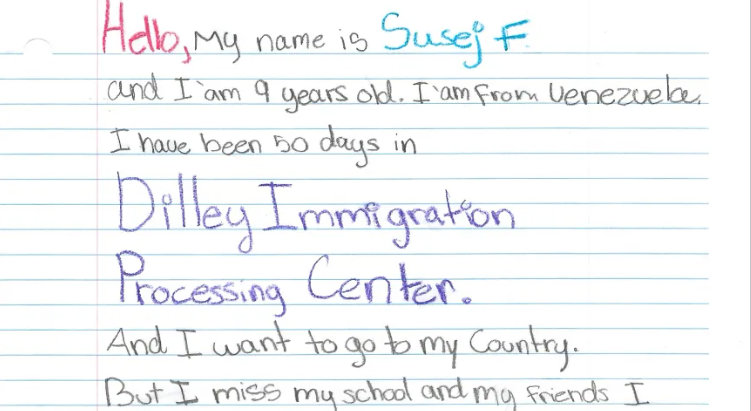
Health Organizations Condemn Traumatic ICE Raids, Family Separation
According to letters from children living in an ICE detention facility, living conditions are inhumane and their mental health is suffering.

In Teens, Social Anxiety Often Looks Like Anger
A study finds that some teens’ aggressive behavior may be due to social anxiety, not straightforward reactivity.

Expert Calls for Harm Reduction, Not Punishment, to Resolve Our Overdose Crisis
As the Trump administration pulls funding from harm reduction, an expert on the overdose crisis says it’s the best way to save lives.
