How Trump’s Domestic Spying Threatens Our Collective Mental Health
Greetings, MindSite News readers!
Today we look at why state surveillance isn’t just chilling – it hurts our collective mental health. Also in this edition: how one man’s dedicated work might have helped reduce opioid overdose deaths; colleagues mourn a mental health worker killed by a patient in San Francisco; and an excerpt from a memoir about a harrowing journey into forced incarceration.
We’re also trying to cope with the nightmarish news from all over the world: the horrific mass shooting at a Hanukkah gathering on Bondi Beach in Sydney, Australia; a mass shooting at Brown University in Rhode Island; and the killings of Hollywood director Rob Reiner and his wife, photographer Michele Singer, whose son was arrested and booked on murder charges. We’ll have more to say oon these in coming newsletters.
But first, let’s revisit two MindSite News essays from young writers about finding hope in the fantasy and sci-fi books they read as teens: “Hope Was Still Waiting For Me: Finding a Sanctuary in Fantasy Fiction” and “No Illusion: Fantasy Fiction Is My Safe Space.”
Big Brother’s ever-widening gaze keeps us alienated us from each other
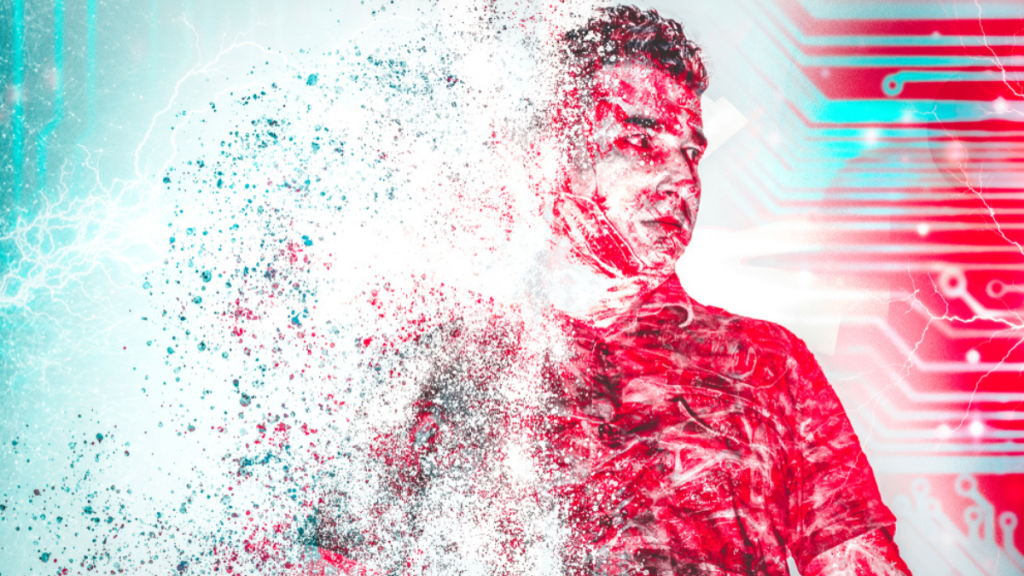
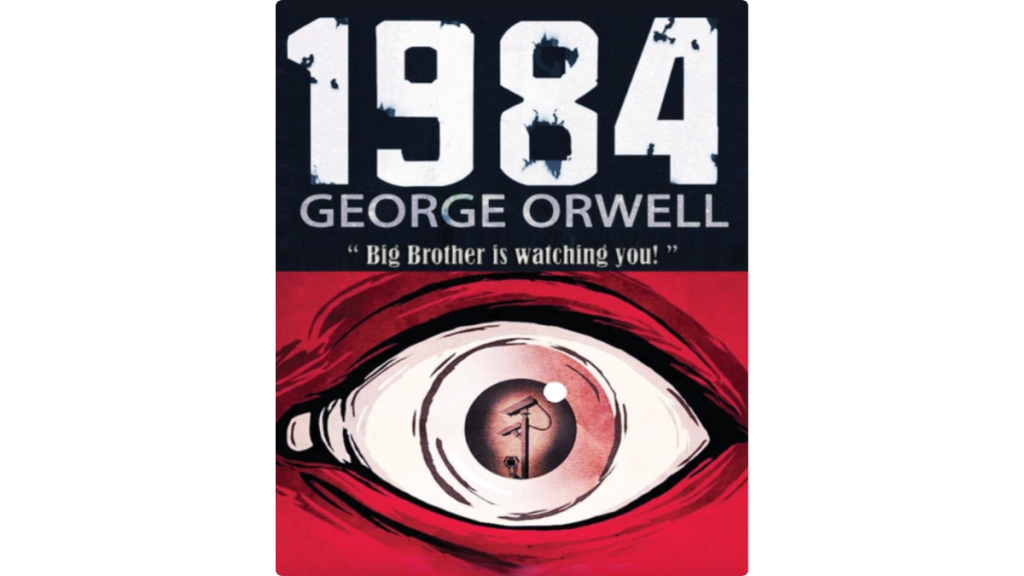
I was an avid science fiction reader as a teen – I remember devouring “Fahrenheit 451,” “Brave New World” and “1984” all in the same year. Rereading them recently, I was struck by the parallels between the book-burning government of “Fahrenheit 451” and our own, and how the party of Big Brother used slogans in “1984” (“War Is Peace,” “Freedom Is Slavery,” and “Ignorance Is Strength”) that echo the doublespeak we hear constantly today.
Perhaps the starkest resemblance was to Orwell’s “Big Brother is watching you.” This week, the Trump administration proposed that many visitors to the US who don’t currently require a visa hand over five years of their social media history to the Department of Homeland Security before they’re cleared to enter – along with their DNA and the names, birthdays and birthplaces of family members. And on the domestic front, economist and former US labor secretary Robert Reich’s continues to warn Americans about Palantir, which he calls “the most dangerous corporation in America” – one that is working with the Trump administration to “collect and compile personal information on millions of Americans,” and which earlier this year became a “mature partner to ICE.”
Surveillance like this has significant psychological effects, as noted by Scientific American. Psychologist Clément Belletier said it affects our attention and working memory, and “if these processes are taxed by being monitored, you’d expect deteriorating capacity to concentrate.” Being watched can put our brains into fight-or-flight mode, ramping up our stress levels and potentially exacerbating preexisting mental health issues.
The idea that surveillance has a psychological impact goes at least as far back as the 19th century, when Jeremy Bentham’s ‘Panopticon’ proposed that a feeling of being watched could force prisoners to self-regulate (the proposal failed). In a pair of articles for CounterPunch, Steve Martinot, instructor emeritus at San Francisco State University, looked into the idea and psychology of a “surveillance state.” He argued that its American form dates back to the oppression of enslaved Black Americans, and its modern implementation alienates us from one another. “Self-regimentation becomes a constant force for conformity.”
A scientist worked for decades to track and lower overdose deaths through harm reduction. The Trump administration wants to roll back such strategies.
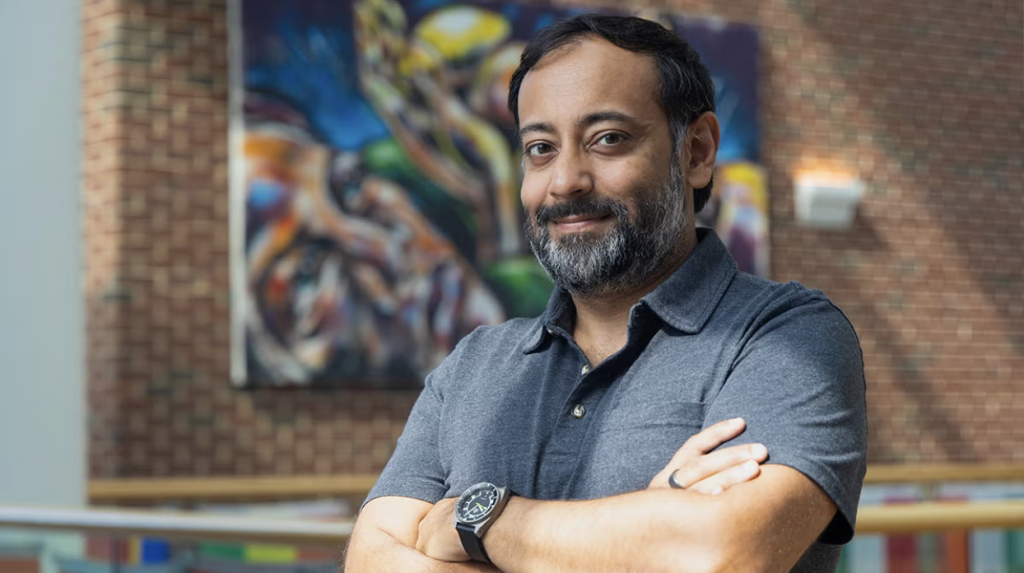
Scientist Nabarun Dasgupta began analyzing data on overdose deaths after a dear friend died of a heroin overdose. His friend and former colleague, Tony Givens, who died in 2004, “was the first one who really connected me with the human side of the drug problems in the United States,” Dasgupta told Tradeoffs, a health policy news outlet. “It was just super hard to feel him disappear from my life.”
Dasgupta, who describes himself as a “street drug scientist,” has spent the two decades since working to stem the country’s overdose crisis. Although his data-crunching began as an effort to cope with his grief, he has become one of the country’s most influential experts on how drug use spreads – and how lives might be saved.
He has worked as an epidemiologist at the University of North Carolina at Chapel Hill since finishing his PhD there in 2013. He helps oversee the Opioid Data Lab, whose work we’ve covered before, and its Street Drug Analysis Lab, which tests community-donated opioids, fillers and byproducts from around the country, sharing the results online “so that the people who are using drugs can get the results first.”
Dasgupta felt a profound relief when he saw that nearly 30,000 fewer people had died of an overdose in 2024 than in 2023 – a 27% decline. “I felt like I could exhale for the first time in 20 years,” he told Tradeoffs. In 2025, Dasgupta received a MacArthur Fellowship, popularly known as the “genius grant,” for bringing “much-needed leadership to the critical work of understanding and reducing deaths and other harms from drug use.”
Dasgupta’s work is read closely by journalists and policymakers, but he says his most important audience are the people who have died – or are at risk – of a deadly overdose. “Our primary mission is getting the information back to individuals who use drugs,” Dasgupta said. “Their lives are on the line.” As early as 2007, he worked to broaden access to Narcan, or naloxone, the overdose-reversal drug that many experts credit with the recent fall in drug deaths.
But such harm-reduction interventions risk as the Trump administration pushes for a return to punitive policies around addiction, including cutting funding for Narcan distribution. You can read or listen to Tradeoff’s conversation with Dasgupta here.
“He trusted the universe”: Colleagues and family mourn San Francisco mental health clinician killed on the job
Dozens of social workers and therapists across the Bay Area are mourning the passing of a colleague whose compassion, bright spirit and sense of fun brought joy to coworkers and patients alike.
Behavioral health clinician Alberto Rangel, 51, began his healthcare career training to be a marriage and family therapist. Around 2003, he started work at an HIV center in the Mission. In 2014, he began work on outreach for homeless people in San Francisco, and later provided therapy at UCSF’s Trauma Recovery Center, helping survivors of violent crime, physical assault and those who had lost loved ones through homicide. “I always joked that hiring him was one of my greatest professional accomplishments,” Cristina Biasetto, manager of the center, told the San Francisco Chronicle. “He had the ability to connect with people in really profound ways … to make them feel seen.”
Rangel was always up for an adventure, friends said – even buying an airplane ticket to Australia to visit a man he had met only briefly in San Francisco – and who would become his husband of more than 20 years. The trip was “like a child jumping into a pool,” said Stuart Moulder, Rangel’s husband. ”They don’t know if they can swim. But he trusted the universe, and the universe answered back to him.”
In 2021 Rangel, who was also an artist, began working at the HIV Care Clinic of San Francisco General Hospital. His love for his colleagues and faith in the patients he worked with – mostly underserved Spanish speakers – “was how he found levity in the taxing work he did, day and day out, at Ward 86, where he began working in 2021,” according to the Chronicle.
On December 4 of this year, tragedy struck: Rangel was fatally stabbed by a disturbed patient at the facility. His grief-stricken colleagues, who held a candlelight vigil, say his killing evokes longstanding worries about worker safety. Between 2024 and 2025, violent incidents at SF General rose by 60%, according to public health data obtained by Mission Local.
And the problem is nationwide: In 2021-22, the last available count from the Bureau of Labor Statistics, there were 41,960 nonfatal violent incidents in the health care and social service industries – making it by far the industry where workers were most vulnerable to violent attacks. Mental health aides and technicians are among those most likely to be attacked.
Chey Dean of United Professional and Technical Employees (UPTE) told CBS the union is going to make sure San Francisco General revamps its safety protocol.
“What I know is social workers have been raising the alarm about safety issues for years, to have been met with pretty much radio silence,” said Dean. “What I know is our colleague, and our friend, and our loved one deserves more than our grief, they deserve change and I know that we will not stop until we get that.”
In other news…
In “The Factory of Maladies,” Deborah Hartung recounts her harrowing lock-up in a San Francisco psychiatric ward. At a time of growing authoritarianism, when Donald Trump threatens to herd homeless people into locked psychiatric hospitals and Robert F Kennedy Jr. wants to send those grappling with drug addiction to labor camps he calls “wellness farms,” the book could not be more timely.
In the book’s foreword, Duncan Macleod, author of “5150: A Transfer,” a novel that draws on his own frightening story of institutionalization, applauds Hartung for her courage. Recalling feelings of stigma and humiliation after his own stay on a psych ward, he describes “The Factory of Maladies” as a healing tool – one that could help mental health professionals view patients not as ‘cases’ in need of ‘management,’ but fellow human beings who are struggling and need their support. Hartung’s account is as taut and suspenseful as any mystery novel – you can read an excerpt from the memoir here.
U.S. Soccer will work to improve the physical and mental health of its female athletes with The Kang Women’s Institute, a new initiative announced last week. The platform grew out of a $30 million donation from billionaire Michele Kang, and will look at injury prevention, mental health, menstrual health and more, addressing “a disparity that has left generations of female soccer players training under models built for male physiology,” according to a press release. Work has begun with a national study, the findings of which will inform a best-practice framework and future support systems.
The name “MindSite News” is used with the express permission of Mindsight Institute, an educational organization offering online learning and in-person workshops in the field of mental health and wellbeing. MindSite News and Mindsight Institute are separate, unaffiliated entities that are aligned in making science accessible and promoting mental health globally.

Author

Related Articles
Generation Cancer: Millennials Struggle With Death at an Early Age
More young adults are being diagnosed with cancer. Even for those who survive, the experience can be destabilizing and isolating.

Millennials Weigh Having Children On Their Own Terms
Not having children is also a valid path, and one that everyone should consider, Merle Bombardieri argues in her 1981 book.

Waiting for Word on Relatives Under Attack in Iran
Iranians in the US are caught between two “unrepentant regimes,” says Iranian-American writer and professor Shervin Malekzadeh.
