
When Does Love Become Dysfunctional?
Experts are debating love addiction signs and causes that lead to obsessive love seeking and destructive relationship patterns.

Greetings, MindSite News Readers. In today’s Daily, a writer asks “Is love addiction real?” Also in this edition, the solace that comes from a “grief walk,” why weight-loss drugs aren’t a panacea for disordered eating, and a look at Philadelphia’s medetomidine crisis, one spilling into US cities across the east and midwest. Plus, a physician reflects on acceptance: While he can’t heal every illness, he can always offer empathy and compassion.
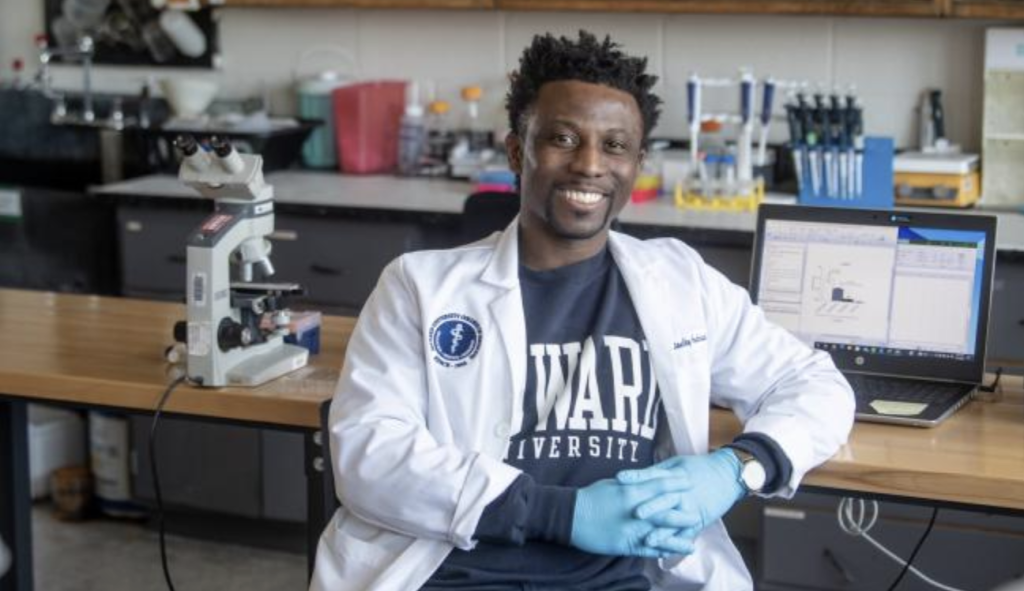
But first, Once dismissed as a “career criminal,” Ferguson, Missouri native Stanley Andrisse is now a tenured medical school professor at Howard University College of Medicine. In a spotlight interview with the university, Andrisse spoke of the power and healing potential of redemption. “Education humanized me again,” Andrisse said. “It helped me see myself not as a number or a case file, but as a thinker, a scientist, and a contributor. It’s what I now try to pass on… that redemption is not abstract. It’s something you can live, build, and share.”
When does love become an addiction?

It’s a question Elizabeth Gilbert explores in her latest memoir, “All the Way to the River”, in which she reflects on seeing herself as a sex and love addict, and managing her condition through 12-step groups like Sex and Love Addicts Anonymous. For Gilbert, also the author of the runaway bestseller “Eat, Pray, Love,” it was an obsessive need for love, acceptance, validation and approval, or LAVA as it’s termed in recovery communities, that led her to confess her love for a terminally ill friend – despite being married – while selfishly enabling said friend, a recovering drug addict, to access narcotics and alcohol during her final months, as an act of care. “I needed Rayya at a level that was far beyond healthy,” Gilbert wrote.
Gilbert’s story is a sound jumping off point for this Guardian piece on a subject long debated by psychology experts. Does “addiction” accurately describe this “destructive romantic fixation” or is it a combination of attachment disorders, behavioral patterns, and general dysfunction in one’s relationships? “I’d be more tempted to say ‘a person struggling with boundaries,’ or ‘a person experiencing enmeshment,’” sex therapist Erin Davidson told The Guardian. “Love addict,” she suggests, can be reductive, or shaming – and used by some as an excuse for abusive behavior.
Still, many researchers use the term to describe behavioral dependence marked by an “incessant need” for another, with a “recurrent fear of abandonment.” Features include an obsessive focus on a partner, using romance to regulate mood, and allowing relationships to interfere excessively with daily life. “Affective dependence” is not recognized in the DSM-5, and some experts argue this limits our understanding of the condition as more than mere heartbreak.
“Partly what we call love is just being addicted to another person,” says academic Brian Earp, an associate professor of biomedical ethics, philosophy, and psychology. It’s even “phenomenologically identical to being high,” he went on. Being in love is “an altered state of consciousness that’s very pleasurable and thrilling, somewhat scary, but very, very enjoyable” that “feels somehow more true or more real than ordinary life,” leading to harmful choices in some cases.
Studies are still exploring potential causes, but specialized counselors suggest “love addiction” is rooted in childhood trauma, attachment wounds, and codependency. “Not all codependents are love addicts, but all love addicts are codependent,” counselor Shena Lashey said.
Since it remains undefined officially, there are no universal standards for treatment, but therapy and peer recovery groups can help people move away from debilitating destruction and towards healthier relationships. Interestingly though, experts warn that seeking support from 12-step groups could, in some cases, lead to more trouble. As they bring people struggling with love addiction together, meetings can sometimes spark new, potentially harmful entanglements.
Tranq is out, medetomidine is in: A potent veterinary sedative has shifted Philly’s drug crisis from one of overdoses to one of deadly withdrawals

Philadelphia might be ground zero for a new and dangerous phase of the nation’s drug crisis as medetomidine, an extremely potent veterinary sedative, rapidly replaces xylazine in the city’s fentanyl supply. Unlike xylazine, or tranq, a large-animal tranquilizer infamous for causing severe tissue damage in users, medetomidine’s most devastating effects stem from extreme dependence and subsequent withdrawal.
“Our ICUs have been overwhelmed,” emergency physician Daniel del Portal told the New York Times, with people ravaged by withdrawal that can leave them mute, unaware and seemingly unable to control bodily functions, with blood pressure so high that it could cause brain damage. The Center for Forensic Science Research and Education has identified the substance – which can be 200 times more potent than xylazine – in 91 percent of Philadelphia’s tested drug supply.,
Now, it’s making its way to other cities across the east and midwestern parts of the country. Medetomidine causes users to black out almost instantaneously, and life-threatening withdrawal symptoms – including dangerously fast heart rates, sky-high blood pressure, tremors, delirium, and uncontrollable vomiting – kick in if it’s not used every few hours.
Knowing this, many users are terrified to seek help. Some describe waiting for hours with worsening withdrawal, as patients with serious physical injuries are treated first, before having to leave and seek more medetomidine to end their agony, or remain alive long enough to get help. It’s a choice that Joseph, six months sober, remembers having to make. Facing convulsions, vomiting, delirium and hallucinations in the home of a friend who had been attempting to help him get sober, he asked for a few dollars. “I have to get right,” he said. The quick hit he purchased put off his withdrawal just long enough to get him to the hospital’s doors.
Public health officials trace the drug’s arrival in Philly to late April 2024, when ERs were flooded with more than a hundred opioid overdose patients who, though treated with overdose reversal medication, did not resume consciousness as their breathing restarted – as is typical for such cases. Instead, they remained sedated for as long as 12 hours, with very slow heartbeats. The picture became clearer by that fall, and the danger of medetomidine continues to show in Philly hospitals.
From January to September 2025 alone, the city recorded 7,252 ER visits for withdrawal, compared to 2,787 for all of 2023. To help patients stabilize, doctors now administer intravenous dexmedetomidine, a safer human relative of the drug. But medetomidine withdrawal is not a recognized diagnosis that requires extended hospitalization, limiting reimbursement by insurers. As weather gets colder, sedated users outside are at increasing risk – but doctors fear they don’t have capacity for what Dr. Teixeira da Silva of the city’s health department called “a public health crisis of prolonged sedation.”
The power of a grief walk
A small group of grievers in Northampton, Massachusetts meet up each week, whatever the season, sharing their sadness with people who understand. Led by Shelly Bathe Lenn, a bereavement counselor at Cooley Dickinson Hospital, mourners move through loss and their surrounds at a gentle pace. “It’s not an exercise group,” Lenn reminded participants at a recent walk attended by NPR. “Slow down for the people behind.”
Though most join the group after losing a spouse, it’s for anyone seeking support after the death of any loved one.“Being outside distracts your mind,” said Diana, an attendee who asked to go by her middle name, as not everyone in her community knows about her grief. “Sometimes we are so focused on our pain, but when you are outside, you’re walking. It kind of helps.”
While some bereavement groups might be more structured, the walking group is open-ended – the walking itself matters less than what happens while they move through the paths and parkland. “They’re talking, talking, talking,” without prompting, or guidance, Lenn said. “That’s when the magic happens.” Conversations range from the lighthearted to the deeply personal; chatter about the triumphs (or losses) of a local sports team shares space with recountings about lost loved ones. “They’re sharing experiences that most of them feel like they couldn’t share with anybody else,” Lenn said. Moving together, as they do on these walks, makes it easier to share, and to feel heard.
Maureen Cahillane, 91, who lost her husband more than two years ago, said the group helps with the emptiness left behind. Though she says “it never goes away,” the group reminds her that “other people are dealing with the same sadness.”
In other news…
When the doctor is powerless to deliver a cure: Doctors generally expect to be able to heal ills. But what happens when there’s no simple treatment? Critical care physician Venktesh Ramnath reflects on this psychological and emotional conundrum in a personal essay for STAT News, recalling the grief, guilt, and helplessness he experienced from losing two close friends, both doctors, to incurable illness and suicide. His conclusion: Suffering isn’t simply a problem to be solved, but a part of human experience, one that should be met with empathy and compassion. “I cannot stop human suffering – not my friends,’ not my patients’ not my own,” he writes. “What I can do is sit with it, carry it, and let it expand the way I understand life itself.”
GLP-1s help many, but those with a history of disordered eating might want to think carefully when considering the medications for weight loss. Writing in GQ, Daniel Munoz reflected on his struggles with binge-eating throughout most of his life, and said he thought that taking a GLP-1 would help him. It was easy to get: It took a less-than-ten-minute virtual consultation to get a prescription. But while it did make him feel fuller faster, it did not deal with his underlying fears and anxieties surrounding food.
“The weight loss drug was powerful, but my eating disorder was stronger,” Munoz wrote. Experts have warned that while GLP-1s can help curb binge-eating, they can’t deal with the psychological issues behind them. He’s since come off the meds, and is learning to eat intuitively.
The name “MindSite News” is used with the express permission of Mindsight Institute, an educational organization offering online learning and in-person workshops in the field of mental health and wellbeing. MindSite News and Mindsight Institute are separate, unaffiliated entities that are aligned in making science accessible and promoting mental health globally.

Author

Related Articles

Family of 6 in ICE Detention for 9 Months ‘Dying on the Inside’
After nine months in Dilley Immigration Processing Center, “we forgot what it feels like to be free,” a recent high school graduate wrote.
Generation Cancer: Millennials Struggle With Death at an Early Age
More young adults are being diagnosed with cancer. Even for those who survive, the experience can be destabilizing and isolating.

Millennials Weigh Having Children On Their Own Terms
Not having children is also a valid path, and one that everyone should consider, Merle Bombardieri argues in her 1981 book.
