
Countering Bias in San Diego 1 Laser Pulse at a Time
The Clean Slate program in San Diego provides gang tattoo removal benefits to formerly incarcerated individuals, helping them reduce stigma.

Welcome Back MindSiters,
We’ve all had a long week… a long month… and a long year, so I’ll be brief.
This month, we look at a San Diego program that is helping former gang members remove their tattoos – and take away some of their stress.
We also speak with the author of a poignant seven-part series exploring the insanity defense in Massachusetts – and how the race of a defendant may intersect with prosecutorial decisions and public sentiment related to capacity and culpability.
And finally, we share a guide to grieving in prison.
Let’s get into it…
A Fresh Start in San Diego
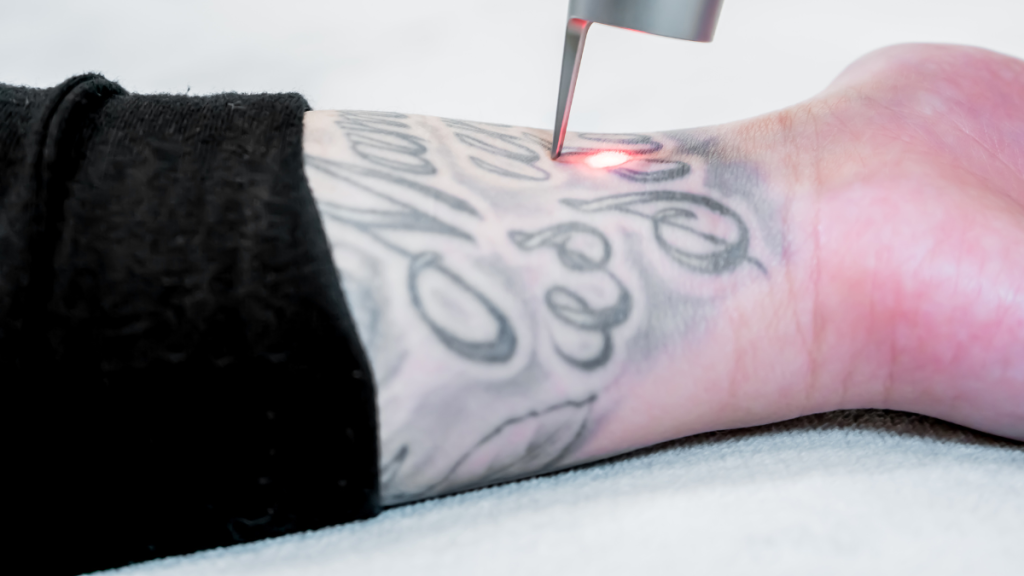
The folks walking into Clean Slate tattoo removal at the University of California San Diego are carrying more than just unwanted ink. Many have a history with the criminal justice system — previous incarceration, probation or parole — and a past that they’d like to leave behind.
There are gang tattoos on hands and faces that can expose them to violence. Others may just want to move up in their career and feel the tattoos are a hindrance. Others simply want their outer appearance to match their new lives.
Over the last decade, Clean Slate has allowed them to do just that. One laser pulse at a time.
Victoria Ojeda, a professor at UC San Diego’s School of Public Health and Human Longevity Science, originally launched what became Clean Slate as a small pilot program in Tijuana around 2011, according to the online news magazine Reasons to be Cheerful.
Shedding their tattoos helps clients in the program relax and feel less stressed as they try to change the trajectory of their lives, she said.
“Once they start this tattoo removal process, it changes their own perspective on themselves, giving them confidence and self-esteem,” Ojeda told the outlet. “Many say they’re aligning their outer self with their inner self. They’ve made a lot of transformation, and now their external is matching all of that change.”
While the pilot in Mexico was short-term, it showed some success in the promise of employment and in reducing stigma. Colleagues across the border took notice and emphasized the need in San Diego.
“Although tattoos have become more normalized, folks who have what are considered anti-social images or text marked on their bodies are not always viewed positively,” she said. “Couple this stigma with an individual who is released from jail or related to a gang, and you have a negative perception that may create problems for persons who are re-entering society.”
Some San Diego residents were driving three hours to Los Angeles, waiting months or years to access tattoo removal services at Homeboy Industries, the largest gang rehabilitation and reentry program in the country. It runs one of the busiest tattoo removal services, eliminating more than 50,000 tattoos per year.
In 2016, Clean Slate opened, drawing on lessons learned from the pilot and Homeboy Industries. It is not open to the public. Most clients are referred by probation officers or parole officers, though self-referrals are also accepted.
While the program’s output is modest compared to Homeboy Industries, Ojeda emphasizes the program’s sustainability, which is enabled by the residency training program for dermatology students at the school.
To learn more about Clean Slate click here.
“Torment and Trial”: Interview with the Author of a Devastating Boston Globe Series
Warning: This story contains some distressing information about the death of children. If you think it might be too disturbing, consider not reading it. If you or someone you know is in crisis or experiencing suicidal thoughts, call or text 988 to reach the 988 Suicide & Crisis Lifeline and connect in English or Spanish.
The 911 calls came rolling in just after noon on Feb. 5, 2018. They reported that a woman was in distress in Brockton, Massachusetts, a diverse city south of Boston with a large Black and immigrant population. While her neighbors thought she was having a seizure, it was clear to the emergency responders who arrived that Latarsha Sanders was in the midst of a psychiatric episode.
She warned them that people were trying to kill her. Then, she screamed, kicked and flailed when they put her on a stretcher. Her neighbor volunteered to babysit her two boys, until their older siblings got home.
But when the neighbor entered the bedroom in the rear of the apartment, he found the first of the two boys stabbed to death underneath a blanket.
“Oh my God!” he screamed. “Oh my God!”

The story is tragic and gruesome. There isn’t a happy ending. It’s the story of a woman with a long history of largely untreated mental illness, of two dead boys killed by their mother, and of a jury’s decision to deliver the murder conviction that prosecutors sought.
The Sanders family was always suspicious of therapy. They were reluctant to get Latarsha help, believing authorities would take her children away if they sought it, Boston Globe columnist Yvonne Abraham told MindSite News. (Read the full interview here.)
“That pattern of feeling like they don’t own the institutions of society continued through the whole case,” Abraham said. “It made it less likely that she would seek help and be able to get help. Then, after she killed the boys, it made her family more afraid to speak publicly about Latarsha. It made it more difficult to work out how to get her an attorney.”
In the days before the killing, Sanders was disintegrating. She ranted about the Illuminati and raved about killing her 18-year-old son. She attacked her mother and one of her daughters. Her mother had seen her act bizarrely before, but the way she was behaving this time was terrifying – and then it got even worse.
Over seven intense chapters, Boston Globe columnist Yvonne Abraham chronicles the mental health issues that preceded her killing of the boys, the problematic interrogation conducted by police in the hours after their deaths, a prosecution determined to make Sanders the face of evil and the incredible burden placed on juries to determine criminality versus sanity.
Abraham also juxtaposes Sanders — an impoverished Black mother — with the case of Lindsay Clancy, a white woman from the affluent seaside suburb of Duxbury who killed her three children four weeks after Sanders was convicted.
Clancy, like Sanders, was charged with first-degree murder, a charge that doesn’t allow defendants to waive their right to a jury trial. That’s important because judges are far more likely to find someone not guilty by reason of insanity, while juries seldom do, Abraham notes.
Mindsite News spoke with Abraham about the case and what more we can learn from it. Read the full story here. (It’s paywalled, but right now, you can get a six-month subscription for $1.)
Grieving in Prison
The holiday season is hard on almost everybody, but the loneliness can be especially unsettling for the incarcerated and those who love them.
Research shows that grief is a hidden yet profound part of prison life. When ignored, it impacts people’s health and their chance of moving forward, according to reporting by The Marshall Project.
A study of imprisoned men in Texas found a higher rate of depressive symptoms among those who experienced the death of a loved one in their last year of incarceration. Research on incarcerated women shows grief is often left unresolved because prison offers no space to process it.
“If we can show people how to grieve in prison, whether they’re alone [or] whether they’re with others,” said Rev. Susan Shannon, an interfaith chaplain who founded the Buddhist Prison Ministry, “it’s going to turn things around.”
This month, The Marshall Project released a guide of simple practices for dealing with grief in prison, including: what to do when grief hits your body, when you don’t have privacy, when you see something traumatic and when someone you love dies and you can’t say goodbye.
The name “MindSite News” is used with the express permission of Mindsight Institute, an educational organization offering online learning and in-person workshops in the field of mental health and wellbeing. MindSite News and Mindsight Institute are separate, unaffiliated entities that are aligned in making science accessible and promoting mental health globally.

Author

Related Articles
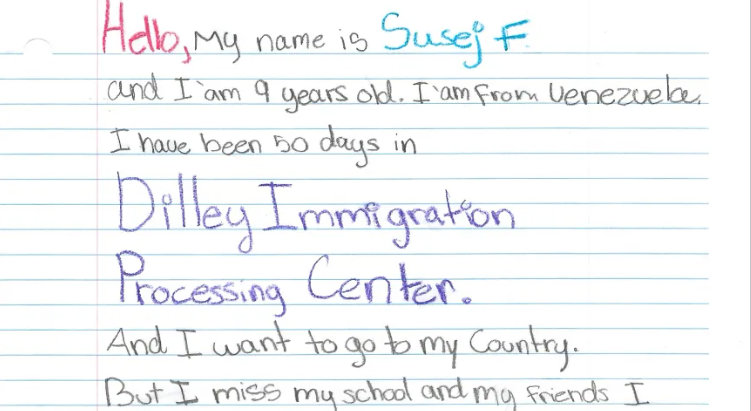
Health Organizations Condemn Traumatic ICE Raids, Family Separation
According to letters from children living in an ICE detention facility, living conditions are inhumane and their mental health is suffering.

In Teens, Social Anxiety Often Looks Like Anger
A study finds that some teens’ aggressive behavior may be due to social anxiety, not straightforward reactivity.
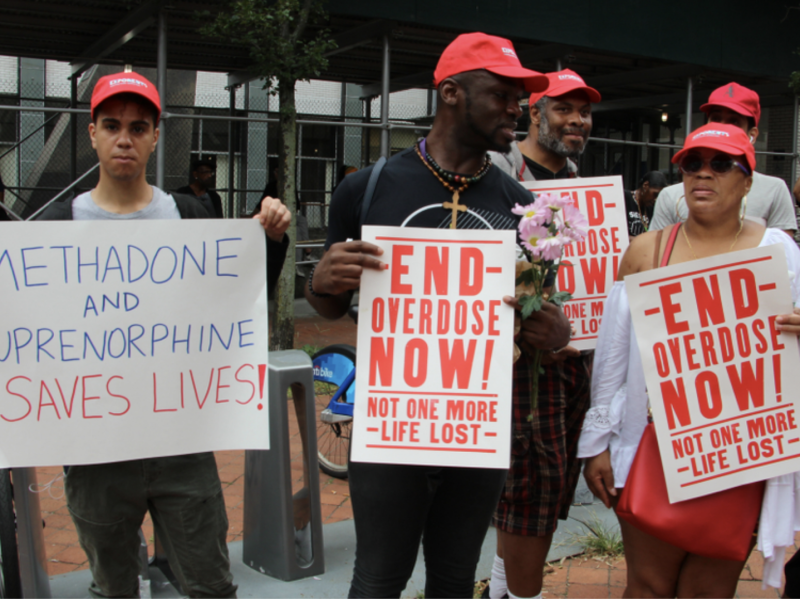
Expert Calls for Harm Reduction, Not Punishment, to Resolve Our Overdose Crisis
As the Trump administration pulls funding from harm reduction, an expert on the overdose crisis says it’s the best way to save lives.
