
Care for Dogs While Their People Are in Recovery
Pawsitive Recovery is a Denver-based program that places pets with foster caregivers while their guardians recover from mental health problems.
People with mental illness or addiction can get the treatment they need with help from Pawsitive Recovery.

Greetings, MindSite News Readers.
Here in the US, 2026 has begun with a cyclone of overwhelming, world-changing events, but I’m hoping to enter this hump day 🐪🐪 with some good news. In Colorado, Pawsitive Recovery gives pets a home while their guardians get help for mental illness, addiction, or domestic abuse. Plus, a longtime researcher of guilt considers the complex emotion’s power to restore relationships and help us heal.
Finally, new research suggests that our brains develop by leaps and bounds at various distinct points – development that does not end in early adulthood.
But first, check out Cycling Without Age, an international nonprofit dedicated to helping older adults and people with low mobility combat loneliness through bike rides. Or, as one passenger put it, to give people “the right to wind in your hair.” “Cycling Without Age is about connection,” cyclist and coordinator John Seigel-Boettner tells Reasons to Be Cheerful. “It’s about the conversations between pilot and partner, and the connection with everyone we meet along the way.”
Giving pets a temporary home so their people can heal
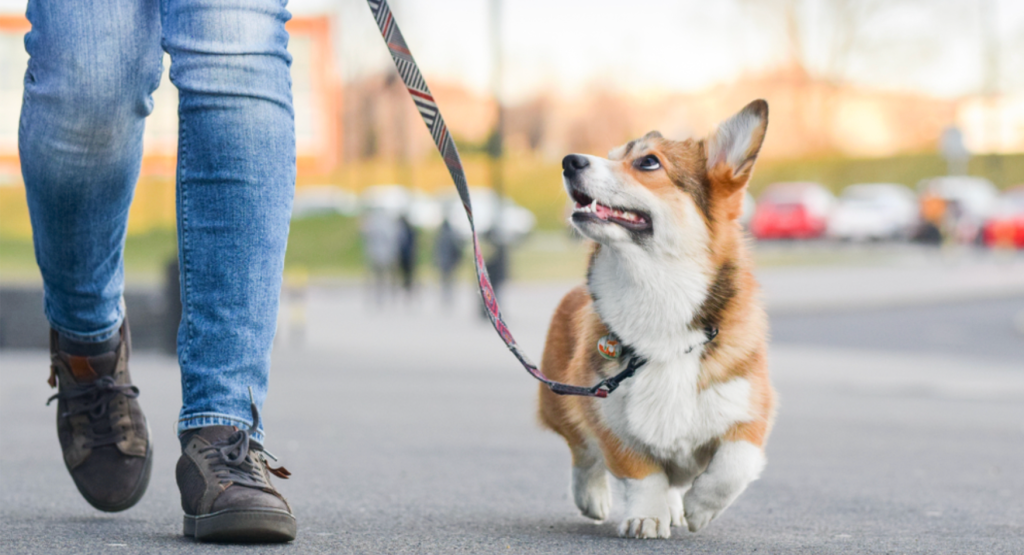
The promise of reuniting with her black Lab mix, Duck, kept Ashlee Chaidez going through months of hard work healing and rebuilding. And what a joyous reunion it was! After half a year apart, the face rubs and the best pals shared made every ounce of that work worth it.
Chaidez was in need of serious help – she and Duck were living out of her car, barely above water as she struggled with underemployment and her mental health. But Chaidez couldn’t imagine moving forward with inpatient treatment if it meant that she’d lose Duck, she told The Denver Post. While searching for a solution, Chaidez learned about Pawsitive Recovery, a Denver-based program that places pets with foster caregivers while their guardians recover from addiction, abuse, or mental health problems. It kept the duo intact.
“One of the main things preventing me from getting help was that I didn’t want to give him up because he’s my family,” Chaidez said. “This gave me the peace of mind to get the help I needed, and I don’t think I would be where I am now without this program.” It’s a sentiment many other people share – last year we covered a similar initiative in Minnesota called Serenity Kennel.
Former vet tech Serena Saunders founded Pawsitive Recovery after getting sober from alcohol a few years ago. She’d wanted to continue working with dogs while going through recovery, and began the program out of her home to do just that. Two years ago, the SPCA took an interest, hiring Saunders and making Pawsitive Recovery part of their work. “It was probably the best decision of my life,” Saunders said.
Most foster pets have been dogs and cats, but guinea pigs and even tarantulas have been on the roster, too. Foster caregivers are often volunteers from the recovery community, including people in long-term recovery, family members affected by addiction, and therapists. Animals, like people, can experience trauma from discord in their family unit, so Pawsitive Recovery also partners with trainers to help animals heal while in their care. “We are not limited to dogs that are in perfect shape,” Saunders said. “We can take broken ones, too, which is amazing because the dog and the person get to heal simultaneously.”
Best of all, full-time care for six months costs just $100 per month – Saunders frames it as an accountability tool. “It’s part of their responsibility, having a little skin in the game when it comes to the care of their animal,” Saunders said. “If they’re in treatment, a lot of these people are not working, so what we do is set up a fundraiser for them, and as they start rebuilding their life, they can go in and make payments. It’s all situational.” Thanks to popularity, the SPCA hopes to roll out the program nationwide.
It’s given Chaidez and Duck a brand new life. After completing mental health treatment, Chaidez secured a job and home, knowing Duck was being looked after. “This program gave me a lot of hope when I didn’t really see any,” Chaidez said. Now, the pair are back together again. “I didn’t really notice how much he helped me out until I didn’t have him anymore,” she added. “He’s my best friend. He’s the whole point.”
Seeing guilt for what it is – motivation to change
Floating on a cloud of alcohol-infused revelry, British student Chris Moore and three university friends made a fateful decision: They stole a car and drove it home, drunk. Instead of making it back, they crashed into a group of cyclists, killing one, wounding others, and leaving Moore seriously injured. The totality of the experience changed the trajectory of Moore’s life. “I felt this incredible shock, that mass combination of emotions, obviously the horror of what had happened,” he told The Guardian. “The massive regret of what we’d done.”
“There isn’t a simple story in terms of what the emotions were,” Moore says. “It was just a roiling mass of different negative emotions. That’s why I think of guilt as being complex, because all of these other emotions were tied into it.” Because some of those feelings propel us to the work of repair, healing, and transformation, guilt – unlike shame – can be a good thing, Moore says. Informed by the work of US social psychologist Roy Baumeister, Moore views guilt as less of a moral question and more about felt damage to relationships, along with empathy for those harmed.
“So there’s anxiety, which is the fear that our relationships, or something we care about, has been harmed in some way. There’s compassion, sadness or empathy that we feel for the person we might have hurt, and there’s anger at ourselves for what we may have done,” he explains. When there’s too much self-directed anger, it becomes shame, “which is the idea that you’re a bad person, not just that you did a bad thing,” he says. Shame makes us hide from relationships rather than fix them. But when healthy guilt forms, “you realize you have responsibility, and that you need to make amends in some way. You feel that anxiety, but that motivates you to try to heal the relationship rather than to run away from it,” Moore says.
Moore is now a professor of psychology and neuroscience at Dalhousie University in Nova Scotia and has worked more than 40 years as a psychology researcher. He was able to heal because he was buoyed by forgiveness from those he harmed, including the other injured cyclists and the family of the man killed, along with uncharacteristically vocal reassurance and love from his parents.
“I didn’t come out of it with shame,” he said. “I didn’t think I was a bad person. I thought I was, at the time, a stupid person. I’d done a stupid thing, drunk too much, agreed to get in a car that wasn’t ours, with somebody who was not capable of driving. But it doesn’t mean I’m a bad person.”
But not all stories are like Moore’s, and sometimes self-forgiveness “is really the route to healing,” he says, especially if amends can’t be made. Moore was able to complete his studies following one year of suspension, and later complete his PhD.Plus, he didn’t have to pass a criminal background check, which isn’t always the case now.
Criminal records have a disproportionate impact on low-income people, Black people and other people of color in the US – even small crimes can shut out opportunities for life. Moore’s vision of guilt as social, about relationships, means that he believes restorative justice should be further prioritized, “because it puts relationships at the heart, and says that crime is an offence against individuals, but also the community, and we need to think how we restore those relationships in society.”
This value also extends to his ideas about collective guilt and collective responsibility to repair past transgressions. Specifically on the question of reparations for the UK’s role in slavery, Moore is skeptical of individual attempts to avoid responsibility: “You’re saying, for the purposes of this issue: ‘I’m not part of the group, I’m an individual, and I had no responsibility for it.’ The question is: did your group have responsibility for it? Did the UK as an entity, as a collective, a nation, have responsibility for it? And if they did, then there is a reasonable debate to have about reparations.” That said, Moore acknowledges it’s tough to settle upon a solution.
In a world where leaders impetuously inflict war and pain upon others with impunity, Moore returns to guilt’s truth and utility. “I think there should be more attempts to keep our relationships strong, whether those relationships are at the individual level, or whether they’re larger scale in terms of societies,” he said. “A functioning life, and a functioning world, is all about strong relationships, and the point of guilt is to strengthen and manage relationships.”
In other news…
More confirmation that our brains constantly change: A new study finds that our brains change structure throughout our lives, with multiple distinct junctures marking our development along the way, The Washington Post reports. Led by Alexa Mousley at the University of Cambridge, researchers analyzed roughly 4,000 brain scans from healthy people ages 0 to 90, and found that the brain experiences significant developmental changes at roughly ages 9, 32, 66, and 83.
Interestingly, adolescence lasts much longer than we typically think, a finding that jibes with what we already know about humans. “Something that sets us apart as humans from other animals is how slowly we develop,” Mousley said. “A giraffe can stand up very soon after being born, but human babies just take a very long time to learn to walk, to eat.” It’s in the turbulent phase, roughly from 9 to 32, that we are most vulnerable to developing a mental health disorder, but Mousley notes that this drawn-out period of change might allow us to develop more complex brain connections, enabling us to do things that other species cannot.
The name “MindSite News” is used with the express permission of Mindsight Institute, an educational organization offering online learning and in-person workshops in the field of mental health and wellbeing. MindSite News and Mindsight Institute are separate, unaffiliated entities that are aligned in making science accessible and promoting mental health globally.

Author

Related Articles
Generation Cancer: Millennials Struggle With Death at an Early Age
More young adults are being diagnosed with cancer. Even for those who survive, the experience can be destabilizing and isolating.

Millennials Weigh Having Children On Their Own Terms
Not having children is also a valid path, and one that everyone should consider, Merle Bombardieri argues in her 1981 book.

Waiting for Word on Relatives Under Attack in Iran
Iranians in the US are caught between two “unrepentant regimes,” says Iranian-American writer and professor Shervin Malekzadeh.
