
Trump Administration Cancels, Then Restores Federal Grants for Addiction Treatment and Mental Health
The administration restored nearly $2 billion in addiction and mental health grants after an overnight cancellation sparked a furious outcry.

Over the last two years, MindSite News published a series called “Forgotten Children,” which explored, in part, the bereaved children whose parents died in the opioid overdose crisis. From 2011 to 2021, more than 300,000 children lost a parent to fatal drug overdose. Although such deaths have declined in the last few years, drug overdoses claimed more than 73,000 lives in the U.S. in 2025, and many of those people will have left a grieving child behind.
It was amid that backdrop that the Trump administration canceled nearly $2 billion in federal grants for mental health and addiction services late yesterday, ending funding overnight – only to chaotically reinstate them today without explanation, following a furious outcry from advocates, experts and elected representatives.
In other news, one young reporter argues Gen Z’s “therapy speak” may be doing more harm than good, and a mother reflects on raising children in the wake of ICE’s killing of Renee Nicole Good.
Trump administration abruptly terminates, then restores $1.9 billion in federal funding for mental health and addiction
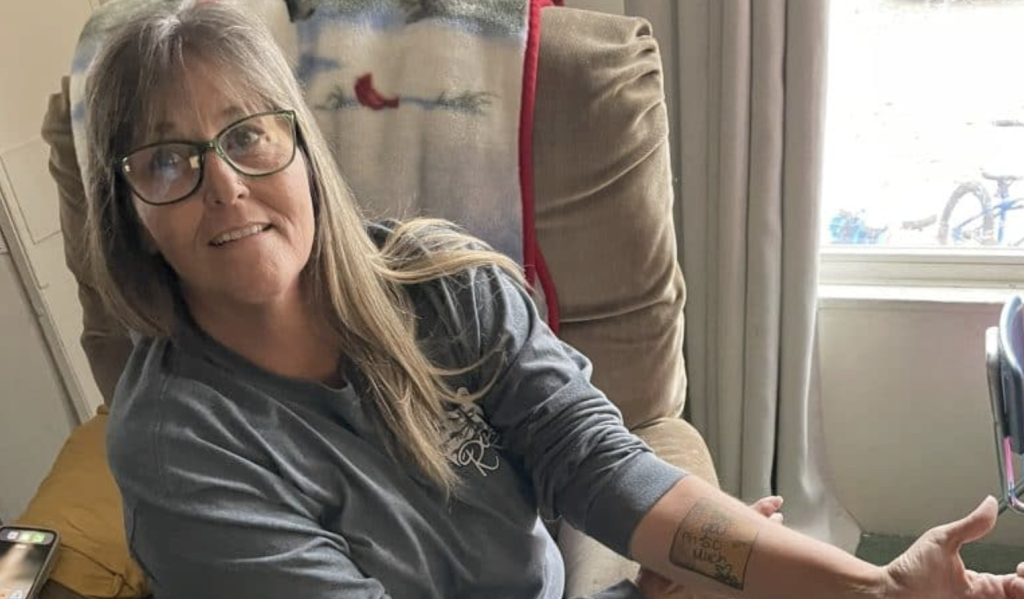
Without explanation, the Trump administration restored federal grant funding to thousands of programs providing street-level mental health and addiction care across the country less than 24 hours after notifying program leaders that it would be immediately terminating nearly $2 billion in funding. The reversal came after fierce lobbying from both Republican and Democratic members of Congress, including a letter addressed to Health Secretary Roberty F. Kennedy, Jr., signed by 100 House members, the New York Times reports.
Projected cuts would have hit programs like drug courts offering treatment as an alternative to incarceration, programs for pregnant and postpartum women in recovery, screening and referral services, and overdose prevention education. Robert Franks, CEO of the Baker Center for Children and Families in Boston, told ABC News that part of the $1 million in immediate cuts to the mental heath provider organization were the loss of a grant meant to support child survivors of trauma, including sexual abuse and school violence.
According to a letter reviewed by NPR, the grant terminations connected to the administration’s efforts to reshape national healthcare, in part by restructuring SAMHSA’s grant program. It suggests that the defunded programs did not align with the Trump administration’s priorities.
After termination letters were sent late on Tuesday night, cuts were set to affect more than 2,000 organisations across the country, and panic ensued. Ryan Hampton, recovery advocate and founder of Mobilize Recovery, an organization due to lose around $500,000, said the cuts would leave “communities defenseless against a raging crisis,” and that cruelty would “be measured in lives lost… the administration will have blood on its hands for every preventable death that follows.”
While these cuts have, thankfully, been reversed, Congress, which is Republican-controlled, approved deep Medicaid cuts last year. This will make mental health treatment for any condition, addiction included, less accessible and less affordable.
“These are cuts he should not have issued in the first place,” Representative Rosa DeLauro, a ranking member of the House Appropriations Committee, said in a statement published after the reversal. “This episode has only created uncertainty and confusion for families and healthcare providers. I hope this reversal serves as a lesson learned. Congress holds the power of the purse, and the Secretary must follow the law.”
Gen Z knows how to lay down a boundary – but too much therapy speak could further disconnection

Gen Z seems like it might be the most therapy-literate generation ever, but that hasn’t necessarily translated into amazing well-being. In fact, Rachel Hale, a 24-year-old mental health reporter at USA Today, argues that her generational peers have let friendships wither in service of short-term self-care. “Protect your peace,” she says, is often an easy excuse to flake out on a friend – or worse, avoid important confrontations and situations just because they might be uncomfortable. It’s a problem made even more pertinent by our loneliness epidemic.
“The use of therapy speak to justify, in essence, being non-committal socially, sort of withdrawing socially, or having the right to withdraw socially, I think, is really hurtful,” says Jamil Zaki, director of the Social Neuroscience Lab at Stanford University. Hale points to her own potluck-style party in which several invitees didn’t respond, or cancelled at the last minute.
Sociologists used to measure the strength of folks’ social connections by asking how many people they could depend on to pick them up from the airport at 1 am, Zaki says. But these days, young people might simply request a ride on Uber or Lyft. Technology has reduced our need for face-to-face interaction, and we haven’t ramped up our in-person social efforts to make up for it. “Where we’ve gained convenience, we’ve lost community,” Hale writes. Older generations simply couldn’t drop out with a last-minute message, but today’s youth have both the option to withdraw on a whim and the language to justify it.
The thing is, relationships require us to be burdened or inconvenienced sometimes – and that’s a good thing. Our connections with each others are vital for our health and well-being, and helping out, far from something to avoid, makes us calmer, happier people, says Zaki. “If we focus on keeping ourselves comfortable… we’re missing out on, I think, a critical opportunity… When we show up for others, our stress decreases, our sense of agency and autonomy increases, our happiness increases, and so when we focus on a hyper individualistic almost single-serving version of well being… we actually are depriving ourselves of one of the great sources of well being,” Zaki explains.
The thought of re-engaging socially after a period of isolation is anxiety-inducing for plenty of people, but it’s worth pushing through, according to Zaki. “On the other side of that anxiety is a connection that you vitally need for your health and well being,” he says. Technology might be part of the solution – Hale mentions apps that can help, specifically Bumble BFF and Yubo, in addition to in-person options like Camp Social, a women’s-only sleepaway camp designed for folks to arrive solo and leave with new friends. “The obvious demand for these groups shows the elusive village exists if we’re willing to make the effort,” she says.
Replace your resolution with a mantra in 2026
New Year’s resolutions can quickly become loaded, but mantras can offer something more refreshing. Rather than focus on a future goal or specific outcome, mantras – easy-to-remember, repeatable phrases – coach the mind to stay in the present. They can help ground us in overwhelming moments by helping to tune our inner voices towards greater awareness, self-compassion, and confidence. “As an example, ‘I want to be more patient’ is a goal or intention; ‘I can pause and take a breath’ is a mantra that can help focus you in a moment where you want to have more patience,” San Diego-based therapist Caitlyn Oscarson explained to Parents magazine.
Essentially, mantras can help shift our minds to practice the habits that help us become who we really want to be, little by little. “They work best when they focus on acceptance – being able to cope with big feelings rather than push them away,” Oscarson adds.
The practice can help anyone, but Oscarson offered some guiding questions that could help families find one to adopt together – keeping positive progress, rather than perfection, in mind:
- What helps us stay calm when things get hard?
- What do we want to be reminded of as a family this year?
- What are our family’s strengths?
In other news…
“How are we supposed to parent through this? Renee Nicole Good was stolen from her children. I’m still figuring out what to tell mine.” That’s the headline for a story in The Cut by Danielle Cadet, who starts by recalling the stuffed lamb her daughter carries everywhere, including in the car. So, “seeing Renee Nicole Good’s glove compartment, overflowing with her 6-year-old’s stuffies, shattered me. I imagined her son requesting stuffies from the back seat while she was driving, just like my daughter does. I thought of all three of her children, ages 6, 12, and 15 – how they would get picked up early from school and receive the worst news of their lives. How the hot tears would stream down their faces like lava. And how their mother wouldn’t be there to wipe them away.”
“Consuming the news, not simply as a person with a conscience but particularly as a parent, is harrowing,” she writes in another passage. “I know I can’t be the only one pouring cereal and playing on the floor with my kids, telling them everything will be all right while simultaneously asking myself if that’s actually true.” Read the rest of the eloquent piece here, – Diana Hembree
From SciLine: “Do ICE agents impact people getting medical care? One 2025 study in Texas suggests that the presence of border patrol agents in hospitals may deter people without legal status. One national survey published in November points to health care access effects for kids.”
The name “MindSite News” is used with the express permission of Mindsight Institute, an educational organization offering online learning and in-person workshops in the field of mental health and wellbeing. MindSite News and Mindsight Institute are separate, unaffiliated entities that are aligned in making science accessible and promoting mental health globally.

Author

Related Articles
Will the Pursuit of Profit Suck the Benefits Out of Psychedelics?
Many new programs have removed the most transformative, curative and life-affirming parts of the psychedelic experience.
New Mexico to Probe Allegation that Epstein Ordered the Burial of Teen Girls Near His Ranch
New Mexico has announced it is probing into an allegation that Epstein ordered the bodies of two girls to be buried on Zorro Ranch.
A Better Way to Treat Addiction in Seniors
As overdose deaths rise among older adults, Baltimore’s REACH Health Services offers groundbreaking addiction care for seniors that combines medication with intensive peer support. Plus a look back at a historic fight against solitary confinement. And more.
