
A Cat Love Story, and The Battle Over Opioid Settlement Dollars
A major policy shift in Pennsylvania now allows opioid settlement funds for public defenders, a move that could transform how counties address addiction and the legal system.

Welcome Back MindSiters,
This month, we’ll look at an investigation from our friends at The Appeal into the county in Pennsylvania where restraint chairs are used the most. Then, the fight to give public defenders more money through opioid settlement funds.
But first, the tale of an orange cat in prison and the women who love it.
Let’s get into it…
A Prison Support Cat and the Incarcerated Women Who Care for Him
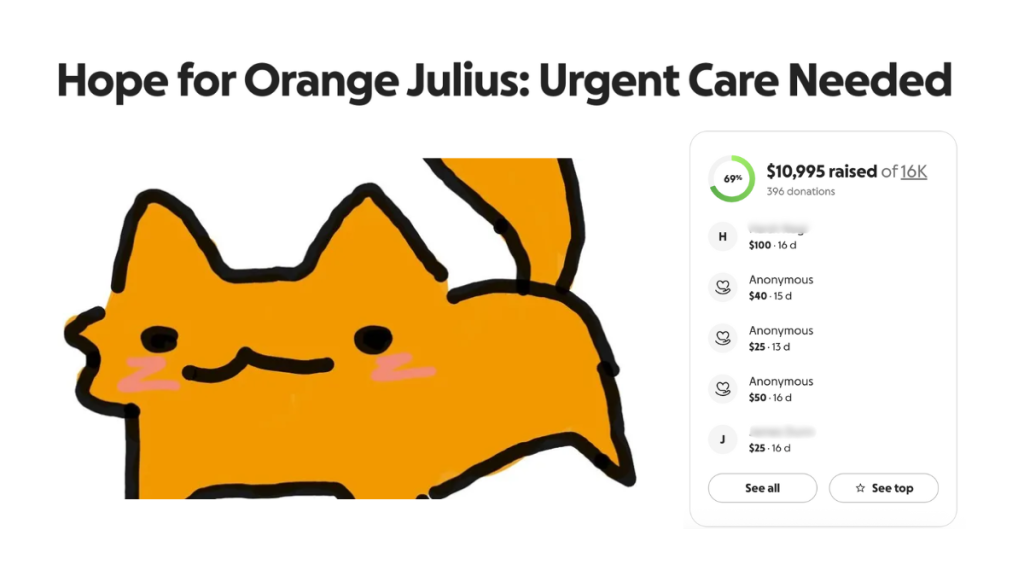
It all began with a cat — a cat they named Orange Julius.
Like the other cats found abandoned in this part of central Texas, it would be cared for by Sonya Reed and other incarcerated women at the Patrick O’Daniel Unit, a women’s prison in Gatesville.
Normally, the women tended the felines, including ones who were ailing, with their own commissary funds. This time, one of their daughters on the outside had an alternative idea — to fundraise for the expensive care needed by one of the kitties.
In a post on GoFundMe, Kitti Reed wrote on behalf of her incarcerated mom and Orange Julius (nicknamed OJ).
“Anything is greatly appreciated, OJ has been her lifeline for the majority of her time incarcerated, and has helped her not lose her hope or her spark,” Reed said in the post, noting the funds would be used to pay for OJ’s treatment.
The fundraiser, created on Dec.18th, described Julius as an emotional support animal with an untreated kidney infection, which has caused him difficulty walking and urinating.
Since then, the Texas-based news outlet The Barbed Wire has chronicled the movements of Julius and his cat mom.
“Nobody is obligated to take care of this cat for my mom,” Reed told The Barbed Wire. “But she’s volunteering her time and personal money to make sure this cat can continue living comfortably.”
The public may not have been obligated to give, but they felt moved to.
The GoFundMe gained traction on social media after being shared on X by ProPublica journalist Keri Blakinger, who covers the criminal justice system with a focus on prisons. The link was sent to her by one of the women incarcerated at the prison, she told The Barbed Wire, a digital Texas publication that bills itself as “an alt-weekly for the modern era.”
“I have never seen a GoFundMe quite like this,” posted Blakinger, whose two years in a New York State prison prompted her to become a journalist. “The women at one Texas prison are trying to pay for a vet for one of the stray cats that they clandestinely take care of at the facility.”
Before the X post, the fundraiser had brought in less than $100 in donations. Soon after the post appeared, it raised nearly $11,000 with some anonymous donors donating as much as $400. The funds enabled Julius to receive a full round of antibiotics and undergo a small procedure, Reed said.
“He’s able to walk again without falling over,” Reed told The Barbed Wire. “He seems to be recovering really well.”
But all was not well in other regards. Days after the procedure, Sonya Reed, OJ’s principal caretaker was moved to solitary confinement and charged with “solicitation” – even though the fundraiser was organized outside the prison and her mother also had no way to access the money, Reed told The Barbed Wire.
The elder Reed, who is 53, has significant medical issues that could be exacerbated by solitary confinement, including heart problems, anxiety, depression and a spinal condition requiring special bedding. As The Barbed Wire noted, a United Nations human rights expert has warned that prisons in the U.S. often overuse solitary confinement and practices like prolonged isolation, restraints, and intrusive searches – practices he says amount to psychological torture.
“The severe and often irreparable psychological and physical consequences of solitary confinement and social exclusion are well documented and can range from progressively severe forms of anxiety, stress and depression to cognitive impairment and suicidal tendencies,” said Nils Melzer, a UN Special Rapporteur on torture, after investigating U.S. prison practices in 2020.
Fortunately, the story ends on a good note: Sonya Reed was returned to normal prison housing as of Thursday, The Barbed Wire reported, and presumably reunited with Orange Julius.
York County: Restraint Capitol of Pennsylvania
Back in April 2018, a 41-year-old Army veteran named Everett Palmer Jr. was picked up on an old DUI charge and booked in Pennsylvania’s York County Prison.
Over the next two days, Palmer’s mental health deteriorated. He hallucinated and screamed. He repeatedly put his blanket in the toilet and wrapped himself in it. Much of his actions were captured on surveillance video.
In the early morning hours, he took it a step further — slamming his head and pounding his fists into the cell door, according to a grand jury’s report. A supervisor tased him twice. Officers stormed his cell, tackling him and placing a spit hood over his head as he was carried out of his cell and strapped in a restraint chair.
He was breathing heavily and gasping for air. Still, the guards took him to the medical unit strapped in the chair. An ambulance was called and Palmer was pronounced dead at the hospital.
In the wake of his death, local and national media would document his last days, but no charges were filed. The attention would do little to change the practices at York County Prison. In fact, it may have emboldened its use, according to a new investigation by Elizabeth Weill-Greenberg of The Appeal.
Six years after Palmer’s death, restraint chair usage increased almost 30 percent, even though the population of the jail was nearly half of what it had been in 2018. Between 2018 and 2024, York County used restraint chairs 1,295 times more than any county in the state, according to their analysis.
Noah Barth, the prison monitoring director at the Pennsylvania Prison Society, told The Appeal that restraint chairs are disproportionately used on people in the midst of a mental health crisis. On a recent tour, he even saw a restraint chair in a housing unit specifically for people with “serious mental health diagnoses.”
“The share of people in jails with serious mental health diagnoses is disproportionately high due to a lack of other resources and structures to support them in the community,” Barth said. “Officers are not equipped or trained to provide the right kind of therapeutic interventions, and so what we see is in some localities, they disproportionately fall back on overly physical measures such as restraint chairs.”
MindSite News has republished Weill-Greenberg’s investigation, and you can read it here.
Opioid funds for Public Defenders
As in most states, public defender’s offices in Pennsylvania are chronically underfunded. Thanks to a decision around the use of state opioid settlement funds, that may soon change a bit – at least in Buck’s County, a sprawling suburban county north of Philadelphia.
A state board that distributes funds received by the state in lawsuits against the makers and distributors of prescription opioids has approved Bucks County’s plan to use a share of its settlement dollars to support its strapped public defender’s office, according to reporting by Spotlight PA.
The move is a reversal for the board that reviews how opioid settlement funds are allotted across Pennsylvania – one that has the potential to cause ripples in how some $2 billion in settlement dollars are spent across the state.
It also represents a modest victory for a range of groups: harm reduction and recovery organizations skeptical of law enforcement spending, leaders wanting more flexibility with the funds and advocates arguing public defenders play a vital role in helping people with addiction.
“Public defender offices are chronically underfunded compared to law enforcement agencies, compared to probation departments, compared to district attorneys’ offices,” Niels Eriksen Jr., chief public defender in Bucks County, said in November. “We are barely keeping our head above water.”
Spotlight PA first reported on disparities in the allocation of opioid settlement dollars two years ago that allowed millions to go to prosecutors and nothing to public defenders. That was due to a decision by the Pennsylvania Opioid Misuse and Addiction Abatement Trust, which distributes and oversees the funds, that public defenders were ineligible to receive them.
It was not a decision that sat well with public defenders. In its 2024 investigation, Spotlight PA noted the objections of Gary Knaresboro, Elk County’s chief public defender, who argued that public defenders are often uniquely positioned to intercede to change lives for the better. “I think we have to present that chance to everybody, whether they take advantage of it or not,” he told Spotlight.
While the funding for Buck County public defenders still falls short of what advocates say is needed, they hope the decision will lead more counties to seek a share of their settlement dollars for their public defender’s office.
To read more about the battle over the funds, read Spotlight PA’s coverage here.
Until next month,
Josh McGhee
The name “MindSite News” is used with the express permission of Mindsight Institute, an educational organization offering online learning and in-person workshops in the field of mental health and wellbeing. MindSite News and Mindsight Institute are separate, unaffiliated entities that are aligned in making science accessible and promoting mental health globally.

Author

Related Articles

On No Kings Day, Millions Rallied to Denounce Trump and “Epstein War”
Anti-Trump protests took place in all 50 states, Puerto Rico and other US territories and in countries around the world.
How Medicaid is Helping People Leaving California Prisons
Changes to federal law allows Medicaid to provide health and other services to people exiting prisons. California and some other states are making use of the program, but expansion efforts will depend on the Trump administration.

Google and Meta Found Negligent in Apps’ Mental Health Harms
Meta, Instagram’s owner, and Google, Youtube’s owner, neglected to protect a user from their apps’ addictiveness, a jury rules.
