
The Trauma and Resilience of Afghans: An Interview with Dr. Qais Alemi
Alemi says refugee trauma stems not only from war atrocities, but from cultural dislocation and the loss of language and identity,
This article is part of Unseen: The Impact of Trump’s Draconian Immigration Policies on Asians in America, an ongoing series supported by the Nova Institute for Health.
For Qais Alemi, the study of refugee mental health is not an academic abstraction. It is the story of his father, an attorney in Afghanistan, forced to work fast food counters to make ends meet in the United States. It is the memory of watching his parents weather the emotional toll of uprootedness and Islamophobia navigating a new country that offered safety but demanded the surrender of nearly everything else.
Born in Kunduz in 1978, Alemi was 6 months old when he and his family made the perilous journey out of Afghanistan. That exodus became the foundation for a career devoted to understanding and healing the kinds of trauma he and his family experienced.
Alemi is now a professor at Loma Linda University. For 13 years, he has built a body of research that gives empirical weight to what he witnessed growing up. This includes challenging a dominant narrative in refugee mental health that trauma stems primarily from war’s atrocities. Dr. Alemi’s assessment, instead, points to a different source of suffering: the stressors of resettlement itself. Financial precarity, cultural dislocation, the erosion of social status, the loss of language and identity – these daily indignities, he argues, often inflict deeper psychological wounds than the turmoil that drove people from their homelands.
The lexicon he has helped develop in a 2023 paper on Afghan mental health and psychosocial well-being centers the lived experiences of Afghans and represents a quiet rebuke to Western psychology’s tendency to assume that adversity and resilience are experienced in a universal pattern independent of cultural context. As lead researcher exploring the impacts of the HEAL (Health Extension for our Afghan ALlies) Project, Dr. Alemi helped evaluate a telehealth program pairing Afghan refugees with culturally matched patient navigators – many of them former medical professionals from Afghanistan now resettled in America. The results showed significant reductions in depression and anxiety across all treatment groups, suggesting that healing lies not just in medication or therapy, but in being seen and understood by those who share your language and story.
Dr. Alemi’s current research – called The Silk Road Project – collaboratively explores mental health across countries that were part of Asian trade routes established during the Han Dynasty of China in 130 BCE that helped facilitate cultural, political, and economic interactions between the Eastern and Western worlds. The project intends to “revive an ancient superhighway of global collaborative scholarship to advance health and well-being in conflict-affected populations.”
MindSite News contributor Simran Sethi, media fellow at the Nova Institute for Health, spoke with Dr. Alemi about the unique challenges Afghan immigrants face and how they persevere in the face of challenging circumstances.
The interview has been edited for length and clarity.
Simran Sethi: Tell me about your early life.
Qais Alemi: I was born in September 1978 in Afghanistan, in a city known as Kundaz, which is in the northern part of Afghanistan. It used to border Russia before the Soviet Union fell apart, and countries like Tajikistan and these other nations later came to the fore. Due to the Soviet invasion, things started to get really unstable. My mom and dad fled the country, with my twin brother and me, six months after we were born. We spent a few months there and then managed to cross into Turkey, then into Greece.
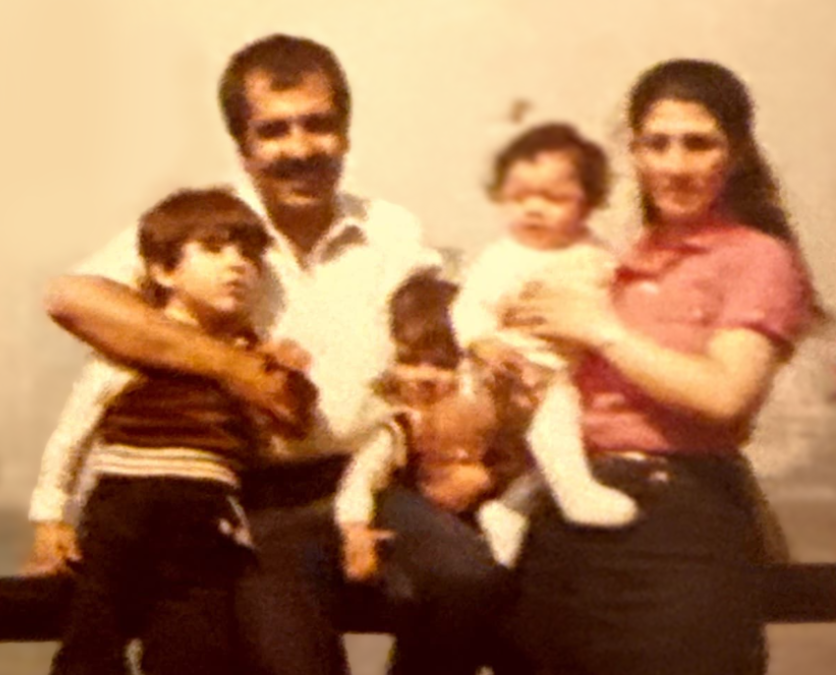
Your parents were carrying two 6-month-old babies and fleeing on foot?
It was a very dangerous journey. I wish my father was here to tell you the story. We made it to Greece where they gave us asylum. A Catholic church in North Carolina sponsored us, so we ended up in Charlotte for a little while – one of the first Afghan families in Charlotte. The people there were welcoming, but there wasn’t that sense of community they got from their fellow countrymen. Economic opportunity really pushed my dad in the early 80s to move to Queens in New York City. It was a major hub for Afghan refugees at the time in terms of social connections and that sense of community. We spent 10 years there and then moved out to San Diego, California, also a hub for Afghans.
I completed all my training at Loma Linda University, and ultimately got a job there. I have been a full-time professor for about 13 years.
Your research is focused on mental health disparities in refugees and immigrant communities. What inspired this?
Being a former refugee myself and understanding how hard it can be to adjust to a new world. I saw that sense of loss in my parents. Being abruptly removed from Afghanistan and having to resettle took a real toll on them, other relatives, and so many others.
In research, I can give people a voice. I can use it as an advocacy tool to bring attention to the issues that Afghan refugees and other refugees face.
You were so young when you came here. At what point were you self-aware enough to recognize the refugee trauma you just described?
Well, there were significant financial difficulties growing up. My father was an attorney in Afghanistan. He went to Kabul University, which was one of the best universities in the region at the time …
The Harvard of Afghanistan …
Yes. And he got a job with the government as a prosecutor right before the Soviets invaded. He had a good job and good pay. Being uprooted, he was forced to take up menial jobs here in the United States.
I remember as a young child seeing him work in fast food and other types of industries just to make ends meet. We always felt that financial stress and the stress of cultural adjustment, as well.
What we also call acculturation stressors. What were they?
Being seen as different, being treated differently – especially during the first Gulf War. I clearly remember my dad being called “Saddam Hussein” and other terms that were very demeaning.
We are a peace-loving people. Ordinary Afghans did not ask for these wars and conflicts. They are peace-loving people who have made lots of sacrifices to come here to rebuild their lives…They want the same things we all want: to succeed and be happy.
And then there are the cultural conflicts that come with raising kids in the United States when you also want to adhere to your own culture’s family values and religious values. Those conflicts are pervasive and complex. I witnessed them over years in my own family and saw the impacts [they had] on my mom and dad.
No group is a monolith. Especially not those who come from a multiethnic, multilingual country that sits at the crossroads of Central, South, and Western Asia. That said, how would you broadly describe the mental health of Afghans in the United States? Afghans have endured four decades of war trauma and hail from a collectivist culture widely known for its hospitality. How would you describe people holding those lived experiences and values coming into an individualist culture that may not be as welcoming?
I want to, first, name this positively. Most Afghan refugees, over time, do well. Yes, it takes time to adjust, but after a few years, many Afghan individuals and families do well. They learn to navigate employment and healthcare. They seek out education and rebuild their lives.
Is that unique to Afghans?
I wouldn’t say the aspect of “doing well” is unique to Afghans. You find that across the board. There’s a proportion of refugees that suffer and report distress, but a lot also end up fine. That is because of their resilience.
For Afghans, whom I can speak for, this is rooted in their faith – Islamic values – and in the family [structure] that is the bedrock of Afghan society and what keeps people sane, if you will. They have these different resiliency assets that are working in their favor – ones that they really, really hold near and dear. That’s really important.
For some, the suffering never ends…People are feeling that they’re not wanted here, that they’re not liked. The effect of this variable on poor mental health is very strong.
But my surveys have also shown that there is a proportion that suffer even years after initial resettlement. For them, the suffering never really ends. It’s not just war trauma or memories of atrocities that they faced in Afghanistan or during transit. Our research shows post-resettlement stressors supersede those traumatic experiences and seem to contribute much more to poor mental health than traumatic experiences do.
There is so much leading up to those post-settlement stressors. For context, pre-migration stressors can include exposure to violence, poverty, persecution, environmental disaster and loss in a person’s family and community. Migration stressors can include not only the grief of dislocation but exposure to harrowing conditions including violence, detention, and limited, if any, access to services to cover basic survival needs like food, shelter, and medicine. And then there are post-migration stressors you just mentioned …
They range from financial stressors and not having basic needs met to cultural adjustment challenges – feeling rejected by society and having to learn how to gain mastery in a new world. These things really take a toll.
And there is also, as researchers point out, “the chronic stress related to legal uncertainty, limited access to services, and fear of immigration enforcement.” These stressors have been shown to contribute to anxiety, trauma, and PTSD and compromise relationships between caregivers and children.
Immigration procedures and having to manage visa and citizenship application challenges are generally known to contribute to stress, and uncertainty in one’s immigration status is a big contributor to poor mental health among refugees. There we see similarities between Afghans and other groups. But when you talk about Afghans, specifically people who have recently come in after 2021, they’re especially feeling the stress of destabilization.
When talking to those in the refugee community in San Diego [in early December], I could see people are living with a sense of fear as a result of what’s going on.
Meaning the enactment of travel bans and changes in actual immigration policy that were enacted in the aftermath of the November 2025 shooting of two National Guardsmen by an Afghan national who had worked with the CIA. I imagine there is also an increased sense of precarity as the actions of one person are now impacting every Afghan.
That’s a good way to put it. They are now seeing themselves living in an even more precarious situation where they don’t know what is going to happen or what the future holds.
It’s tragic for all involved. And we are also seeing a rise in anti-immigration hate.
The Center for the Study of Organized Hate found, in the immediate aftermath of the shooting, a dramatic rise in online hate and threats targeting Afghans. They wrote, “the dominant narrative reframed all Afghans as ‘terrorists,’ ‘invaders,’ and ‘illegals’” and the majority of posts they analyzed “advocated for mass deportations and the denaturalization of Afghans, operating at the dangerous intersection of nativist anti-Afghan sentiment and broader Islamophobia.” How is this surfacing in this community?
This is an important question and timely, too. We recently conducted a small survey of about 150 Afghans in New York City and Sacramento [before the November shooting] and found that, despite the fact that there are low proportions of individuals reporting feeling rejected by U.S. society or having feelings of unfair treatment and discrimination, this perceived discrimination variable alone contributes the most to poor mental health. Among a number of other post-resettlement stressors, the perception of unfair treatment is really strong when it comes to predicting poor mental health.
I want to make sure I understand this …
People are feeling that they’re not wanted here, that they’re not liked. In our survey, they are reporting experiences of discrimination. Although the proportions are low, the effect of this variable on poor mental health is very strong.
With regard to anti-refugee or anti-immigrant sentiment, what I tell my students and neighbors who ask about the situation in Afghanistan, or about the Afghan people in general, is that that’s not really us. We are a peace-loving people.
The violence that has ensued in Afghanistan over the past 40 years or so should not be something that defines us. Ordinary Afghans did not ask for these wars and conflicts. They are peace-loving people who have made lots of sacrifices to come here to rebuild their lives and care for themselves and their families. They want the same things we all want: to succeed and be happy.
In their 2006 paper on a culturally grounded approach to Afghan mental health, psychologist Kenneth Miller and his Afghan colleagues cautioned against a kind of essentialism in most Western psychiatry outside of the transcultural psychiatry paradigm that assumes psychiatric constructs are universal. They write, “A strict reliance on the language and constructs of Western psychiatry risks inappropriately prioritizing psychiatric syndromes that are familiar to Western practitioners…but that may be of secondary concern or simply lack meaning to non-Western populations for whom local idioms of distress are more salient.” In 2023, you and your colleagues created an extraordinary checklist of those idioms.
Mental health in Afghanistan is really defined as one’s ability to function in the community, one’s ability to function in the family – maintaining harmonious relationships with family members – and also one’s internal state. Ken Miller put together this scale that includes culturally specific items and a number of items that are familiar to Western psychiatry. Many of the idioms and expressions of distress on his scale show that mental health problems manifest in physical symptoms.
Somaticization …
Exactly. Headaches, abdominal pain, being on edge, feeling pins and needles, and experiencing sleep disturbances. There’s definitely that connection between mental health and physical health. We see this in Western psychiatry where physical health problems contribute to poor mental health, but definitely in the Afghan cultural context where mental health problems manifest in physical health problems.
Generally speaking, Eastern cultures acknowledge that interconnection between the body/mind whereas Western medicine bifurcates physical and mental health. In your paper, how did you arrive at not only a need to say, “We have different ways of conceiving of well-being and dysfunction, but here’s the lexicon.”
Many years ago, when I did my dissertation project, I worked with a medical anthropologist who had developed a cultural consensus model that I used to ask Afghans how they defined depression. When I went into the community and did my interviews and surveys, I found that concepts around, for example, depression were highly gendered, that men and women viewed the symptoms very differently. This paper was intended to bring all of that language together. It’s very important and can’t be overlooked.
Why?
The terms Afghans use are deep and signify so much.
And they are nuanced. Such as the term jigar khun – what you and your colleagues describe as “a state of acute dysphoria, sorrow, regret, and depression, often because of losing relatives as a result of war”– or tashweesh, “everyday worry”…
Whether a person is feeling gham [“sorrow and depression”], jigar khun, or takleef asabi [“irritability and anger”], there’s a story behind each. Or take the Afghan idiom fishar. That means “psychosocial pressure” and corresponds with physiological blood pressure.
It’s important for a clinician to use these types of terms in order to be culturally sensitive and to get accurate assessments and know, if they’re implementing a program, whether or not people are changing in a positive direction.
How do you get there? Meaning, if “depression” isn’t a term someone would use, how did you approach your inquiry about those symptoms?
That’s a great question. We started with an icebreaker: ”Tell me about who you are, where you’re from, what happened in Afghanistan that resulted in you resettling in the United States?” A lot of people’s stories were somewhat similar in a sense – “the Soviets invaded” or “there was civil war.”
We used those more introductory-type responses to segue into questions about how they thought those pre-resettlement traumas and post-resettlement stressors affected Afghans. And then we used those answers to transition to questions like, “Do you think depression is a big problem in this community?”
From there, they identified certain subgroups they thought were really suffering. And then, I asked them about the symptoms where they essentially freelisted a number of items plus consequences if left untreated.
Were there any subgroups they identified that surprised you?
I wouldn’t say they surprised me, but they really did emphasize older individuals who tend to be somewhat isolated. Elders really feel the loss of culture and identity because of being uprooted at an older age and having stronger connections to back home.
How about language. Did you have any experiences of, “Oh my goodness, I’ve heard this word my whole life and I’m only now realizing how much it holds.”
There were a few times that came up. Words that I’ve heard over the years, but just didn’t really understand. Like gosha-giirii that basically means “self-isolating” and is a hallmark feature of being depressed. Not just for Afghans, but other cultures too. But another definition they shared [for the term] was “thinking too much.”
Depressive rumination.
Exactly.
What about expressions of resilience? What had a deeper impact on you?
The one term that really stood out was qurbani. Qurbani means “sacrifice.” [This is often associated with ritual sacrifice of an animal.] It is a term that cut across a lot of interviews I did with both men and women. They talked about their life circumstances and what has happened to them – being uprooted and losing everything they had: their culture, their identity, whatnot – as a sacrifice. A sacrifice for whom? For their children. The narratives that people shared with me really reflected the love for their family, namely their children. What really stood out for me was that.
Simran Sethi is a Media Fellow at the Nova Institute for Health, which provided financial support for this series. If you or your loved ones are impacted by current immigration policies, these Family Preparedness and ICE Encounters guides may help.
The name “MindSite News” is used with the express permission of Mindsight Institute, an educational organization offering online learning and in-person workshops in the field of mental health and wellbeing. MindSite News and Mindsight Institute are separate, unaffiliated entities that are aligned in making science accessible and promoting mental health globally.


Author

Related Articles
Mental Health Coalition Protests ICE Raids and Detention
Patients are avoiding health care, even in serious medical emergencies, because of ICE raids on clinics and hospitals.
‘It’s More Horrific Than What Is Being Told’: Filipinos Speak Out About Being Targeted by ICE
A series of audio interviews about detention, abusive treatment and deportation for the 4th largest immigrant group in the U.S.
How the Trauma of Immigration Can Harm the Developing Brain: An Interview with Harvard’s Martin Teicher
Dr. Martin Teicher explains how immigrant trauma and family separation act as toxic stressors, permanently rewiring a child’s brain, reducing IQ, and increasing the risk of lifelong mental health challenges.
