
The Trump Administration Continues to Fail Epstein’s Victims
The millions of Epstein files included thousands of mentions of Donald Trump as well as identifying information about Epstein’s victims.

Like many other news organizations, we strongly condemn the federal government’s recent intimidation of journalists, including the arrest of former CNN anchor Don Lemon and independent journalist Georgia Fort for covering a church protest in Minneapolis, as well as the raid of Washington Post reporter Hannah Natanson’s home and confiscation of her computer.
These authoritarian attacks on the press – much like ICE’s killing of law-abiding civilians, without meaningful consequence – are something we never expected to see in our lifetimes.
In other news, a positive framework for recovery from childhood trauma. An experiment using the humble payphone to bridge political divides. And a recent relaxation tip from the Science of Happiness podcast.
But first, once again, survivors were let down, the powerful protected in the latest Epstein files release.
Allegations of Trump’s sexual abuse of underage girls in Epstein files removed
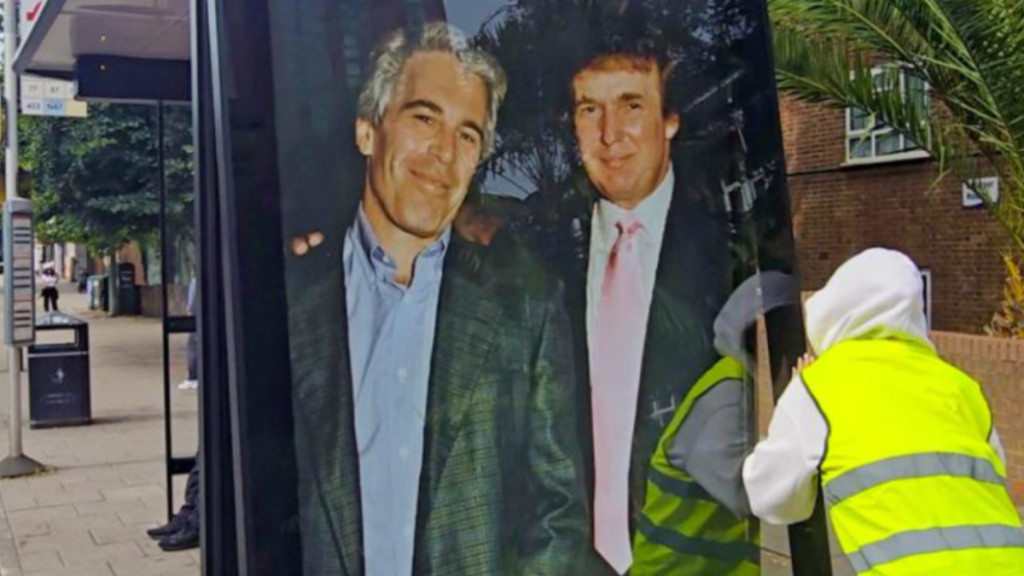
Following the passage of a bill by Congress compelling it to do so, the Department of Justice released 3.5 million new pages relating to Epstein, including, The New York Times reported, some 4,500 documents involving Donald Trump. These included a document containing allegations of Trump’s sexual abuse of underage girls and adult women, which disappeared from the Epstein files the same day it appeared.
This file included an FBI summary of tips submitted through the FBI’s National Threat Operations Center in West Virginia. Because the tips were not accompanied by any evident corroborating evidence, the Times noted, it chose not to describe “details of the unverified claims.”
However, subsequent news reports have supplied new charges that appear to support at least one of those claims. The Guardian did a breaking news story on January 26 about the Alexander brothers – Alon, Oren and Tal – wealthy Florida developers now on trial, charged with raping, assaulting and trafficking dozens of women.
The Guardian story did not mention the brothers’ friendship with Epstein and their alleged abuse of the children and teens he trafficked. The Miami New Times, though, did make the connection, reporting on the documents later removed by the DOJ from its tranche of files. It included a complaint by a then-16-year-old girl who said she attended eight parties at Epstein’s mansion, “while modeling“ and said she was sexually assaulted by Epstein at one.
Quoting from the now-removed Epstein file document, The New Times also reported: “On another occasion, two twin brothers, Allen (sic) and Oren, lured caller and her friend upstairs but they escaped back downstairs. Caller stated Oren raped her best friend and a third brother, Tal, raped a 14 year old girl named [name redacted]. Caller named other individuals involved in “big orgy parties’ with her, other young girls, and older Victoria’s Secret models, including Bill Clinton and Donald Trump.”
Three mentions of the Alexander brothers appeared in the Epstein files, according to the New Times.
The initial release of the files by DOJ included multiple mentions of the names and in some cases, contact information and even nude photographs of Epstein’s victims – despite the fact that the legislation that led to the document’s release required that their identities be protected.
The Department of Justice later took down thousands of those uploaded documents, after lawyers representing more than 200 of Epstein’s victims filed a legal complaint alleging that victims had been personally identified. Victims and families have reported being threatened for speaking out, and the disclosure further undermines confidence that their identities will be kept appropriately private.
A group of 20 victims commented on the release in a joint statement. “As survivors, we should never be the ones named, scrutinized, and re-traumatized while Epstein’s enablers continue to benefit from secrecy,” they wrote. “Once again, survivors are having their names and identifying information exposed, while the men who abused us remain hidden and protected. That is outrageous.”
Meanwhile, millions of files remain unreleased, those that often redacted the names of the wealthy and powerful figures accused of sexual exploitation, and many of those implicated in the documents have not had any charges brought against them. Democratic Congressman Jamie Raskin described the administration’s reticence to move forward as a “full blown cover-up.”
Childhood Trauma Doesn’t Have to Upend Your Life Forever
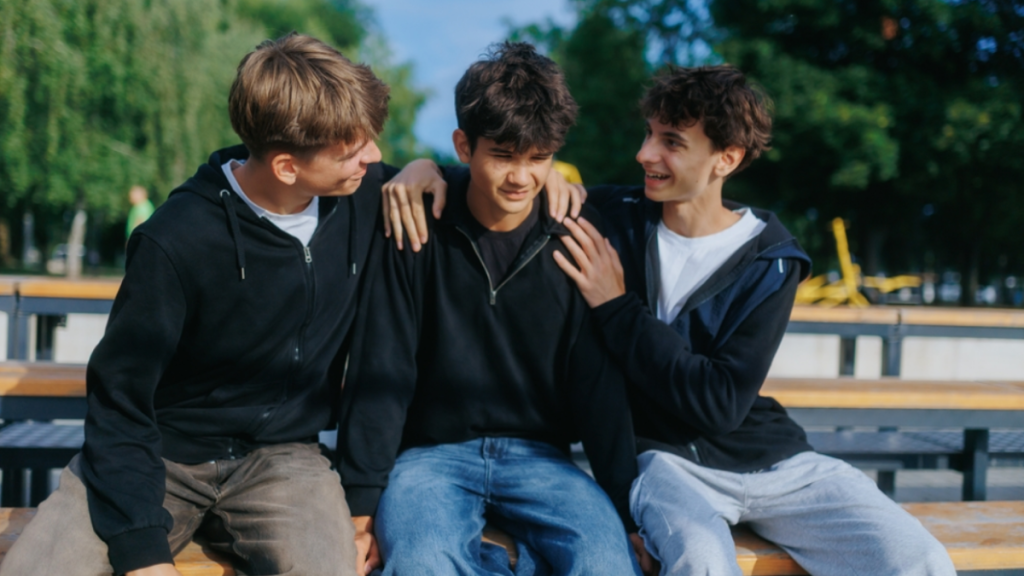
“Decades after a landmark study showed the lasting health effects of (childhood) trauma, researchers are finding ways to guard against enduring harm,” the New York Times reported last week.
The story won’t surprise researchers and clinicians in the field of childhood resilience, but the article does a lovely job of getting the word out to the public – in part by profiling Massachusetts pediatrician and researcher Bob Sege of Tufts. In prior jobs and in this one, we’ve had the opportunity to talk with him about topics trauma-related and otherwise – everything from surviving family holiday dinners with grace to the value of giving kids chores.
Sege understands how childhood trauma can lead to lifelong mental and physical health problems. But his work builds on evidence that positive experiences can also be transformative, potentially offsetting neglect and abuse.
“As evidence emerged showing the brain rewires itself after good as well as bad events, Dr. Sege spent years exploring why some people manage to emerge unscathed from horrific childhoods,” journalist Rochelle Sharpe wrote. “After figuring out the protective value of key positive experiences, he devised a way to translate his insights into action.”
Sege’s HOPE (Healthy Outcomes from Positive Experiences) framework now helps clinicians center their work on people’s strengths rather than their deficits, promoting resilience and agency.
“One of the worst things you can do to children who have experienced trauma is to treat them like damaged goods,” Sege once told us. The Times article summarized the four pillars that HOPE uses to promote healing: “supportive relationships; safe environments; opportunities for emotional growth, and social and community engagement that promotes a sense of belonging.”
Over 100,000 practitioners have received training so far, and some who spoke to the Times were effervescent in their praise for it. “It has transformed my life – my communication with my patients and their parents, my parenting of my own children, my approach to cultivating my own well-being and how I look at my community,” said Dr. Wendy D. Pavlovich, a San Diego pediatrician.
Dr. Pradeep Gidwani is medical director of the American Academy of Pediatrics’ San Diego area chapter, and described doctors’ work with marginalized patients as part-advocacy: “We heal through relationships. That’s how we really make change.” He described HOPE’s change in approach as “so profound… It shifts the paradigm from what is the problem to what can I do about it.”
In other news
If I need to talk to someone with vastly different political views, I can call one of my cousins in Georgia or Alabama. We love each other dearly, despite our political differences. (One beloved uncle used to call out, whenever I visited, “Well, well, if it isn’t the only cousin to the left of Karl Marx!”) But for those in San Francisco or Abilene, Texas, who don’t know anyone across the political divide (and so might benefit from a little cross-cultural talk), there’s now a pair of pay phones “connecting strangers across party lines, allowing callers to speak directly with Democrats and Republicans in two of the US’s most ideologically opposed cities,” according to the Guardian.
Ben Goldhirsh, co-founder of Matter Neuroscience, the biotech company behind the project, hopes people have “meaningful conversation and enjoy common humanity,”as he told the Guardian. “Our thesis is that humans are pretty awesome and – if given the opportunity – will really look to find common ground, because biologically that actually gives us a lot more happiness.”
In an especially cold and dark winter, consider a little self-care by tuning into the Science of Happiness podcast – a biweekly, expert-led show that we’ve covered before. On one recent installment, students in an immigration studies class, feeling understandably “emotionally devastated,” come together for collective breathing. In this 20-minute episode, student Evelyn Mata and professor Pablo Gonzalez talk to host Dacher Keltner about attention, social injustice and the science behind breathing exercises.
The name “MindSite News” is used with the express permission of Mindsight Institute, an educational organization offering online learning and in-person workshops in the field of mental health and wellbeing. MindSite News and Mindsight Institute are separate, unaffiliated entities that are aligned in making science accessible and promoting mental health globally.

Author

Related Articles
Will the Pursuit of Profit Suck the Benefits Out of Psychedelics?
Many new programs have removed the most transformative, curative and life-affirming parts of the psychedelic experience.
New Mexico to Probe Allegation that Epstein Ordered the Burial of Teen Girls Near His Ranch
New Mexico has announced it is probing into an allegation that Epstein ordered the bodies of two girls to be buried on Zorro Ranch.
A Better Way to Treat Addiction in Seniors
As overdose deaths rise among older adults, Baltimore’s REACH Health Services offers groundbreaking addiction care for seniors that combines medication with intensive peer support. Plus a look back at a historic fight against solitary confinement. And more.
