Expert Calls for Harm Reduction, Not Punishment, to Resolve Our Overdose Crisis
As the Trump administration pulls funding from harm reduction, an expert on the overdose crisis says it’s the best way to save lives.

Greetings, MindSite News Readers.
In today’s Daily, an expert calls for treating drug addiction in a way that saves lives. Also in this edition, a deep, personal look at the impact of exclusions to Canada’s assisted-dying laws for people with mental illness, and a sharp decline in 988 crisis calls answered in Georgia. Plus, the American Psychiatric Association’s recently announced plans to overhaul the DSM.
But first, the knitting group that meets each week at Minneapolis’ Needle & Skein has raised nearly $400,000 by crafting “Melt the Ice” hats patterned after “nisselue,” or Santa hats once used to protest Nazi occupation of Norway in the 1940s. To date, the shop has donated $250,000 of funds raised to STEP and to the Immigrant Rapid Response Fund, nonprofits dedicated to providing housing support for immigrants in their local communities.
“What’s been happening in Minneapolis has been so egregious and awful and so destructive to our community,” shop owner Gilah Mashaal told NPR. “Knitting is just a great way to find community, but it’s also a great way of protest. I cannot sit by and watch really good people literally being torn apart by the actions of the federal government.”
As the Trump Administration Pulls Funding from Harm Reduction, a Journalist and Author Covering the Overdose Crisis Says It’s the Best Way to Save Lives
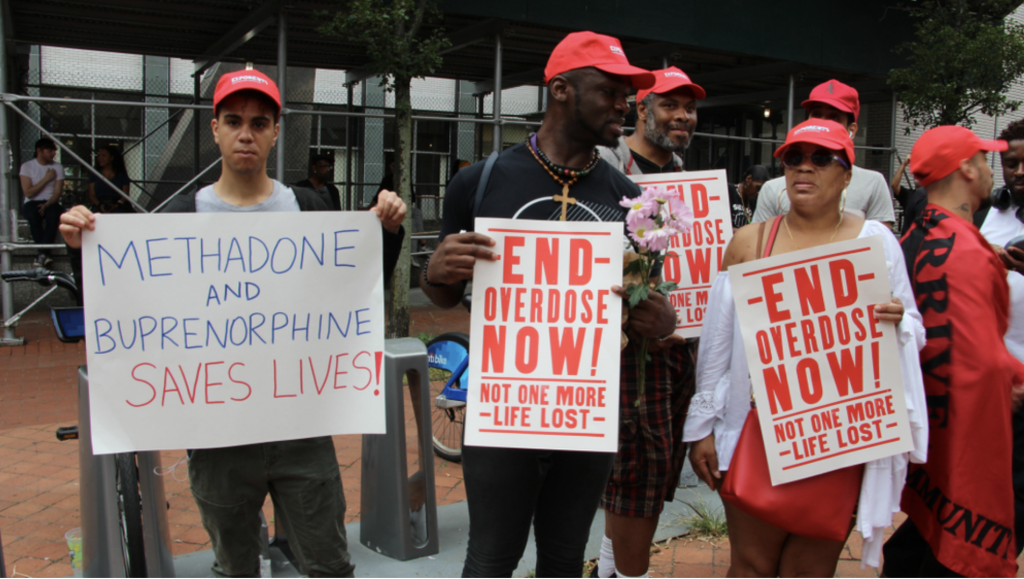
Maia Szalavitz calls on the U.S. to support compassionate harm reduction to prevent deadly overdoses in a column published by the New York Times. The author of “Undoing Drugs: How Harm Reduction Is Changing the Future of Drugs and Addiction,” Szalavitz has studied the issue closely, and points to New York City’s’ OnPoint overdose prevention sites as evidence of how effective harm reduction has been.
Almost 7,000 people have consumed drugs under supervision at OnPoint sites over the past four years, and nearly 2,000 overdoses were prevented. Michelle Morse, acting health commissioner for the city, credits harm reduction strategies like OnPoint with the 29% reduction in overdose deaths among Black and Hispanic New Yorkers – the first such drop since 2018.
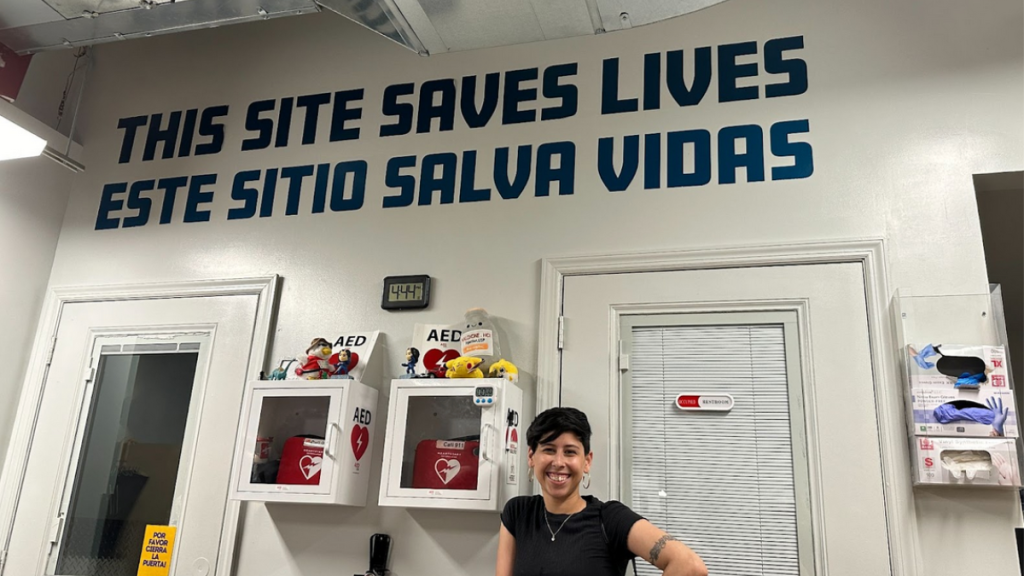
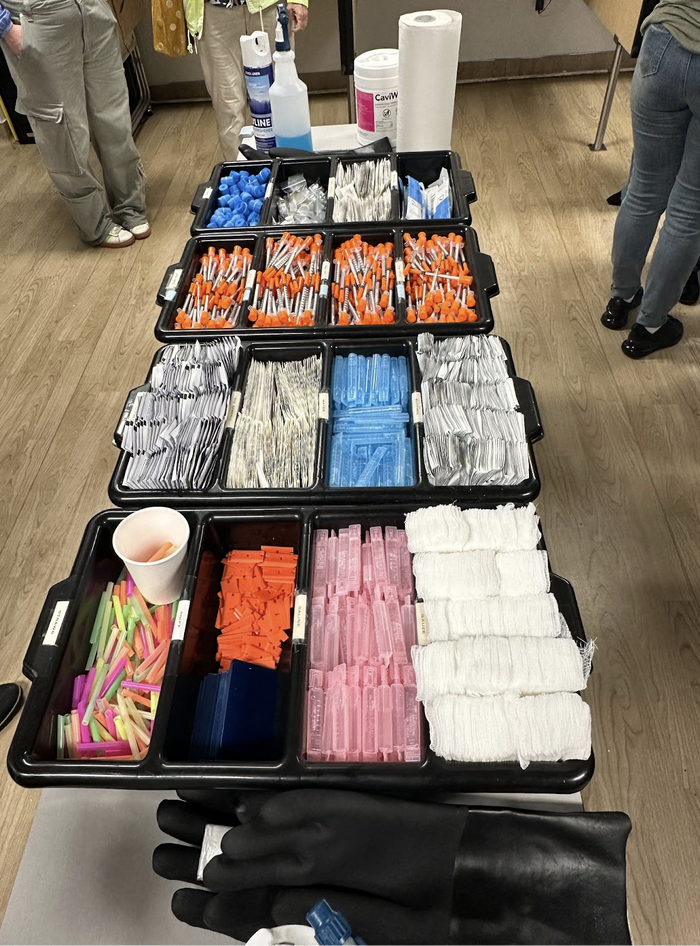
OnPoint’s presence in Harlem has actually helped improve conditions in the neighborhood, not worsen them, says Eri Noguchi, who helps lead an early childhood center across the street from the OnPoint site in Harlem.
A 2023 study also found no increase in crime near sites, and other research has found that harm reduction leads people to substance-use recovery.
“If a toddler trips and falls, we scoop them up and comfort them,” Dr. Noguchi said in a YouTube video. “We hug them when they’re scared and encourage them to try again and again and again, no matter how many times they fail.” OnPoint, she says, does similar work, for people who get far less sympathy.
But last summer, President Trump signed an executive order that puts sites like OnPoint under threat – stating that such sites should be defunded by the federal government.
It has meant the withdrawal of $500,000 in grants to OnPoint, and has cost similar organizations across the country millions – hurting their ability to provide life-saving, evidence-based support.
Canada Debates Assisted Death for Those with Mental Illness as One Woman Pleads for a Peaceful Death
Claire Brosseau is ready to die, and has been for 40 years, if a diary entry she wrote at 8 years old is to be taken seriously. Back then, she would go sit on the train tracks, calm and sure that “it would be better for me and for everyone else if I weren’t here,” she told the New York Times.
At this point, Brosseau has lost count of the number of times she’s attempted suicide. Therapy, dozens of medications and rounds of electro-convulsive therapy have failed to make a difference.
But in 2021, she felt a twinge of hope. By then, medical assistance in dying (MAID) had been legal for people in Canada, where she’s from, for five years, provided they were imminently dying of “grievous and irremediable medical conditions.”
And a change to the law was slated to extend the eligibility to people with chronic – but not imminently terminal – conditions.
There was just one remaining exception: people, like her, with debilitating mental illness and no other chronic physical condition. They’d be excluded until March 17, 2023. Brosseau had made a mental note to apply for assisted death that day. But almost three years later, she’s still alive.
Canadian lawmakers – and the public – cannot agree on whether or how to allow MAID for people without terminal illness. The deadline has been pushed again and again, and the exception for mental illness is currently set to end in 2027.
Even Brosseau’s own psychiatrists – both of whom have met with her at least weekly for years – are at odds. One, Mark Fefergrad, is sympathetic to the argument that while we can understand when diseases like end-stage ALS or certain cancers are incurable, those markers don’t exist within psychiatry.
“People get better in ways that we don’t expect – and surprising, unexpected things happen every day,” he said, suggesting that new treatments or even new relationships can help treatment-resistant people enter remission. “That doesn’t really happen with a big brain cancer.”
To Gail Robinson, Brosseau’s other psychiatrist, this is discrimination against people with mental illness. Were their conditions physical, there would be no lengthy debate.
“I would love her to change her mind,” Robinson said. “I would hope that she would not have to do this. But I will support her.”
“Every psychiatrist who’s been around for a long time has one or two patients – not a lot, but one or two – that they have carried over the years who have been miserable, unhappy, have a treatment-resistant depression, maybe have made some suicide attempts,” she said. “I can’t do anything more for this person. I can still keep seeing them, but it’s not changing anything for them.”
Their mental illness should not bar them from relief available to people with incurable physical conditions, Robinson asserts. “If you have cancer and you’ve tried every treatment there is and they say there’s nothing more we can do, do they then say, ‘But you can’t have MAID because maybe in five years we’ll have another treatment’?”
Early in Brosseau’s conversations with Stephanie Nolen at the Times, she told her, “I’m not a person. I can’t be in the world.”
For two years she’s been languishing – still attending weekly online sessions with her psychiatrists, but rarely leaving her home. She no longer speaks to any loved ones beyond her parents and sister.
In July she went to see the Toronto Blue Jays with her father, reviving an old tradition, and she’s been leaving her apartment to walk Olive, the maltipoo puppy her mother gave her.
But bright spots like those haven’t changed how she feels. Since 2024 she’s been part of a legal case arguing that her exclusion from MAID laws is discriminatory – it’s given her new energy, Nolen says, but she is still adamant that she wants to die.
As the case makes its way through the legal system, Brosseau says she’s inching closer to dying by suicide each day.
988 Call Responses Plummet in Georgia after Insurer Cutbacks
Since the 988 crisis hotline launched in July 2022, it has become a lifesaving resource for millions of Americans. It routes calls to local operators in each state who help people in crisis and can connect them to local resources, like therapy, to help them get well.
Kaitlin Cooke credits Georgia’s crisis hotline, which predates the national one, with saving her life. “If it weren’t for this resource, I might have been a statistic,” she told KFF Health News.
Starting last March, Georgia’s response rate to mental health crisis calls “fell off a cliff” following a decision by Carelon Behavioral Health, who runs the lines, to drop a subcontractor that handled staffing.
Carelon is a subsidiary of Elevance Health, an insurance agency, and its response teams answer calls to Georgia’s local line and the national number. If a local center can’t answer 988 cal they are routed to a national backup network.
At issue is the sharp rise in abandoned calls – when callers hang up before they’re connected to a counselor. Georgia requires a call abandonment rate of 3% or less, but had one at 18%, according to a letter sent to Carelon by Kevin Tanner, commissioner of the state Department of Behavioral Health and Developmental Disabilities.
Since that letter went out, state officials have changed what qualifies as an abandoned call – excluding those abandoned after less than 30 seconds, and those routed to national backup centers – making the rate artificially lower.
In April, only 62% of calls were answered within the state – the industry’s unofficial target is 90%. While it has recovered in the months since, people in severe mental health crises needed help throughout, and still do.
“Some of the callers are actively experiencing suicidal thoughts,” said Heather Saunders, a senior research manager at KFF. “Sometimes they actively have a suicide plan and it’s a very urgent situation.”
As suicides rise among young adults – with the largest such rise recorded in Georgia – the urgency to ensure they’re connected to help couldn’t be higher. Yet its future looks tenuous as federal cuts to Medicaid threaten funds for state crisis lines, many of which are already under-resourced, she said.
“All behavioral health is having enormous challenges in terms of staffing,” said psychiatrist Margie Balfour, a member of a national 988 advisory committee. Being a crisis line counselor “is a very stressful job,” she said. “You’re talking to people at the peak of their crisis.”
In other news…
Faster, broader updates planned for the DSM: Officials at the American Psychiatric Association, which publishes the field’s “bible” – the Diagnostic and Statistical Manual of Mental Disorders (DSM) – recently announced plans for the book’s overhaul. Rather than continue to rely on a massive, print-based version, only revised every decade or so, the APA intends to publish an online “living document” that can be continuously updated as science and clinical knowledge evolve.
A fixed physical format has held the influential manual back, said Nitin Gogtay, deputy medical director of the APA, who spoke at a virtual press conference attended by NPR. “Clinicians and other stakeholders may lack uniform and timely access to the most current evidence that might delay translation of new discoveries into the practice,” he said. “We want this process to be as current as possible.”
Officials also say the next DSM will address long held critiques of the tome, placing greater emphasis on the causes and contributing factors of mental illness, including trauma, poverty, environmental exposure, discrimination and chronic stress, as opposed to a historic focus only on symptoms. The manual may also begin incorporating biological markers, like blood tests or imaging, where scientific evidence supports their use.
The name “MindSite News” is used with the express permission of Mindsight Institute, an educational organization offering online learning and in-person workshops in the field of mental health and wellbeing. MindSite News and Mindsight Institute are separate, unaffiliated entities that are aligned in making science accessible and promoting mental health globally.

Author

Related Articles

College Sports Has an Emotional Abuse Problem
As the Galic twins’ experience with their coach shows, there are few protections for college athletes experiencing emotional abuse.

Autism and Alzheimer’s May Be Linked, Study Suggests
New discoveries are pushing researchers to consider that autism and Alzheimer’s may offer insight into the other.
He Almost Killed His Father. Now He Helps Others At Risk.
In today’s newsletter, we explore how one man healed after a dangerous psychotic break that nearly led him to murder.
