
New York City’s Effort to Send Mental Health Workers to Crises Ends in Police Response 86% of the Time
Mayor Mamdani wants to speed up the expansion of community responders, but an analysis by THE CITY of existing efforts found that 911 dispatchers send cops in the vast majority of cases.
This story was originally published by THE CITY, a nonprofit news outlet covering New York City. MindSite News is republishing it as part of a new collaboration between our newsrooms to cover mental health in the nation’s largest city.
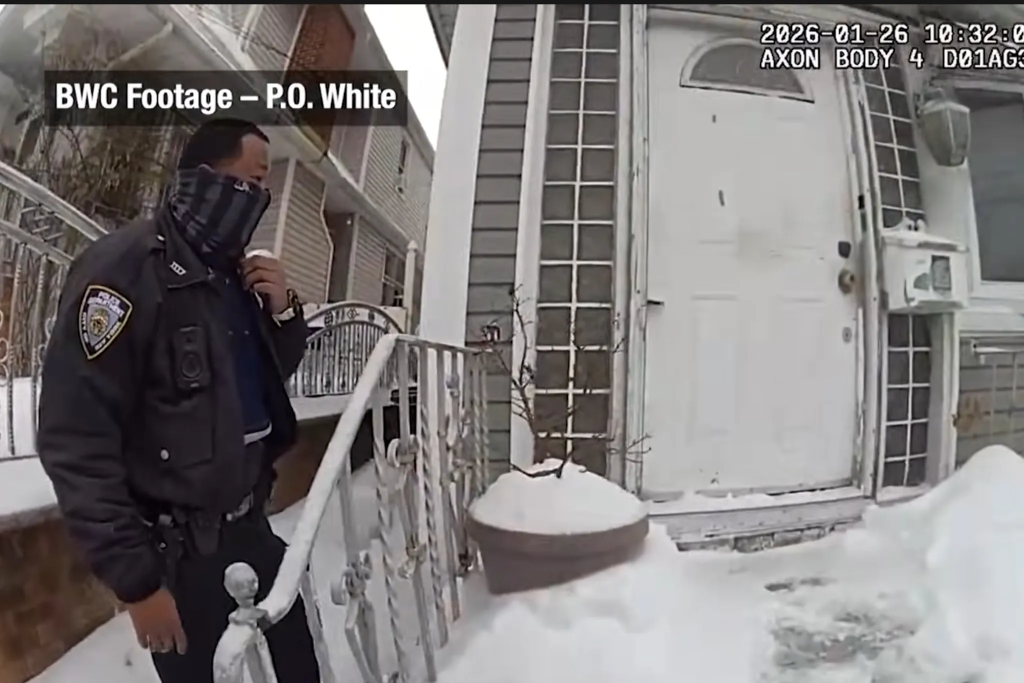
The NYPD says the recent shooting of 22-year-old Jabez Chakraborty was justified because he lunged at the cops with a large kitchen knife within seconds of them approaching his home in response to a call from a relative asking for help during a mental health crisis.
It’s a familiar and tragic outcome in New York City, one that Mayor Zohran Mamdani has promised to reform through the creation of a new Department of Community Safety that moves such encounters away from police and to mental health workers.
But an analysis by THE CITY of existing efforts — as well as the sequence of events that led to Chakraborty’s shooting — indicate that even with more mental health workers, police may continue to be called on as first responders in the vast majority of cases.
The fateful confrontation started with a 911 call by Chakraborty’s sister, who calmly requested to the dispatcher that an ambulance — and not cops — respond. During a prior incident with her brother, who had been diagnosed with schizophrenia, the police who showed up told her she should have asked for an ambulance instead, a history she relayed to the 911 dispatcher.
The sister assured the operator her brother was not violent, had no weapons and hadn’t hurt anyone. She said Chakraborty had thrown glass at a wall, but not at any specific person, and she requested an “involuntary transport” via ambulance to a hospital.
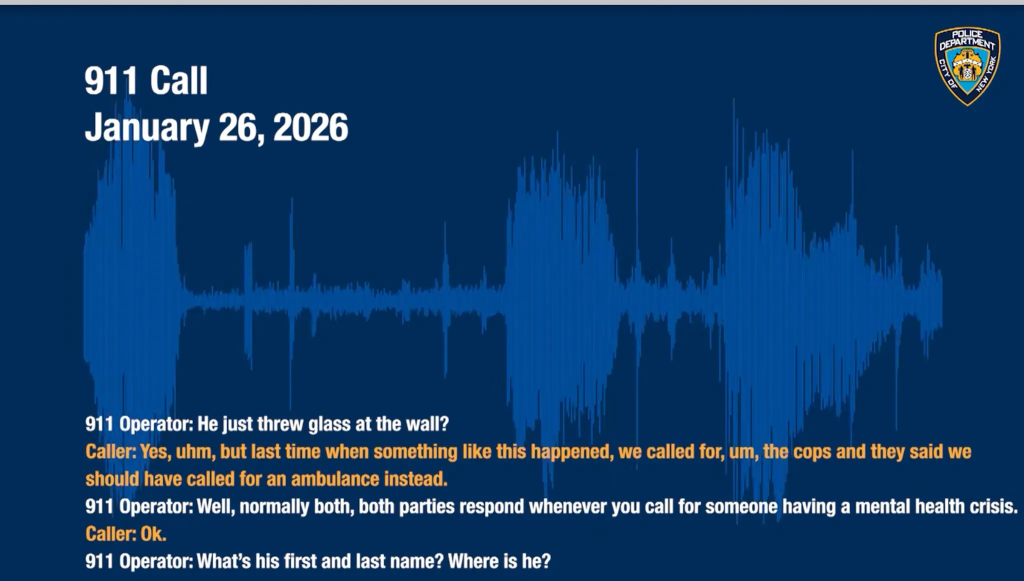
The mention of “involuntary transport” and the glass throwing was enough to trigger the dispatcher to send cops, instead of EMS workers.
Within seconds of police arriving, Chakraborty grabbed a large knife and approached the officers, who tried to back away and yell at him to drop the knife. When Chakraborty didn’t comply, one of them fired four rounds.
The Jan. 26 shooting has now dramatically raised the stakes in Mamdani’s signature plan to create a Department of Community Safety.
At an unrelated press conference this week, Mamdani made a point of mentioning the proposed agency, saying it aims “to build a mental health system rooted in prevention, and sustained care, and a real crisis response, so officers no longer have to handle these situations alone.”
The mayor did not provide details on who will run it and how it will operate, but he said he has instructed his team “to speed up this work.” Mamdani also said the police appeared to have acted appropriately in this case. He visited Chakraborty in the hospital and asked the Queens District Attorney, who is investigating the incident, not to file charges against him.
Reducing the reliance on the police to handle mental health calls like Chakraborty’s is at the heart of Mamdani’s plans for the Department of Community Safety. A central element of that effort will be an expansion of a team of trained clinicians known as the Behavioral Health Emergency Assistance Response Division (B-HEARD).
Introduced in 2021 by then-Mayor Bill de Blasio, B-HEARD sends clinicians to respond to mental health calls deemed to be “non-violent” instead of cops. The program started in a few precincts and expanded over the years to 31 precincts.
Mamdani plans to put B-HEARD teams under the Department of Community Safety umbrella, expand it to all 78 precincts and increase its funding, which has been flat at $35 million over the last three years, by 150%. Overall he estimates the new community safety department will cost $1 billion annually.
Whether this dramatic expansion of B-HEARD will actually reduce the number of police interactions with people in mental health crises is an open question.
All calls to 911 are handled by the NYPD, but if there’s any indication of a mental health issue, the dispatcher patches in EMS workers to confer with the caller about what they’re witnessing. This triage team asks a series of questions to determine if there’s a potential for violence, then makes a decision about whether police are required.
A review by THE CITY of 911 call data from 2024 through 2026 in B-HEARD precincts found that the overwhelming majority of 911 mental health calls ended in a police response — instead of a clinical one. What’s more, the share of calls ending in police responses has been increasing, from 73% in fiscal year 2024, to 85.5% in 2025, to 86.4% in fiscal year 2026 to date.
During those years, THE CITY found that in both the B-HEARD precincts and citywide, around 50% of all mental health calls were deemed to have the potential for violence by 911 dispatchers. During that same period, between 25% and 32% of calls were simply labeled as an “EDP call” [emotionally disturbed person], because the dispatcher couldn’t determine whether there was a risk of violence. That designation also automatically triggers a police response.

In precincts without B-HEARD programs, cops respond to nearly 100% of mental health calls. Within the B-HEARD precincts, just 14% of calls in 2026 so far ended with mental health workers being dispatched.
A spokesperson for Correct Crisis Intervention Today (CCIT), which advocates for changes to the way first responders handle mental health calls, told THE CITY, “The data showing that 911 dispatchers route the vast majority of mental health crisis calls to police, even in B-HEARD precincts, underscore a core problem that expansion of B-HEARD alone will not fix.”
Liz Glazer, formerly head of the Mayor’s Office of Criminal Justice during de Blasio’s tenure and now publisher of Vital City, an urban policy publication, worried that Mamdani may be overrelying on B-HEARD in the formation of his Department of Community Safety.
“He’s focused on B-HEARD, that there should be a big expansion, and that somehow will satisfy the need. But if B-HEARD is it and if civilian intervention is the focus, that’s incredibly limited and partial and doesn’t recognize the complexity and the duration of this issue,” she told THE CITY. “What’s important is that any civilian response is connected to a system that’s coordinated from end to end, meaning from 911 or outreach to ideally housing and services.”
One of the challenges for the Department of Community Safety will be the crucial role dispatchers play in deciding whether to steer mental health calls to civilian clinicians, EMS or the police.
“There are problems all along the way,” Glazer said. “What’s the criteria for deciding when it goes to a civilian team or when it goes to the police. The factors default to police because they don’t know if there’s going to be a need for police or not.”
In Chakraborty’s case, the family specifically told the operator he was not violent and that they wanted an ambulance. In a statement released Wednesday after the NYPD posted the body camera footage of the shooting and audio of the 911 call, the family said the call makes clear “the situation was calm when the call was made, and we were getting ready to go to accompany Jabez” to the hospital.
Viewing the body-cam footage “takes us back to that horrible moment when we were trying to get medical care for him and instead NYPD officers arrived,” the family statement said.
They charged that the presence of the officers “caused the situation to escalate quickly and unnecessarily.”
“This is why officers should not be responding to medical support calls,” the family asserted.
Rozario Shooting
Chakraborty’s case also recalls the killing of Win Rozario, a 19-year-old experiencing a mental health crisis who was fatally shot by police on March 27, 2024.
That afternoon, his mother called 911 and stated, “I think my son is on drugs and is acting mad erratic.” The dispatcher got the address from the mother but then the call cut off.
The dispatcher called back, and it appears Rozario himself answered the call and told her “No” when she asked if they’d requested the police. The dispatcher nevertheless sent two cops to the address.
When they entered the home, Rozario was standing in the kitchen with his mother and younger brother. When he saw the cops, Rozario picked up a pair of scissors from a drawer and began to approach them.
One of the cops hit Rozario with a Taser, and his mother managed to take the scissors away from him. Then one of the cops again used a Taser on Rozario, who no longer had the scissors in his hand. That prompted him to pick up the scissors and again advance toward the cops. Ultimately both cops wound up firing five rounds at Rozario, killing him.
As is required by all fatal police shootings, the state Attorney General’s office of special investigation examined the Rozario shooting. In its December report, the office asked Eva Wong, director of the mayor’s office of community mental health, if a B-HEARD team could have been sent to the scene given that the 911 caller made no mention of violence.
In a letter to OSI, Wong noted that the precinct where Rozario lived was not served by B-HEARD, but she claimed that even if it was, “because the subject of the 911 call was said to be ‘on drugs’ the call was ineligible for a B-HEARD response.”
The bill to expand B-HEARD and create the Department of Community Safety has not yet arrived at the city council’s public safety committee. The agencies involved — including the NYPD, the FDNY (overseeing EMS) and the Department of Social Services (DSS) — will weigh in. Questions will focus on whether the new agency is duplicative of existing bureaucracies, and how to ensure the safety of both people experiencing a crisis and first responders.
“This problem is complex, and I look forward to exploring the many ideas that can help resolve these challenges,” said Councilmember Oswald Feliz, D-Bronx, chair of the committee. “We must do everything to support New Yorkers facing mental health challenges.”
Additional reporting by Haidee Chu. Sign up here to get the latest stories from THE CITY delivered to you each morning.
The name “MindSite News” is used with the express permission of Mindsight Institute, an educational organization offering online learning and in-person workshops in the field of mental health and wellbeing. MindSite News and Mindsight Institute are separate, unaffiliated entities that are aligned in making science accessible and promoting mental health globally.


Author
Related Articles
1 in 8 Youth Turn to AI for Mental Health. ‘It Just Tells Me What I Want to Hear’
Youth with the deepest emotional needs are using chatbots for therapy the most – but many are unhappy with the outcome.
California Tribal Advocate Who Fought to Prevent Suicides Dies in Apparent Murder-Suicide
Celinda Gonzales of the Yurok Tribe worked to prevent suicides among Native Americans after losing a son and a brother. She “was a friend to many,” the tribe said.
Ghost Guns, Made at Home on 3-D Printers, Are Linked to an Increase in Suicide Rates
Homemade ghost guns are raising new challenges around mental health, firearm access and suicide risk.
