
Countering the ‘Dark Passions’
Across liberal democracies and nations, like the U.S., that are sliding out of the democratic zone, autocrats are weaponizing our most divisive emotions. In “Anger, Fear, Domination,” William A. Galston offers a guide to how these passions spread and what it takes to keep them from overwhelming us.
While traveling through Pennsylvania, the Black abolitionist leader Frederick Douglass was once forced to sit in a train’s baggage car. When a white passenger expressed regret that Douglass had been “degraded” in this manner, the former slave replied that he could not and would not be degraded.
“The soul that is in me no man can degrade,” he said. “I am not the one that is being degraded on account of this treatment, but (rather) those who are inflicting it upon me.”
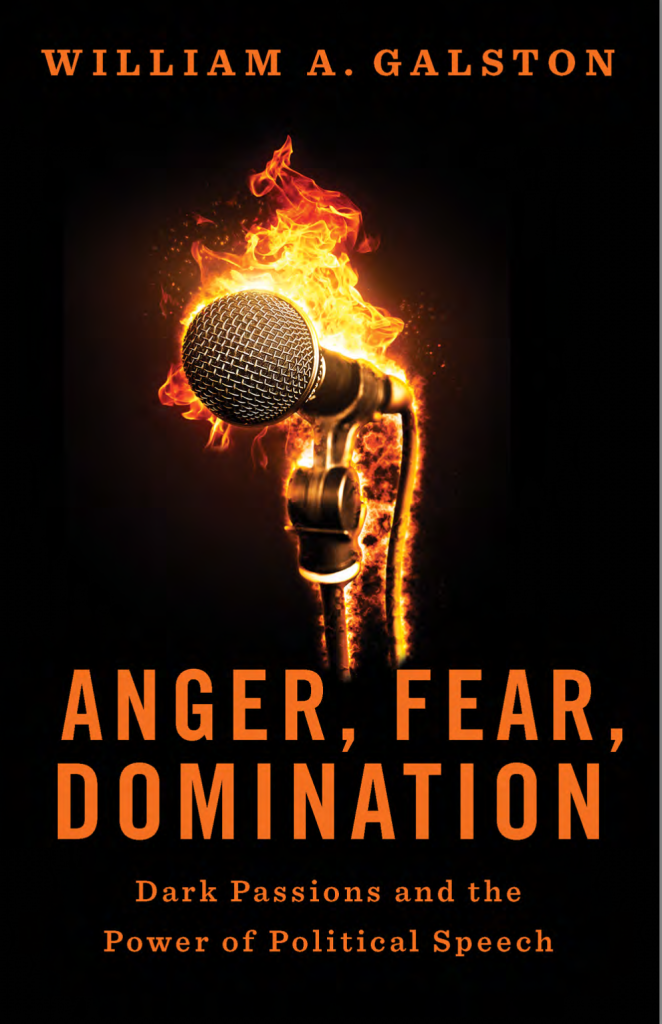
Author, academic philosopher and political advisor William Galston notes that while Douglass “burned with anger over the injustice of slavery and second-class citizenship,” he – like Nelson Mandela and Vaclav Havel more than a century later – didn’t allow anger to turn into a desire for revenge.
Such a response – of rising above in response to humiliation – is a rare attribute, Galston notes in his book, but one he would like to see more political actors and advocates try to achieve by toning down their rhetoric. As Michelle Obama notably put it, “When they go low, we go high.”
That is, of course, more easily said than done – especially at this historically polarized moment. Economic hardship, political disempowerment and disrespect often pile up into humiliation, which fuels resentment and anger. Fear — fear of people who differ, fear of rapid cultural change, fear of losing control — pushes us toward domination. Instead of wanting to be equals, we want to be masters. Instead of collaborating, we want to subordinate.
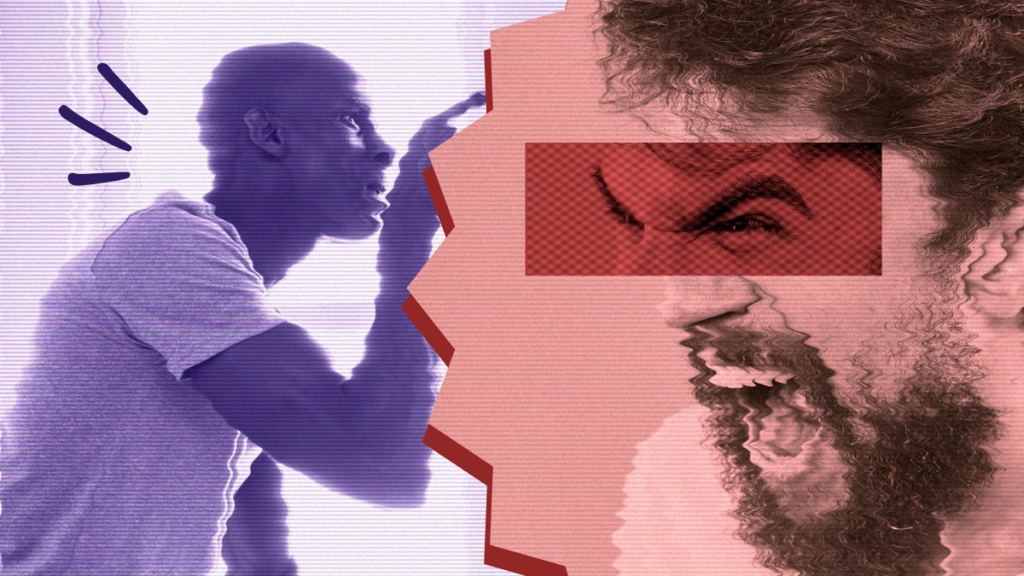
Galston highlights “anger born of humiliation” as especially dangerous. When people feel wronged, when their status slips, or when their identity is threatened, many people find themselves unable to meet the moment with calm deliberation. They lash out. They retaliate. They look for someone to blame.
Galston’s most valuable contribution is his reflection on the all-too-frequent quest for domination — the desire not just to win, but to crush, silence and impose one’s will. That impulse corrodes the democratic norm of compromise. It poisons the civic spirit. It turns politics from a contest among equals into a fight for supremacy.
Galston argues that “optimistic liberal rationalism” is naïve. Reason and empathy matter, but they cannot by themselves counter emotions evolution wired us to feel intensely. Threat — real or imagined — activates fear and anger far faster than rational appeals activate hope or generosity. Autocrats understand this instinctively. They flood public life with negativity because it works.
These divisive passions don’t stop at the town square, they also seep into family life, workplaces, schools and daily interactions. As Galston writes, “We feel anger because of what someone has done, hatred because of who someone is.” Top-down power, both personal and political, feeds on this cycle.
David Brooks captures the danger well: “When people can’t locate the source of their fear, you never know who they will lash out at.” Scapegoating prevails. Tribes harden. Respect, curiosity, fellowship and shared hope shrink. “Dark passions are imperial,” Brooks says. “Once they get in your body, they tend to spread.”
Galston rightly shows how humiliation drives the triad in his title — anger, fear, and domination. And he is clear: these impulses cross party lines.
Donald Trump once rejected Erika Kirk’s forgiveness of her husband Charlie’s killer by boasting, “I hate my opponent and I don’t want the best for them.”
Progressive icons have played the same game. Saul Alinsky urged organizers to “demonize the target.” Michael Walzer said, “Fear has to be our starting point.” Eric Holder flipped Michelle Obama’s notion on its head, declaring, “When they go low, we kick ’em.”
And in November 2025, many Democrats turned their anger on fellow Democrats who supported the compromise to end the government shutdown — even though prolonging it would have caused more suffering and almost certainly wouldn’t have won anything concrete. The conflict became another bout of angry, self-righteous symbolism: a display of moral superiority that tears down allies but achieves nothing. It was politics as venting — rage for its own sake. In moments like this, anger stops being a means to an end and becomes the end itself.
Galston’s strengths — and blind spots
Galston’s central claim is solid: To defend liberal democracy, we must understand destructive emotions — fear, humiliation, anger, resentment, hatred — and the drive to dominate. Left unchecked, these passions can mobilize people toward violence or democratic decay.
He calls for responsive public policies, a deeper grasp of political psychology, deliberation aimed at calming rather than inflaming and persuasive, public-spirited rhetoric that honors dignity
All are essential, but where Galston falters is that he underplays the structural sources of humiliation.
Words like inequality, economic justice and economic security do not appear in the book. He notes job loss, trade shocks and rural decline, and he criticizes neoliberalism, but he stops short of proposing policies that would prevent economic humiliation at its source. His model favors a modest welfare state that softens suffering rather than preventing it.
He praises the 1990s as an era of shared prosperity, overlooking persistent poverty, racial inequality, mass homelessness and the 1996 dismantling of federal welfare guarantees.
He affirms that liberal democracy needs goals like freedom, equality and justice — but he doesn’t flesh them out. Without concrete commitments, those ideals float above the real world.
A more ambitious vision
A stronger democratic project would promote a society in which everyone is treated with equal dignity, where eople can afford what they need to live decently and safely and where wealth and power cannot be concentrated in the hands of a tiny few with the power to dominate everyone else.
It would also encourage people to act by standing up to unfair power without blind obedience, to build communities where people help each other grow stronger and to seek solutions to problems at their root rather than treating symptoms.
Galston’s book, intentionally modest, still offers principles worth using. He suggests that people try to speak to emotions directly instead of pretending that people are purely rational. He urges us to affirm each other’s dignity before offering policy and to acknowledge fear rather than dismissing it.
He also calls for building bottom-up structures that give people voice, agency, and inclusion; urges us to guard against leaders who exploit legitimate grievances for domination and calls on us to practice narrative discipline and set norms for speech and discourse that calm rather than inflame.
These tools matter, but without structural changes that provide economic security and civic empowerment, the dark passions Galston diagnoses will keep returning. People need to feel they — and the society they live in — are moving toward something better. Otherwise, resentment becomes a way of life.
A path forward
Our society celebrates climbing the ladder, looking down on others, dominating those below and submitting to those above. Politics doesn’t create that pattern — it reflects it. If we want healthier politics, we must cultivate healthier selves and healthier communities.
Nelson Mandela insisted he fought against all domination — white and Black — and dreamed of a society where all live together “in harmony and with equal opportunities.”
Martin Luther King, Jr. warned: “Power without love is reckless and abusive, and love without power is sentimental and anemic.” Yet today we see both reckless power, inflaming fear and anger, and sentimental love that seeks to hide from the realities of the world we live in.
Our best hope is to build compassionate communities — small, face-to-face circles where people look inward honestly, support one another in tempering their negative emotions and grow stronger together. Linked in solidarity with countless other circles, these groups could meet nearby needs, practice reconciliation, and commit to serving all humanity, the environment, and life itself — steadily, step by step, minute by minute.
Galston helps us understand the storm. The work of building shelter — and building power from the bottom up — remains our great unfulfilled task.
The name “MindSite News” is used with the express permission of Mindsight Institute, an educational organization offering online learning and in-person workshops in the field of mental health and wellbeing. MindSite News and Mindsight Institute are separate, unaffiliated entities that are aligned in making science accessible and promoting mental health globally.


Author

Related Articles

From “Girl, Interrupted” to “Girl in Pieces”: What I learned from reading three books about teen mental illness
How books on teens with mental illness help destigmatize and educate us.
‘The Factory of Maladies’: A Chilling First-Hand Account of Life in a Psych Ward
“The Factory of Maladies,” a memoir by Deborah Hartung, is a gripping account of being locked up in a San Francisco psychiatric ward.
In Our Future, We Are Free: The Movement to Dismantle Youth Prisons in America
Over the past 20 years, one state after another has shuttered its youth prisons and stopped prosecuting kids as adults, slashing the number of children locked in cages by a stunning 75%. This new book tells the story of how a coalition of parents, activists, and prison officials brought a destructive institution to its knees.
