
Does Contemporary “McMindfulness” Reinforce Our Suffering?
A Buddhist teacher and professor argues that a mindfulness solely focused on the self is only a stopgap fix.

Greetings, MindSite News Readers.
In today’s Daily, mindfulness expert and author Ronald Purser argues that contemporary mindfulness has been commodified into an industry that entrenches our structural suffering – but that returning to its socially engaged roots can help improve our collective wellbeing.
Plus, how to avoid “empathy bypassing.” And notes from experts on navigating the unavoidable grief of loss that accompanies the gift of aging.
But first, in a MindSite News book review of William A. Galston’s “Anger, Fear, Domination,” Wade Lee Hudson breaks down Galston’s critique of modern political communication tactics. Galston argues that our darkest emotions are being deliberately roused in order to drive us apart from our fellow citizens, and that the effect is pushing our nation deeper into autocracy.
An Argument for Returning to the Communal Roots of Mindfulness

What’s the point in modern mindfulness? Popular apps like Calm and Headspace promote a practice that “is nothing more than basic concentration training,” says Ronald Purser, author of “McMindfulness: How Mindfulness Became the New Capitalist Spirituality.”
Part of the book’s argument is that mindfulness has been commodified and co-opted into little more than a pacifier shushing us amidst intolerable, overwhelming conditions, as Purser explains in a Q&A with The New Yorker’s Jay Caspian Kang. Rather than apply the practice in full – including its demands to “go beyond self-interest” – Western practitioners use mindfulness to remain isolated, disconnected and inwardly focused, he says.
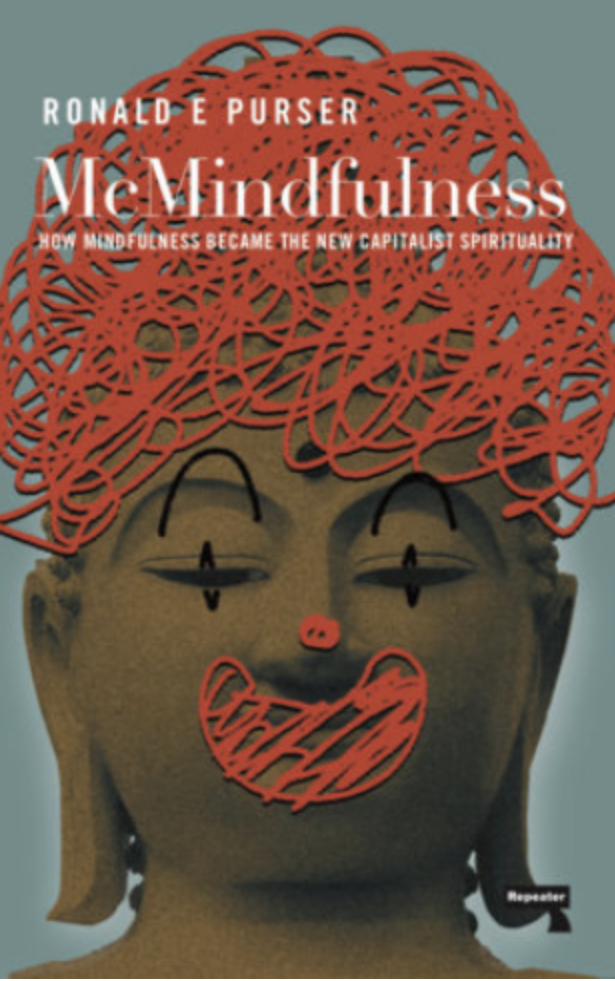
“Although derived from Buddhism,” Purser writes, “it’s been stripped of the teachings on ethics that accompanied it, as well as the liberating aim of dissolving attachment to a false sense of self while enacting compassion for all other beings. What remains is a tool of self-discipline, disguised as self-help. Instead of setting practitioners free, it helps them adjust to the very conditions that caused their problems. A truly revolutionary movement would seek to overturn this dysfunctional system, but mindfulness only serves to reinforce its destructive logic.”
That’s not to say that Purser, a Buddhist teacher and professor at San Francisco State University, discourages meditation to resolve personal distress; quite the contrary.
But, he argues that a mindfulness solely focused on the self is only a stopgap fix – a long-term solution to collective suffering within a harmful system that requires collective resistance against it. There’s got to be a change to the actual structure causing our stress in the first place — but it requires a collective awareness of the problem.
“Justice and compassion aren’t just moral duties that we impose from the outside,” Purser says. “They grow out of a revolutionary change in consciousness – a recognition of interbeing, radical interdependence. When you really see that, you act differently. Not because you should, but because you can’t help it.”
Radical interdependence means a return to communal practices. The real need, Purser says, is for people to gather together, engage one another and look back to spiritual, collectivist traditions that reinforce our common humanity. The mindfulness that we need, he argues, is not the profitable, isolated practice we’ll find online.
“You can’t think your way into this,” he says. “You have to live it. But you can’t live it until you ground yourself in it, until you discover and nurture it with other people.”
Grieving as we age
If you live long enough, grief becomes a companion. It doesn’t only show up after a death, grief therapist Caroline McKinnon told the San Francisco Chronicle, but throughout all sorts of losses that compound as we age.
Parents grieve their children growing up and moving away; athletes yearn for the feats their bodies once achieved; still others mourn for the faces they used to see in the mirror. Other age-related changes may bring about a loss of independence due to declines in health. Even retirement from work can trigger a crisis of purpose.
“Old age,” McKinnon said, “is not for sissies.”
Despite being an experience affecting everyone across the globe, grief in later life is also hard to name or talk about, said Krista Harrison, a UCSF professor who studies geriatrics and public health.
“All of the incremental and ambiguous loss, where you don’t really know how to grieve it because you don’t always know how to articulate it — it gets heavy,” she said. Sometimes, new grief even rouses old grief we forgot we were carrying, making the “multiplicity of loss” feel “beyond our resources” to manage. Fortunately, there are things we can do to embrace our continued lives, even with much grief in tow.
A first, necessary step is to accept that grief isn’t going anywhere. We can develop skills to cope with the grief we have, but we must also acknowledge and respect it. We should also have grace for ourselves in feeling a sense of loss after retirement or reaching a particular age, especially as our society places a higher value on youth and productivity.
Next, be intentional about self-compassion, creative expression, and as always, social connection. (Our greatest hope, it seems, rests in one another.) Even seemingly innocuous interactions matter, like chatting with the cashier at the grocery store can help, said Erin Cassidy-Eagle, co-chief of geriatric psychiatry at Stanford University.
And while therapy is a go-to recommendation, letter writing to what or who you’ve lost can be helpful, McKinnon says, especially when done with the support of others familiar with grief.
Fifteen years ago, my sister lost one of her best friends to suicide. Ever since, my sister, her friend’s daughter’s, and their respective friend groups gather at least twice a year to sit together and remember a woman they all still love.
“We can’t stop the grief, especially as we get older,” Cassidy-Eagle said. “But it doesn’t mean it’s going to take us out or kill our happiness.”
In other news…
Bye bye to emotional bypassing: There’s a popular saying, “I cried because I had no shoes until I saw a man with no feet.” It’s attributed to so many people, I can’t be sure who said it first, but I grew up being taught that it’s a reminder for me to be grateful for what I’ve got, no matter the challenges I’m currently facing.
It’s noble and admirable to say, especially in the context of certain professional industries, Sally Clarke writes in Fast Company. It’s also a great way to bury your own needs, in a habit called empathy or emotional bypassing, psychological experts say.
That can be dangerous. Self compassion requires acknowledging our suffering — not ranking it, psychologist Kristin Neff says. Dismissing our emotional needs can make it tough for us to recognize them in the future, causing further distress.
“When we minimize our emotions, we distort the feedback loop that helps us understand our limits and boundaries,” Clarke writes. A healthier step is to acknowledge and tend to the reality that we can hold multiple truths at once: We can be grateful and exhausted; aware of others’ suffering and still deserving of care.
Kennedy’s Unfounded Claim: Health and Human Services Secretary Robert F. Kennedy Jr. asserted last week that the keto diet could cure schizophrenia — and that “the things you eat are driving mental illness in this country.” Both claims are a distortion.
Dr. Christopher Pallmer, a Harvard psychiatrist who studies the link between diet and mental health said that the keto diet, while promising, does not “cure” schizophrenia. An in-depth MindSite News story by Gordy Slack last year examined the research on “ketogenic metabolic therapy” as a treatment for schizophrenia and other mental illnesses.
As the story made clear, such a diet shows great promise in helping some people become healthier and almost symptom-free — but that doesn’t make the diet a “cure.” Far from advancing research into the link between diet and mental illness, RFK Jr.’s claims of miracle cures do the opposite. –Diana Hembree
The name “MindSite News” is used with the express permission of Mindsight Institute, an educational organization offering online learning and in-person workshops in the field of mental health and wellbeing. MindSite News and Mindsight Institute are separate, unaffiliated entities that are aligned in making science accessible and promoting mental health globally.

Author

Related Articles
Part Three | Ukraine Uses TV, Internet to Train People to Manage their Stress and Anxiety
The government has set up many projects intended to mitigate the effects of war on the psychosocial health of the population remaining in Ukraine. The projects range from interactive cellphone apps to websites and TV public service announcements.

Part One | ‘This Was Not a Dream’
War isn’t only about bombs, bullets and deaths on the battlefield. It is also about people away from the fighting, struggling to maintain a modicum of normalcy and hope in their daily lives. “We obviously became stronger, even though we are broken inside,” said multimedia artist Olha Spytsia.

